Kellogg/Wharton/London Breakfast Speaker Series

October 25, 2007

Joseph J. Iarocci
Senior Vice President and Chief Financial Officer

My azaleas have wilted. My hydrangeas have withered. And my coneflowers have all wasted away.

It has been a tough summer for Georgia gardeners.

Governor Sonny Perdue declared a state of emergency in most of Georgia on Saturday, and called on President Bush to recognize that the historic drought had created a disaster for 85 counties.  The governor recently accused federal agencies of endangering one of the country's most populated areas, which is seeing its drinking water disappear down the Chattahoochee River for the Gulf of Mexico.

"The actions of the Army Corps of Engineers and the Fish and Wildlife Service are not only irresponsible, they are downright dangerous," Perdue said at Saturday's news conference.    "If the Corps and the Fish and Wildlife Service do not act now, I will hold them fully responsible for endangering the people of Georgia. Any harm that comes to humans is 100 percent on their hands."

Governor Perdue is standing up for the people of Georgia. He knows that lack of water is dangerous and presents imminent harm to innocent people.  Governor Perdue is fortunate.  He has laws and regulations, judges and lawyers and a free press to help him address Georgia’s drought problem.  

But it is not that way in most of the world.  

In most of the world, the poor, the marginalized and the powerless are denied their basic human rights to safe water and sanitation.  They have no politicians, or courts or free press on their side.  They are caught in the middle of deep conflicts as rural areas, cities, regions and neighboring countries compete for a shrinking water supply.  

Today, about 1.1 billion people live without access to a sufficient quantity of safe water.    It is estimated that over 40 percent of the world’s population, or 2.7 billion people – mostly living in the developing world – will experience severe water scarcity by 2025.  Conflicts over water are predicted to contribute to most of the wars in the future.

When I consider facts like these, I stop thinking about my azaleas, hydrangeas and coneflowers.

I do think about my family though.  I have a wife and three daughters.  My wife, a 1988 graduate of the Wharton Business School, is the real gardener in the family; my main value outside is in the heavy lifting and digging.  I have a daughter in college, a daughter in high school and a daughter in elementary school.  

For wives and daughters in poor countries, water is a particular problem.  For women and girls in poor countries, collecting water is a tedious, time-consuming, difficult and sometimes dangerous task.  I have seen women and girls who have walked miles to collect drinking water, carrying jugs like beasts of burden.  I have seen women and girls collecting drinking water from a muddy hole in the middle of a farm field.  I have seen women and girls collecting drinking water from tiny streams next to other women washing clothes and bathing their children.  

As I stand here today, thinking about my trips to the countries where CARE works, I cannot recall seeing a man performing such tasks.

Which is not to say that the world’s water problem is not a man’s problem – it most certainly is.  

Indeed, poor people, both men and women, consistently name lack of water among the main causes and consequences of their poverty.
    
The truth about poverty in today’s world is astonishing.  More than half the world’s population live on just $2.00 per day.  Over one billion people survive on the equivalent of less than $1.00 a day.  Roughly 300 million people in sub-Saharan Africa live on barely 65¢ a day.  In my travels around the world, I have been to places where the people may never have clean water from a tap, an indoor toilet or light from an electric light bulb.     

The gulf between the rich nations and the poor nations may be even more astonishing.  In the year 2000, the richest 225 people had wealth equal to about half of the world’s population.  Americans and Europeans spend $17 billion a year on pet food – more than double what is needed to make basic education accessible to every child in the world.

Despite the overwhelming nature of the problem, at CARE we believe that extreme poverty can be overcome.  CARE's vision statement reads this way: We seek a world of hope tolerance and social justice, where poverty has been overcome and people live in dignity and security.  
CARE will be a global force and a partner of choice within a worldwide movement dedicated to ending poverty.  We will be known everywhere for our unshakeable commitment to the dignity of people.

So, we play our part, along with other local and international partners, seeking to address the root causes of poverty.  CARE’s role is to empower people to exercise their human rights to things that you and I take for granted – food, water, shelter and basic health care and education.  CARE’s role is to strengthen self-help and provide economic opportunities.  CARE’s role is to fight discrimination in all of its forms.  CARE’s role is to influence policy decisions at all levels.

CARE's headquarters are in Atlanta, and all our program work is done outside the United States.  CARE currently works in nearly 70 countries.  We employ more than 12,000 people around the world.  Revenues in our most recent fiscal year were just under $600 million.  Last year, CARE made a direct difference in the lives of 55 million people.

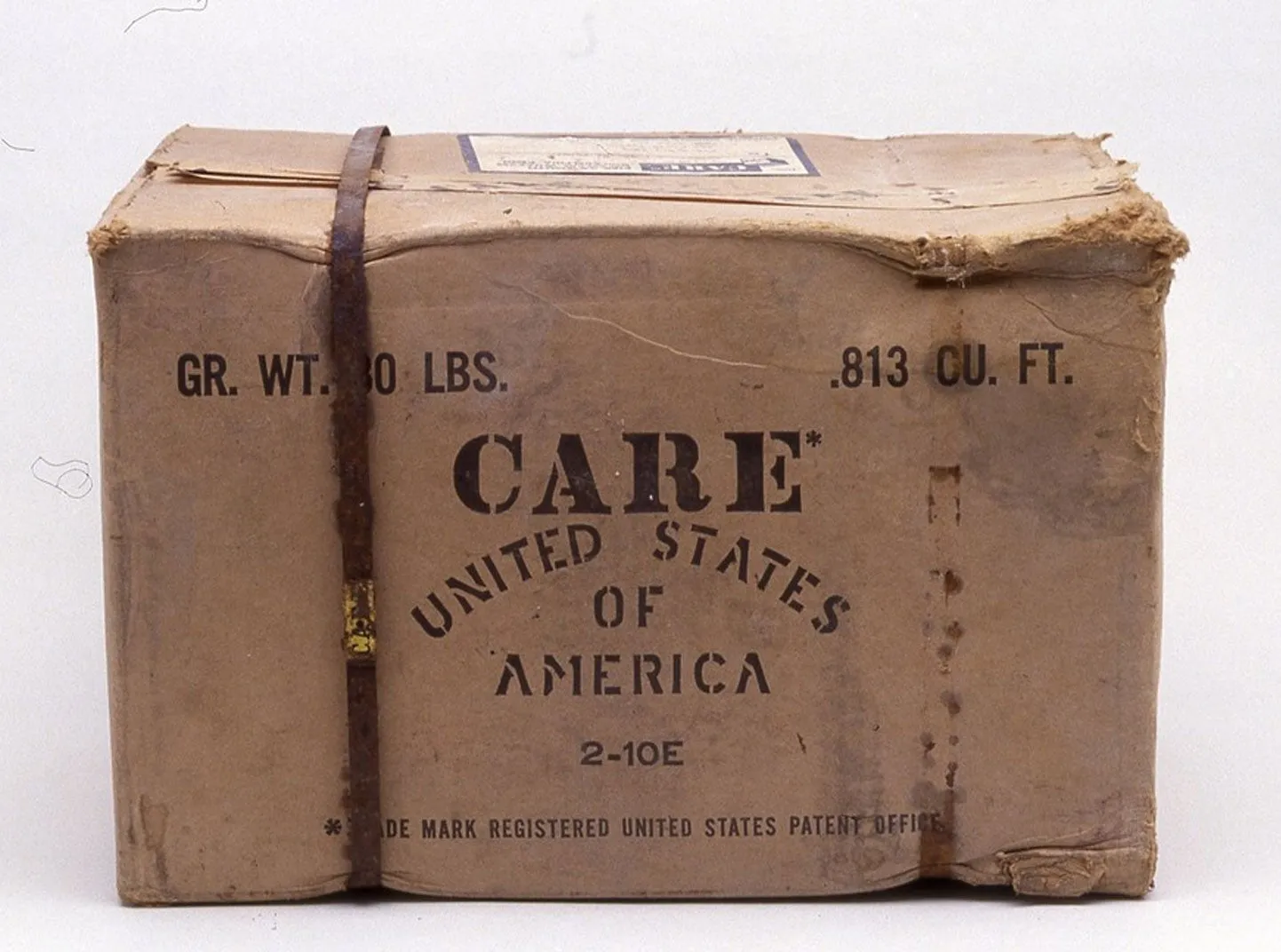
And in case you think that a “care package” is something parents send their college kids at exam time, think again.  CARE “invented” the CARE Package at the time CARE was founded in 1945.  The original CARE Package was a box of food and other emergency supplies, including such delicacies as dried eggs and dried milk, plus sometimes, cigarettes.  (I hasten to add that we don't do cigarettes any more.)  In the aftermath of World War II, CARE sent over 100 million CARE Packages to the people recovering from war in Europe and Asia.

CARE has come a long way from sending CARE Packages in 1945.  Today, CARE does more than distribute rations.  CARE now provides emergency relief and a wide range of development assistance.

In the area of emergency relief, CARE prides itself for being the first on the scene when disaster strikes.  Whether the disaster is natural (like the 2004 Asian tsunami) or of human origin (like the conflict in Darfur), CARE helps families made most vulnerable by poverty.

In many cases an emergency brings us to a place, but we remain to help ensure that communities are better equipped to face future crises.  Our programs are varied and focus on such things as: basic education and training; maternal and child health; agriculture and natural resources; small business development; HIV/AIDS prevention; and, of course, water and sanitation.
 
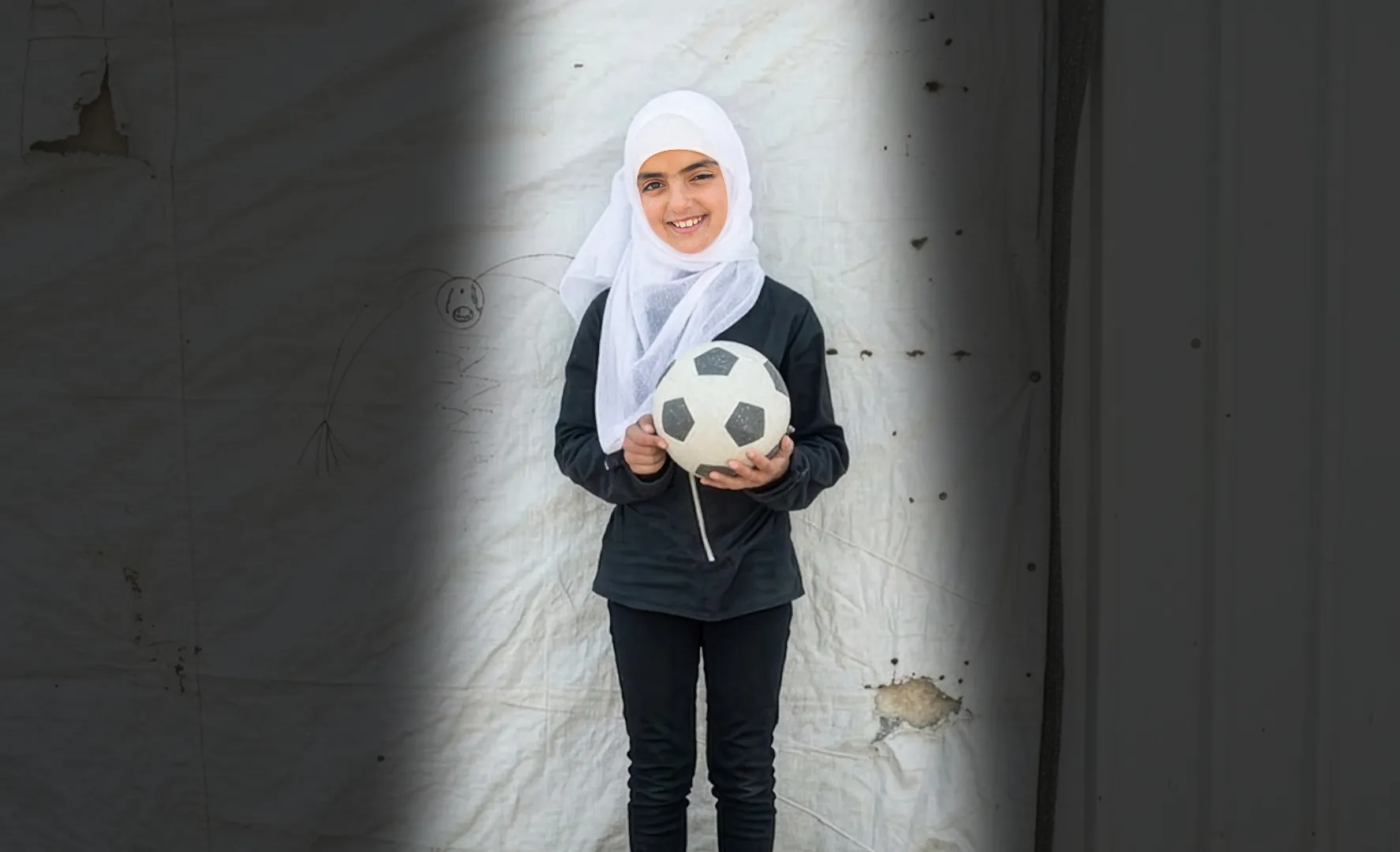
Over the last few years, CARE’s work to end global poverty has focused on empowering women.  You may have seen ads or stories reflecting our current marketing campaign, with the theme “I Am Powerful.”  This speaks to CARE’s belief that women in poor countries, if given the chance, can transform their own lives; and, as importantly, that people in this country can partner with them – and in so doing, we can all help end global poverty.

CARE did not decide on this approach simply because we value equality; instead, we reached this conclusion based on facts. Some international poverty statistics tell the story and show, as one leader said, “poverty has a woman’s face”:
 
Of the one billion people who live on less than $1 a day, about two-thirds are women and girls.

Women produce half the world’s food, but own only 1 percent of its farmland.  

Each year, more than 500,000 women – at least one every minute – die from pregnancy-related causes.  

In many countries, women are often denied the basic human right to be treated as equals.  They do not have the right to own or inherit property, to go to school, to consent to marriage, to receive health care and information, even the right to vote.  

Even where girls have the right to go to school, they don’t.  Why?  Because so much time is required for tasks like collecting drinking water for their families.

We know that the status of women is closely linked to the status of children.  When women are poor, illiterate and ill-treated, so are their children – and whole families and communities suffer the consequences.    

But, when women have a chance to earn money and gain an education, they uplift not only their own lives, but also those of their children; and they invest in the communities where they live.

“She has the power to change her world. You have the power to help her do it.”

When you empower women – when you give women tools and opportunities for improving their lives – they don’t just help themselves.  They help all the people around them.
    
That's what our "I Am Powerful" campaign is all about.  It's a way to illustrate the belief that women have the power to help families and entire communities escape poverty.  

The words "I Am Powerful" are much more than a catchy marketing slogan.  They affirm and celebrate the potential of women, and emphasize the importance of personal self-esteem and economic self-sufficiency.  They also speak to those of us who have the power to invest in this cause.

Certainly many women are finding and claiming their power through the help of CARE and other poverty-fighting organizations.  

But think of how much faster, how much more we could achieve if we swelled our ranks if we made “women’s empowerment” a global movement with every able woman – and every able man – pledging to the cause.

The rain we received over the last two days will surely refresh my azaleas, my hydrangeas and my coneflowers.  

And if doesn’t, so be it.  I am thankful that I have clean water to drink and that I live in a society where disputes over water can be resolved without armed conflict.

In concluding, I urge all of you to affirm the rights of poor people around the world – men and women – who would gladly trade their water problems for ours.  

I encourage all of you to visit our website where you can learn more about CARE and, of course, easily make an online donation.  

I want to send best wishes from CARE’s President, Dr. Helene Gayle, who could not be here this morning.  

And, finally, I would like to thank you all for listening.

Media Contacts:


Atlanta: Lurma Rackley, CARE USA, lrackley@care.org, (404) 979-9450

Join the CARE community     Follow:   Share:
Connect & share on our blog >>

To donate today, please call us. Within the United States: 1-800-521-CARE or 1-800-521-2273 (24 hours)

Outside the United States: +1-404-681-2552 (M-F, 8:30 a.m.-6:00 p.m. ET)

CARE is a nonprofit 501(c)(3) organization (EIN/tax ID number: 13-168-5039).


Join The CARE Community