Gaza Humanitarian Crisis
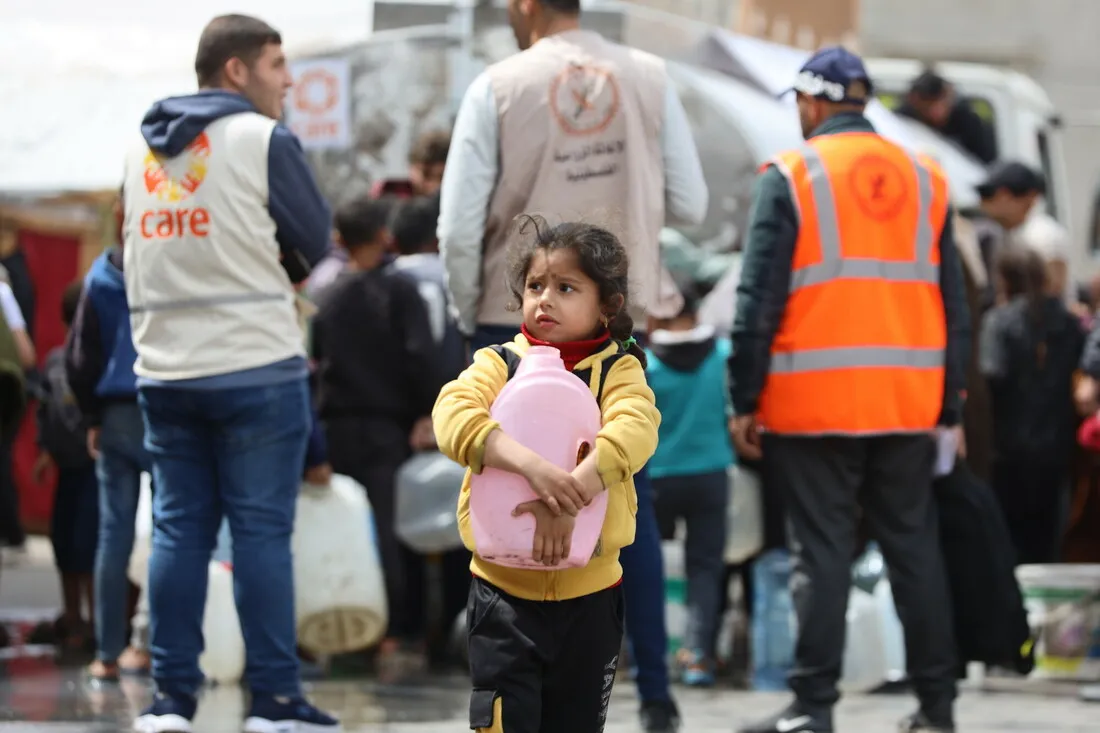
The scale of suffering and need in Gaza is at a level we have never seen. While humanitarian access is currently limited, our teams in Gaza and across the border in Egypt are prepared.
Learn more





Six months after the start of this devastating conflict in Gaza, CARE spoke to displaced mothers about their current living situation, biggest fears, and their wishes for the future.
As the month of Ramadan begins around the world, there is no escaping the stark contrast between the spirit of the holy month and the reality of life in Gaza, Yemen, the West Bank, Sudan, Syria, and other conflict zones.
Following the Oct. 7 attacks, all cross-border aid into Gaza was initially halted. Since late October, limited aid deliveries, including food, medicine, and water, are allowed into the enclave. However, these are not nearly enough to meet the enormous humanitarian need.
Step Haiselden is CARE’s Global Shelter Team Leader who currently supports CARE West Bank/Gaza’s team to ensure shelter assistance meets people’s urgent needs. Here are the five things he thinks it’s most important for people to know about what’s going on right now in Gaza.
From advocacy, to letter writing, donating money, volunteering and more, there are many ways you can help.
Worldwide, 1.2 billion people live in absolute poverty. Most of them are women and girls. You can change that.
Learn how to become an advocateWhen you give to CARE, you fight against the barriers that women and girls face every day.
Start donating todayFrom advocacy, to letter writing, donating money, volunteering and more, there are many ways you can help.
Worldwide, 1.2 billion people live in absolute poverty. Most of them are women and girls. You can change that.
Learn how to become an advocateWhen you give to CARE, you fight against the barriers that women and girls face every day.
Start donating todayFor more than 75 years, CARE has led the way to a better life for millions of vulnerable people around the world.
We
save lives,
defeat poverty,
achieve social justice,
and fight for women and girls.