CARE CARE
Tell-A-Friend
Get E-mail Updates:
Why Should I Join?
Existing Member?
Login Now!
CARE's Blogg

caresworkPrint this PageE-mail this Page
Home :: CARE's Work :: What We Do :: Health :: Environment :: Tools & Guidelines

Environment

Water, Sanitation and Environmental Health
Negotiating Beneficiary Involvement in Agricultural Development Projects
by Carlos A. Perez

Since the seventies managers in international agricultural development projects have tried to incorporate farmers as active participants in projects. These efforts have been only partially successful. In many cases farmer resources have been used, farmers have been interviewed, but farmers have not had a decisive role in the planning, implementation and evaluation of the projects.

In this paper I will attempt to address the issue of farmer participation in large-scale development programs initiated by nongovernmental organizations. Large-scale programs are defined here as those that benefit over one thousand households. In particular, I seek to define the extent to which farmers can actively and conclusively participate in the design and implementation of development projects. I differentiate several forms of participation which can be basically grouped into two groups: 1) those that inform, consult and mobilize farmers in ways that facilitate the work of the implementing agency, and 2) those that promote the development of the analytical and problem-development skills of farmers through their active participation in project decision-making. I will point out that there is an apparent inherent contradiction between the way in which development projects are generally planned and implemented, and the active participation of beneficiaries in the definition of the project. I will show that this contradiction can be overcome. I will ground the discussion on the experience of some of the Agricultural and Natural Resource projects of CARE International (CARE stands for Cooperative for Assistance and Relief Everywhere) to describe some project features that seem to be more conducive to facilitating the definition and implementation of project goals and activities jointly between project beneficiaries and agency staff.

AN OVERVIEW OF CARE INTERNATIONAL

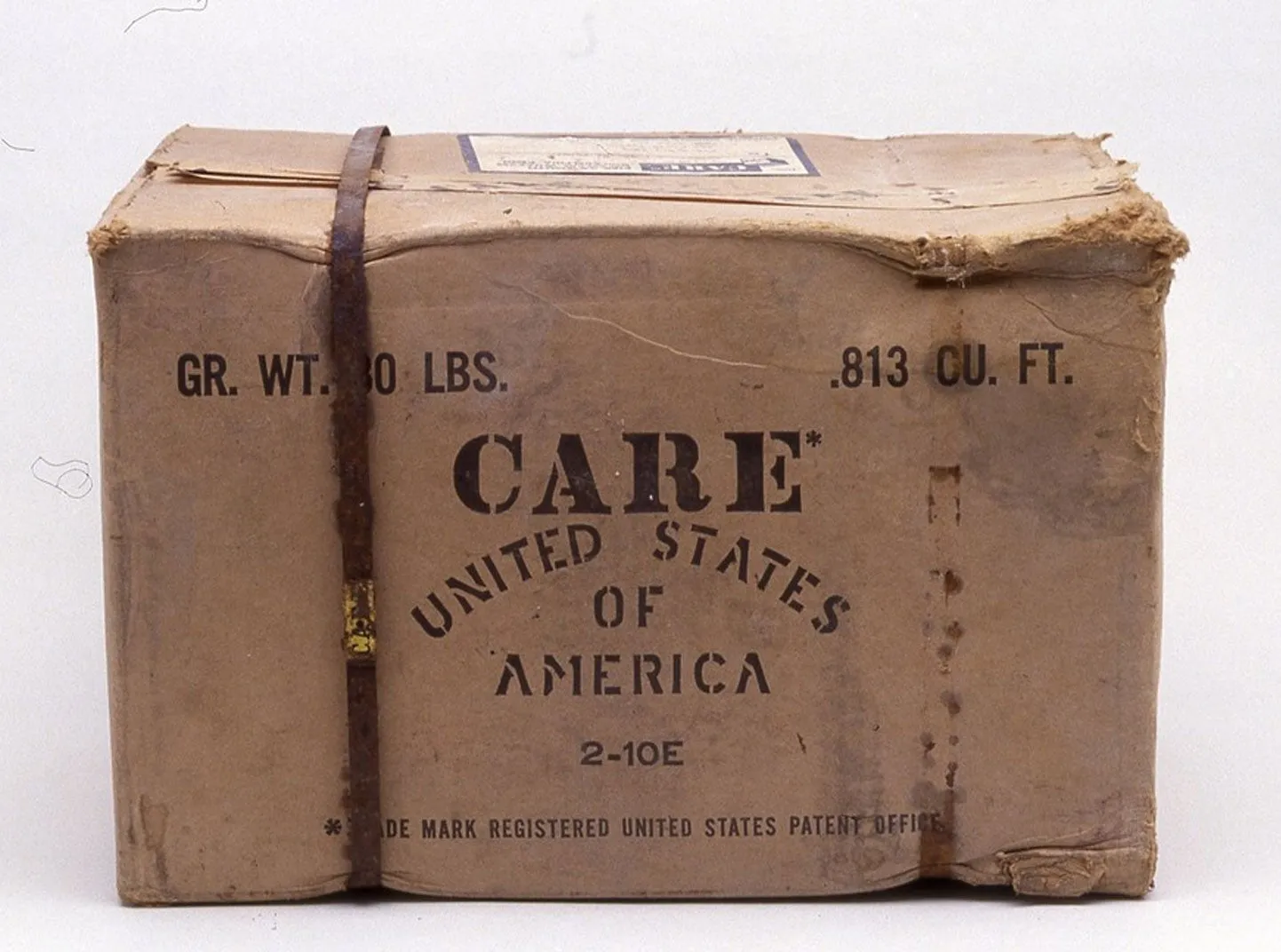
CARE was founded in 1945 as an emergency relief agency to assist people in Europe and Asia whose lives had been devastated by World War II. It sent millions of CARE packages of food and non-food items after the war, and in the 1950s it became a leading member of food commodity in the developing world. Since the 1970s, CARE has expanded its activities to include development projects pertaining to agriculture and natural resources, primary health care, population, small economic activities development, and girls' education. Currently, CARE assists more than 27 million people a year in 61 countries in Latin America, the Caribbean, Africa, Asia and Eastern Europe.

CARE's program in Agriculture and Natural Resources (ANR) has over 90 agriculture and natural resource projects in 35 countries in Asia, Eastern Europe, Africa, and Latin America, with more than 800,000 participants. The goal of CARE's ANR program is to increase the food security and income of poor families through ecologically sound agriculture and natural resource management, in ways that strengthen local problem-solving capacity and social equity, especially for women. The program is grounded in the belief that human development and environmental sustainability are mutually dependent. Over the past 21 years, the program has sought to prevent and revert decreased agricultural productivity, and counteract its impact on the local farm household and the environment. At the farm level, the program has contributed to improve agricultural productivity by promoting the use of improved open pollinated seeds; bio-intensive soil fertility enhancement and soil moisture management; agroforestry-based soil erosion control and prevention; integrated pest management; and small-scale gravity fed irrigation. At the landscape level, it has been instrumental in increasing agricultural productivity through long-term restoration and protection of micro and macro watersheds. To this effect, it has emphasized a continuous farmer-centered integrated land management approach that takes into account socioeconomic as well as bio-physical issues, rather than a technology-driven strategy that is centered on reforestation activities. This has resulted in higher agricultural returns for farmers, stronger institutions capable of articulating local needs and objectives, improved water regimes, and reduced soil erosion, siltation and sedimentation. In addition, since 1988 the ANR program has engaged in the design and implementation of over 15 conservation and development projects in buffer-zones around protected areas endowed with biodiversity or ecosystem function value. This has entailed developing sustainable economic activities, based on improved agriculture or utilization of river- or forest-based resources.

A DEFINITION OF PARTICIPATION
Many types of processes are frequently subsumed under the term "participation." Each of these processes varies in the degree and form under which beneficiaries engage in a development project. Yet, defining participation is intricately linked to the issues of who controls the process of participation, and what outcomes participation is intended to bring about. We differentiate five levels of participation, namely information sharing, process-nominal participation, consultation, decision-making and action initiation (See, for example, S. Paul, Community Participation in Development Projects The World Bank Experience. World Bank Discussion Paper no. 6 Washington, DC: World Bank, 1987.)

Information sharing involves a one-way communication flow to the beneficiaries (extension messages and client "education"), or data gathering managed by the implementing agency. Process-nominal participation entails beneficiaries providing resources for the project (most frequently, land, labor and organization). Consultation involves the beneficiaries' knowledge, perspectives and opinions (client assessments, willingness to pay studies).

Only when the beneficiaries are able to influence the nature and content of the project is there a shift of primary emphasis from the implementing agency to the beneficiaries. In this case the agency is open to negotiating and sharing with beneficiaries the ability to make strategic decisions on the project. Beneficiary participation in decision-making empowers beneficiaries in defining project design and implementation, technology choice and cost/benefits, and requires a commitment to capacity building. The beneficiaries' self-initiated action assumes that people are already empowered and, hence, proactive. Information sharing, process-nominal participation and consultation primarily hinge on the implementing agency rather than the beneficiaries. These processes are controlled or managed by the implementing agency. The agency wishes to work with and improve the situation of the beneficiary communities, and needs to inform the beneficiaries, or obtain their input to improve its ability to provide services. The agency reserves for itself the right to make the choices on technology, interventions and outcomes.

The scope and degree of negotiation between the agency and the beneficiaries largely depends on how openly the agency defines its broader development goal and roles. It is in this sense that we can talk about "narrow" and "wider" participation. Narrow participation is geared to facilitate a problem-solving process within the boundaries of the project. The agency encourages beneficiary involvement in order to meet clearly delimited goals such as increased agricultural productivity, income growth, food security or conservation of natural resources. The agency defines its role primarily as being a source of information and other resources for rural communities, and, hence, as a catalyst for project-based development. Wider participation, on the other hand, ultimately seeks to empower the beneficiaries beyond the limits of the project. The project becomes a laboratory and a medium for experimentation and the long-term empowerment of the beneficiaries within and beyond the life of the project. Beneficiaries accomplish this by developing critical thinking and problem-solving skills. The implementing agency facilitates a change in the role that beneficiaries play in society. Wider participation is political, whereas narrow participation is technological.

In this paper, therefore, we define beneficiary participation as farmers' contribution to, influence and control over the project's decision- making and outcomes (See J. Cohen, John and N. Uphoff, Rural Development Participation: Concepts and measures for Project Design, Implementation and Evaluation. Rural Development Monograph no. 2, Ithaca: Rural Development Committee Center for International Studies, Cornell University, 1977, and D. Korten, Community Organization and Rural Development: A learning process approach. Public Administration Review (September/October):480-511, 1980.) The challenge for development organizations is how to move from agency-centered participation to beneficiary active involvement in decision-making. A further challenge is to facilitate a broader empowerment that starts with negotiations on project design but also spills over beyond the limits of the project.

HOW DEVELOPMENT PROJECTS ARE DESIGNED AND IMPLEMENTED
The design of large-scale projects tends to reflect primarily negotiations between donors and the implementing agency on the nature and scope of the problem that will be addressed, and the specific goals and activities proposed. In the best possible scenario, the implementing agency has been operating in the target area for a relatively long time, and thus it is assumed that it is familiar with, and represents the interests and objectives of the beneficiary populations. Even if the implementing agency is not well-acquainted with the area and its population, it is also frequently assumed that once the project has been approved, one of the first project activities will be to conduct a rapid rural appraisal to ascertain in detail the farming environment and farmers' goals.

Conducting rapid rural appraisals after having defined the project design, however, has limitations. The project may continue doing whatever it is contractually obligated to do regardless of whether it coincides with the farmers' defined priorities. This is particularly the case when the appraisal reveals profound discrepancies between farmers' conditions and project assumptions, and the implementing agencies are unable to get from donors the authorization to revise the project goals. In such a case, the project may, in fact, carry on as though the appraisal had never occurred, despite the fact that the problem that the project is supposed to address is not defined as such by the farmers, or that the farmers don't consider the project's problems to be a high priority.

Yet, it is unfortunately all too common to reduce to rapid rural assessment all the channels for farmers to provide input into project design and operation. Because of, or despite that farmer participation in project planning is less than ideal, their participation in project monitoring and evaluation is even more unusual. In any case, farmer participation tends to be restricted to one or two clearly defined events, rather than being incorporated into a continuous process of negotiation and re-negotiation between farmers and the implementing agency. We obviously assume here for argument's sake that the data gathered through participatory rural appraisals will eventually inform the project's baseline data against which the project's performance will be ascertained. This is not always the case. In fact, rapid assessments often generate data that are not fully incorporated into the critical information used in project decision-making.

Having a sound knowledge of farmers' economic systems and choices is critically important for the successful implementation of projects, and hence rural appraisals have a paramount role in development. Farmer participation in information gathering through participatory methodologies, however, may not necessarily increase the farmers' control over the project design. Farmer involvement in data gathering may coexist with project implementation planned and controlled "from outside". In fact, the appraisal may simply be construed to gather information that confirms the projects' defined goals, rather than to test and possibly challenge the definition of the problem and its solutions. For instance, the implementing agency may have decided that the project would address land degradation, and that the project's main strategy will be to put in place soil conservation and fertilization measures. In this case, the agency may not probe deep enough in the assessment to realize that from the farmers' perspective land erosion is just one component in the broader erosion of the farmers' ability to make a living, and that in fact increased agricultural production may not be their first priority among their strategies for social reproduction.

HOW TO ENCOURAGE PARTICIPATION
There is research evidence that beneficiary participation contributes significantly to the success of development projects (See, for example, D. Narayan, The Contribution of People's Participation: Evidence from 121 rural water supply projects. Environmentally sustainable development occasional papers series, n.1, the World Bank, July, 1995.) At the same time, it has been shown that a lack of participation of project beneficiaries has resulted in projects with limited impact or sustainability (See R. Chambers, Challenging the Professions London, ITP, 1993, and M. Cernea (ed.) Putting People First: Sociological Variables in Rural Development London, Oxford University Press, 1991.) Nonetheless, more needs to be done to define and document strategies that encourage farmers participation in project decision-making. Based on the experience of CARE projects, I propose that there is a high correlation between farmer participation in project decision-making and the following types of project.

1. Projects designed with built-in flexibility. Projects with streamlined design can accommodate more easily to farmers changing circumstances than projects with elaborate designs. In Egypt, the FarmLink project seeks to broker high quality technological information to meet specific knowledge or skill gaps which farmers prioritize. FarmLink is a participatory extension project that targets low-income fruit and vegetable producers who do not have access to the new technologies used by capital-intensive farms to produce high quality horticultural products for both local and international markets. The technology exists, but small farmers have been bypassed by the government agricultural extension system. Through participatory assessments FarmLink farmers define the target crops whose production they want to improve, and the target crops' particular constraints to production that they want to overcome. Farmers then organize themselves into small groups by target crop. Project staff facilitate the farmer groups' visits with expert farmers, researchers and/or agricultural traders, frequently from other regions in the country. From gap identification to contact with experts, it takes 3 weeks. The process continues with different crops and different communities. The project is not tied to any particular technology (it is rather, a methodology project). Farmers--instead of CARE--continuously define the project's content.

2. Projects conceived as organic rather than inert structures. Participatory projects do not emphasize a rigid and mechanistic approach which defines its objectives and outcomes in the planning stage, and then laboriously tries to meet those expectations without any alterations. Rather than being fixated on what was decided in the past (the design phase), they are guided by the present situation. They are projects that evolve and adapt to new conditions, and hence, shed activities and change targets. They expand or contract over time. Their design matures without losing focus. They learn from mistakes and successes. They experiment with choices rather than bring in pre-packaged solutions. They evolve into new forms which are progressively more attuned with farmers' needs and priorities. Their boundaries are flexible. In these projects, farmers are encouraged to evaluate options rather than being recruited and told to do. The above described FarmLink project, for instance, evolved from pilot activities in fruit seedling production in nurseries. After one year of operation, however, farmers were not using the nurseries. A series a interviews with farmers revealed that for them the most important limiting factor was technical knowledge (they wanted to acces new technologies and practices) instead of inputs (which they could obtain commercially). The project experimented with its strategy. In a first stage, farmers' decision making was limited to the selection of one of the options that project staff had previously identified through a long and laborious CARE-centered process. This did not contribute to an enthusiastic adoption of technologies. The project then shifted its emphasis to creating an environment that would allow farmers to rapidly analyze, prioritize and deal with problems, and select technologies that they deemed relevant. FarmLink role, thus, shifted from being the depository of technical knowledge, to the facilitator and broker. In the process, it became effective in technology extension.

3. Projects in which all stakeholders believe in, and understand participation. Frequently, participation is defined as a negotiation for power between farmers and the implementing agency. Although the relationship between these two players is critical, one should not neglect to consider that participation is not possible if donors do not support participation, and extension agents are not empowered, themselves, to be participatory. At CARE, some donors have been patient to support farmers' pace, willing to forego inalterable final goals, intermediate goals, and expected activities, and open to adaptation and negotiation. In Bangladesh, the UK's Overseas Development Administration (ODA) expects that things may be changed in the projects' annual review, and it is open to experiment with new approaches. All of these donors have profoundly contributed to enhance the projects' willingness to meet the changing farmers demands. At the same time, there is more participation in projects when the CARE office is participatory with its extension agents. Extension agents tend to be more participatory if they are reinforced by their managers to think of themselves and their work critically as catalysts for farmers innovations, and allowed to disagree and re-define project activities and objectives if the latter do not meet the conditions in the field. Projects are more responsive to farmers' needs when the extension agents are encouraged to listen to, and learn from farmers, and have a say in project design and implementation.

4. Projects that operationalize their goals in behaviors that make sense to farmers. The SUBIR (Sustainable Uses for Biological Resources) project in Ecuador has broken down its natural resource conservation goals into observable actions called ideal behaviors. Ideal behaviors are defined as single observable actions that experts consider people need to perform in order to reduce a specific problem. Those experts include project staff (technical specialists, educators, anthropologists) and target beneficiaries. The ideal behaviors are defined collectively through several meetings and workshops. Before adopting this approach, SUBIR project staff could not clearly articulate in concrete terms the project's biodiversity conservation goal. After several planning meetings it agreed that among other objectives, biodiversity conservation included limiting the expansion of the agricultural frontier into the core protected area by promoting the intensive use of existing agricultural plots. Through lengthy discussions this was further disaggregated into the following agricultural practices that were associated with agricultural intensification: integrated pest management, improved soil fertility, crop diversification, farming systems, multiple-use forest management, soil conservation, and conservation of aquatic resources. Once consensus was reached, the project conducted audience research with a sample of adopters of the good behavior and people who were not adopting it, in order to understand what they were currently doing and why were they doing it. The goal was to identify factors (technology, knowledge and skills, and policies) that are most relevant to specific audiences. The staff was then able to define precisely how each one of the agricultural practices above described was operationalized into "ideal behaviors" (mulching with sugarcane and sisal pulp, for instance) by farmers and other "experts" in the target area." The emphasis is on behavior (what and why), consequences (benefits), barriers (problems with doing it, and what was done to overcome them); social norms (who do they trust on this topic; what does that person think of that behavior); knowledge and skills (how did they hear about it, learn). If no one is adopting the behavior, then some people will be encouraged to try the behavior for a period of time, and to discuss how they adopted the behavior to meet their needs, resources and abilities. The project focuses on a limited number of feasible target behaviors with which farmers can readily relate.

5. Projects that disaggregate socioeconomic groups and levels of knowledge among farmers. Rather than dealing with farmers as a homogenous and predictable group, participatory projects are more clearly aware of, and respond to, differences among them. These projects tend to be more gender sensitive, and hence adopt methodologies to ascertain project benefits differentiated by gender. They also acknowledge that there are experienced and inexperienced farmers, and build on the knowledge of the former. They accept that not all farmers adopt the same strategy for social reproduction, and that such strategies may incorporate agricultural activities in varying degrees of intensity throughout the year. The projects, therefore, do not try to engage or benefit all the farmers in a community at the same time, and respect and allow for farmers to engage or drop-out of the program freely depending on their circumstances and on their terms.

6. Projects that encourage self-reliance among target communities. There are several ways to encouraging self-reliance. First, projects learn about and build on what participant farmers are already doing correctly, instead of emphasizing farmers' shortcomings and proposing solutions from outside. This entails valuing and reinforcing local knowledge and customs. Second, project staff make sure that farmers contribute substantially to meet the costs of the project and that the project costs are optimized. Participatory projects create a sense of ownership and hence responsibility among beneficiaries. Third, participatory projects have a clear and explicit phase-out plan, and hence they avoid creating dependency from outside agencies among farmers.

7. Projects that are demand-driven. Participatory projects strive to provide services that are valuable to farmer communities. As a result, they constantly monitor farmer satisfaction. One way in which they gauge such satisfaction is by identifying who initiates contact between implementing agency and the communities to participate in the project. If the communities take the initiative rather than CARE, it means that farmers see value in the project (high value projects have long waiting lists). Another way of assessing beneficiary satisfaction is by gradually privatizing extension services over the life of the project, or by designing the project to explicitly provide extension services for fees. In Guatemala, for instance, some government extension agents were asked to either retire or participate in a CARE-managed program in which they would become economically independent from the program in five years. The program would pay them 90% of their salary the first year (while farmers contributed with the rest), and progressively less, until they were totally supported by farmers. The assumption was that the horticultural farmers that the extension agents served would have enough financial resources for, and interest in supporting the extension system, and that the agents would be more responsive to farmers. This assumption has largely been confirmed. Farmers are willing to pay for services that they believe substantially improve their lives. At the same time, project personnel are willing to listen carefully to farmers if farmers pay their salaries. It is not surprising that the most responsive projects refer to beneficiaries as clients.

8. Projects conceived as a non-formal educational activity. In CARE Bangladesh's INTERFISH project, the extension agents' role is to facilitate, accompany and support the farmers' process of learning and problem-solving. The project promotes production of rice and fish in the same paddies, and vegetable cultivation in the paddies' dikes. The project does not teach practices but concepts that farmers can adapt to different realities. It promotes self-discovery rather than lectures, and provides the opportunity for farmers to experiment with fish feed, water quality, beneficial insects, etc. and come to a conclusion. Farmers do not learn recipes for crop management, but rather discover approaches and develop skills that are transferable to activities beyond agriculture. In INTERFISH, the extension process is dialogical, and it facilitates the access of the farmers to resources for development

CONCLUSION

This paper shows that there is not an insurmountable contradiction between farmer participation and project design and implementation. This is not to deny, however, the constant tension between encouraging active involvement of farmers in projects, and trying to control and influence the results of those projects. Empowering people to act requires flexibility and trust. It requires a commitment to help people to develop themselves and to evolve in ways that are not predictable. It also requires treating projects as enormous opportunities for farmers and the implementing agencies to grow.


Home | Search | Site Map | Feedback | Privacy | Terms | Global Sites |