![]() |
BREAKING NEWS: According to recent climate and food security forecasts released on April 3, there is a substantial likelihood of drought conditions returning to the Greater Horn of Africa region in 2012. The forecast anticipates rainfall to begin late, to be poorly distributed over space and time and to total only about 60-80 percent of average.
Kenya, Ethiopia, Somalia and Djibouti would suffer significant impacts on crop production, pasture regeneration, and the replenishment of the water sources. Consecutive years of drought in the region have severely weakened livelihoods leaving vulnerable communities with little coping capacity to survive another failed rain season.
In addition, the humanitarian situation is precarious in this region barely recovering from a period of conflict, extreme drought and last year's food crisis. Therefore, an expansion in the size of the food insecure population and an increase in the severity of food insecurity is likely.
On July 20, 2011, the United Nations took the drastic step of declaring parts of southern Somalia in famine. In so doing, it recognized that hundreds of thousands of people were at imminent risk of starving to death. As the crisis spread to more regions, the number of people in famine zones eventually reached 750,000. An estimated 13 million people were in critical need of food aid. Suddenly the Horn of Africa, a region seemingly so often in crisis, was in the global spotlight again. The world finally took notice of a dire situation.
At that time, CARE Humanitarian Director Barbara Jackson said, "The declaration of famine is an urgent plea for these people. It is the most critical thing I've seen in 22 years of field experience. Everyone I met had the same message: Please tell the world for us that we need help, and that we need it now. We cannot last much longer."
The emergency in Somalia – and neighboring countries including Djibouti, Ethiopia and Kenya – had been long growing. Drought, a recurring phenomenon in this part of the world, has become increasingly devastating, due to factors including climate change, population pressures, new limits on access to water and pastureland, conflict, and poor or non-existent governance in some places. Months later, the same number of people remain food insecure, in what was then the world's worst humanitarian crisis at the time.
The ongoing relief effort in the Horn of Africa, and in Somalia in particular, faces sobering challenges, particularly in the area of security. Several national and international military forces are now involved in the conflict in southern Somalia. Escalating violence, suicide bombings, attacks on civilians, kidnappings and killings of aid workers, and the wholesale expulsion and looting of 16 U.N. agencies and other humanitarian groups by militants have affected hundreds of thousands of people at a time of enormous need.
While the famine was declared over in late-January, a third of the population of Somalia remained in crisis, unable to fully meet essential food and non-food needs. Most of these people, 2.34 million in early-Feburary, live in southern regions of Somalia, where humanitarian access remains very limited.
CARE's Response
DADAAB REFUGEE CAMPS
(Click Photo to View Larger) A Tragic Snapshot: The Horn of Africa - This infographic highlights what your donations can do. Donate Now
CARE is working alongside our partners to provide emergency support with food, water, health, education, protection, livelihoods, and prevention of gender-based violence in the Dadaab refugee camps.
Please note that CARE, along with the United Nations and other NGOs, have temporialy suspended various activities due to security issues; however, all essential humanitarian operations continue, including food, water, critical health and nutrition and some child protection services.
CARE has worked in the Dadaab refugee camps since 1991. More than 270 staff members and around 1,600 refugee "incentive" workers serve the growing population of the three camps Ifo, Dagahaley and Hagadera. CARE is responsible for the bi-monthly distribution of food to every refugee, for distribution of food and other relief items to new arrivals at reception centers, for the provision of safe drinking water in all three camps and for hygiene promotion. CARE also runs five primary schools in Dagahaley camp. Protection and counseling for women as well as community development initiatives (such as sports, greenhouses and IT learning centers) are also part of CARE's portfolio in Dadaab.
Key facts on CARE's work in the camps:
- Dadaab hosts almost 464,000 refugees as of November 18
- On an average day of food distribution, distributes 389 metric tons of food for 45,000 people
- The food distribution cycle runs for 9 days during which CARE distributes a total of 3,500 metric tons to provide all registered refugees with 14 days of food equivalent of 2,100 kcal/day
- CARE is pumping and distributing approximately 7.5 million liters of water a day, enough to provide more than 446,000 people with 15 liters of water per day
- CARE opperates 5 schools, providing primary education to aproximately 15,000 children.
CARE’s work in Dadaab falls into the following sectors:
- Water, sanitation and hygiene (WASH):
- Public health promotion
- Food security
- Education
- Gender-based violence and psychosocial support
Learn more about CARE’s work to help bring an end to sexual and gender-based violence.
(Click photo to enlarge)
Newly-arrived refugees from Somalia collect water. CARE is trucking in the water at the Dagehaley camp, one of three camps that make up the Dadaab Refugee Camps. (© 2011 Kate Holt/CARE)
(Click photo to enlarge)
CARE's Education Officer Theresiah Nthiani visits an accelerated learning programme in Dagahaley. Newly arrived kids attend classes in August to catch up with their fellow students. (Photo: CARE/Sabine Wilke)
OUTSIDE OF THE CAMPS
NOTE: The figures of people affected and reached by CARE are from January 20, 2012.
Along with our work helping meet the acute needs of refugees, CARE is continuing our ongoing interventions reaching those who remain at home in some of the worst-affected countries:
ETHIOPIA: 4.8 million affected
CARE has reached: 772,786
As elsewhere in the region, CARE’s long-term objective in Ethiopia is to promote resilience in the face of future food emergencies. In the meantime, to meet immediate needs, we are continuing relief operations, reaching more than 709,000 people to date with interventions in four sectors: food assistance; water, sanitation and hygiene; nutrition; and support to livelihoods including agriculture and livestock rearing.
CARE’s emergency food distributions, in cooperation with the government and our humanitarian partners, are in their seventh round, reaching a total of about 450,000 people in Oromia Regional State, East Hararghe, West Hararghe and the Borana and Dewe zones of Afar region.
SOMALIA: 4 million affected
CARE has reached 161,582
Despite the critical security situation in south central Somalia, CARE continues to scale up our humanitarian response. We operate both independently and through local partners in various parts of the country. Our priority regions include relatively stable parts of northern Somalia that are struggling to accommodate displaced people from the south.
Our emergency work in Somalia covers the sectors of water, sanitation and hygiene; food security; livelihoods; health/nutrition; and the distribution of other critical supplies. Our longer-term objectives include a variety of approaches to help communities build resiliency and sustainable livelihoods.
KENYA: 4.3 million affected
CARE has reached 534,247 in NE Keyna
Plus another 463,512 people in the Dadaab refugee camps
Making the total number of people reached almost 1 million
In addition to providing food, water, primary education and psychological support to the residents in the Dadaab refugee camps, CARE has reached hundreds of thousands of people in the northeastern parts of the country. In this hard-hit region, CARE has been addressing drought conditions by reducing long-term vulnerabilities and strengthening community resilience. CARE is emphasizing disaster risk management measures owned by the local communities and supports district veterinary department teams to protect the lives of animals – people's main assets. CARE is also responding through maintenance, protection and development of water resources; encouraging improved hygiene practices; livelihood protection, cash for work and support through diversifying sources of income; and cash transfer though our Hunger Safety Net Program. CARE has partnered with a financial institution and both public and private meat dealers to increase livestock sales from the pastoral community, reducing the number of animals relying on limited pasture and enhancing available cash for households.And we're vaccinating livestock against disease and and working with a veterinary officer to help protect people's these valuable resources.
DJIBOUTI: 200,000 affected
Poor households in both urban and rural areas are expected to remain at crisis levels through March 2012. The food security situation for families remains dire. CARE has carried out an assessment, and will be opening a temporary location in Djibouti to help with relief efforts.
You can help today by making a gift to support CARE's hunger and poverty-fighting work
in the Horn of Africa and poor countries around the world.
Background
Click image to view maps
Community members in Nanighi community report that drought is causing livestock deaths, poor livestock production and livestock and human diseases, among other problems.
OVERVIEW
As the drought and food crisis in the Horn of Africa continues, CARE has scaled up our emergency response in Kenya, Ethiopia and Somalia to assist more than two million people across the affected region. More than 13 million people are in need of humanitarian assistance, such as water, food, medical assistance, shelter and help regaining lost livelihoods.
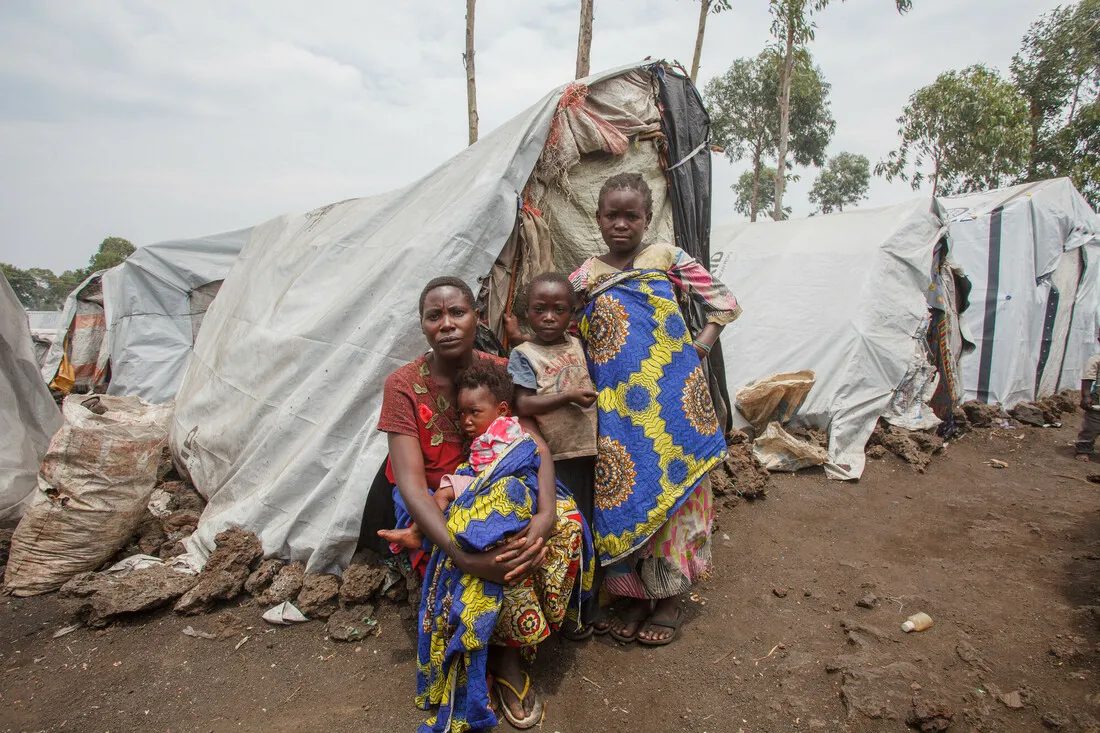
Somali refugees are still crossing into neighboring countries to seek help – soon the numbers will top 300,000 people and that doesn't include those who are fleeing into cities within Somalia. After having walked for days, often without food or water, most arrive exhausted and malnourished at the refugee camps. Around 520,000 refugees now live in Kenya, the majority at the Dadaab camps that were originally built to host 90,000 people. There, CARE provides primary education and water, distributes food and offers psychological support and counseling, particularly to women and girls. More than 1,600 refugee aid workers assist CARE in implementing programs, many of them having lived in the camps for most of their lives.
THE DADAAB REFUGEE CAMPS
The remote Dadaab refugee camp were created in 1991 to meet the needs of refugees from war-torn Somalia. CARE has worked in Dadaab since 1992 and is the primary provider of basic services including food, water and sanitation.
The severe drought in southern Somalia coupled with ongoing conflict and instability has led to a surge in refugee arrivals in Kenya. The refugee population in Dadaab grew by 85 percent in just three months this summer, putting immense pressure on humanitarian response and the environment and straining relations between refugees and host communities.
CARE is working alongside UNHCR and the World Food Program to ensure refugees in the camps are receiving the daily lifesaving support they urgently need. Funding to support increased basic services, such as water, sanitation and education, will be essential to meeting these urgent needs for a rapidly growing population in the camps.
The United Nations refugee agency, UNHCR, is negotiating with Kenyan authorities over the allocation of additional land to help decongest the Dadaab camps. The Kenyan government has opened of a fourth camp, and CARE is expanding our provision of food, water and psychological support at this new facility.
Blogs from the Field
BLOGS AND STORIES FROM THE FIELD AVAILABLE ON WE.CARE.ORG
Click here to read all of our blogs and stories on the food crisis in Africa >
- Supporting the people of Ethiopia to get back on their feet
- We don't intend to stop
- Northern Kenya: More resilient communities on the line
- On the front bench: Refugee girls get a fair shot at a future
- CARE is helping me heal despite my horrific nightmares
- Enough is enough: Mohamed Gedi's hopeful new start
- CARE is meeting the challenges of water and sanitation
- The "singing wells" fall silent
- Food for the soul: refugees find safety and security in Dadaab
- I want them to know they are not forgotten
- "We have hope now"
- Investing for the future
- The pictures I saved in my head
Click here to read all of our blogs and stories on the food crisis in Africa >
Press
MEDIA CONTACTS
(Click photo to enlarge)
Newly-arrived refugees from Somalia wait to be registered at Dagehaley camp, one of the camps that make up the Dadaab refugee complex.
© 2011 Kate Holt/CARE
CARE Newsclip
For more information or to arrange interviews with staff in the Horn of Africa:
- Brian Feagans (in Atlanta): +1.404.979.9453 (o), +1 404.457.4644 (m), bfeagans@care.org
- Melanie Brooks (in Geneva): +41.79.590.30.47, brooks@careinternational.org
CARE PRESS RELEASES
- Somalia's Food Crisis: Finding Lasting Solutions
- CARE's Response to the Horn of Africa Crisis
- USAID and Ad Council's Public Service Campaign for the Crisis in the Horn of Africa
- Food for the Soul: Refugees Find Safety and Security in Dadaab
- CARE Urges for More Assistance to Pregnant Women and Lactating Mothers
- Famine Officially Declared in Three More Regions of Somalia
- Saving Cattle Can Save Lives in Drought-Stricken Africa
- Somalia Famine: CARE Scales Up Response, Urges Donors to Ease
Restrictions on Aid Delivery- Reported Cases of Sexual Violence Have Quadrupled Among Refugees
- Drought in Kenya: "Situation of refugees is grave"
- Horn of Africa: CARE Calls for More Attention to Severe Food Insecurity
CARE IN THE NEWS (SELECTED)
Click here to read more media coverage of CARE's work in the Horn of Africa >
- ReliefWeb – Somalia: Turning Mirrors Into Windows
- The New York Times – On Top of Famine, Unspeakable Violence
- The Wall Street Journal – First-Time E-mail Plea Brings Outpouring for Somalia
- All Africa – Drought Causing the Evil Famine in the Horn of Africa – What Should We Do?
- IRIN – CARE's Response in the Horn of Africa
- AlertNet – Kenya: Push to Put Pastoralists on the Map
- IRIN – Kenya: Push to Put Pastoralists on the Map
- The New York Times – Glipses of the Next Great Famine
- Spiegel – The Birth of a City" Putting Down Roots in a Refugee Camp
- CBC News – Dadaab Refugees Face Sexual Violence on Camp Journey
- ReliefWeb – I Am an Aid Worker and a Refugee
- CNN – Horn of Africa Crisis Shocks Even Seasoned Aid Workers
- NBC Nightly News – Making a Difference: Giving a Voice to Victims of Abuse (video)
- CBS News – Greenhouses Grow Hope at Kenya Refugee Camp (video)
- CBS News – Daily Struggle for Refugees in Kenya Camp (video)
- Los Angeles Times – Somalis Swell Kenya Refugee Camp, Fleeing War and Now Drought
- ReliefWeb – Doctors Battle Psychological Trauma in Dadaab Refugee Camps
- CNN – CNN Talks to CARE About the Drought in the Horn of Africa
- PBS Newshour – Drought and Famine Plague Horn of Africa
- The New York Times – Misery Follows as Somalis Try to Flee Hunger
- Los Angeles Times – Refugees Flee War and Starvation in Somalia
- PBS Newshour – Record Drought Threatens Million in Eastern Africa
- CBC News – Analysis: Drought in the Horn of Africa – Does the World Still Care?
CARE Reports
Long-term Solutions
For humanitarian agencies such as CARE, the focus was and still is on preventing deaths from malnutrition and concomitant diseases. The state of famine has been lifted in three of the six Somali areas, indicating that the international efforts and increased funding have helped to ease the situation. In addition to traditional western donors and agencies, charities from Turkey and the Gulf States also joined the aid effort, helping to contain the spread of famine.
But despite some progress, the magnitude of the crisis has not diminished in any significant way. While the number of people in famine has reduced, four million people across Somalia are still in urgent need. The United Nations estimates that today, 250,000 people are at risk of immediate death due to starvation. To make matters even worse, the conflict in southern Somalia has further escalated since the declaration of famine, making access to the affected communities even more difficult. The conflict now involves more Somali, regional and international armed forces than ever before in the history of the Somali war. Humanitarian access to most areas in the south remains restricted and insecurity is widespread. By all estimates, the current wave of hunger and displacement will continue till the end of 2012 while there are no signs of a peaceful solution to the conflict.
A challenging environment, yet tangible progress
Contributing to the international community's response, CARE launched a region-wide emergency program in Kenya, Ethiopia and Somalia. In Somalia, CARE has reached nearly 170,000 internally displaced families and vulnerable local communities suffering from the severe food crisis coupled with the prolonged conflict through non-food supplies, nutrition programs and water and hygiene projects, since July last year. At the same time, CARE continues working towards building the capacity of local Somali NGOs to help deliver aid speedily and effectively.
No progress without lasting peace
We believe that self-reliant, food-secure and skilled communities are better equipped to deal with recurrent droughts. However, given the context in south-central Somalia, where the food crisis is most severe, it is not possible to introduce and sustain similar long-term programs. As long as the underlying causes that keep Somalia mired in humanitarian crises year after year remain unaddressed, food and water scarcity will continue to prevail.
Humanitarian agencies find alternative ways of alleviating suffering: We partner with local, field-based Somali organisations and organise remote programming for urgent supplies. But one thing is certain: Without a lasting solution to the conflict, CARE and other organisations will again and again need to implement short term humanitarian responses. Yet CARE's goal is to support the Somali population in preparing for future droughts and building resilience and self-sufficiency in the long run. This will not be achieved without peace.
Resilience, recovery and development
Long before the current crisis, CARE's work in the relatively peaceful northern regions of Puntland and Somaliland had been focused on better natural resource management, climate change adaptability and livelihoods for the poorest communities. A large part of our work in Northern Somalia is focused on sustainable change that will make communities less susceptible to drought and conflict. Our urban youth livelihoods program helps marginalized youth raise their own income through secondary education, literacy training, vocational training and small business development. Many of these youth are IDPs from the South that are trying to build up a new life in the North. Others are drought affected pastoralists that have moved to the towns. Unemployment amongst youth is a major contributor to conflict in Somalia – and those youth that have a sustainable income will be less likely to join a militia, or for that matter be affected by drought. Our Rural Vulnerable women's program is helping improve the lives of poor rural women vulnerable to the effects of drought. It aims to increase the ability of these women to save money through village savings and loans groups, which help them invest in alternative livelihood opportunities, and have more money available to salvage their livestock during a drought. The program also strengthens the ability of women to contribute to decision making at household and community levels and works with women and men to strengthen community mechanisms to reduce the risk of conflicts happening in their villages. It also works with the education sector to increase girls' access to schools. Finally, through interventions in water, sanitation, food security and natural resource management, the program reduces the direct impact of drought on the livelihoods and income of rural women.
CARE Videos
CARE in the News |
||
Visit msnbc.com for breaking news, world news, and news about the economy |
||
|