Haiti Earthquake:
Six Months Later

CARE's Relief Efforts Continue

Donate Now


We are continuing to distribute aid to survivors of the 7.0-magnitude earthquake that struck Haiti on Tuesday, January 12. The quake's epicenter was just 10 miles south of the country's capital, Port-au-Prince, leaving it in ruins.

Today, the number of deaths is estimated to be more than 222,500 people and the number of injured at almost 310,000 people. The government of Haiti estimates that 3 million people were affected by the earthquake, leaving as many as 1.5 million people displaced from their homes and communities.

CARE is proud to be part of a response that has helped alleviate suffering for hundreds of thousands of people. We've reached more than 330,000 survivors in the six months since the disaster occurred, and we're committed helping Haitians as they rebuild their lives and communities for the future. You can help by making a donation today to support CARE's lifesaving and poverty-fighting work in more than 70 countries around the world.

CARE's Response

CARE IS ON THE GROUND DELIVERING AID TO SURVIVORS

Click photo to view an enlarged version (2010 Evelyn Hockstein/CARE)
Emy Merci, 39, was holding her newborn baby in the hospital soon after delivery, when she felt the earth start to shake on January 12. She received a hygiene kits (background) from CARE. (2010 Evelyn Hockstein/CARE)
Devastation from the earthquake in Haiti was massive. But so was the outpouring of public support for relief and recovery efforts.

As a result, emergency aid has made a real difference in the lives of survivors, including the women and girls targeted in CARE's response. There has been no large outbreak of disease and no nutrition crisis. Virtually all displaced people have some form of shelter. And we are proud to be part of a response that has helped alleviate suffering for hundreds of thousands of people across Haiti.

Today, our relief efforts are currently focused in two areas of the country: Pétionville and Léogâne. We also have worked in Canapé Vert, Cité Soleil, Delmas, Gonaïves, Gros-Morne, Jérémie, Léogâne, Tabarre and Port-au-Prince. During the past six months, we have reached more than 330,000 people with aid, which includes our work on the massive World Food Programme rice distributions.

CARE has distributed food, PUR® water purification packets, water, jerry cans, buckets, hygiene kits, shelter kits, emergency housing repair kits, solar flashlights, kitchen sets, mattresses, blankets, clean delivery kits, newborn kits, latrines, showers and worked on other projects that promote hygiene and sanitation. And we organized our distributions so that women and children, who are among the most vulnerable during times of disaster and crisis, have benefited from CARE's assistance.

WHAT IS IN THE WORKS

Using a community-based approach and working closely with the government, CARE is focusing on those most affected by the earthquake.

Shelter

Click photo to view an enlarged version (2010 Natasha Fillion/CARE)
Daniel Léger, lives alone in his CARE-built shelter in Carrefour. He lost his leg eight years ago after an accident while working in construction. (2010 Natasha Fillion/CARE)
As much as possible, we want to help families move from the camps back into their communities. CARE is doing so by distributing transitional shelter and home repair kits, providing economic opportunities and improving health and educational services – both in earthquake-affected communities and several outlying provinces. CARE also will continue to provide support to people remaining in camps.

Of immediate concern is a hurricane season predicted to be more active and more dangerous than usual. That's why we're importing emergency materials to repair damaged homes and to make 20,000 shelter reinforcement kits for families forced to live in self-built structures. CARE also continues to construct 25 to 30 transitional shelters per week, giving widows, women-headed households and other survivors a safe, secure place to rebuild their lives.

The shelters, roughly 13 feet by 15 feet with wooden frames and sheet metal roofs, are hazard-resistant – able to withstand earthquakes and high winds. They are designed to last at least 3 years – or 5 to 10 years with repair and maintenance. Not only that, but the materials are reusable, and the design can be adapted by beneficiaries to form the core of a permanent dwelling to suit the families' tastes and local housing styles.

Our shelter teams, local authorities and community associations are working together to identify beneficiaries using the following criteria: families with available plots whose homes that have been destroyed or rendered unrepairable. CARE is targeting people who are most vulnerable, including female-headed households, families with children under age 5, persons suffering of chronic illness, disabled people and the elderly. Each person receiving a shelter is assigned two CARE carpenters. Along with three friends or family members, the team can build the shelter in two days.

Women and Girls

Click photo to view an enlarged version (2010 Evelyn Hockstein/CARE)
"Femme Vigilante" women' committee members, Uphania Ladouceur, 30 (left) and Mesidor Hyguette, 29, (right) at a meeting with CARE in Léogâne on June 30, 2010. (Natasha Fillion/CARE)
CARE's programs prior to the earthquake were designed to meet the needs of women and girls, making sure they had significant opportunities to improve their quality of life. Now, we are integrating these approaches into all areas of our emergency response. For example, nearly half the participants in cash-for-work activities are women; half the children receiving recreation kits will be girls; and many of our projects seek to lessen workload burdens of women, such as collecting water.

We are also working to help prevent violence against women in Haiti's crowded camps. We've conducted community-training activities at 14 different sites in Carrefour and Léogâne, covering topics, such as gender-based violence, sexually-transmitted diseases, HIV and AIDS and family planning.

In partnership with local health committees, CARE is opening more than 20 women's centers that will serve more than 40,000 women and girls. The centers that will serve as places that women can go to for counseling and referrals, especially in the case of reproductive health issues and matters of gender-based violence. In addition, the centers will offer activities to support pregnant women, the importance of prenatal consultations, nursing, neonatal care and family planning, the danger signs of pregnancy and use of the clean delivery kits and newborn kits.

Water, Sanitation Hygiene

Click photo to view an enlarged version (2010 Natasha Fillion/CARE)
A mother washes her baby girl in a bowl in Place St. Pierre Camp, Pétionville. Delivering clean water for consumption and hygiene has been a vital component of CARE's relief efforts. (2010 CARE/Sabine Wilke)
CARE is providing water, building latrines and showers, and organizing citizens to promote good hygiene. Since the earthquake, we have built 800 latrines and 140 showers at 60 sites between Léogâne and Carrefour. We've also installed 23 water bladders in 21 locations, bringing clean drinking water to a total of 45,000 people.

In the immediate days after the quake, sanitation quickly became a grave concern, especially the removal of human waste from sites where it was impossible to install emergency trench latrines. CARE purchased 10 mobile vacuum trucks to help meet this need. And we've built 800 latrines that serve 106,000 people in 64 sites.

In addition, CARE is conducting hygiene promotion activities through local committees in 133 sites in Carrefour and Léogâne. These activities include house visits, group training sessions and peer outreach, such as child-to-child and mother-to-mother. So far, 43 latrine-cleaning committees and 76 site-cleaning committees have been created. We've also distributed more than 32,000 hygiene kits. Moving forward, we plan to work with schools to introduce good hygiene habits to students, replicating programs we have done in other countries.

With the installation of waste bins, the problem of household waste disposal around the camps has been halted. Today, Haiti's camps are litter-free and people are enjoying the cleanliness of the water and sanitation facilities.

Livelihoods and Food Security

Click photo to view an enlarged version (2010 Natasha Fillion/CARE)
Mona Jean Pierre and Berta Noel are participating in CARE's "cash for work" program planting peppers, eggplant, tomatoes and other vegetables to eat and sell in the local markets. (2010 Natasha Fillion/CARE)
CARE has supported affected families in non-urban areas (including families who are hosting displaced people) to ensure that sufficient food is locally produced, in order to avoid widespread hunger and reduce the need for people to travel to quake-affected urban areas in search of food.

Our approach includes paying people for infrastructure projects, so they have money to buy food. Through cash-for-work programs, CARE has assisted 1,885 people, nearly half of them women. Through these programs, 33 kilometers of irrigation canals have been cleared; 7 kilometers of feeder roads have been rehabilitated, facilitating exchanges between communities; dry stone walls supporting 250 meters of ravines have been built; and rubble from a church and an orphanage have been removed. Communities identified all of these projects as high priority.

CARE also is promoting gardening to improve families' access to fresh food. So far, 146 pounds of spinach and okra seeds have been distributed to 1,575 families, as these vegetables are easy to grow from seeds. Additionally, tomatoes, chilies and eggplants are being started at local nurseries to improve chances for survival; and the seedlings are being distributed to families.

Children's Psychological Care and Well-Being

Click photo to view an enlarged version (CARE/Melanie Brooks)
Children who now live in a camp in Léogâne. (2010 Melanie Brooks/CARE)
CARE aims to assist a minimum of 20,000 children displaced by the earthquake, helping to meet their immediate needs and rebuild their lives. In order to contribute to the stability and security of children, we're training teachers and parents on psycho-social support for children ages 6 to12. And these adults help spread the messages to other teachers and families in the neighborhood.

Out trainings cover topics such as child development, conflict management and post-traumatic stress symptoms, such as loss of appetite, grinding the teeth, apathy, aggressiveness, nightmares, difficulty concentrating, hyperactivity, intense sadness and difficulty sleeping. Participants employ activities for children such as drawing and coloring (which provide them a way to express their emotions), and sports and games, such as hopscotch and marbles.

We've identified 100 schools where CARE will provide psycho-social training for teachers and caregivers. The schools are located in the towns of Gonaïves, Gros-Morne, Léogâne and Jérémie, where many displaced children are now living. In addition to addressing the emotional well-being of the children, we'll provide school furniture and supplies, and rehabilitate school water and sanitation facilities, and promote recreational activities so that the children have a supportive, comfortable and fun place to resume their studies.

Finally, CARE intends to distribute 8,000 recreational backpacks to families whose children are not currently attending school. The backpacks will contain jump ropes, marbles, pens, colored pencils and pencil sharpeners, among other items.

CARE'S LONG-TERM RELIEF AND RECOVERY PLANS

We have developed a 5-year, $100 million strategy for relief and rehabilitation in Haiti, one guided by the priorities of the Haitian people and the Haitian government. It places special emphasis on women and girls who, with the right support and resources, can help build a better Haiti. The strategy focuses not only on earthquake-ravaged areas but also the provinces, so that economic opportunities and social services are spread throughout the country.

You can help today by making a gift to support CARE's work
in more than 70 countries around the world.

Donate Now

Background

EARTHQUAKE IN HAITI

Click the map above to download a Google Earth file and see what CARE is doing in Haiti now (updated March 31, 2010)!

Around 5:00 p.m. on Tuesday, January 12, 2010, a powerful 7.0-magnitude earthquake struck 10 miles southwest of Haiti's capital city, Port-au-Prince, and triggered a tsunami warning for the region. A series of aftershocks – more than 30 – measuring 5.0 or greater on the Richter Scale, followed throughout the night and into the morning. The nearby towns of Carrefour and Jacmel and other ares to the west and south of Port-au-Prince also were affected, with the town of Léogâne reported to be 80 percent destroyed.

Buildings across the area area collapsed, leaving hundred of thosands homeless, injured and dead. The exact number of people killed will probably never be known, but the Haitian government places the figure at 222,517, and some 300,600 wounded. Three million people were directly affected, of whom the government estimates 1.2 million lost their homes.

Several hundred spontaneous sites in and around Port-au-Prince were established to house affected families, who continue to rely on the assistance of the international community and direct intervention of approximately 1,000 humanitarian organizations, including CARE. There was also a mass migration of an estimated 600,000 persons away from affected cities. Host families and communities in outlying areas are bearing much of the burden of supporting these dispaced people.

CARE IN HAITI

CARE began working in Haiti in 1954 to provide relief assistance after Hurricane Hazel. Our work shifted to development programming in 1959, with a focus on maternal and child nutrition. In 1966, CARE launched community development activities in the country's impoverished Northwest region. In the 1970s, we broadened our focus to include health care for preschool children, safe drinking water and income-generating activities. By the 1980s CARE's programming in Haiti included agriculture and natural resources, preschool education, water and sanitation, primary health care and small enterprise projects. Following the coup d'état in 1991, CARE concentrated on humanitarian feeding and rehabilitation projects.

Today, CARE's work in Haiti reflects an integrated approach, with projects in HIV and AIDS, reproductive health, maternal and child health, education, food security, and water and sanitation. CARE works closely with local nongovernment organizations (NGOs), private companies, community organizations and the Haitian government to build local capacity and achieve sustainable development.

Our emergency response efforts in Haiti also have continued. More recently, tropical storm Jeanne nearly destroyed the regional capital city of Arbonite in 2004. Following that emergency, CARE Haiti developed a comprehensive emergency preparedness plan focused on response to "recurrent emergencies in the country: flooding and drought. This plan was used in 2008 when four storms, including hurricanes, crossed the country in August and September of that year.

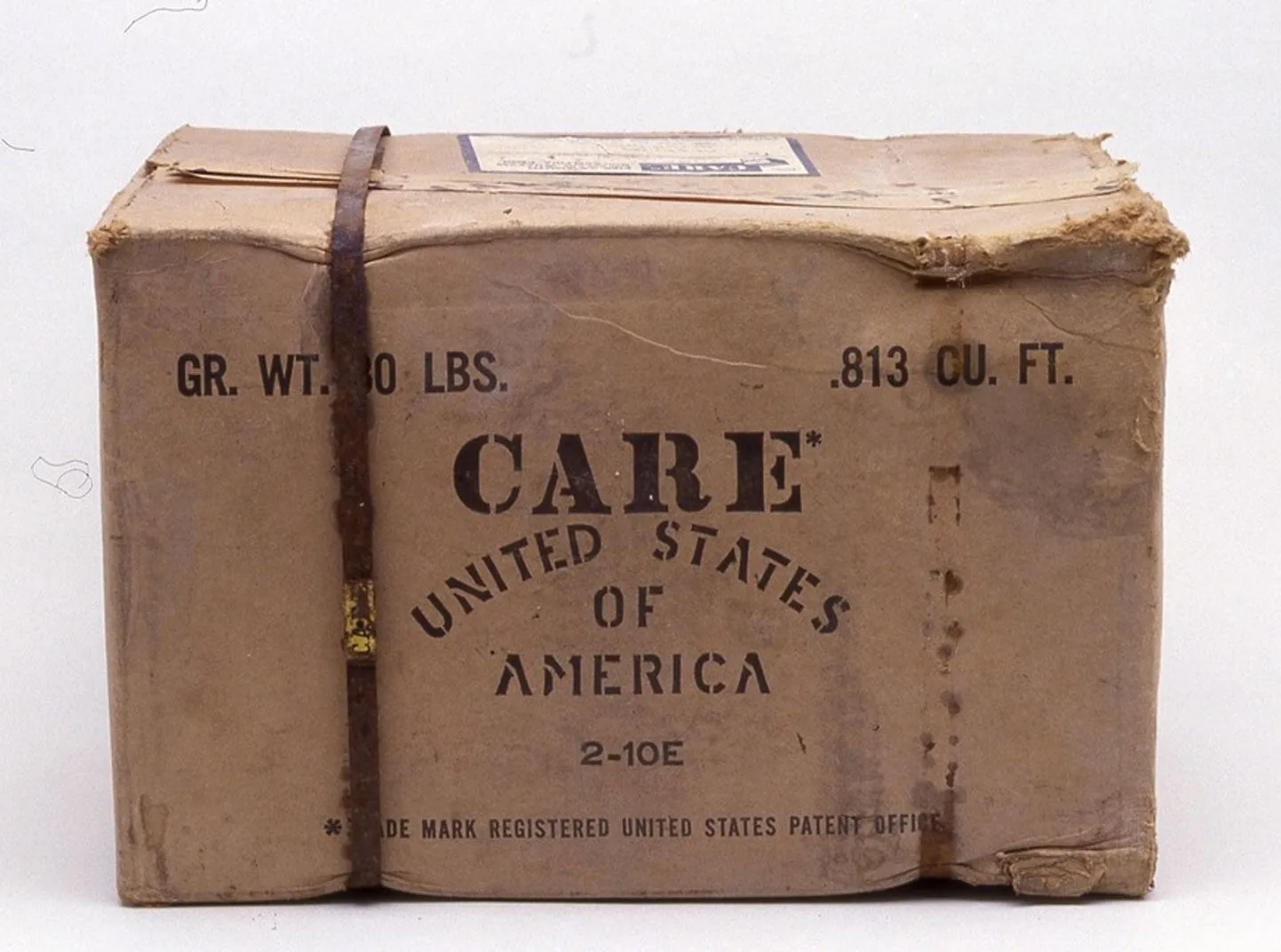
CARE's work in emergencies and times of crisis goes back to our founding in the aftermath of World War II to deliver food and supplies to war-torn Europe by means of the famous "CARE Packages®." In the decades since, we have responded to hundreds of humanitarian disasters worldwide – from earthquakes, to floods, to the consequences of armed conflict. Today, CARE reaches some 11.7 million people each year with immediate relief and long-term assistance coping with, preparing for and preventing disasters.

Find out more about our work in Haiti.

DELTA AIR LINES PARTNERSHIP

Delta Air Lines, a long time CARE partner, is providing transportation support for Atlanta-based CARE staff into Haiti to support our Haiti Country Office team on the ground with emergency relief. Click here to donate your Delta SkyMiles to CARE through Delta's SkyWish program.

Donate Now

Haiti: Six Months After the Quake

Click photo to view an enlarged version (2010 Rick Perera/CARE)
(2010 Rick Perera/CARE)

On Monday, July 12, CARE commemorated the six month anniversary Haiti's devastating earthquake by holding a TweetChat with media officer Brian Feagans and emergency media officer Rick Perera, who deployed to Haiti two days after the earthquake and remained there until May.

Thank you to everyone who participated! We received many good questions before and during the chat, and we'll be posting more of your questions and our replies this week. You can folllow us @CARE directly from Twitter. The tweet chat used the hashtag #haiti6mo.


CARE'S TWEET CHAT:
HAITI: SIX MONTHS AFTER THE QUAKE

    Donate Now

    Blogs from the Field


    EVELYN HOCKSTEIN'S VIDEO BLOG

    Listen to award-winning photographer Evelyn Hockstein describe her experiences in Haiti while on assignment with CARE following the earthquake:

    Rick Perera's audio blog

    Listen to Rick's recorded blog from Haiti.

    Get the audio feed >

    Paul Shanahan's audio blog

    Listen to Paul's recent blogs from Haiti.

    Get the audio feed >

    BLOGS FROM HAITI

    Please note that this blog roll is a feed from our site and every blog may not be related to Haiti. To read all of our blog entries on Haiti, please visit we.care.org.

    "We Are Exceptionally Strong, We Can Stand Up Again"

    A Profile of Mildrède Béliard, CARE Haiti's National Communications Officer

    Sharing the stories of Haitians struggling in the aftermath of January's earthquake is a crucial part of CARE's work to help heal and rebuild the nation. The w... read more >

    "Battling Congo's Rape Crisis: The Slow Pace of Progress"

    Are we doing enough to stop rape in Congo? Read this story at The Daily Beast to learn more about this tragic and important issue.

    bit.ly/9ACkYh
    ... read more >

    Humanitarian work as a family.

    I am inquiring about any positionsand places that my family and I could do together.  I have always had a passion for humanitarian work and I wan't to find a place that i can give of my time and make a differance, and at the same time... read more >

    In the heart of the operation

    By Sabine Wilke

    March 2010

    Standing in the middle of the dusty parking lot surrounded by huge trucks, you find yourself right in hustle and bustle of the logistics center supporting CARE's emergency response. Planes are roaring ov... read more >

    Devastation and courage in Léogâne

    High in the hills above Léogâne, near the epicenter of the earthquake that struck Haiti on January 12, the signs of both devastation and courage are everywhere.

    ... read more >

    Airwaves of hope

    by Rick Perera, CARE Media Officer in Haiti

    Friday, February 26, 2010

    The studio at Radio Francisque FM is a tiny affair, but buzzes with activity. DJ Bernard Felusma works the audio board, headset glued to his ears as he spins hi... read more >

    Womens Radio Network fundraiser for Haiti

    Womens Radio Network, www.womensradionetwork.com, has launched a fundraiser for CARE for Haiti.

    It involves an online art auction and ongoing sales of women's art through... read more >

    Rice is not enough

    by Rick Perera, CARE Media Officer in Haiti

    Monday, March 17, 2010

    I love watching the humming machine of the Haiti relief effort in action. CARE has more than doubled our local staff since the January 12 earthquake, and the well-o... read more >

    A midwife's tale

    by Sabine Wilke, CARE Media Officer in Haiti

    Monday, March 8, 2010

    Her first life was that of a teacher at a nurse's training school in Port-au-Prince, teaching skills to make sure that women have a healthy delivery. Today, Carline ... read more >

    Donate Now

    Press and Media Coverage

    Helium

    MEDIA CONTACTS
    For more information or to arrange interviews with staff in Haiti:

    CARE REPORT

    CARE HAITI NEWSLETTERS

    CARE PRESS RELEASES

    CARE IN THE NEWS

    CARE ACTION NETWORK UPDATE

    We asked our supporters to send a message to their elected officials asking them to encourage the IMF and others to forgive Haiti's debt. Thousands of you did, and your efforts will make a difference in the lives of so many:

    Donate Now

    CARE in the News

    Recent and six month anniversary coverage:

    Previous coverage:

    Donate Now

    Videos

    SOPHIE PEREZ: CARE IN HAITI COUNTRY DIRECTOR

    Sophie discusses the earthquake and the dedication of the CARE staff in Haiti to working on relief projects, despite deep personal losses.


    SALLY AUSTIN: HEAD OF EMERGENCY OPERATIONS IN HAITI

    Sally discusses the transitional needs of the Haitian people six months after the earthquake.


    JIM KENNEDY: SHELTER COORDINATOR IN HAITI

    Jim talks about CARE's initial efforts to assist Haitians with emergency shelter and our efforts to help Haitians with transitional housing today.


         Join the CARE community now     Follow us on:   Connect & share on our blog >>>

    To donate today, please call us. Within the United States: 1-800-521-CARE or 1-800-521-2273 (24 hours)

    Outside the United States: +1-404-681-2552 (M-F, 8:30 a.m.-6:00 p.m. ET)

    CARE is a nonprofit 501(c)(3) organization (EIN/tax ID number: 13-168-5039).


    Join The CARE Community