Given the Chance, Widows of Kabul Work to Build a Brighter Future
by Karen Robbins, Program Services and Information
Hanifa’s lined face and worn hands belie her age. Only 35, the petite and soft-spoken mother was widowed three years ago when her husband died in an accident at work. Several months pregnant with her seventh child, she was forced to move in with a relative and rely on food handouts to feed her large family.
A widow sews one of 8,000 school uniforms that CARE will distribute to poor families in Kabul. (CARE/Jason Sangster)
She wasn't alone. Under the Taliban, women in Afghanistan were banned from the workplace. The situation was most desperate for widows, who were solely responsible for providing for their children, yet could not work or receive government assistance.
Kabul alone is home to between 30,000 and 50,000 widows and their families. During the last five years, most of them, like Hanifa, had to rely on outside help to survive. Their daughters, unable to attend school, were often sent into the street to beg for food and "baksheesh"-- alms for the poor.
With the fall of the Taliban, however, Hanifa and a growing number of other poor widows in Kabul are taking the first steps toward making lasting improvements in their lives. Hanifa is one of hundreds of participants in a CARE project that helps provide widows and their children with new sources of income through sewing, farming and other trades. Income means the opportunity for these widows to rebuild their lives -- to nurture valuable new skills, to feed, house and educate their children. To overcome poverty.
The benefits of their work extend far beyond their own families. For example, the project supports six sewing centers -- located mostly in women’s homes or in community buildings -- where 160 widows produce uniforms for girls attending CARE-supported schools. Without this gift, hundreds of parents would find it exceedingly difficult, if not impossible, to send their daughters to school.
In one of the sewing centers, about 20 women sit side-by-side on the floor, their sewing machines in front of them, while sunlight pours through a large window on the back wall.
Some of the widows learned to sew several years ago through a CARE-sponsored training course. Others were taught by mothers or friends. Although the uniform production lasts only one month, the experience will help many of them expand their own small tailoring businesses.
![]() Hafia, the sewing-center supervisor, trains Hanifa and the other widows in the project. (CARE/Jason Sangster) |
"I will continue to support my family by sewing, even after we finish making the uniforms," vows one widow. "This is my job. Once the clothing factories are rebuilt, we will find work there."
Beside her, Hanifa quickly spins the wheel on one sewing machine with her right hand while deftly steadying the material with her left. Her movements are rapid, but her stitches are precise and even. It will take her about two hours to finish sewing the standard school uniform of black pants, black shirt and a white headscarf, for which she'll earn about $1 -- a princely sum compared to her meager income under Taliban rule.
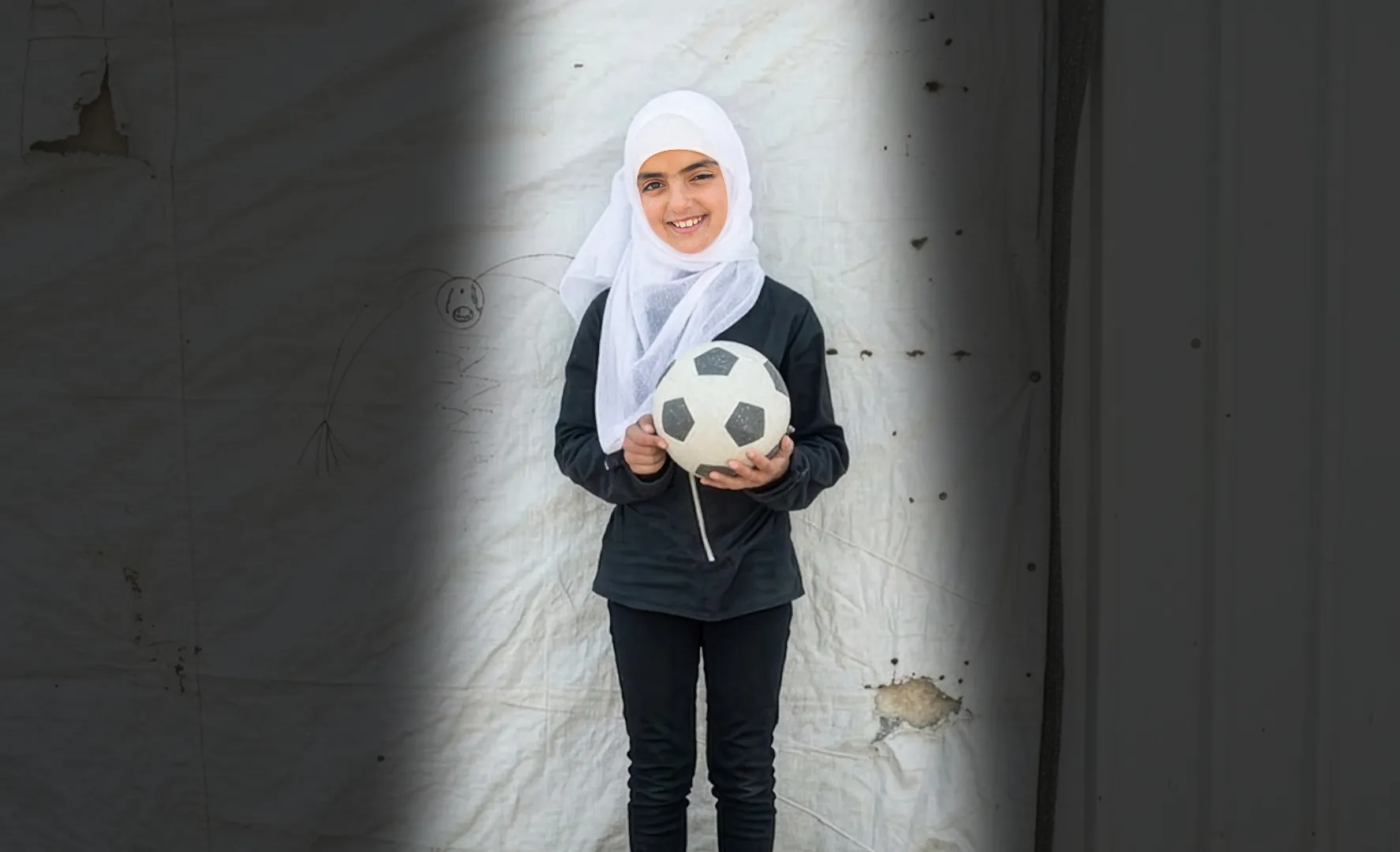
Each day, the pile of completed uniforms in the corner grows a little taller. Each uniform represents another girl who will be able to attend school, who will have a chance to forge a brighter future for herself and her family. When school begins in the spring, some 8,000 girls will arrive in new uniforms, eager to learn.
And with the money she's earned sewing uniforms for strangers, Hanifa will be able to send one of her own daughters -- her oldest, age 12 -- to school for the first time. While tuition and supplies are expensive, Hanifa knows that the price of not getting an education is greater still.
"I myself am illiterate because my mother didn’t want to send me to school," she says. "I never want my children to suffer like I have. If they go to school and learn to read, they will have a good life. I hope that all my children, especially my girls, will eventually graduate from college."
|
|