|
Power and Progress at CARE's National Conference 2007
WASHINGTON, D.C. (June 26, 2007) - More than 350 volunteer advocates came together on Capitol Hill on June 13 and 14 for CARE's National Conference, raising their voices on behalf of the poor in meetings with their elected representatives.
"We believe the U.S. has a responsibility to fight global poverty," said Jeri Rice, who led a delegation from Washington state in their meetings with members of Congress. "There is a clear and present link between global health, education, poverty and security, for the United States and globally, for us all."
Participants came from far and wide — representing 37 states and 125 Congressional districts — to bring their concerns about poverty in person to members of Congress and their staffs.
"I can't believe how many Americans are interested in helping poor people around the world," said Sarah Alier, a volunteer from New Hampshire. "Here at the CARE conference, hundreds of people have taken time off work, left their families and traveled to Washington at their own expense to speak out about important issues."
Moving Forward
Opening the conference, CARE President Helene D. Gayle made it clear that participants were making an important contribution in the global fight against poverty.
"Together with your ideas, knowledge and creativity, we can end extreme poverty," said Dr. Gayle. "That's why we're here. We know it can be done. We are creating a movement that is growing exponentially and we are going to win!"
Dr. Gayle stressed that together, participants had real power to make a difference in the lives of poor communities, echoing the conference theme, "The Voice of One, the Power of Many."
Kendra Chubbuck, a returning conference participant from Maine, agreed. "What a wake-up call I received at last year's conference," she related. "On my way home, I ran into Senator Snowe [R-Maine] in the airport and, feeling empowered still from the conference, I went right up to her and told her I met with three of her staff members about CARE. I told her about the issues we discussed and she said she would have a meeting with her staff to discuss the CARE issues. My voice really made a difference."
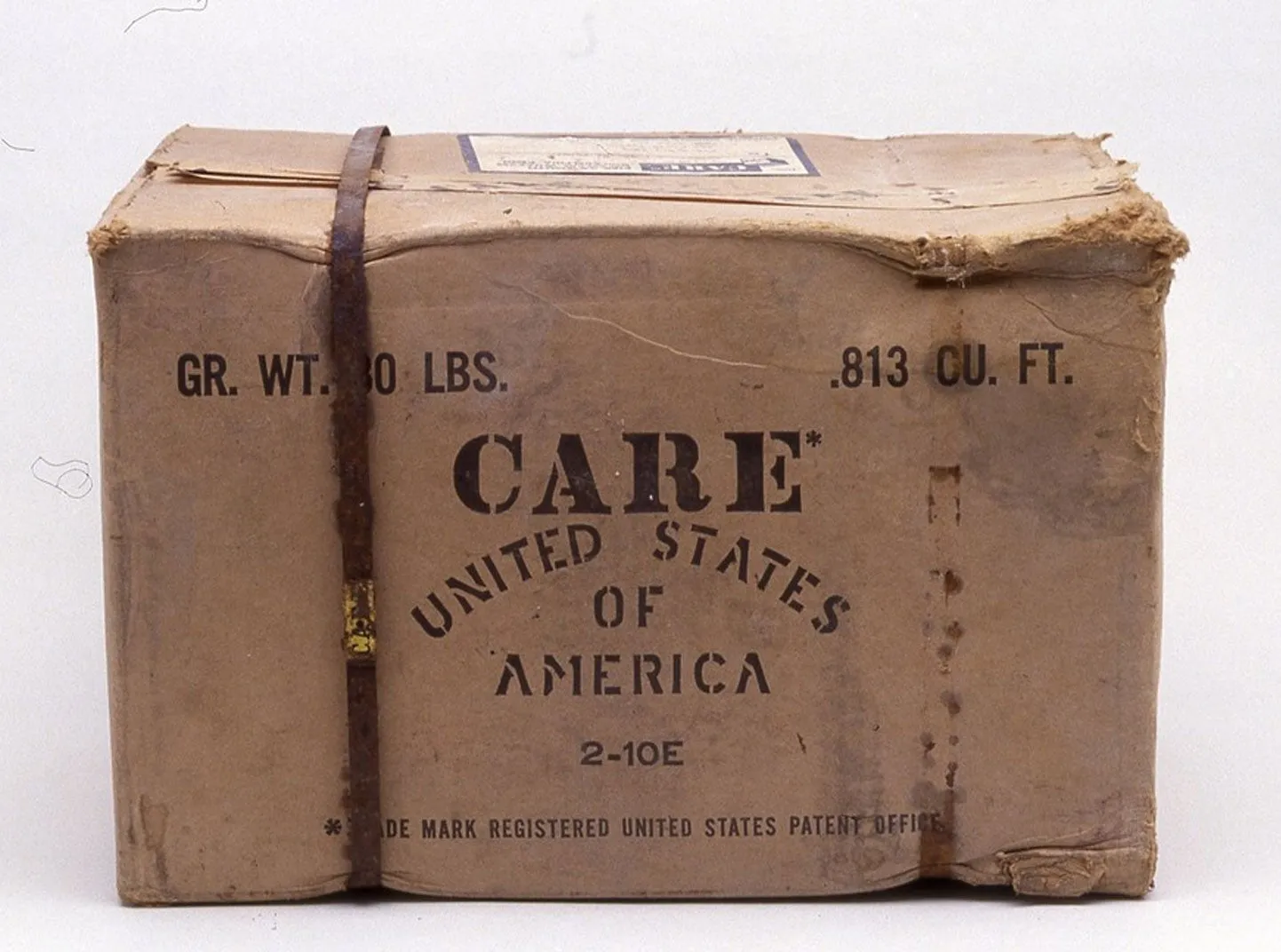
Participants were eager to make their voices heard on Capitol Hill the next day and spent the first afternoon preparing for their meetings by attending workshops on global poverty issues, including "The ABC's of Basic and Girls' Education," "Hunger: It's Not Just About CARE Packages Anymore," "Gender Based Violence: A Weapon of Mass Destruction," and "Strengthening Global Health: Are U.S. Efforts Well Targeted?"
In the evening, advocates formed delegations by state and district to go over the three key measures they would ask their members of Congress to support:
-
Robust funding for poverty-focused development programs, including basic education, family planning, maternal and child health, clean water and emergency relief.
-
Legislation to eliminate the arbitrary abstinence provision in U.S. funding for HIV and AIDS.
-
Education for girls through the Education for All Act of 2007.
Support for these measures is critical to reducing poverty and overcoming the immense obstacles facing communities in the developing world.
The evening's first keynote speaker, Sen. Chuck Hagel, R-Neb., painted a stark picture of those challenges and noted that legislators must also do their part in meeting them:
"Forty percent of global citizens are under 19 years old. One billion live in abject poverty, another billion live without water and sanitation... Until we focus all our efforts to bring people out of poverty and address these human issues we will be going backward.
"Organizations like CARE shape the world in truly human ways. You do a great deal and will have to do more but we as policymakers have a responsibility to help. I know there are times when you wonder whether your contributions make a difference. They do, and you need to continue, and we in office will continue. One fundamental guiding point that should guide us all... is to make a better world. It's that simple, to make a better world."
I Am Powerful
CARE places a special focus on working alongside poor women, recognizing that women have tremendous potential to lift their families and communities out of poverty. This theme resounded forcefully throughout the conference.
"I believe strongly in what CARE does in the empowerment of women," said Rep. Nita Lowey, D-N.Y., in the second keynote address of the evening. "It's easy to see how a country's social and economic well-being is reflected by women's participation in their societies. The message is very simple: Women can compete in the global economy if they are given the tools to do so... We are one step closer to a safer and better world of equal opportunity for all."
| Stanojka Tesic was the recipient of this year's 'I Am Powerful' Award. (©2007 Erin Lubin/CARE) |
| CARE's "I Am Powerful" award, presented by actress and CARE Ambassador Sarah Michelle Gellar, put the spotlight on a compelling example of women's empowerment in action. Ms. Gellar presented the award to Stanojka Tesic, saying, "You exemplify CARE's work around the world."
Stanojka Tesic is the Bosnian co-founder of a non-profit, non-governmental organization called Forum Zena ("Forum of Women"). The organization was established in 1998, three years after the war in Bosnia formally ended, in response to the still-harsh conditions in the country. In accepting the award, Ms. Tesic spoke about the changes in her community thanks to CARE's support.
"During and after the war women in our communities were not empowered. It was important to give them their voice and this was not possible without the support from CARE. Our focus was to help women and give them strength. Seventy percent of women were widowed in the war and of these, 30 percent are single mothers now... We've empowered these women to take part in the decisions that influence their lives. They are raising their voices in Congress to develop civil society and the environment."
Ms. Tesic closed the evening with a smile: "I'm very happy to be here and I received so many smiles it's almost impossible to bring them all back to my country. Thank you!"
Delivering the Message to the Hill
The next day the conference hall buzzed with the excitement of participants eager to voice their concerns face to face with their elected representatives and their staffs on Capitol Hill.
At the breakfast plenary, entitled "Citizen Advocacy," speaker Bill Novelli, president of AARP and former executive vice president for CARE, focused on that excitement, making it clear to participants that they had a crucial social responsibility to translate it into action. "Good citizenship means more than voting on Election Day," Novelli said. "Advocacy work is a critical part of social change."
| CARE supporters traverse Capitol Hill during the second day of the National Conference. (©2007 Erin Lubin/CARE) |
| Advocates took this message to heart as they canvassed Capitol Hill. The rest of the morning saw teams of advocates grouped by state and district visiting the offices of their elected representatives to discuss the key issues of the previous day with lawmakers and their staffs.
The different delegations regrouped for a special luncheon, with CARE Ambassador Sheila C. Johnson presiding over the gathering. Only days before, Ms. Johnson showed her support for CARE's work in a remarkable way, providing the organization with $5 million in funding through the Sheila Johnson Challenge grant. She told delegates that her goal in making the grant to CARE was to "activate 3 million women over the next two years."
"You must take all the connections you have and bring them together for CARE," Ms. Johnson added. "If you compare what's going on in the U.S. with the developing world, there is no comparison. I want young people to develop a social conscience."
CARE Ambassador Sarah Michelle Gellar also linked education and communication to the ability to create change. "If we don't emphasize education we're setting ourselves up to fail," said Gellar. "And I don't want to be a part of that. I want to be a part of making a difference. Spreading the word is the only way to make change happen."
Taking It Home
After more Congressional visits in the afternoon, the delegations came back together for the closing reception. Discussing the day's experiences, many reported a strong sense of empowerment.
"For me it has been immensely satisfying to be able to vocalize something that's important in a venue that has potential to make an impact," said the Rev. Patrick Smith. Smith, who participated in the conference for the first time as part of the Tennessee delegation, added: "I can really say to someone, 'Come alongside us and make a difference.' The argument that 'there's nothing I can do' is — in all generosity — wrong. Because you can."
Fran Thorsen, a participant from Arizona, remarked: "We're sitting here as beneficiaries of another type of empowerment that CARE has made possible - bringing us here, giving us information and putting us in a position to sit down with the people who can make a very big difference. It touched my core and I can't wait to come back."
"Until I got here to this conference, I never imagined there could be a day when no one is poor, where everyone goes to school," said Sanaz Arjomand, who just graduated from Northview High School in Duluth, Georgia. "Now I believe it can happen."
| Rep. John Lewis thanked constituents for "making noise" on behalf of the poor and marginalized. (©2007 Erin Lubin/CARE) |
| Rep. John Lewis, Democrat from Georgia and a leader of the civil rights movement, whole-heartedly agreed.
"For too long, we've been too quiet," said Lewis. "It's time to make a little noise for the segments of society that have been left behind. We have a mission, a mandate and a moral obligation to speak up, to speak out and defend the rights and the dignity of all humankind."
"It's incredibly gratifying to know that you're going to go out and carry forth this mission," CARE President Helene Gayle told participants at the close of the conference. "And every year it's clear that people leave here recommitted to making a difference. Thank you for all you've done and for the commitment you have made."
The conference participants may have come to Washington as individual activists, but they left as part of a movement - a movement dedicated to ending global poverty.
"The conference has made a tremendous impact on me," said the Rev. Patrick Smith. "I am impressed with the clear and evident passion, the understanding of the issues. It's exciting and compelling — and fun, to be quite honest — to be part of something that is so intensely engaged in things that matter. It's not all talk. It's action."
|