Syrian Refugee Crisis

Syrian Refugee Crisis

More than 70% of Syria's population — 16.5 million people — need urgent assistance. About 60% of Syrians face food insecurity.

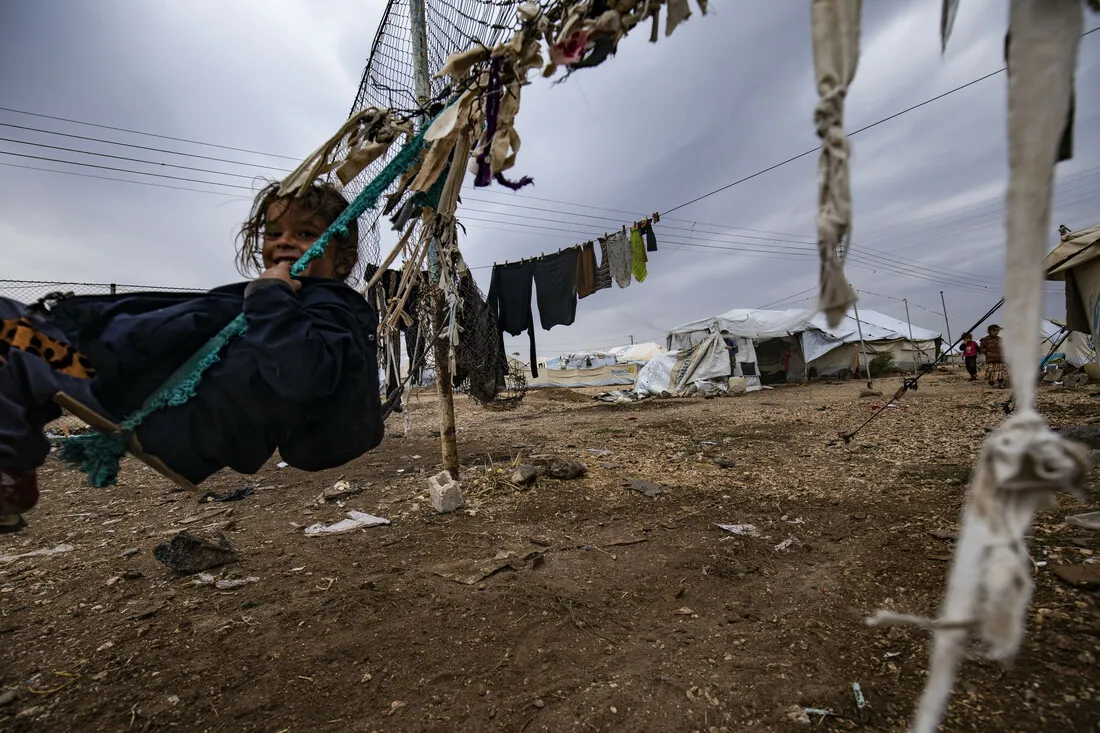
A girl plays on a swing in front of a clothesline and white tents.
Current emergencies

Syria remains one of the world's largest and longest-running humanitarian emergencies. The needs are enormous, and CARE is supporting with food, shelter, health services, livelihoods, clean water, sanitation and hygiene, and support for violence against women.

How you can help

Over 13 million people – more than half the country’s population – remain displaced. Over half of this 13 million are children. Your gift reaches families surviving displacement and starvation in Syria with lifesaving aid.

Donate now

About the humanitarian crisis in Syria

Since the conflict began in 2011, hundreds of thousands have died, and millions have been displaced. Today, more than 13 million  — over half the country’s population — are displaced, either inside or outside Syria. More than half of them are children. Thousands remain missing.

Ongoing conflict, economic decline, funding shortfalls, earthquakes in 2023, destruction of civilian infrastructure, and new waves of displacement have worsened an already fragile humanitarian situation. Since late November 2024, at least 652,000 people have been newly displaced, increasing pressure on a humanitarian sector struggling to meet increasing needs.

Funding shortages have severely undermined response efforts. By the end of September 2025, only about one-third of the 2024 Humanitarian Response Plan was met, and less than 18% of the 2025 plan was funded.

Displacement in Syria is highly fluid. An estimated 7.4 million people are internally displaced (IDPs), living both within communities and in IDP sites. Of these, 5.4 million live outside IDP sites, while 1.97 million live in 1,671 IDP sites, mostly in Northwest Syria.

In Northeast Syria, about 100,000 people have been displaced since November 2024. Nearly 24,000 live in overcrowded collective centers, mostly schools, stadiums, and other public buildings. Families face limited space, little privacy, and poor access to basic services. Using 133 schools as emergency shelters has left more than 68,700 children out of school. Education partners warn that without urgent support, many could lose an entire academic year.

The lack of a political solution adds uncertainty to Northeast Syria’s future. Violence in the coastal areas in March, followed by deadly events in As-Swaida in July, displaced thousands more families and worsened sectarian divides.
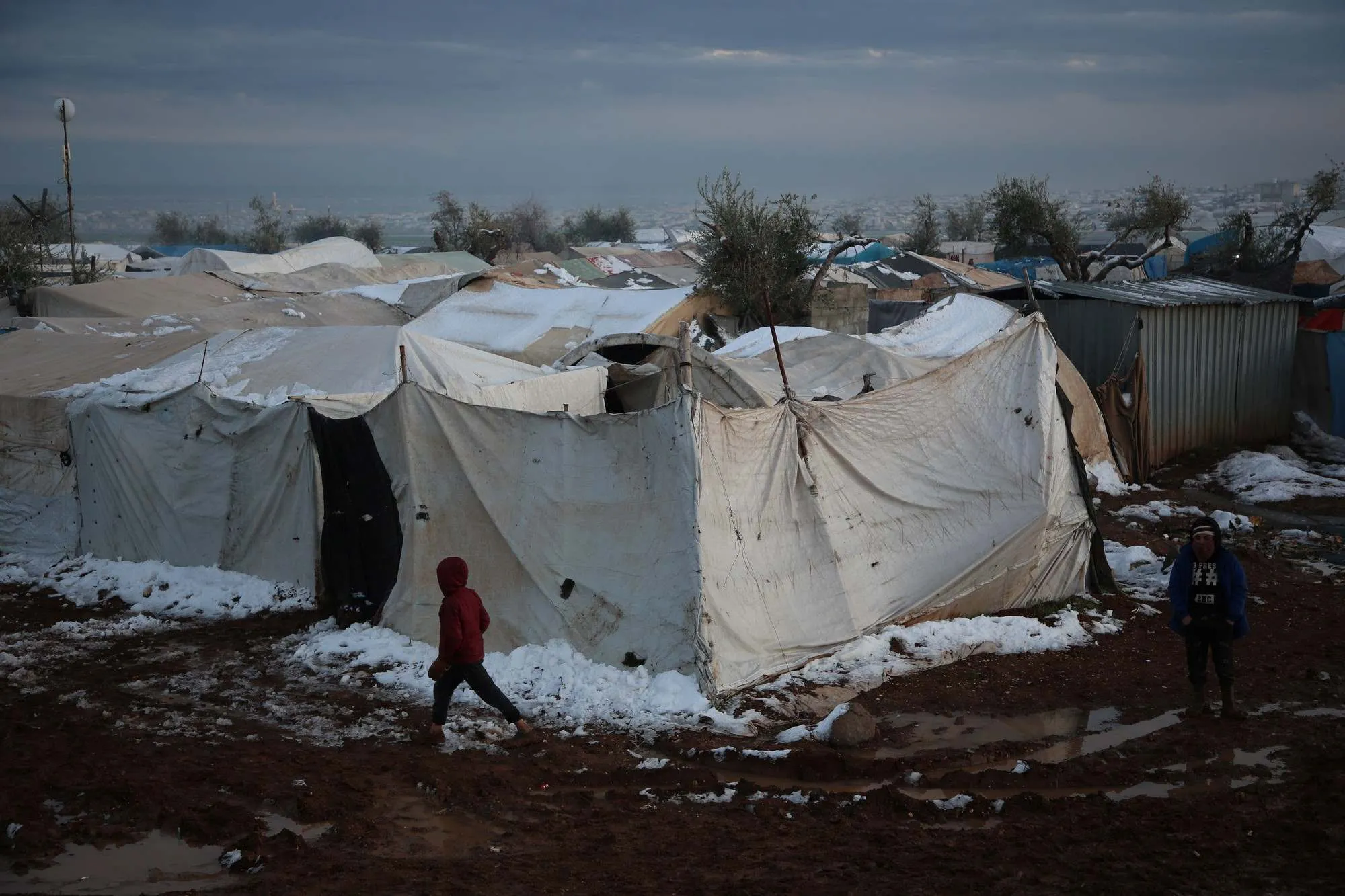
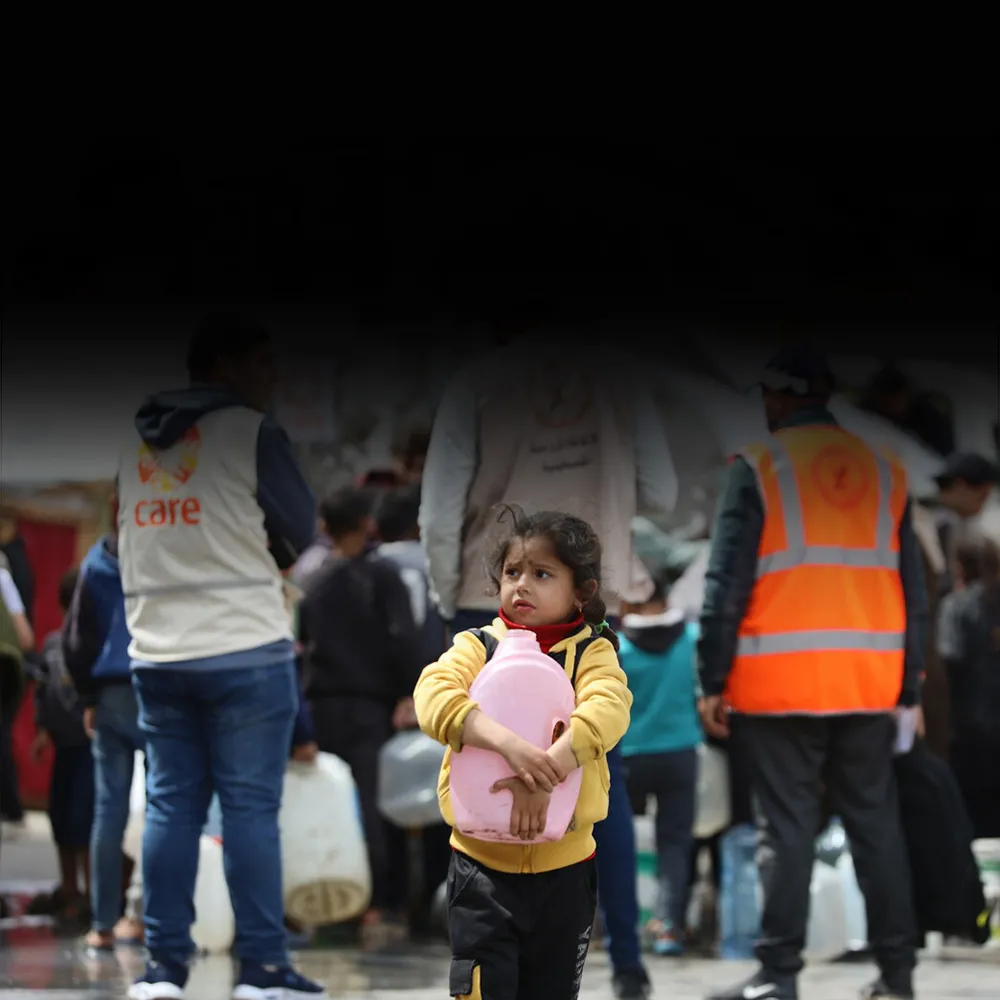
Photo credit: Shafak/CARE

How many Syrians are refugees?

Nearly 5 million Syrians are registered as refugees in neighboring countries, including Lebanon, Türkiye, and Jordan. More than 80% live outside refugee camps, mostly in poor urban neighborhoods where rent is affordable. Having left everything behind, refugees struggle to meet basic needs. After the regime change in Syria, over 1.5 million internally displaced people returned home, along with about 700,000 refugees from abroad. Returns are mainly in Northwest Syria and Central-South regions, and less common in Northeast Syria.

Some Syrians choose to return, but many will find their homes destroyed and need help to recover and rebuild. Conditions in Syria still do not support large-scale returns. Protection risks remain, including leftover war remnants, weak law enforcement, and armed groups. Many homes, public buildings, and infrastructure are destroyed. Access to essential services and humanitarian aid is limited or unavailable in many areas.

How to help Syrian refugees: What CARE is doing

CARE supports displaced and host communities across Syria with a broad, coordinated approach. Our work meets urgent humanitarian needs while promoting long-term recovery, resilience, and women’s economic empowerment. We also consider environmental factors.

Since late 2024, CARE has been responding to newly displaced populations arriving in emergency collective centers in Raqqa, Qamishli, and Al-Hassakeh, while continuing to support communities in Idlib, northern Aleppo, and other areas accessible through cross-border programs from Türkiye. We also reach at-risk families in south-central Syria with cash, shelter, and livelihoods support.

Our activities include:

  • Emergency relief and protection services for displaced families, including cash and in-kind support with food baskets, baby kits, dignity kits, mattresses, blankets, and children’s clothing.
  • Shelter and infrastructure rehabilitation, including winterization support to help families cope with harsh conditions.
  • WASH services including water trucking, rehabilitation of water networks, sanitation facilities, and hygiene promotion.
  • Health services focused on maternal and reproductive health, specialized care, and psychosocial support.
  • Livelihood recovery and vocational training, emphasizing women’s economic empowerment, cash-for-work, agricultural aid, and small business grants.
  • Safe spaces and protection for women and girls, with awareness programs on violence, health, life skills, mental health, and recreational activities.
  • Cash provisions for heating fuel and essential winter items like blankets and children’s clothes.

In this ongoing crisis of economic decline, drought, and renewed violence, these programs are critical for helping families rebuild and strengthening community resilience.

CARE works in partnership with Syrian NGOs leading the humanitarian response. By combining direct action with local expertise, CARE supports communities in navigating the crisis, recovering from displacement, and building a more stable future.