“If we had stayed, we would have been murdered.”
“I was sitting in a math class. I love math, as it is about solving complex problems,” Neema remembers. Her class of fifty fell silent when gunfire echoed outside. “Men were shouting orders in the distance. Our teacher ran and left us behind. The director wanted us to hide inside. But we saw our neighbors running, so we felt we needed to run as well. If we had stayed, we would have been murdered.”
That night, she and her classmates slept by the roadside with only the clothes on their backs. For three weeks, they walked until they reached Uganda, still searching for safety. But even there, Neema found no peace.
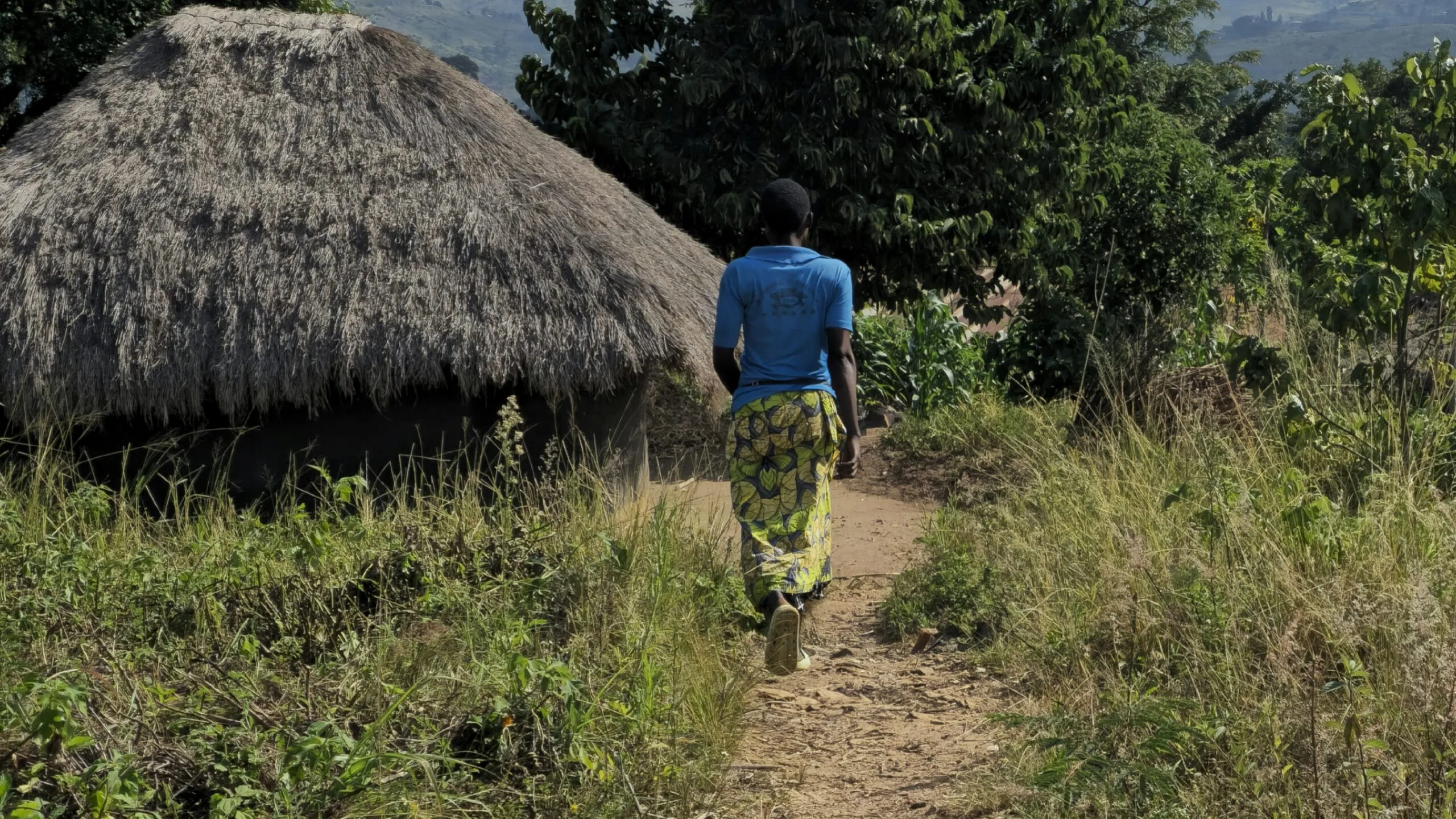
Longing for her parents and seven siblings, she eventually returned to DRC. She was able to find shelter with an uncle, but Neema is still unsure of what happened to her family. For the first time in months, she had a place to rest — but she still wasn’t truly safe. In this area, roads and walking paths can be dangerous for women and girls. Just walking out of their homes to farm in the fields, go to school, or shop at the market can put them at risk.
One afternoon, walking home from school later than usual, Neema was ambushed.