CARE to Congress: It's time to level the playing field for women and girls

By Beatrice M. Spadacini April 8, 2026

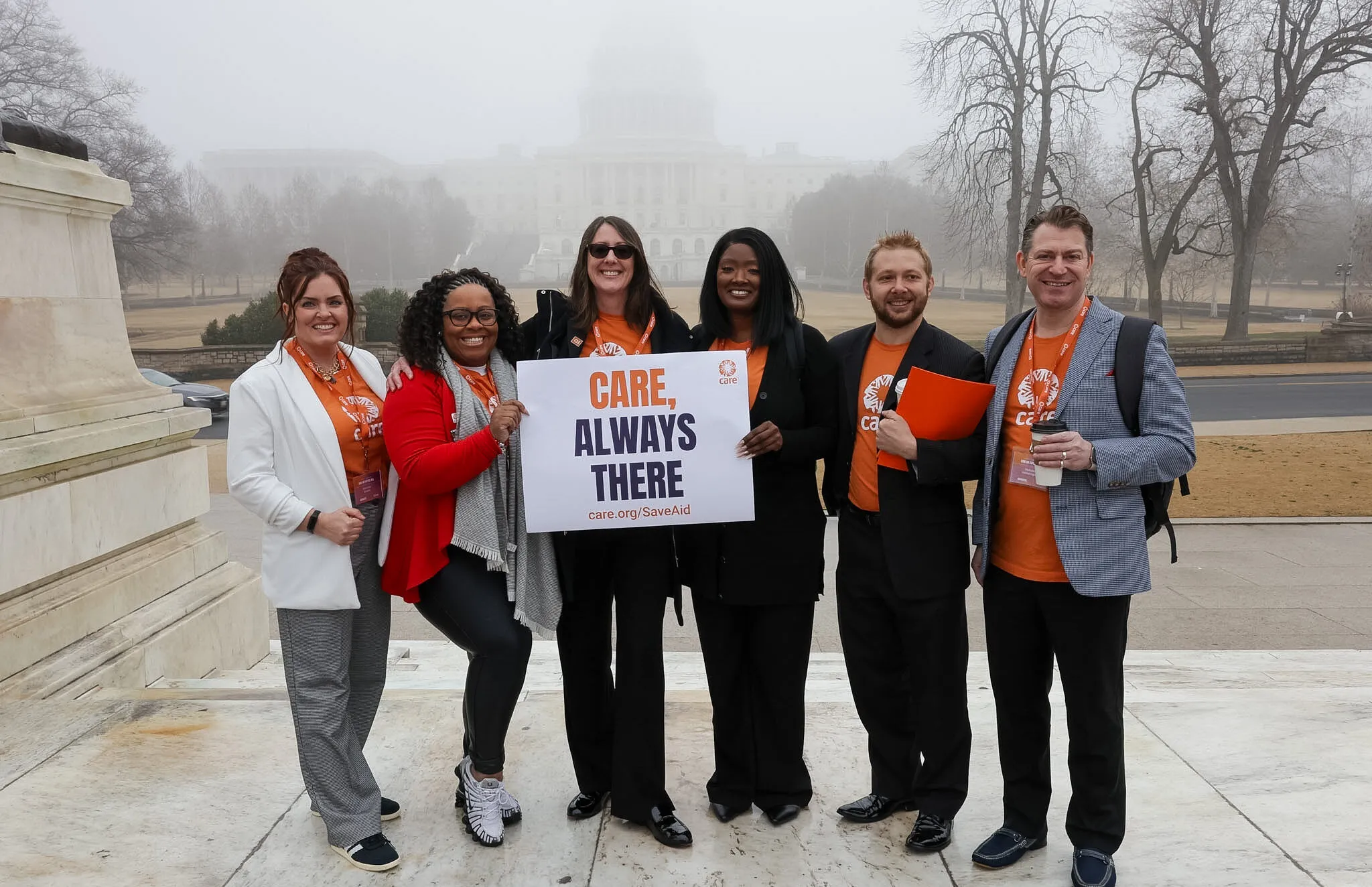
Group of CARE advocates on Capitol Hill.

CARE on Capitol Hill brings volunteers from around the country to Washington DC for a marathon of congressional meetings. Photo: Shannon Olsen/CARE

In early March, nearly 100 volunteer advocates from across the United States joined CARE on Capitol Hill to urge Congress to level the playing field for women and girls. Their message was clear: support for women and girls strengthens communities, drives economic growth, and builds a more stable and prosperous world for all.

Be part of what CARE makes possible.

Get stories, updates, and actions you can take to support women and families worldwide.

Subscribe
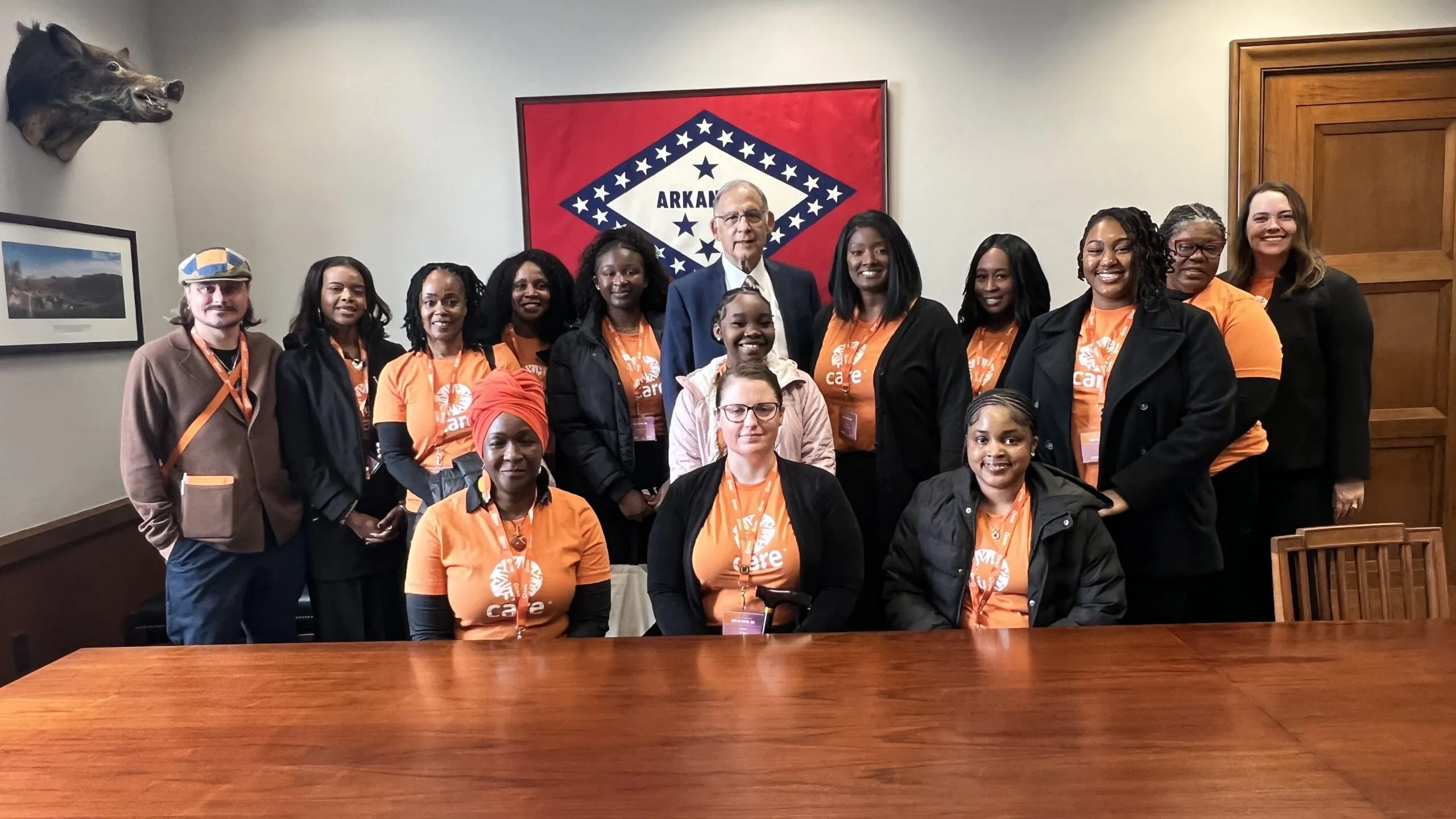
CARE advocates gathered around a table with Senator John Boozman of Arkansas.
Senator John Boozman with CARE Arkansas advocates, including Chef Matt Cooper, on Capitol Hill. Photo: Shannon Olsen/CARE.

We are living in uncertain and polarizing times. The global challenges before us – from war and hunger to widespread displacement – are unprecedented in scale and complexity. Civil discourse is increasingly being replaced by antagonistic rhetoric, often amplified through social media. At the same time, historic funding cuts to global humanitarian aid have left more than 300 million people worldwide in need of emergency assistance. Many of those at risk are women and girls, who bear the heaviest burden in crisis.

There are many reasons to despair, but not everyone is standing still. Inspired by the resilience and courage of women and girls everywhere, close to 100 volunteer advocates from 26 U.S. states gathered in Washington, D.C. for CARE on Capitol Hill, a two-day advocacy event held March 4-5, just a few days ahead of International Women’s Day on March 8.

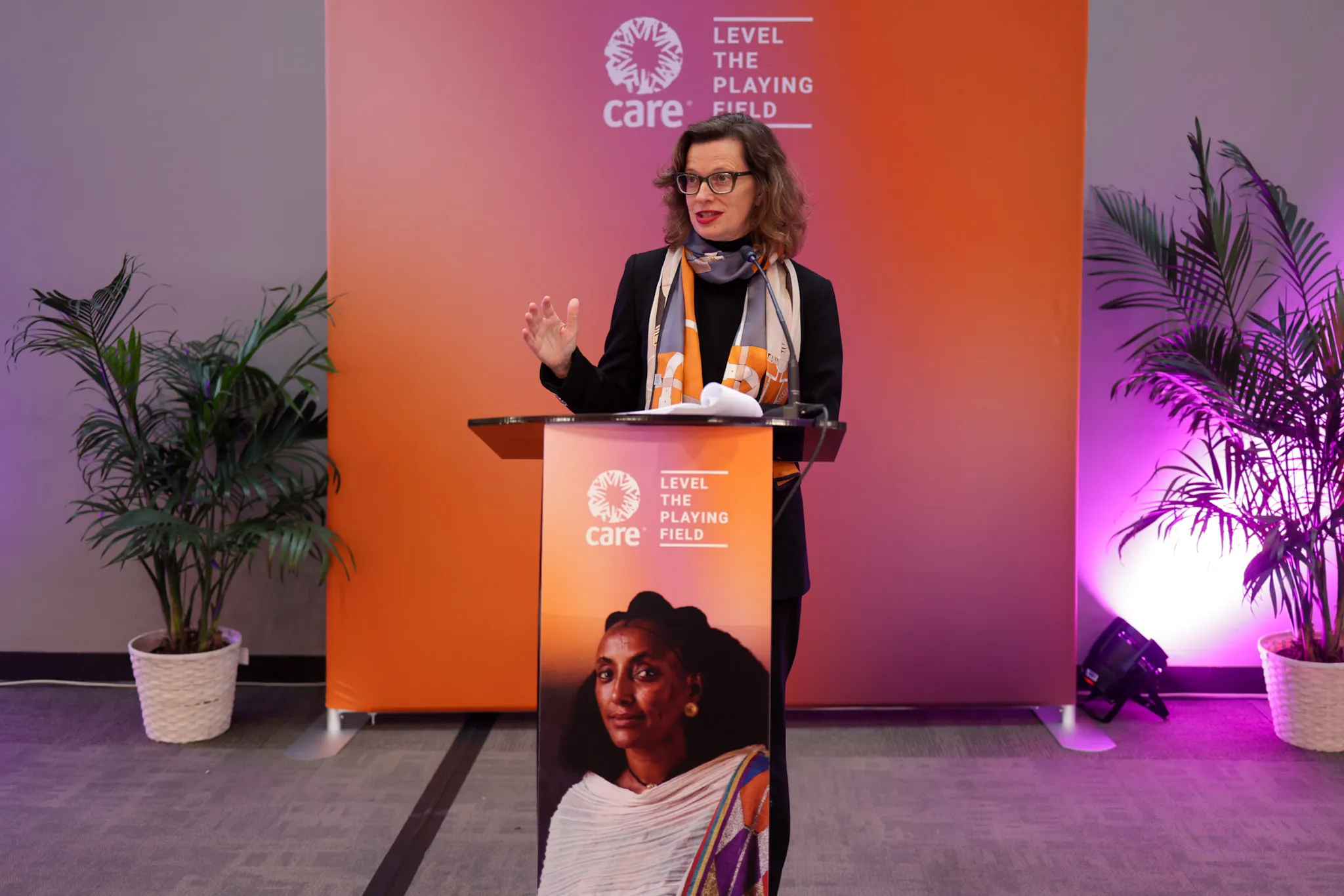
“International Women’s Day gives us a chance to embrace a simple truth: when women and girls rise, the world rises with them,” said CARE President and CEO Michelle Nunn during an evening reception at the Senate office building. “When they have the freedom to learn, to lead, to earn, and to shape their own futures, whole societies move forward.”

The volunteer advocates’ message to Congress was clear: It is time to level the playing field for women and girls everywhere. Across every sector — the sports field, the farm, the marketplace, the executive suite, the hospital floor, and beyond — women show up with strength and determination, often while being forced to navigate systemic barriers to their success. Investing in women and girls helps break down those barriers and unlock unfairly limited opportunity.

“With the right support at the right time, women lift their families, communities, and, yes, economies,” said Ritu Sharma, CARE’s Chief Global Policy Officer. “Targeted support doesn’t just transform lives abroad. It saves U.S. resources in the long run by reducing the need for costly emergency interventions. When we prevent crises, we strengthen global stability and deliver real value for American taxpayers.”

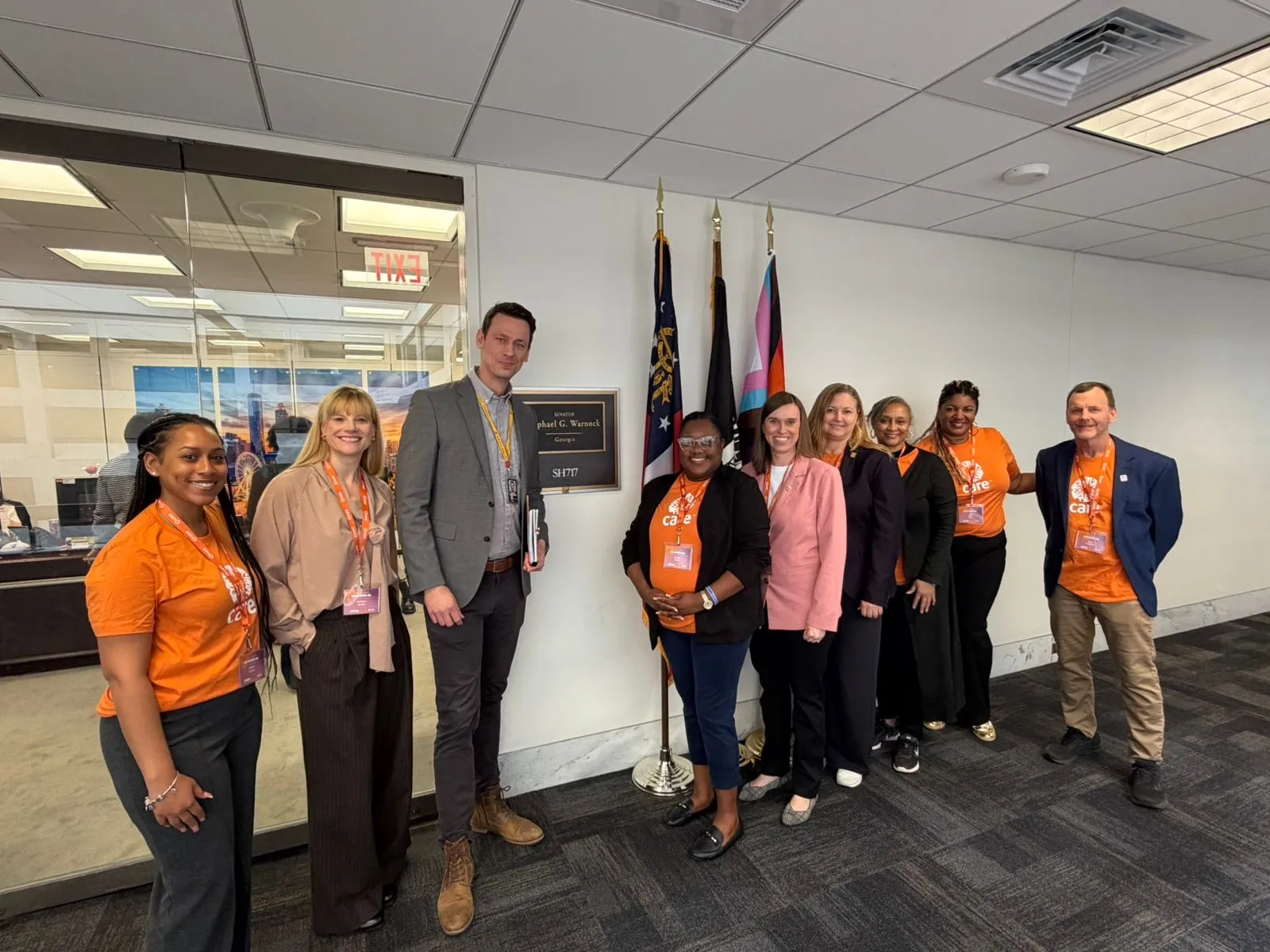
CARE advocates stand with staffers from Senator Raphael Warnock’s office in Atlanta during CARE on Capitol Hill.
Volunteer advocates from Georgia standing with two staffers from Senator Raphael Warnock’s Atlanta office. Photo: Beatrice M. Spadacini/CARE.

Building on the momentum

CARE on Capitol Hill took place just weeks after Congress passed a $50 billion for U.S. international assistance — a 16% reduction from the money appropriated for international aid in 2025, but nearly $20 billion more than was proposed by the administration. Following historic aid cuts, the bill offered a measure of cautious optimism for the future of American international assistance.

“In a complex and often polarized environment, we are seeing progress,” said Anne Meyers, CARE’s Associate Vice President for U.S. Advocacy. “Congress acted in a bipartisan fashion to pass a budget that funded international assistance at much higher levels than the administration requested. We can build on that.”

“When advocates engage their members of Congress with clarity, expertise, and real stories, it moves the needle,” Meyers added. “This is not a moment to step back. It’s a moment to ensure that U.S. international assistance continues to advance stability, opportunity, and dignity.”

While it remains unclear how all allocated funds will ultimately be spent, the bill signals that many lawmakers recognize the value of international assistance for America and the world. Some have seen firsthand the impact of CARE’s work and understand the importance of partnering with local organizations to drive long-term stability and growth.

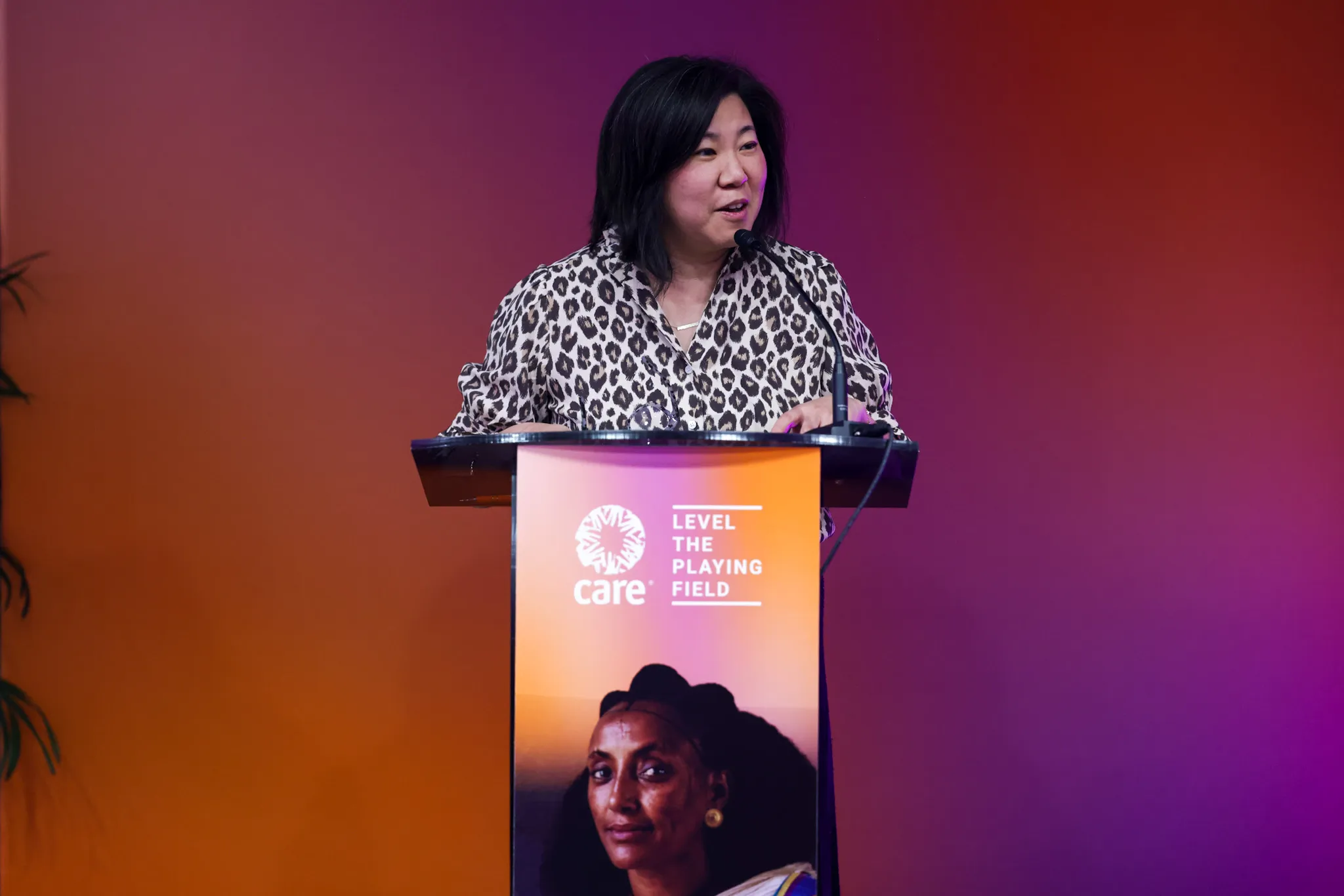
“When you have communities who understand the power of empowering women and girls, those communities are always doing better than the ones who leave women and girls behind,” said Senator Chris Van Hollen (D-MD), a longtime CARE supporter and a member of both the Senate Appropriations and Foreign Relations committees. Congresswomen Grace Meng (D-NY) and Madeleine Dean (D-PA) echoed the importance of sustained investment in women and girls.

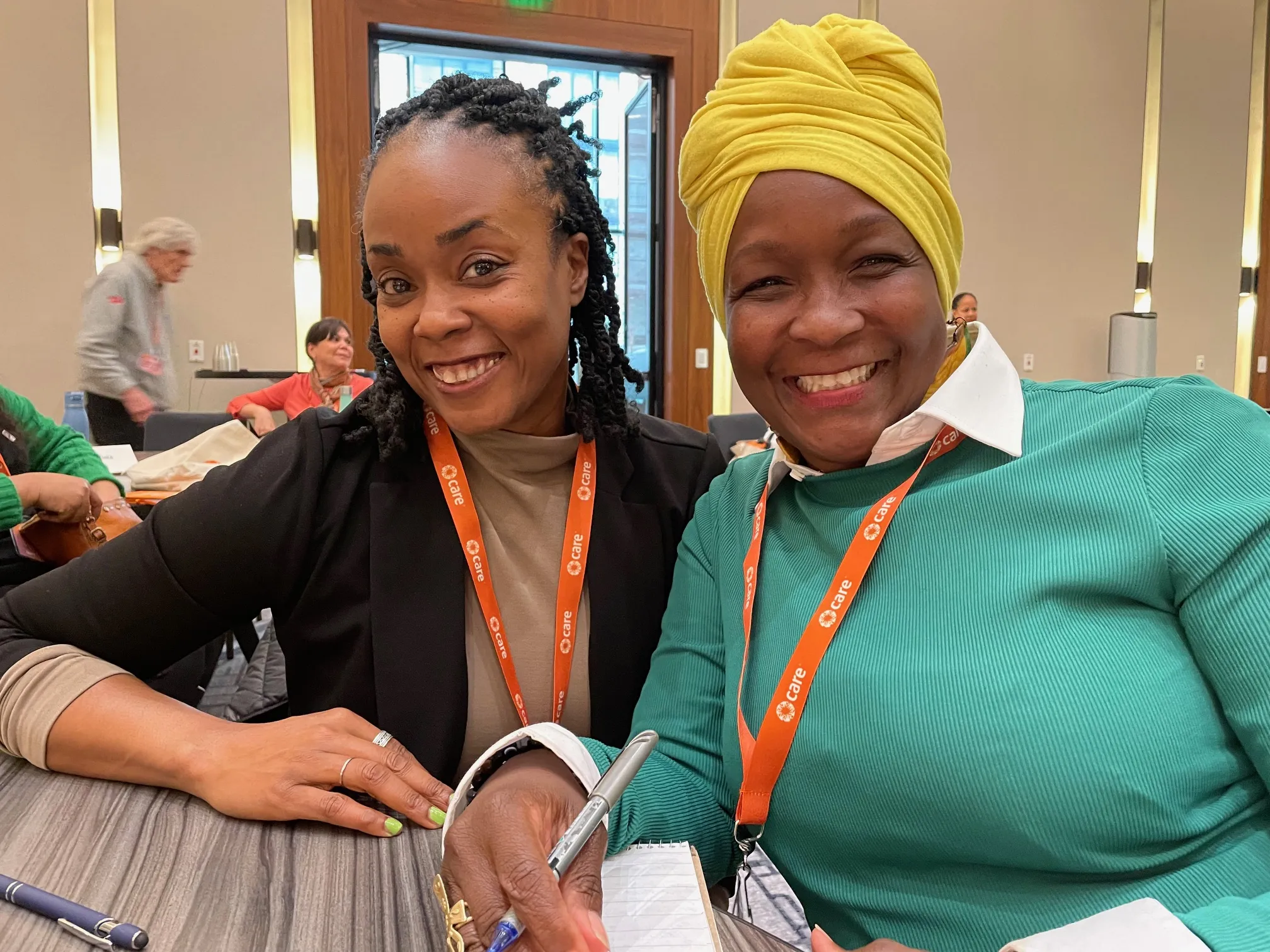
Two women advocates wear CARE lanyards in a meeting with their representative on Capitol Hill during a CARE event.
Coffy Davis (L) and Deena Patterson (R), two advocates from Little Rock, Arkansas, who attended the CARE on The Hill event in March 2026. Photo: Beatrice M. Spadacini/CARE.

Connecting the local to the global
Issues impacting women and girls in the U.S. often mirror global trends. Women worldwide continue to face persistent wage gaps, unequal access to opportunity, and a disproportionate share of unpaid care work and domestic responsibilities. While more girls are attending school than ever before, disparities widen after primary school, particularly in STEM fields and during times of economic hardships.

The connection between local and global challenges is clear to many of CARE’s volunteer advocates.

For Coffy Davis and Deena Patterson of Little Rock, Arkansas, violence against women and girls is a shared crisis connecting Arkansas to the wider world. “In 2022, our state ranked fourth in the nation for the number of per capita violent murders of Black women and girls,” says Davis. “We are here advocating for all Black girls. This is not an Arkansas problem or a national problem. It is an international problem.”

Mobilized through the Southern Black Girls and Women’s Consortium, a CARE partner, Davis and Patterson emphasized the importance of investing in community-led solutions. They were encouraged by CARE’s growing work in the United States, including programs focused on community resilience, disaster response, and maternal health.

Brian Friedman, a long-time CARE supporter from Tucker, Georgia, has visited CARE programs in various countries. His recent visit to a CARE program in Honduras motivated him to meet with U.S. policymakers. “We must think of foreign aid as an investment, not an expense,” he said. “People I met in Honduras told me that if they had a choice, they would not migrate. When people lack economic opportunities and social safety nets, they will move. Helping them stay seems to me like a smarter investment.”

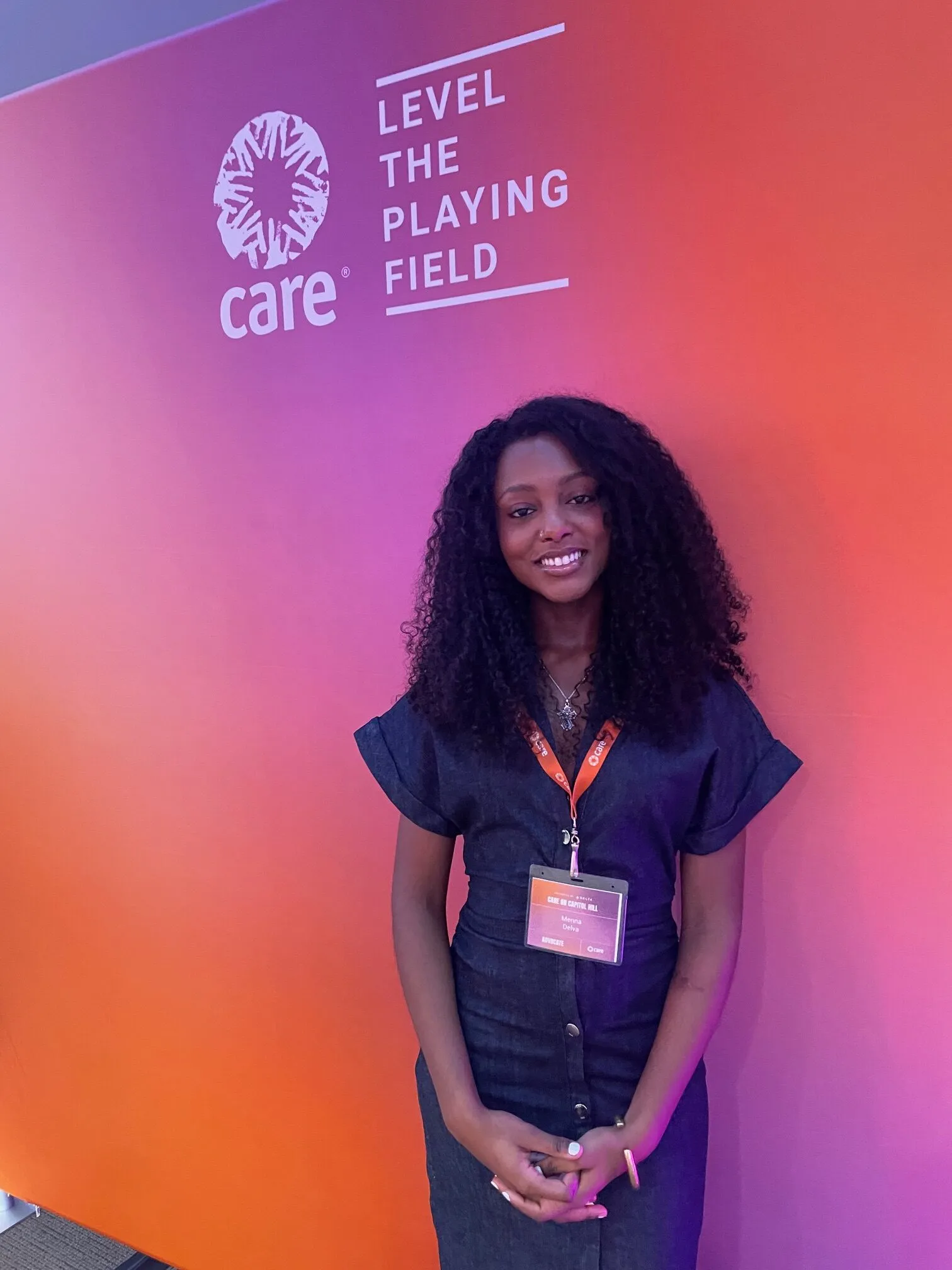
For 23-year-old University of Pennsylvania student Menna Delva, the CARE on Capitol Hill experience was deeply personal. “As a Black woman and a child of immigrants — my mom is from Ethiopia and my dad is from Haiti — I wanted the opportunity to speak to people in power to make them understand my story, my perspective, and why helping people matters. If you exist in this world as a privileged state, like the United States, you have an obligation to help people who are less fortunate than you. I think it is about basic humanity.”

University of Pennsylvania student advocate Meena Delva stands in front of a CARE banner during the CARE on Capitol Hill event.
University of Pennsylvania student advocate Meena Delva. Photo: Beatrice M. Spadacini/CARE.

Lifelines, not budget lines

On the second day of CARE on Capitol Hill, the advocates put their training into action. Wearing orange CARE T-shirts with their business attire, they split into state-based groups and fanned out through the halls of Congress.   In meetings with lawmakers, advocates shared their personal stories and  urged their representatives to protect and strengthen U.S. international assistance, particularly  programs that advance the rights, safety, and empowerment of women and girls. In total, volunteers participated in 139 meetings on Capitol Hill.

“Our strategy of bringing strong delegations from key states made a clear impact,” said Anne Danhoffer, CARE’s Director for Movement Building, Partnerships, and Advocacy. “One office remarked that this was ‘the most Arkansans he’s ever had in his office.’ In partnership with organizations like Delta Sigma Theta, we showed how effective advocacy can be when it reflects the voices of communities across the country”

Encouraged by the recent progress but mindful of growing global needs, CARE has called for $52.5 billion in international assistance for fiscal year 2027.  Sharma emphasized that CARE’s budget request is more focused and more urgent than ever. The first priority is expanding women’s economic opportunities. Ensuring that women can access education, build skills, grow businesses, and participate fully in their local economies is key, Sharma said. “Investing in women’s economic empowerment has one of the strongest returns in global aid.”

The second priority is supporting essential services for survivors of violence, including safe shelter, healthcare, legal support, and crisis counseling. “These are not budget lines. They are lifelines,” Sharma said. “They are commitments to dignity, safety, and a level playing field for millions of women and girls.”

These investments matter both globally and at home in the United States, where CARE continues to expand partnerships with local organizations working to strengthen communities and create lasting change for millions of women and girls.

Stand up for lifesaving aid

U.S. funding cuts are shutting down the programs families rely on to survive. Sign our petition and tell Congress to protect funding that saves lives and builds stronger futures.

Sign now.
Back to Top