

Sustainable scale has been one of the development sector’s guiding principles for decades. We have celebrated programs that reach millions, replicate across geographies, and attract sustained donor interest and investment. And yet, we have seldom delivered solutions that grow big enough to solve persistent global challenges. Too often, pilots show promising results but never sustain or expand beyond a small scale.
It’s no surprise, then, that many in the sector are now grappling with a harder question: What actually makes something scalable in the first place?
This blog series is about one attempt to answer that question in practice. Over the past few years, CARE has taken a closer look at its own work — examining what scales, what doesn’t, and why. That inquiry led us to rethink how we identify, design, and support solutions so that they can move beyond pilots and grant-funded delivery into lasting, system-level results and durable scale.
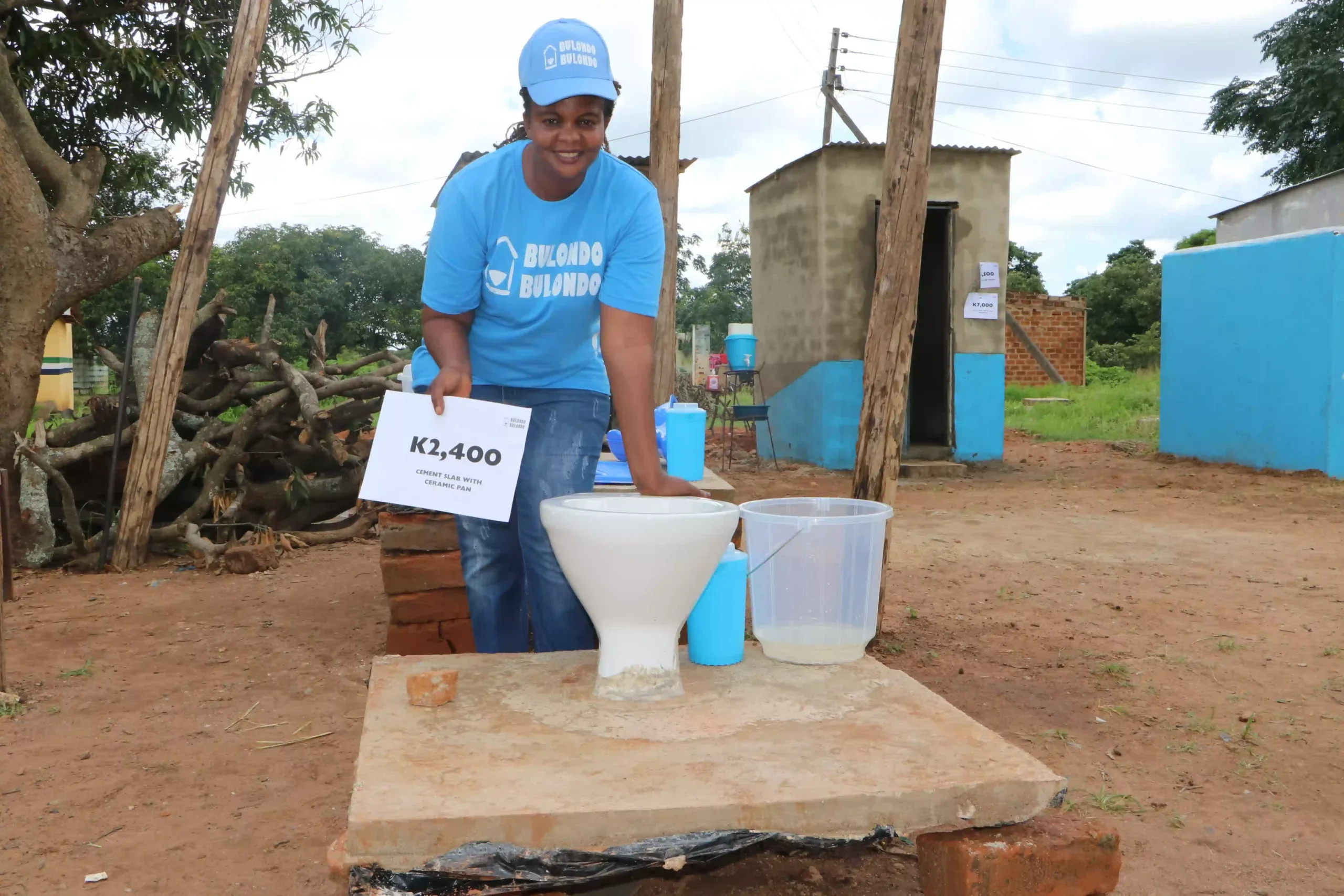
The market-based sanitation (MBS) initiative that is the subject of this blog series is our first effort to put that thinking into practice. In this series, we will explore many aspects of this new way of working: how we’re collaborating differently, how we’re thinking about where to scale, what our target communities tell us sanitation means to them, and more. Our goal for this blog is simple: to share what we’re learning as we go, because it’s fascinating.
This first post looks at where that shift began — and what it required us to reconsider.
When successful isn’t scalable
In 2020, CARE began asking difficult questions about its own long-standing programs. These were interventions with evidence of impact, years of donor support, and, in many cases, replication across multiple countries. By most conventional measures, they were successful.
But their results remained tied to philanthropic funding and NGO delivery. Few solutions had been taken up and sustained by the governments, markets, and other local stakeholders — the ‘doers and payers’ who ultimately deliver and maintain results at scale. These results, while meaningful, were limited and did not match the scale of the problems CARE aims to solve.
With our evidence partner IDinsight, we developed methods to help us understand whether ‘successful’ always meant ‘scalable.’ We interrogated some of our most deeply held assumptions about what it takes for development solutions to scale, and what we learned was sobering.
Programs that performed well under NGO implementation did not always translate into models others could adopt. Many were too complex, too resource-intensive, or too dependent on capabilities that were not available to those expected to carry them forward. In some cases, the very features that drove strong results in controlled settings made them difficult to sustain at scale.
The implication was clear: Just because an intervention produces results, that doesn’t guarantee it will scale, and scalability cannot be an afterthought. Interventions must be designed for scale from the start.
Designing for scale means designing differently
That realization has reshaped how we think about both our work and our role. Instead of starting with legacy programs that demonstrate impact and then asking how to scale them, we are trying to focus on scale early — asking what kinds of evidence-based solutions can be delivered, financed, and maintained by real-world systems, and designing accordingly.
In practice, this means thinking more deliberately about whether a model can function within the resource and capacity constraints of governments and markets, whether it aligns with the incentives of the people and organizations who will carry it forward, and whether it can operate without continuous external support. The best way to do that, of course, is to design with the organizations that will own, fund, and deliver the solution and its impact, from the beginning.
It also means rethinking what success looks like. A complex, highly supported model may deliver strong short-term results, but if it cannot be adopted and sustained by local systems actors, its long-term results are limited. A simpler, system-integrated approach could take longer to design and launch, but ultimately deliver greater results in the long run.
Why market-based sanitation?
Within CARE’s broader portfolio, water and sanitation stood out as areas that are foundational, yet where the scale of need continues to outpace progress. Safe sanitation is a critical building block of public health, and fundamental to safety, security, and dignity. Globally, 3.4 billion people — more than 40% of the world’s population — lack access to safe sanitation, and nearly 20% lack access to even basic sanitation. As a result, the World Health Organization estimates that diarrheal disease kills over 400,000 children under the age of five each year, and causes over 1 million deaths globally — exceeding the annual death toll from war and armed conflict. The world is behind target to achieve SDG 6 — one of the UN’s Sustainable Development Goals (SDGs) to ensure water and sanitation for all — which puts progress against all other SDGs at risk.
Lack of safe sanitation (good toilets that last) isn’t primarily a technology problem; it’s a finance problem and, in large part, a market problem. Supply chains are weak, access to finance for both households and entrepreneurs is low, and ability to pay is limited.
Market-based sanitation (MBS) offers one way to address these constraints by developing local markets — supporting entrepreneurs to supply products and services while addressing the barriers that limit uptake. There is promising evidence from South and Southeast Asia that this approach can work. But there are also open questions about how – and under what conditions — it can scale. That combination made MBS a compelling place to begin applying a “design for scale from the start” approach in practice.
How we’re working differently
Applying this lens has led us to work in ways that differ meaningfully from how we have approached similar efforts in the past:
First, we looked at the sector’s evidence — not just our own:
Rather than defaulting to models developed within CARE, we began by stepping back and looking across the WASH (water, sanitation, and hygiene) sector through the lens of CARE’s existing WASH portfolio, focusing on approaches aligned with our strengths. While CARE brought deep experience and a strong understanding of the sector evidence, we deliberately revisited that evidence with fresh eyes, examining which approaches had promising evidence of both effectiveness and scalability. That review pointed to two areas with more compelling track records: rural water utilities and market-based sanitation (MBS). Both have demonstrated the potential to scale within existing systems, and both align with areas where CARE can add meaningful value. Revisiting the evidence in this way was a slower process, but also an exciting reset. It encouraged us to think beyond our own approaches and re-examine the landscape with a broader lens, and to shift from refining something we had built to focusing on what could work effectively within systems, with or without us.
Second, we made a deliberate decision about where to start:
With both water utilities and MBS emerging as strong candidates, the question became which would enable us to most effectively test what it means to design for scale from the start. MBS offered a more immediate entry point, largely because it is less capital-intensive, builds on existing markets, and has clear incentives for government and private sector participation. In this context, we saw the potential to make MBS even leaner by leveraging CARE’s existing systems strengthening work — creating space for iteration without significant upfront investment. Starting here enables us to apply and refine a design-for-scale approach in practice.
Third, we decided to approach MBS as a systems problem:
One of the clearest lessons from CARE’s prior WASH work is that no single actor — government, private sector, or NGO – can deliver everything required for rural sanitation to scale. Demand, supply, finance and governance are interdependent, spanning different parts of the system. As a result, delivery is inherently shared by multiple actors — and that changes how we engage. Rather than designing a model independently and then looking to others to adopt it, we are engaging the system from the outset — working alongside government, businesses, and community platforms to shape the model together, and to find a solution that can survive and thrive in real-world conditions. From the beginning, we have framed this as a solution that the local system will own — and our focus is on aligning roles, building capabilities, and ensuring the model works within their realities. CARE’s role is intentionally time-bound: to support these actors to develop and institutionalize a model they can own, finance, and evolve over time.
Finally, we decided to partner differently rather than sub-contract or compete:
If scale depends on systems, it also depends on bringing together the right capabilities – many of which sit outside any single organization. iDE has developed one of the strongest MBS models in the sector, with a substantial evidence base and success at scale. We’ve worked with iDE on many occasions – including in Bangladesh, Ethiopia, and Madagascar. But in this case, rather than replicating iDE’s work or having them deliver one piece of the intervention, we decided to focus on how we could both help scale iDE’s proven model through local systems, and leverage our complementarities and collective assets to make the model even leaner, accelerating progress towards sanitation goals. This reflects a broader shift: away from ownership, toward alignment around what works and shared responsibility for evolving the model.
What comes next
This work, by design, is an ongoing process of testing assumptions and adapting as we learn. We do not expect to get everything right. The work we are doing is not unique to sanitation — or to CARE. It reflects a broader challenge facing the sector: how to move from solutions that perform under project conditions to those that can be adopted, sustained, and expanded by the systems that serve the people who need them.
With this series, we aim to share not just what we conclude, but how we arrive there — so others can also learn, build on, adapt, or challenge it as we go.