
In the development sector, we often talk about partnership. We practice it far less – especially the difficult kind, where organizations genuinely share decisions, pool assets and capabilities, and admit that someone else might know more.
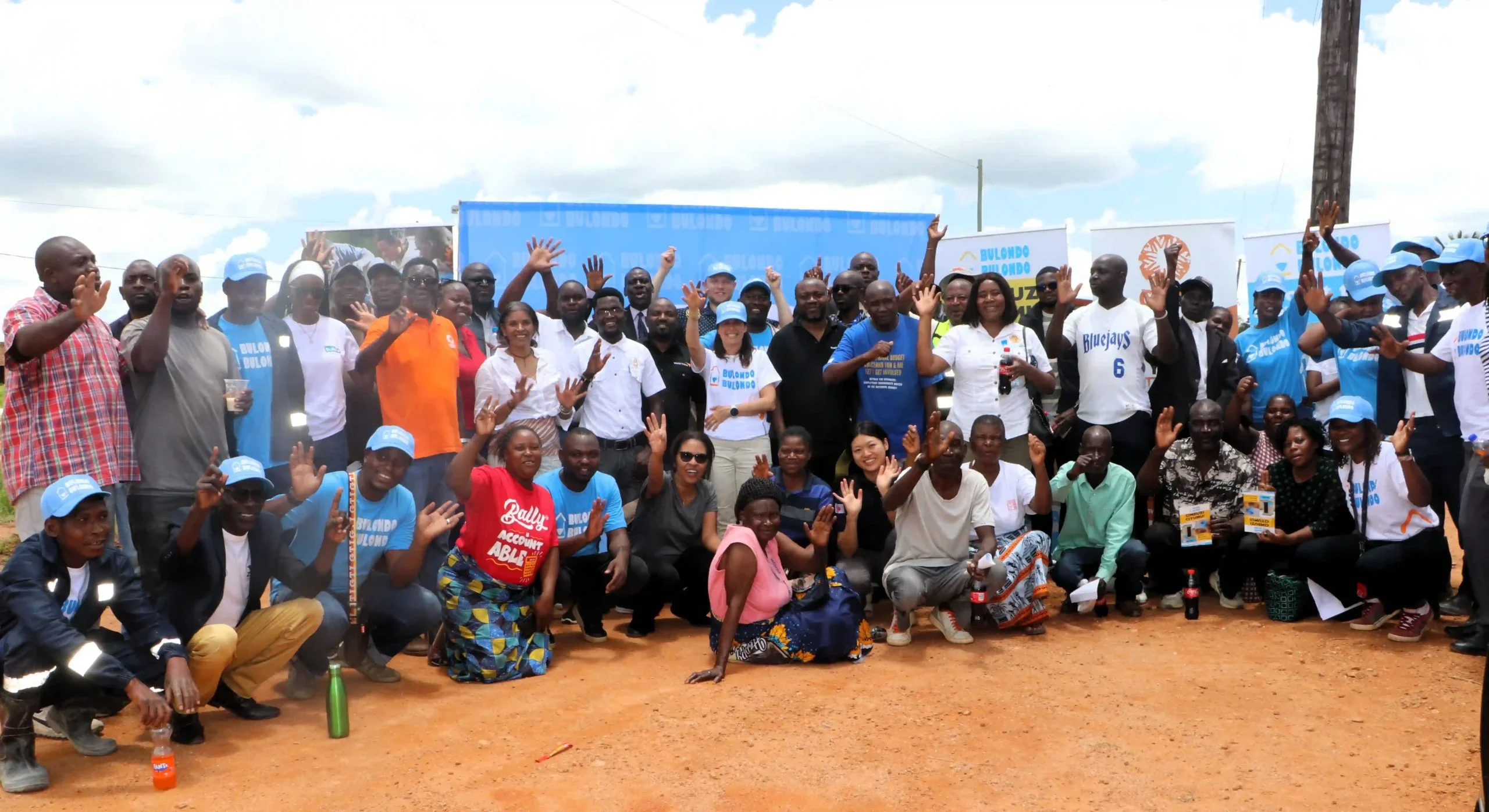
This blog series is about one attempt to practice that kind of partnership. Since 2024, CARE, iDE, and IDinsight have been building a partnership to test how market-based sanitation (MBS) can scale more quickly, starting in rural and peri-urban Zambia. We have kept this effort going on a shoestring for two years despite funding struggles, recognizing the value of what we have: a shared hypothesis, complementary expertise, deep trust, and an unusual willingness – at least in this sector – to try scaling somebody else’s model.
In this blog series, we hope to share what we’re learning: what’s working, what isn’t, and what we’re still figuring out.
Sanitation is a system, not a product
MBS depends on multiple parts of a system working together: product design, supply chains, entrepreneurs, customer demand, financing, and public institutions must all be in alignment for the system to work.
Together, our organizations can help improve different pieces of this system. iDE brings deep experience designing affordable toilets adapted to local preferences and supply chains, and training entrepreneurs to produce and sell them. CARE has long-standing, trusted relationships with communities and governments across Zambia – including local governments and community-based savings groups that can help finance household sanitation purchases. IDinsight has expertise in evidence and measurement, helping to ensure stakeholders use robust data to inform key decisions in optimizing solutions for scale.
Our core questions are simple, but that doesn’t make them easy to answer:
- Can we reduce one of the biggest demand-side barriers to sanitation – access to finance – and help more families purchase improved toilets if we connect trained sanitation entrepreneurs with savings groups?
- Can we strengthen supply chains by embedding market actors inside the formal utility system rather than around it, making it easier for sanitation businesses to get training, support, and quality oversight by connecting them directly with the Southern Water and Sanitation Company of Zambia?
- Can we make an MBS approach lean and simple enough that networks of local systems actors including government, businesses, utilities and community groups are able to deliver, finance, and scale it nationally without long-term NGO support?
These questions matter. Safe sanitation improves health, safety, dignity, and quality of life – especially for women and girls. MBS has driven major gains in Asia, but uptake in Sub-Saharan Africa remains limited. Zambia has committed to 90% basic sanitation coverage by 2030, but as of 2024, fewer than 40% of rural Zambians have access. Across Sub-Saharan Africa, that figure is under 30%. Cracking the barriers to scale could change that trajectory.
Letting go of ownership
This partnership asks each organization to work outside of established norms. CARE is investing in scaling another organization’s model. iDE is opening its model to outside experimentation. Neither is standard practice for international NGOs. “There is a level of institutional arrogance among INGOs that has kept them from being willing to scale external models,” says Anita Sundari Akella, Director of CARE’s Impact at Scale team. Funding structures often reinforce this dynamic: organizations compete for grants by promoting what they themselves created, even when evidence suggests another approach works better.
CARE’s team had been questioning that pattern since 2020, influenced in part by Kevin Starr’s critique of “Not-Invented-Here Syndrome” – the idea that large global organizations should stop seeing themselves primarily as engines of innovation and instead become platforms for scaling proven solutions. That framing resonated. As CARE assessed the scalability of its own legacy models with evidence partner IDinsight, it also began asking a different question: what if we used decades of community trust and last-mile reach to scale external solutions that have robust evidence behind them?
When CARE and IDinsight shifted to designing for scale from the start, it made sense to incorporate proven, optimized external models. When we selected sanitation as an initial focus, iDE emerged as an obvious partner. “iDE had a lot of evidence behind their MBS model,” Anita explains. “We felt CARE could help scale that model through our existing footprint, and we wanted to test whether integrating iDE and CARE approaches could produce a leaner intervention that local actors could eventually deliver, finance, and scale themselves.”
For iDE, the partnership offered an opportunity for scaled impact. “This is an important way for iDE to drive sanitation access using our expertise while leveraging CARE’s presence and scale,” says Elise Mann, Director of Global WASH at iDE.
It has been uncomfortable at times for both organizations to share, rather than divide, control – to open our approaches to joint scrutiny and mutual adaptation. But the mission outweighs the friction. “People deserve high‑quality, dignified products and services,” says Elise. “If we can make this model work, the potential payoff is enormous for entrepreneurs and customers.”
Shared vision, different lenses
This pilot bridges numerous teams and perspectives. Each team entered the partnership with a common goal, but with a different lens on our core questions. This diversity of perspectives enriches our approach, but it also requires a slower starting pace to accommodate shared decision-making and stakeholder alignment.
For iDE, the central question is whether savings groups can enable scale, as self-sustaining platforms for both household finance and behavior change. “If we can partner with savings groups effectively, can we unlock scale? And could that produce a leaner MBS model?” asks Elise. “Working with CARE and IDinsight to test that rigorously has been exciting, so together we can meaningfully grapple with the question of scale.”
For IDinsight, the appeal was evidence with real-world impact. Rico Bergemann, Associate Director at IDinsight, found the MBS evidence base promising, but saw a persistent gap: household finance. CARE’s savings groups’ connections offered a credible way to address that constraint, while private sector delivery offered a compelling scaling pathway in a time when limited government resources need to stretch ever further. As Rico puts it, “We tend to overestimate how much bandwidth and resources governments have to scale NGO initiatives.” IDinsight’s objective for this partnership was straightforward: the evidence had to hold up, and partners had to be willing to follow what it revealed.
For CARE Zambia, the partnership is part of a larger institutional evolution. Moses Mumba, CARE Zambia’s WASH Program Expert, describes a team asking hard questions about its future role. “We have been discussing what the value-add of CARE in Zambia is in the changing development landscape,” he says. The answer: CARE Zambia should be an organization that “facilitates innovation while supporting local organizations and actors to do direct implementation” – not one that implements everything itself. MBS is a test case for that new identity.
For CARE’s global Water+ Team, the frame is systems change. Avo Ratoarijaona, Senior WASH Systems Advisor, draws on experience in Madagascar and Rwanda: MBS cannot succeed without being embedded in local government, the private sector, and communities. In Zambia, policy is supportive but finance is scarce. The opportunity is to build the right connections deliberately – using savings groups and the government’s constituency development funds as levers for scale.
Why we’re testing this under scarcity
This partnership exists under unusually lean conditions. After years of tight funding for rural sanitation, the global funding cuts of 2025 made resources even scarcer and fundraising harder. For more than two years, we’ve relied on contributed staff time, small pools of flexible funding, and immense trust between partners. We have recently secured full pilot funding but have made that budget as lean as possible.
Anita calls this the “cactus pilot” approach: “Any model can survive under ideal conditions with enough grant funding – just like any flower can thrive in a greenhouse. But for scaling to be feasible, we need a model that works in the real-world conditions local actors actually face – which are much more like a desert.”
“Bootstrapping in this environment is genuinely difficult,” Elise adds, “but there’s also more need for it.” The core questions keep everyone engaged: if the bootstrapped version works, we know it’s durable. If it doesn’t, we need to learn that too so that we can adjust.
Establishing deep trust across three organizations – without a large grant forcing alignment – has called for patience, generosity, and commitment. “It has required enormous enthusiasm and dedication from people already stretched thin,” Anita says. “But I’m proud of what we’ve built.”
Learning in public
Anita often frames partnership as simple math: “In the best partnerships, 1+1=3, resulting in better outcomes for participants, for partners, and for our approaches.”
The next posts in this series will test that proposition. We’ll share what we’re learning about linking entrepreneurs to savings groups, what collaboration with a water and sanitation utility actually requires, how three organizations make decisions together, and what the early evidence shows.
We’re sharing this as we go because we think the sector learns better when organizations are honest in real time. We hope others will build on, challenge, and improve what we’re testing – because that’s how scale happens. If delivering greater impact to more people is the goal, then learning in public isn’t optional – it’s the work.