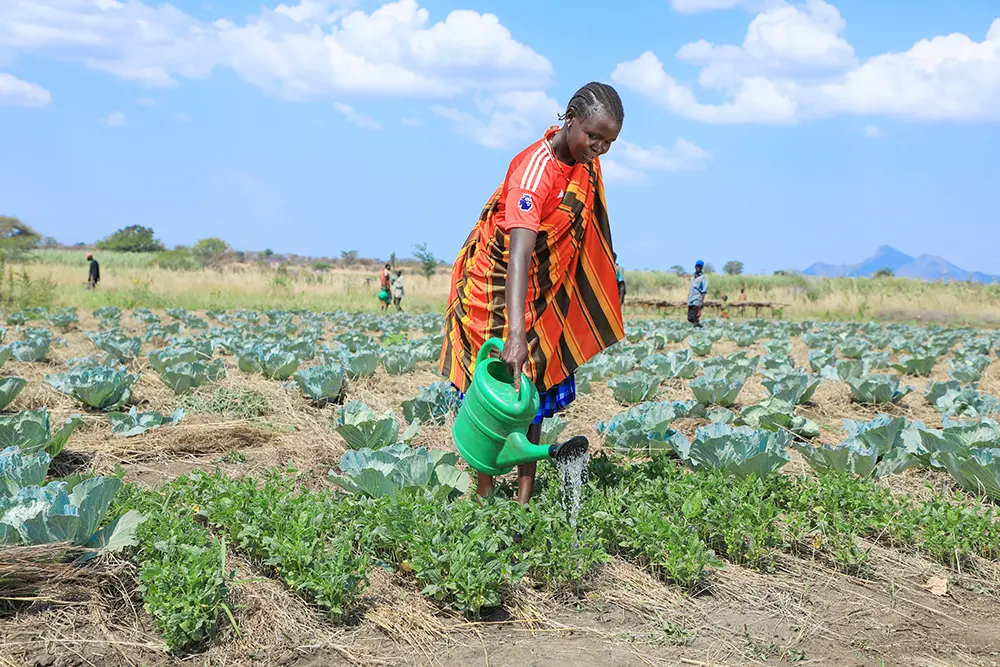
CARE Journeys Uganda Trip

We can't wait to see you in October!

CARE at a glance

CARE is a leading humanitarian organization fighting global poverty. Women are at the heart of CARE’s community-based efforts to improve basic education, maternal and child health, increase access to clean water and sanitation, expand economic opportunity, and protect natural resources. CARE also delivers emergency assistance to survivors of conflict and natural disasters and helps people rebuild their lives.

CARE operates in 121 countries reaching more than 53 million people through more than 1,450 life-saving humanitarian and development projects.

CARE Uganda


About CARE Uganda

Uganda is a central-east African landlocked country of immense geopolitical importance. Uganda faces significant challenges in development and economic growth, with high youth unemployment and widespread poverty. The country’s population is notably young, with nearly 44% under 15 years old. Chronic poverty affects one in five Ugandans, and malnutrition is prevalent among children.

Despite these difficulties, Uganda has become a haven for refugees, hosting over 1.7 million from various countries. Most of these refugees are women and children fleeing regional conflicts, political violence, and famine.

To maintain stability, Uganda’s refugee response model requires international support focused on:

  • Comprehensive services
  • Community integration for refugees
  • Sustainable development investments for host communities

CARE has been working in Uganda since 1969, contributing to these efforts by:

  • Providing protection and life-saving assistance to new refugees and host communities
  • Diversifying livelihood options for refugees and locals
  • Promoting equal influence for women in household financial decisions
  • Reducing Ebola incidence through community awareness
  • Improving WASH, shelter, and protection infrastructure, especially for at-risk groups

Uganda’s refugee policies, including open borders and free integration, have earned it recognition as one of the world’s most welcoming countries for refugees. However, the influx has strained the country’s resources and services, highlighting the need for continued international support and investment in both refugee and host communities.

Welcome letter by Country Director

Dear all,

I am thrilled to welcome you to Uganda!

CARE has been working in Uganda for 56 years to save lives and defeat poverty. Our dedicated teams focus on improving structures and partnering with local organizations, particularly those led by women. We strive to ensure the impact and ongoing nature of our initiatives.

Despite the various risks and challenges that communities face, such as poverty, inequality, and environmental shifts, we have enabled entrepreneurial women and girls who are determined to change the reality of their families and communities for the better. Our programs, including livelihoods, environmental resilience, and humanitarian assistance, aim to improve food security, reduce malnutrition, and promote sustainable livelihoods, emphasizing the empowerment of women and girls. You will see these innovative initiatives during your visit.

Our local partners are committed to upholding the rights of those still unable to exercise them. In this context, notable women-led and women’s rights organizations stand out for their actions and influence in our country.

On behalf of the CARE Uganda team and our local partners, I am pleased to welcome you and ensure that your visit is an opportunity to learn and understand the local context and explore opportunities for growth in our country program’s impact.

Sincerely,

Michael Opio
Interim Country Director
CARE Uganda


Traveling with you

Meet the CARE team

Michael Opio

Interim Country Director  

Clement Atoko

Head of Sub Office – Fortportal and STEPs Consortium Manager

Cotilda Nakyeyune

Program Manager, Climate Justice

Grace Kemirembe

Program Manager, Livelihoods

Norah Namono

Communications Specialist

Trip itinerary


Sunday, October 19 – Kampala​ 

  • Arrive at Entebbe International Airport and transfer to the Kampala Serena Hotel.
  • Time to rest and adjust to the time difference.

Monday, October 20 – Kampala​ 

  • Breakfast at the hotel, followed by departure for the CARE Uganda office.
  • Introductory meeting with the CARE Uganda team, including a program overview and security briefing, followed by lunch.
  • Half-day tour of Kampala, with a possible visit to the Uganda National Museum.
  • Welcome dinner with the CARE Uganda team.

Tuesday, October 21 – Kampala​ to Gulu

  • Breakfast at the hotel, then check out and depart for Gulu (approximately 275 km / seven-and-a-half-hour drive, including rest stops).
  • Lunch en route at Kabalega Diner.
  • Arrive in Gulu and check in at the Boma Hotel.
  • Time to rest, followed by an early dinner at the hotel.

Wednesday, October 22 – Adjumani

  • Breakfast at the hotel, followed by departure for project visits in Adjumani (approximately two-hour drive).
  • Welcome meeting with District Government officials, then visit the SAY Program to hear directly from young people about how they are gaining life skills, health education, and economic opportunities, while schools and communities work together to create a safer, more supportive environment for their future.
  • Lunch at the Aragan Hotel.
  • Afternoon site visits to the SAY program in Nyumanzi.
  • Return to Gulu for a rest break and optional dinner.

Thursday, October 23 – Gulu to Murchison Falls

  • Breakfast at the hotel, then check out and depart for project visits.
  • Meet with Gulu City leaders, followed by visits to the GEAR Initiative, where you will engage with women and youth groups building resilience and advancing gender equality. Hear how women and girls are creating income opportunities, challenging harmful norms, and strengthening their voices in community decision-making.
  • Lunch with local officials and CARE team members.
  • Afternoon departure for Murchison Falls National Park (approximately two-hour drive).
  • Check in at Sambiya River Lodge with time to rest.
  • Group dinner at the lodge.

Friday, October 24 – Murchison Falls to Kampala

  • Breakfast at the lodge, followed by optional morning activities, including a boat cruise or game drive in Murchison Falls National Park.
  • Midday departure for Kampala (approximately 275 km / five-hour drive), with stops en route for lunch and rest breaks.
  • Check in at the Kampala Serena Hotel.
  • Closing dinner with the CARE Uganda team.

Saturday, October 25 – Departures

  • Breakfast at the hotel, followed by check out.
  • Departures for the United States or onward travel within Uganda.

Before you leave


Climate and packing list

In Uganda, October is typically rainy with temperatures averaging around 23°C (73°F). It’s one of the rainiest months with frequent showers, though there can also be sunny intervals. Humidity levels are relatively high. You can expect temperatures to reach up to 30°C (86°F) during the day and drop to about 17°C (63°F) at night.

Clothing:

  • 2-3 light fabric long-sleeved shirts (breathable material for warmer afternoons)
  • 2-3 light fabric short-sleeved shirts
  • 2-3 pairs of lightweight pants (long pants for insect protection)
  • 2 sweaters or sweatshirts for layering during cooler evenings
  • 2 smart casual outfits for group dinners
  • 1 rain jacket for potential rain showers
  • 1 light jacket, as temperatures can be chilly in the mornings and evenings
  • 1 hat with a wide brim or visor for sun protection during daytime activities
  • Modest attire for cultural respect (avoid shorts & tank tops)

Footwear:

  • 2-3 pairs of comfortable, sturdy closed toe walking shoes (shoes may get muddy during field visits)
  • Several pairs of lightweight socks for varying conditions

Miscellaneous:

  • Sunglasses, sunscreen
  • Insect repellent (with at least 25% DEET)
  • Daypack or small backpack for daily outings
  • Camera, battery charger
  • Snacks: Trail mix, energy bars (snacks will also be available throughout the trip)
  • Hand sanitizer, hand wipes

Visa

US citizens are required to apply for a tourist visit for Uganda. Travelers can apply for an e-Visa online through the Uganda Electronic Visa/Permit System before arrival at https://visas.immigration.go.ug/.

A single-entry tourist visa typically costs $50 USD and is valid for 90 days.

Alternatively, if travelers plan to visit Kenya and Rwanda as well, they can apply for an East African Tourist Visa ($100 USD), which allows multiple entries among these three countries for 90 days.

Make sure passports are valid for at least six months beyond the travel date and have at least one blank page for entry stamps.

CDC travel recommendations

The information below is provided by the Centers for Disease Control and Prevention (CDC). We advise you to work directly with your health care professional or a travel specialist to determine personal vaccination/medication needs. Vaccines and preventive medications for travel to Uganda as recommended by the Centers for Disease Control and Prevention.

Yellow Fever: Required for all arriving travelers ≥1 year old.

Malaria prevention: CDC recommends that travelers going to Uganda take prescription medicine to prevent malaria. Depending on the medicine you take, you will need to start taking this medicine multiple days before your trip, as well as during and after your trip. Talk to your doctor about which malaria medication you should take.

Vaccines: All routine vaccinations such as measles/mumps/ rubella (MMR), diphtheria/pertussis/tetanus (DPT), varicella (chickenpox) vaccine, shingles and your yearly flu shot, Polio, Typhoid, Hepatitis A and B, Rabies, Meningitis

Additional reading


History of Uganda

Uganda has long been a crossroads for migration and trade, home to 65 ethnic groups speaking languages from three of Africa’s four major linguistic families. By the 13th century, fertile lands and reliable rainfall in the south fostered the rise of centralized kingdoms, including Buganda, from which the country takes its name.

Muslim traders reached northern Uganda in the 1820s, followed by Swahili merchants from the Indian Ocean coast in the 1840s. British explorers, drawn by the search for the Nile’s source, arrived in the 1860s, leading to increasing British influence through trade, missionary work, and political agreements.

Uganda became a British protectorate in 1894, with Buganda and other southern kingdoms securing a degree of autonomy that was rare in colonial Africa. However, British rule deepened regional and ethnic disparities, making national cohesion a challenge at independence.

Uganda gained independence in 1962 with a strong economy and education system, but political instability soon took hold.

In 1966, Milton Obote suspended the constitution and ousted the king of Buganda, followed by Idi Amin’s 1971 military coup, which led to economic collapse and mass atrocities that killed up to 500,000 people. His 1979 ouster ushered in further instability, with multiple coups and ongoing conflict.

Yoweri Museveni took power in 1986 after a successful insurgency, restoring relative stability and economic growth. However, his extended rule, enabled by constitutional changes removing term and age limits, has raised concerns over governance and democracy, making him one of Africa’s longest-serving leaders.

Source: CIA Factbook

Additional reading on socioeconomic indicators

Population and demographics

  • Nationality: Ugandan
  • Population: Over 49 million people, 8.5 million of whom live in Kampala, Uganda’s capital and largest city. Median age is the lowest in the world at 15 years old.
  • Ethnic groups: Uganda has over 50 ethnic groups, with the largest being the Baganda, Banyankole, and Basoga. The Baganda, found in the central region, have a rich cultural heritage. The Banyankole, primarily in the west, are known for cattle-keeping, while the Basoga, located in the east, are famous for their music and dance. Other notable groups include the Acholi, Iteso, and Langi.
  • Language: Official languages are English and Swahili.
  • Religion: 45.1% Protestant, 39.3% Roman Catholic, 13.7% Muslim, 2% others/none.

Government

  • Government type: Presidential republic
  • Executive branch: The President of Uganda, currently Yoweri Kaguta Museveni (since January 1986), serves as both head of state and head of government. The President appoints a Vice-President and a Prime Minister to assist in governance.
  • Legislative branch: Unicameral Parliament, known as the Parliament of Uganda, with 557 members.

Economy

  • Currency: Ugandan Shilling (UGX)
  • GDP per capita: Estimated at $2,800
  • Agriculture: Provides the main source of income for the majority of the population. Most important exports are cotton, coffee, tea, and flowers. Other major exports include coffee, oil re-exports, base metals, fish, maize, tobacco, tea, sugar, cocoa beans, beans, simsim, and flowers.
  • Tourism: A major driver of employment, and is mainly focused on landscape, wildlife, and Uganda’s ten national parks.

Geography

  • Area: 241,038 km2, roughly the size of Michigan or the UK
  • Geography: Uganda lies completely in the Nile basin. It is landlocked between Kenya, South Sudan, Democratic Republic of Congo, Rwanda, and Tanzania. The most important cities are located in the south, including the capital Kampala and the nearby city of Entebbe.
  • Terrain: Boasts diverse terrain, including vast lakes like Lake Victoria, the source of the Nile River, and towering mountains. Also features lush rainforests, savannas, and wetlands.
  • Natural resources: Copper, tungsten, cobalt, gold, and limestone.
  • Biodiversity: Ranks among the top ten most biodiverse countries globally, home to more than 18.500 species, including mountain gorillas and nearly 1,100 bird species. Has 60 protected areas, including ten national parks.

Source: Encyclopedia Britannica and the CIA World Factbook


Frequently asked questions

What currency is used in Uganda, and what is the exchange rate?
The currency used in Uganda is the Ugandan Shilling (UGX). As 7/1/2025, the exchange rate is approximately 1 USD = 3,594.93 UGX. Please check the updated rate at the time of travel.

What are the power outlets used in Uganda?
In Uganda, the power outlets used are Type G. You will need an adapter for your electrical devices. It’s also recommended to bring surge protectors for sensitive electronics due to occasional power fluctuations.

Will my cell phone work while traveling in Uganda?
You should contact your cell phone provider to confirm that you are set up for international roaming and usage prior to departing for the trip. Phone and data service are generally reliable in cities, but coverage varies in the more remote regions of Uganda.

What is the security situation in Uganda?
CARE Uganda frequently hosts visitors, and the country is considered safe for travel. You will always be in the care of staff members while on the trip. CARE takes every effort to ensure the safety of travelers and staff members, but anytime you travel, you should take all necessary precautions to protect yourself and your belongings.

Will we have access to safe drinking water?
Yes, bottled water will be provided throughout the trip. It’s recommended to drink only bottled or filtered water.

What is standard food in Uganda?
Ugandan cuisine is diverse and heavily based on staple foods like matoke (steamed green bananas), posho (maize porridge), and sweet potatoes. Other common dishes include luwombo (a traditional stew cooked in banana leaves, often with chicken, beef, or groundnuts), chapati (flatbread), and rolex (a popular street food of eggs rolled in a chapati). Meat options include grilled chicken or beef skewers (muchomo), while freshwater fish, such as tilapia and Nile perch, are widely eaten, especially near Lake Victoria. Groundnut sauce, beans, and vegetables like cassava leaves are also key components of many meals.

What is the appropriate way to handle tipping at restaurants, hotels, and on tours?
Tipping in Uganda is not mandatory but appreciated, especially in the tourism sector. It is common in mid-tier to upscale restaurants, hotels, and for tour guides. A 10-15% tip is generally appropriate. It’s common to tip in US dollars, but you can also use Ugandan shillings.

Can I take photos during field visits?
CARE staff will assist you with determining when it is acceptable to take photos and of which subjects.
Michael's Book Club

Reading recommendations from Michael Opio, CARE Uganda Country Director:

Song of Lawino and Song of Ocol by Okot p’Bitek

Kintu by Jennifer Nansubuga Makumbi

A Girl Is A Body of Water by Jennifer Nansubuga Makumbi

Abyssinian Chronicles by Moses Isegawa

Tropical Fish: Tales from Entebbe by Doreen Baingana

Sowing the Mustard Seed by Yoweri Kaguta Museveni

Additional book recommendations

Two Songs: Song of Prisoner & Song of Malaya by Okot p’Bitek

A History of Modern Uganda by Richard J. Reid

We Are All Birds of Uganda by Hafsa Zayyan

The First Daughter by Goretti Kyomuhendo