
Bangladesh flood relief: How CARE’s emergency backpacks restore hope

By Hillol Sobhan and CARE Staff March 16, 2026

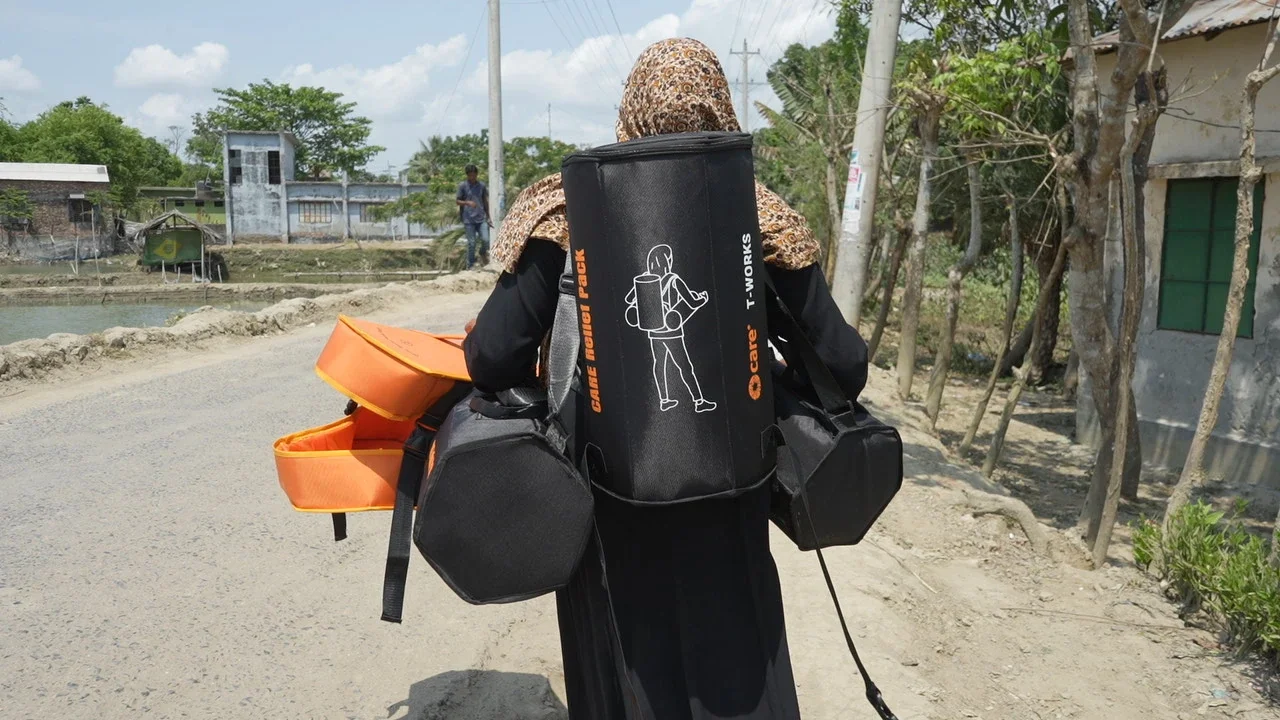
Woman carrying multiple CARE PACKAGE® for Emergencies packs down a rural road.

This lightweight CARE PACKAGE® for Emergencies backpack sustains a family of four for 30 days. Photo: CARE

"The current rushed in so fast that I couldn't save a single possession. I just ran with my husband and in-laws toward the high ground of the embankment to seek refuge under the open sky," said Lipi, a resident of Satkhira, Bangladesh.

On the morning of March 31, 2025 — Eid ul-Fitr — thousands shared Lipi’s experience. Across seven villages in Satkhira’s Anulia Union, families had just finished Eid prayers, the air still scented with attar, when the Kholpetua River reclaimed the land. A 150-foot gap ripped through the flood protection embankment. Tidal surges submerged entire communities before anyone could process the roar.

The local mosque used its loudspeaker to call for help. Hundreds of villagers — many still wearing their Eid clothes — rushed to the breach with bamboo and shovels, working frantically to build a temporary ring dam. For more than three hours, they fought to stem the tide, but rising tidal pressure eventually swept their efforts away.

Bangladesh floods trapped nearly 15,000 people as homes, farms, and livelihoods vanished in minutes. Despite nationwide holiday shutdowns, CARE in Bangladesh reached the hardest-hit families within days using pre-positioned stocks of CARE PACKAGE® for Emergencies parcels. CARE designed these lightweight, portable backpacks to deliver water, hygiene kits, lighting supplies, cooking tools, and shelter in one rapid response.
A community on the brink: Flood disaster response in Bangladesh

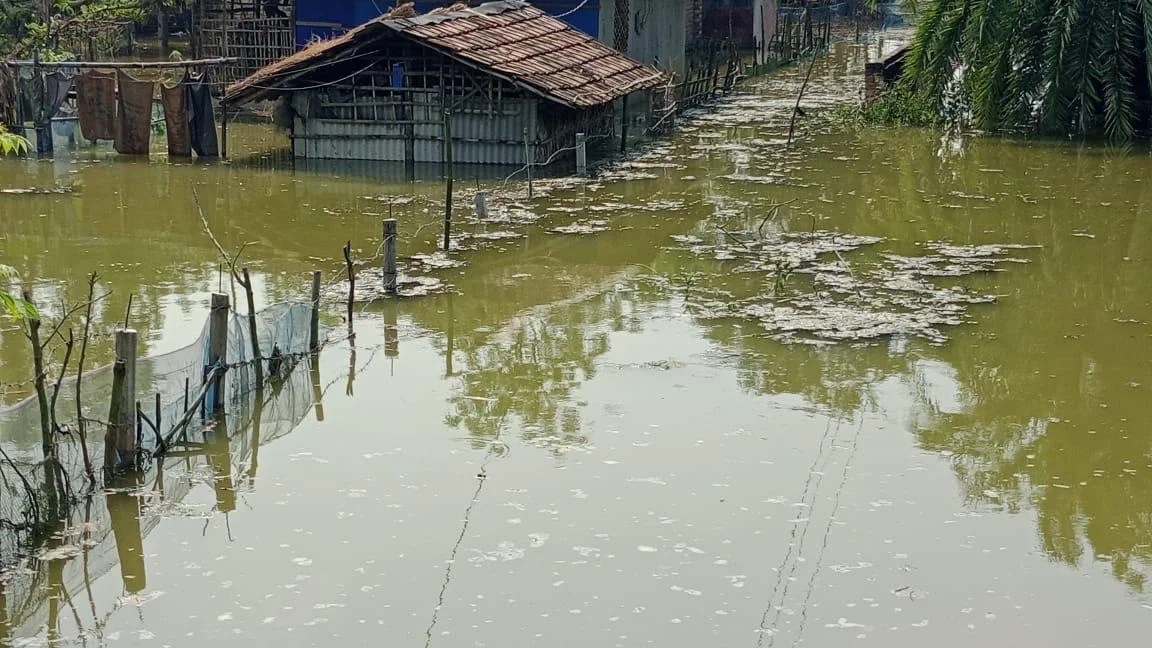
A flooded rural village in Bangladesh with a house partially submerged in murky green water.
Kholpetua River breach submerged seven villages in an instant, plunging nearly 15,000 people into immense misery. Photo: CARE

The water rushed in with a roar that “nearly scared the life out of us,” one village elder recalled. “We have endured this for so many years — going hungry, and watching our homes and livelihoods completely wash away.”

In Ballavpur village, Rina Rani Das watched her vegetable plot, fish stock, and poultry shed disappear. As food spoiled and drinking water turned salty, her children fell ill while sheltering under a neighbor’s thatched roof.

“The flood trapped nearly 15,000 people, destroyed 6,000 fish farms, and devastated 3,000 homes,” said Muhammad Rohul Quddus, Anulia Union chairman. In total, 505 hectares of shrimp farms and crops were left rotting under the brine. For a community where 71% lack access to safe toilets and only a third have a regular income, the shock was devastating.

More than 500 people fled to cyclone shelters or the remaining high ground along surviving embankments. For most families, shelter was out of reach. The first days brought darkness, hunger, and contaminated water. Watching the water refuse to recede, Rina feared her family wouldn’t survive the week.

CARE PACKAGE® for Emergencies: A rapid lifeline for flood survivors

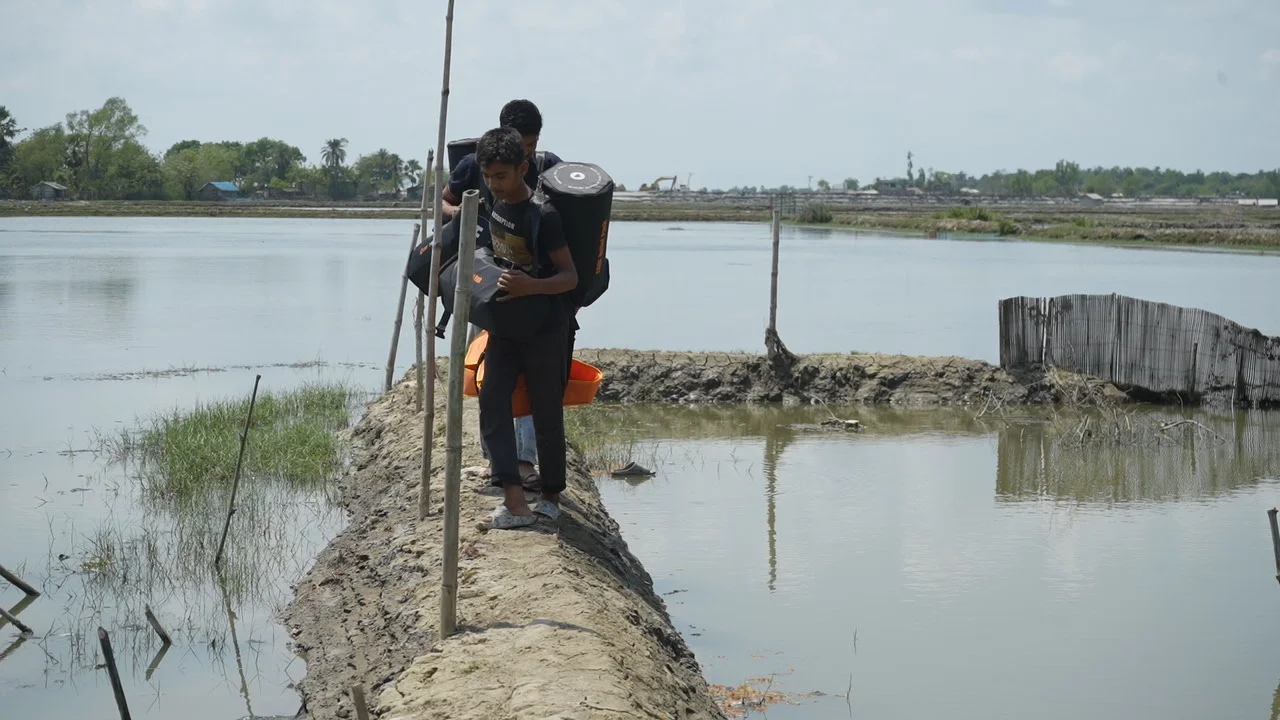
Two young men walking along a narrow, muddy embankment carrying CARE PACKAGE for Emergencies packs.
Despite Eid holiday shutdowns, CARE Bangladesh mobilized rapidly, distributing the CARE PACKAGE for Emergency kits to flood-hit families in desperate need. Photo: CARE

In the immediate wake of the disaster, CARE Bangladesh mobilized despite Eid-related logistical shutdowns. Through the NABAPALLAB project, CARE reached the worst-affected households with CARE PACKAGE for Emergencies parcels, delivering safe water tools, lighting, hygiene supplies, cooking essentials, and dignity to families who lost everything.

“The emergency package represents a breakthrough in emergency response,” said Mrityunjoy Das, Deputy Chief of Party for NABAPALLAB. “These lightweight, customizable backpacks sustain families through rapid-onset emergencies with one portable solution.”

Three CARE staff members sitting on a blue tarp, organizing and packing emergency supplies into relief kits
CARE team packs solar lights, hygiene kits, water purifiers, stoves, and tarps into emergency backpacks for flood survivors. Photo: Asafuzzaman Captain/CARE

Each package — distributed free to survivors and valued at $227 — contains 39 essentials in one portable backpack. Hygiene items include menstrual pads, soaps, and undergarments; cooking tools include a stove and kitchen utensils; safe water items include a collapsible bucket, jerry can, and purification tablets. Each kit also comes with one solar light and two shelter items — tarps and ropes.

The kit also comes with an instruction leaflet — cited by 12% of recipients as one of the three most useful items included — helping families maximize the use of every tool provided.

CARE pre-positioned 500 emergency packages in the nearby Khulna district. This strategic move allowed the team to bypass holiday delays — traffic gridlock and staff shortages — and reduce response time when the embankments collapsed.

Flood relief impact: Hope restored for families

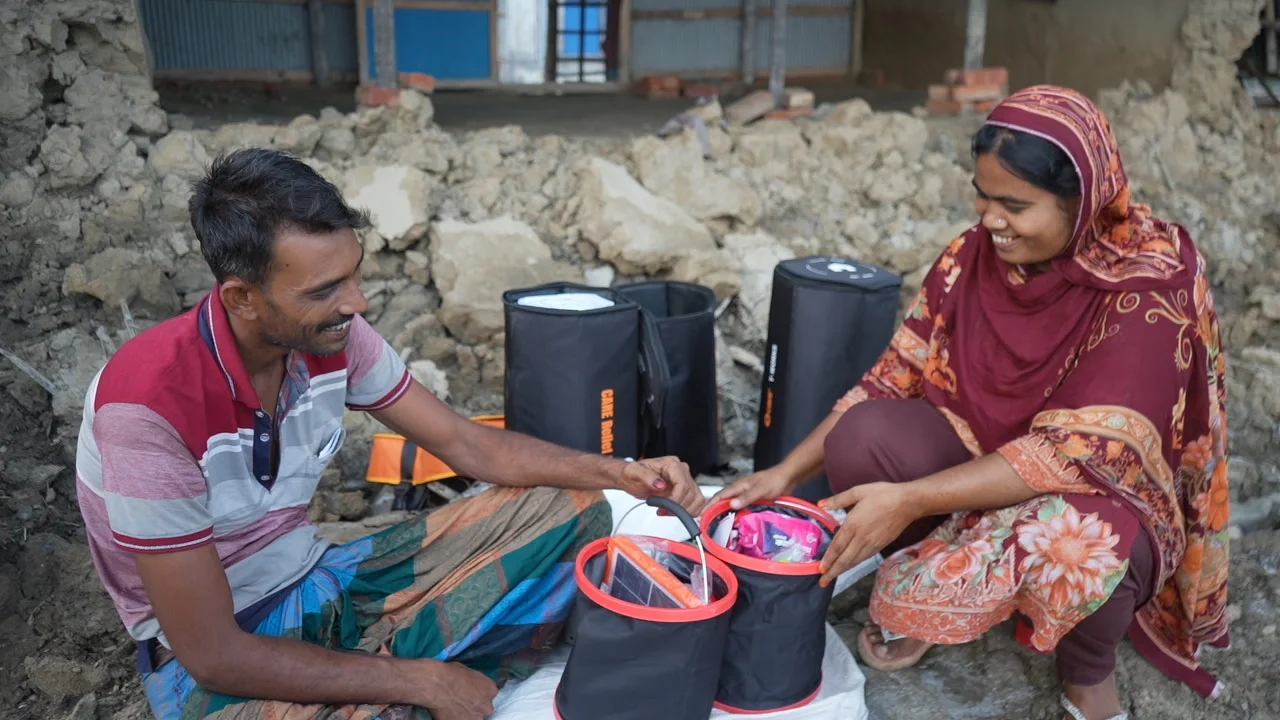
A man and a woman sitting amidst rubble, smiling as they look through the contents of two open CARE PACKAGE for Emergencies kits.
For flood survivors like Lipi, CARE PACKAGE for Emergencies provides 30 days of essentials — including water tools, stoves, solar lights, and hygiene kits — bringing a smile to a community determined to move forward. Photo: CARE

For Rina, the impact was immediate. Hygiene supplies helped to prevent sickness, the water kit protected her children, the stove allowed her to cook again, and solar lighting eased fears at night.

“That gave me hope. I felt we could survive again,” she said.

CARE’s post-distribution monitoring (PDM) data shows how that hope extended across the community. For women, dignity kit items like menstrual pads and undergarments provided more than just health benefits. They restored a sense of privacy and mobility during this public crisis, with 66% of women reporting use of the kit specifically for menstrual hygiene.

Solar lighting also emerged as another vital innovation. 72% of households used the built-in charger to restore mobile connectivity and access critical information.  64% of respondents reported that the solar lighting significantly enhanced their sense of safety at night, acting as a shield against the dark.

“We received two tarpaulins and found all these other items inside the bags. Everyone is so happy and satisfied,” said Lipi.

“CARE Bangladesh has distributed emergency packages across the entire Union Parishad. The flood destroyed our homes, but these kits contain the essentials every family needs, including tarpaulins,” says Taijul Islam, a local CARE program participant.

CARE workers oversee the distribution of the CARE’s emergency packages to a group of flood survivors gathered under a sheltered area.
"CARE was the first to respond. Their package has all the essentials we need," shared Malek, a local villager and CARE program participant. Photo: CARE

Overall satisfaction with the package deliveries was unanimous: 100% of respondents rated their overall satisfaction with the emergency pack as high. Nearly 99% of families reported feeling significantly safer from nighttime hazards like snakebites, while the water tools ensured clean drinking water for nearly 98% of those reached.

In total, CARE supported 336 households in coordination with partners CordAid, Dushtha Shasthya Kendra, and Friendship. While many families received essential multipurpose cash grants, 80 of the most at-risk households received the full 39-item Emergency CARE PACKAGE parcel.

CARE PACKAGE® for Emergencies: A blueprint for global response

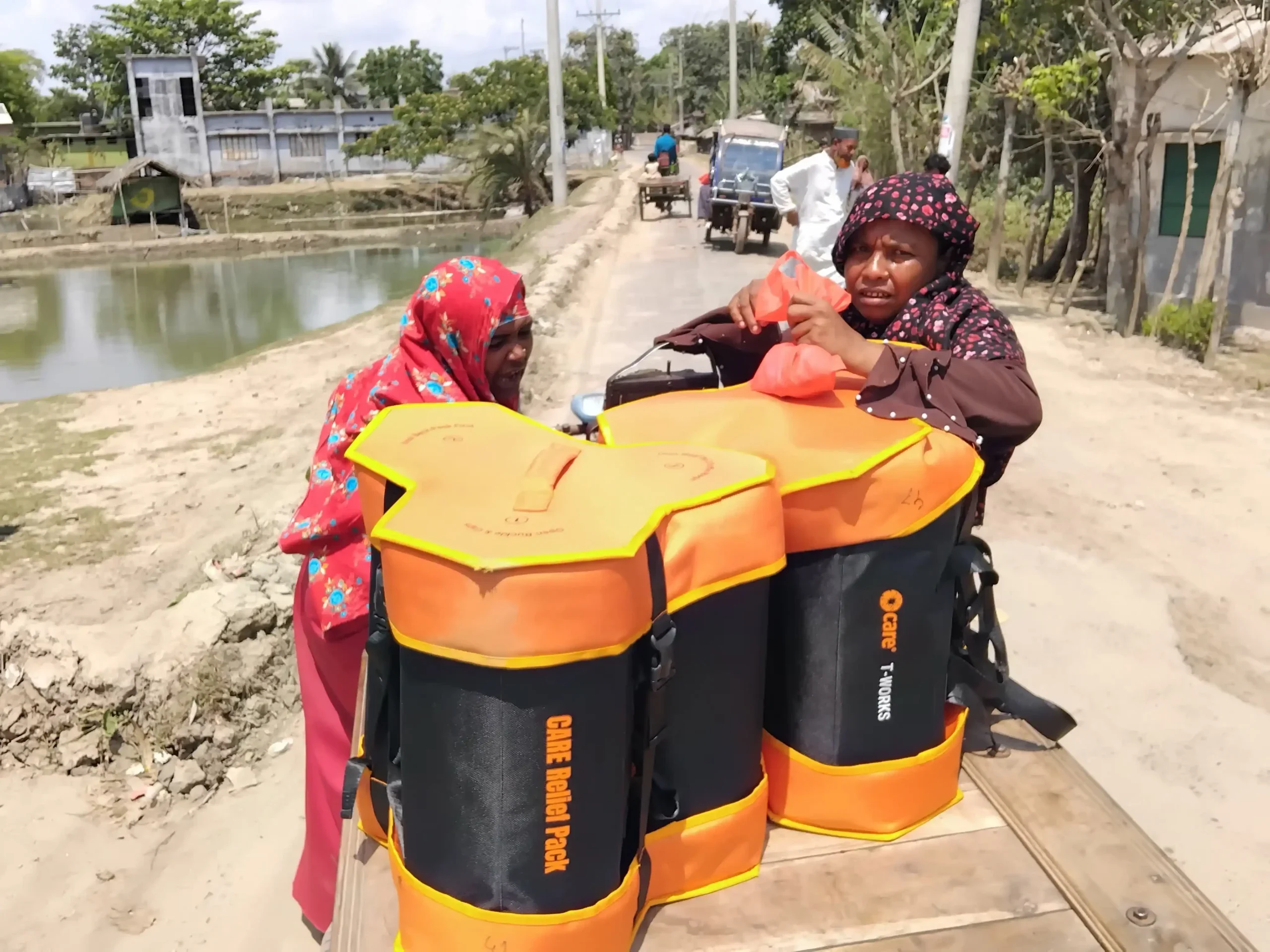
Two village women – CARE program participants – transport orange and black CARE Package for Emergencies kits on a three-wheeler rickshaw van along a rural road.
CARE's lightweight, portable emergency kits revolutionize rapid, dignified aid delivery — with proven potential for global scale in any crisis. Photo: CARE

Designed for families facing temporary displacement, the emergency package offers a new model for disaster response. Lightweight and easy to carry, the 30-pound (14-kilogram) backpack provides immediate essentials in a single, portable kit, allowing families to move quickly in ongoing crisis situations.

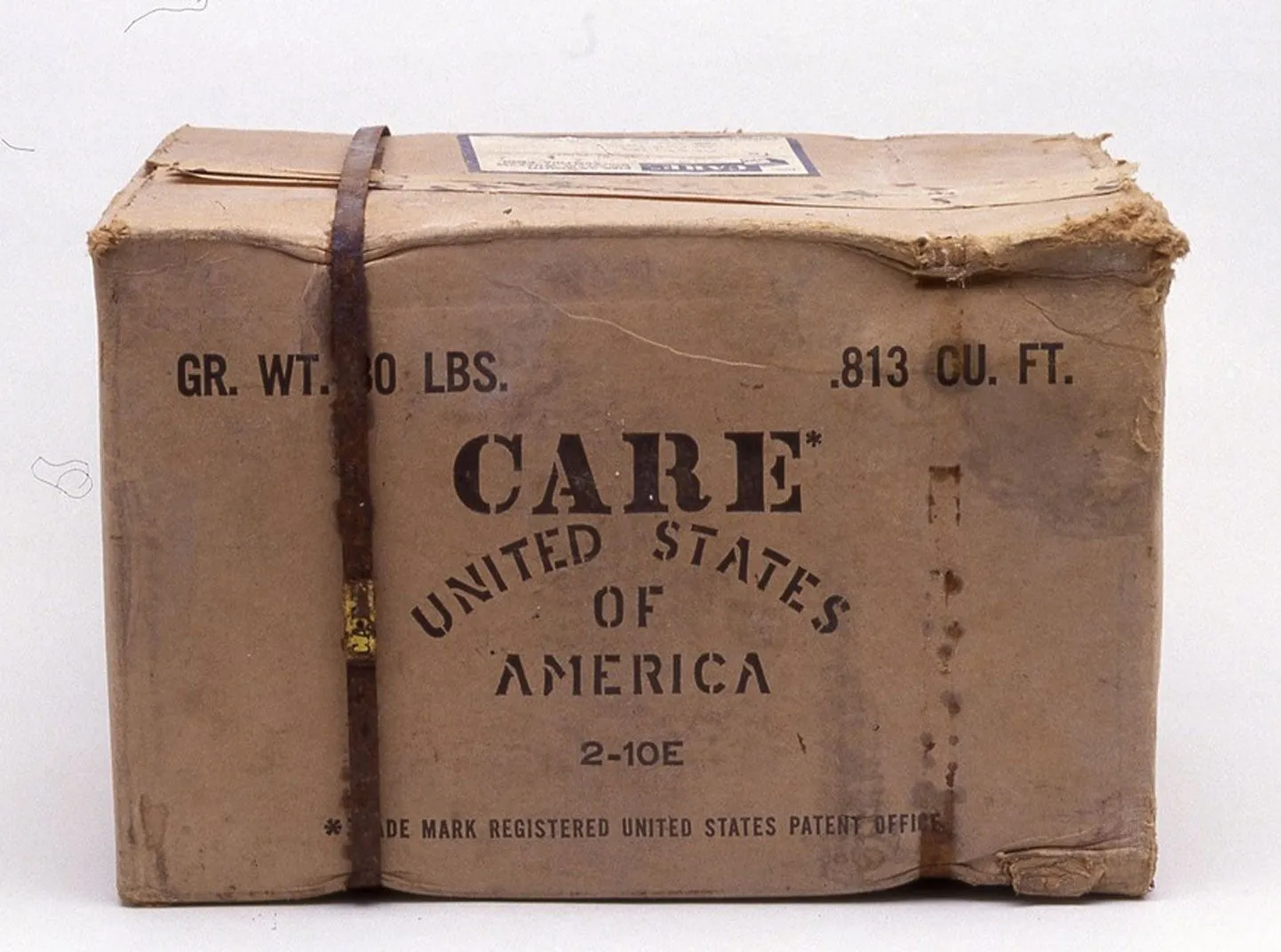
CARE has developed the CARE PACKAGE for Emergencies in partnership with T-Works, India’s largest prototyping center, building on 80 years of its original CARE PACKAGE.

To rethink how emergency assistance is delivered,  CARE has piloted this project in Bangladesh, Nepal, Malawi, Mozambique, and the Philippines with support from the Coca-Cola Foundation.

“CARE developed the emergency package to revolutionize disaster response,” says Kaiser Rejvi, director of CARE Bangladesh. “One backpack meets every immediate need. What succeeds in Bangladesh’s floods will transform aid delivery worldwide.”

By shifting from traditional, heavy relief packages to a ready-to-go backpack model, CARE addresses one of humanitarian responses’ most persistent challenges: last mile delivery in disaster-prone areas.

“This model proves that humanitarian aid can be rapid, dignified, and scalable,” adds Moyen Uddin Ahmmed, CARE Bangladesh program coordinator. “Because it is pre-positioned and comprehensive, it’s ready the moment disaster strikes — anywhere.”

Back to Top