Roses, fire, and the fight for water in Ecuador’s páramo

By Becca Mountain February 13, 2026

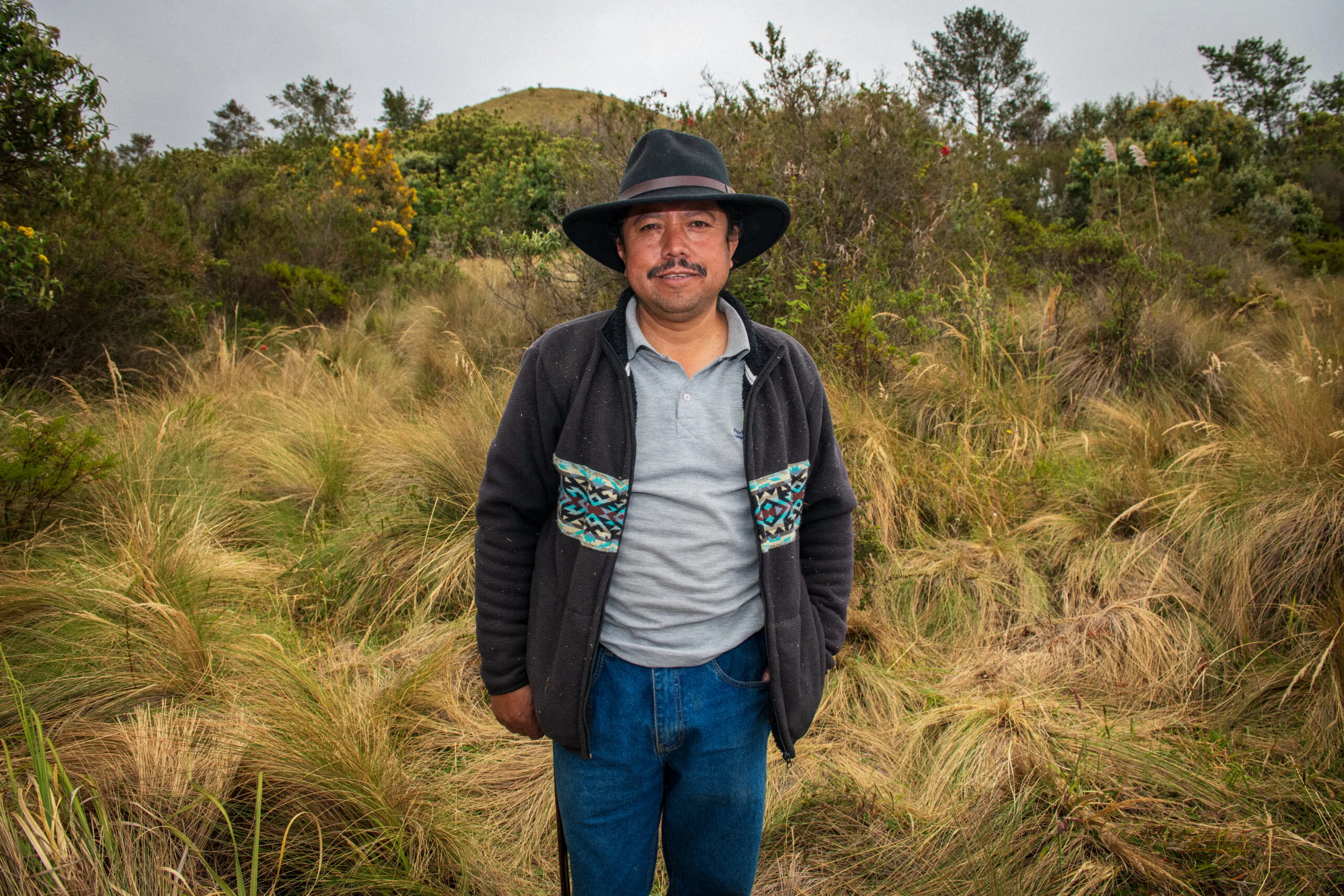
Portrait of Hilario Morocho wearing a wide-brimmed hat and jeans while standing in the páramo grasslands of Ecuador’s Andes.

Hilario Morocho stands in the páramo above La Esperanza, where he leads community efforts to protect water, land, and livelihoods. Photo: Brooks Lee/CARE.

High in Ecuador’s Andes, the fight for water is also a fight against fire, extraction, and loss. In Pedro Moncayo, one community is meeting that challenge together.

Be part of what CARE makes possible.

Get stories, updates, and actions you can take to support women and families worldwide.

Subscribe

The wind whips cold and sharp across the páramo, high above the town of La Esperanza in Ecuador’s Pedro Moncayo canton. The sky is a piercing blue, so clear it feels close enough to touch. At 10,000 feet above sea level, the air is thin and dry, the kind that burns unprepared lungs. Clusters of scrub and tall grasses dance in the gusts, their roots sunk deep into the soil that guards this land’s most precious resource: water.

On the hillside, a group of men and women work in rhythm. Broad-headed axes flash in the sun as they cut back grass and brush to expose dark, rich earth. Calloused hands and wind-burned faces move steadily, joined by children and elders lifting soil, shifting brush, carrying tools. It is hard work, and everyone knows it. Hilario Morocho only shrugs.

“Today’s work is very light,” he says.

It isn’t. The hillside is steep, the labor is grueling, and Hilario has a hernia. Still, the 52-year-old moves with quiet authority, his jeans worn soft, boots caked with earth, a knit sweater pulled against the chill. His black hair, just barely salted with gray, is tied at the nape of his neck. A leather cowboy hat shades his eyes, and a machete hangs from his belt.

Everyone here knows him. When asked his title, Hilario shrugs again: “I am a farmer.” Laughter ripples through the group. He is a farmer, yes, but also a father, teacher, hydrologist, construction expert, firefighter — and today, as on so many days, a leader.
Building with water

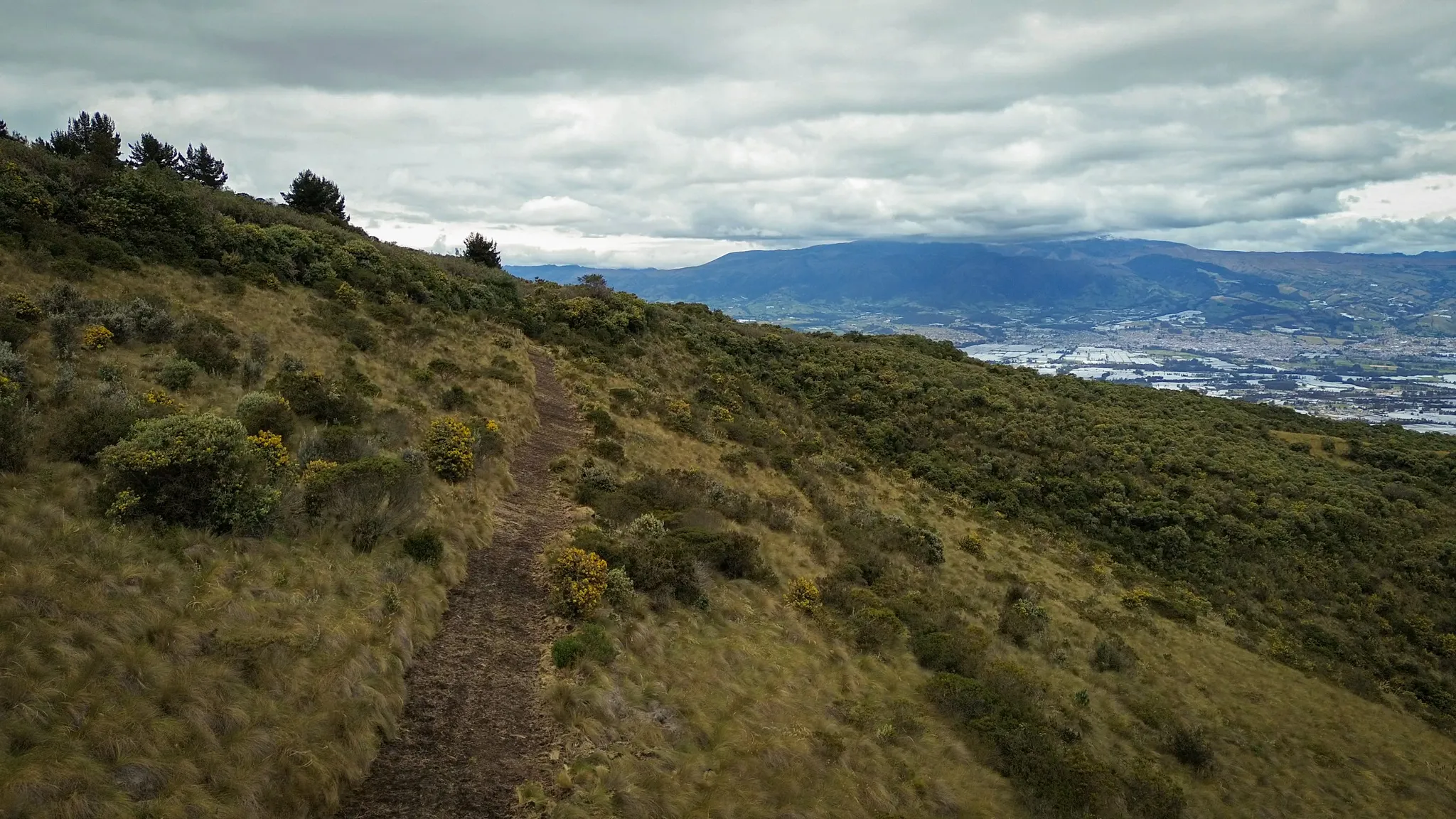
Wide view of the páramo with a strip of bare earth forming a firebreak, and white plastic rose greenhouses visible far below in the valley.
A firebreak cuts through the high Andean páramo above Pedro Moncayo. In the distance, plastic greenhouses mark the valley where roses are grown. Photo: Becca Mountain/CARE.

At first glance, the work looks destructive: grass and shrubs cut away, the hillside opened to wind and sun. But this is how the community protects itself, not only from the water crisis that defines life in Pedro Moncayo, but also from wildfire.

Ecuador suffered a devastating series of wildfires in 2024, destroying thousands of hectares of land, displacing families, and straining emergency services. Here, in this remote region, a single spark could spread across the dry slopes in minutes.

Rainfall once came predictably to Pedro Moncayo, feeding streams and reservoirs that sustained farming communities. But in recent decades, things have changed.

“The rainfall patterns are no longer normal,” Hilario says. Droughts stretch longer, and when rain does come, it can fall with sudden violence, overwhelming fields and washing away soil.

The people here are also caught in another paradox: Pedro Moncayo is part of Ecuador’s booming floriculture industry. In 2018, local volunteers used over half a million locally grown roses to recreate a Cochasquí pyramid, an ancient Ecuadorian ceremonial site. Their work won a Guinness World Record.

Ecuador exports around $1 billion in cut flowers each year, and roses make up nearly three‑quarters of that trade. Most of those flowers go to United States and Europe, particularly around Valentine’s Day. Today, the plastic greenhouses where those roses grow stretch across the valley floor, gleaming white like teeth against the volcanic slopes.

The flowers are beautiful, but they come at a cost. Roses demand enormous amounts of water. The industry also uses chemical fertilizers and pesticides, which leach into streams and seep into aquifers. The same rivers that feed greenhouses are the ones families here rely on for farming, cooking, and drinking. Too often, clean water is diverted to the floral industry, leaving communities to scrape by with what remains.

For people like Hilario, water is survival. One of his earliest memories is working with his parents, grandparents, and neighbors to dig a massive water channel. “I was eight years old,” he remembers, “and the ditch was taller than me. I had to work twice as hard.”

Even then, he knew what still drives him today: water sustains life, and water must be defended.

The water factories

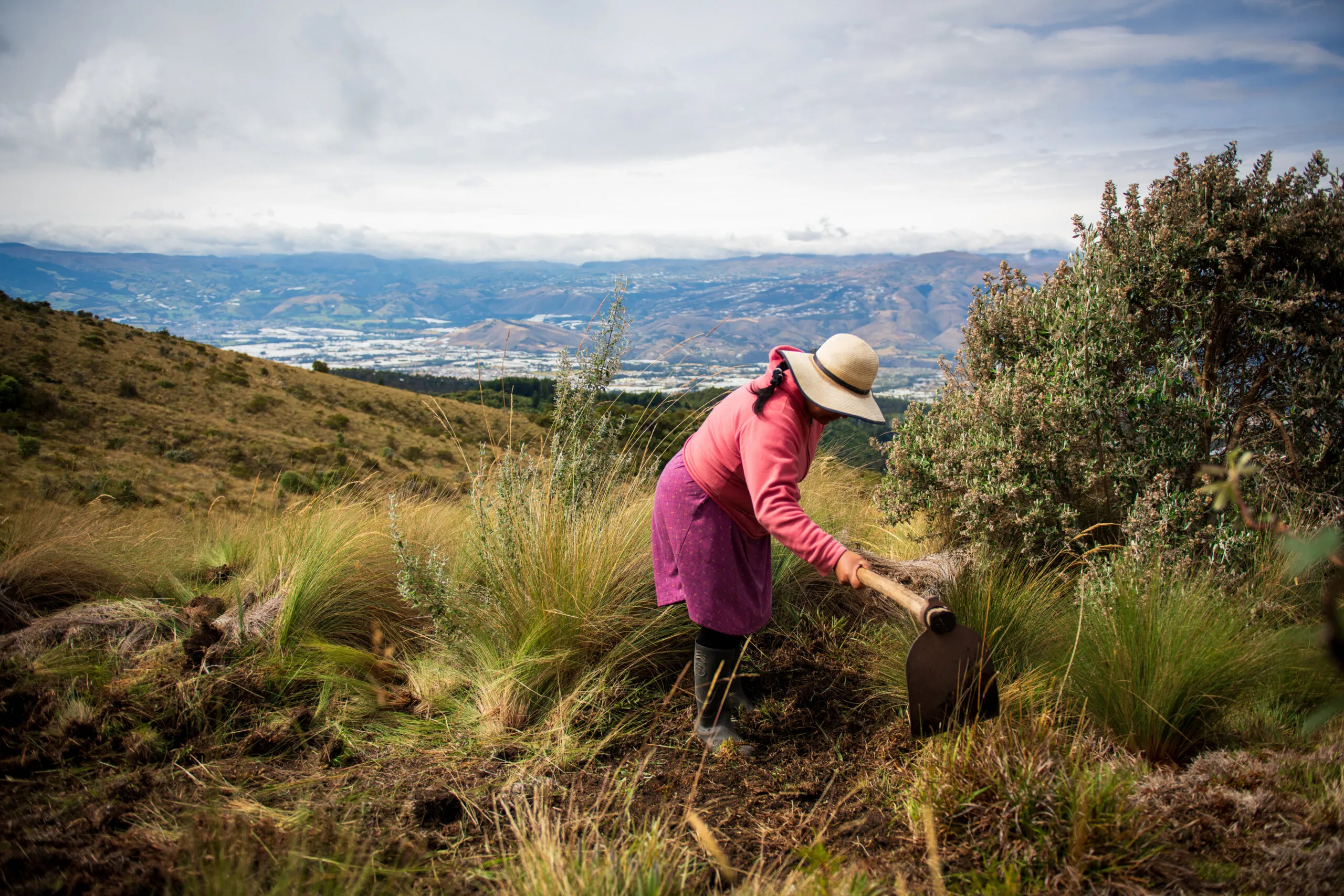
A woman in a pink jacket uses a broad-headed hoe to cut vegetation in the páramo, with white plastic greenhouses visible in the background.
A community member helps build a firebreak by hand, part of a collective effort to prevent wildfires and keep water in the soil. Photo: Brooks Lee/CARE.

Stretching across the Andes between 9,000 and 16,000 feet, the páramo is one of our planet’s great “water factories.” Cushion plants and high shrubs collect mist and rain from the air, guiding droplets down their stems and into the spongy soil. That’s exactly how Hilario describes the land here — a great sponge that stores vast reserves of water. Cold mountain air prevents evaporation, letting the water seep slowly downhill into rivers and aquifers that supply entire regions.

Scientists recognize the páramo as one of the most important ecosystems in the world. It makes up only seven percent of Ecuador’s surface area, but provides 85 percent of the nation’s water for drinking, hydropower, and irrigation. The páramos not only quench thirst in cities like Quito but also store six times more carbon per hectare than tropical forests, making them powerful buffers against environmental shocks.

But the páramo is fragile. Overgrazing, agriculture, and greenhouse expansion compact its delicate soils. Fires, whether sparked accidentally or by drought, scar its wetlands. And as the need for arable land and living space pushes crops and people higher into the mountains, the páramo itself has been forced to retreat. Scientists warn that up to 70% of the world’s páramos could experience significant drying by 2050.

Hilario sees the stakes clearly. “Around here, water is what brings us together—water for irrigation, water for drinking,” he says. “It unites us around a shared good.”

Firebreaks and trenches

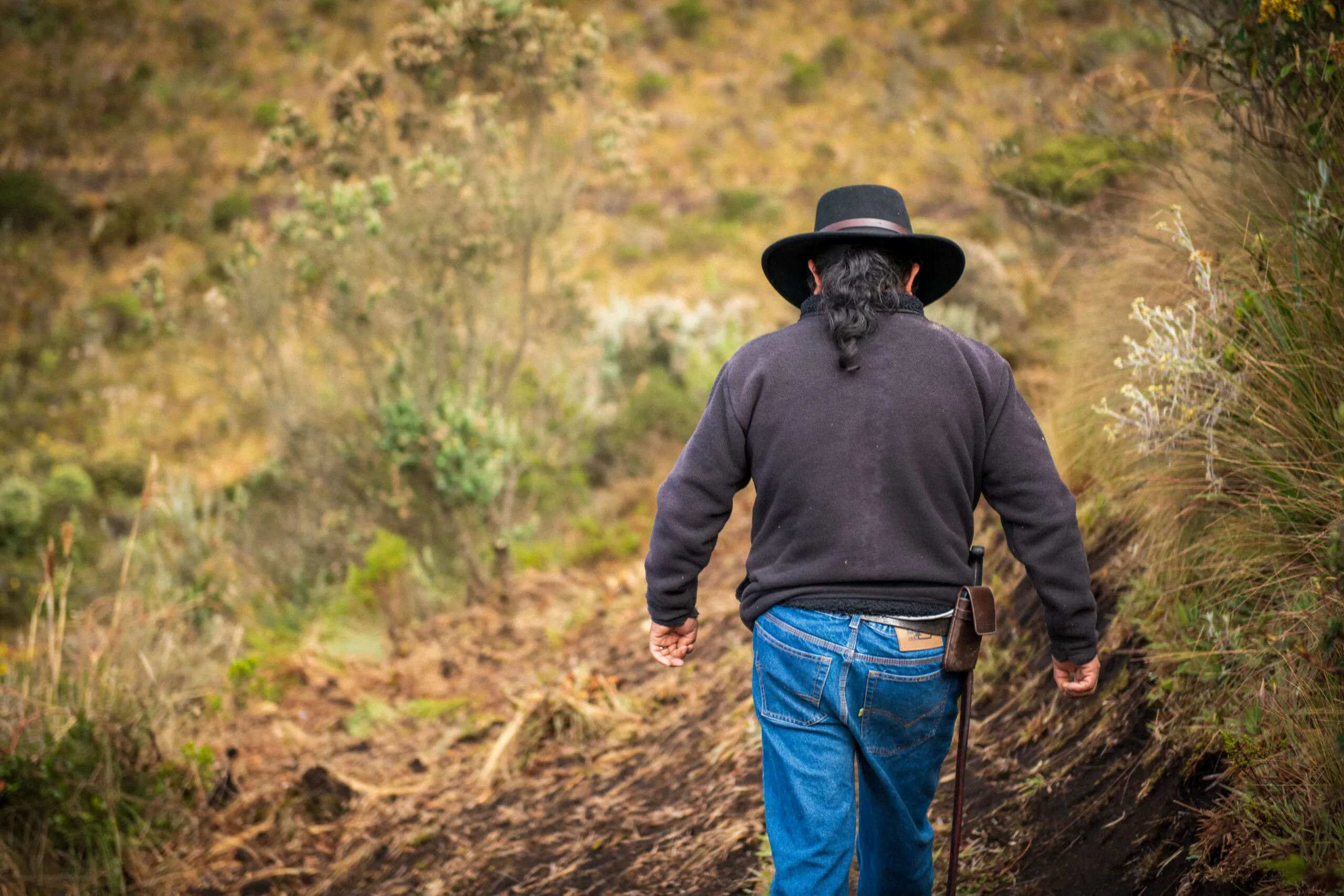
Hilario Morocho walks away from the camera along a dirt firebreak path cutting through tall páramo grasses.
Hilario walks along a firebreak carved into the hillside, built through minga labor to stop fires before they spread. Photo: Brooks Lee/CARE.

That unity has shaped an unusual defense system in the páramo: firebreaks that double as natural water tanks. On the slopes above La Esperanza, community members carve broad lines of bare earth to stop wildfires before they can spread. These firebreaks must be made in advance; once a blaze takes hold, it is too late.

Inside the breaks, they dig trenches — narrow cuts about three feet deep, a foot wide, and ten to twelve feet long. Each trench acts as a miniature reservoir, catching rain or runoff as it courses downhill. The captured water then seeps slowly into the spongy soil, keeping the ground saturated and the plants packed with moisture. In dry seasons, hidden water can be the difference between a hillside that acts like a tinderbox and one that refuses to burn.

The trenches also directly interrupt fires. When flames meet the cuts, they falter. Fire can’t burn bare earth, and that break in fuel slows its advance. Local firefighters, who hike up to learn and implement these techniques with the community, say the combination of hydrology and fire science — trenches, reservoirs, firebreaks — is what has kept this area of Pedro Moncayo free of major wildfires for the past decade.

The power of minga

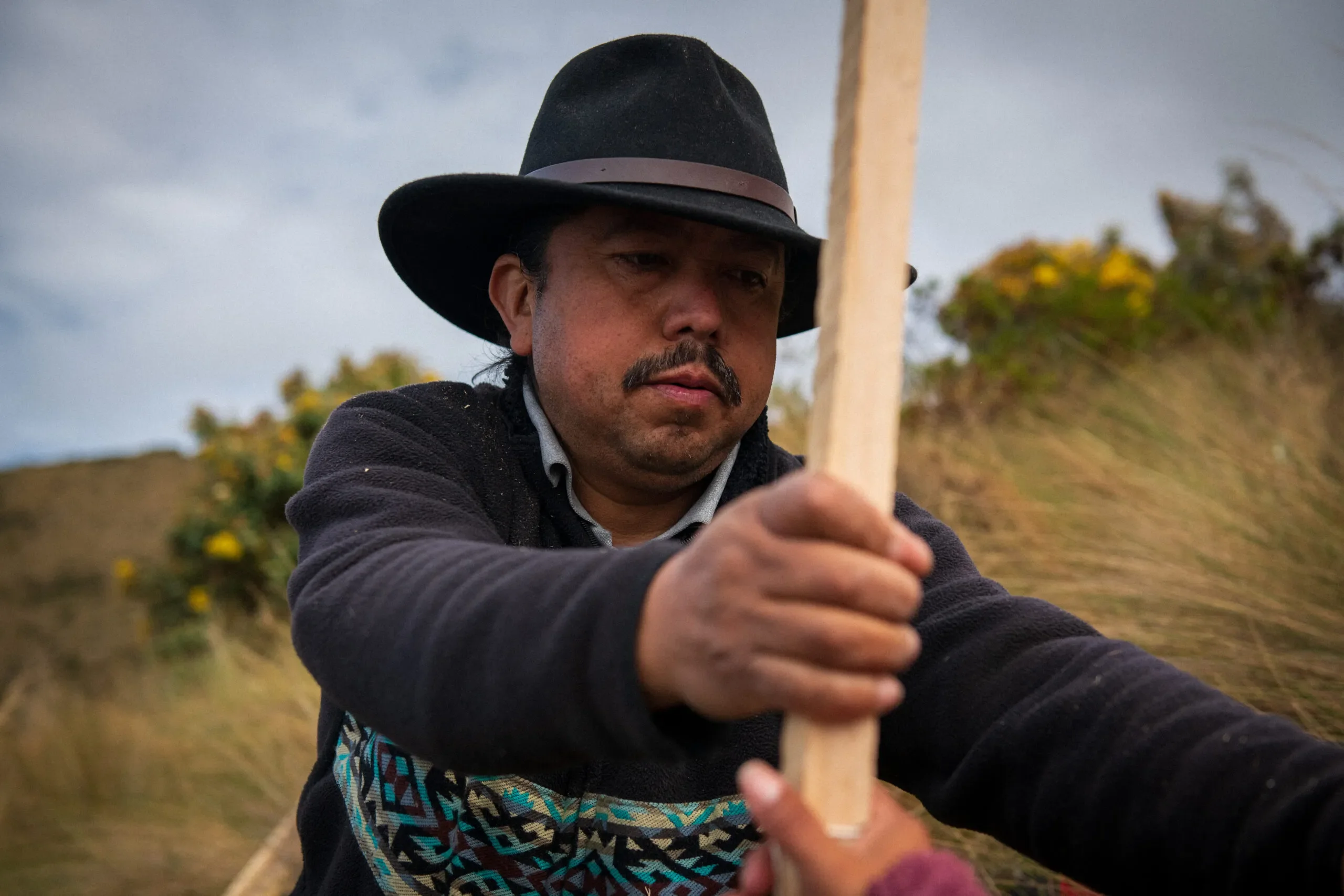
Close-up of Hilario Morocho cutting wooden stakes in the páramo to mark the placement of firebreaks, with another community member just out of frame.
Hilario measures and cuts wooden stakes used to mark where new firebreaks will be built, guiding the work by hand. Photo: Brooks Lee/CARE.

Machines cannot do this work. The slopes are too steep, the páramo’s spongy soil too soft and fragile. Every trench, every break, every scar of earth is cut by hand. Ancestral tools are balanced with modern ones: leveling rods alongside laser devices, technology adapted to the terrain rather than imposed on it.

This is minga, the traditional Andean practice of collective labor. The work is exhausting, but it is also connective. It links neighbor to neighbor, generation to generation, the people to the land as they build together what no single person could accomplish alone.

For Hilario, it is not just practical but spiritual: a link to his ancestors and a model for the future.

“The minga is something we inherited from our grandparents,” he says. “It is the spiritual strength of our ancestral people. This is how they built the great marvels of Cochasquí or Machu Picchu — a communal effort where many people came together for the common good. Here in the Andes, a minga involves everyone, from the family to the entire community. It fills our hearts with joy. It motivates us to strengthen it even more.”

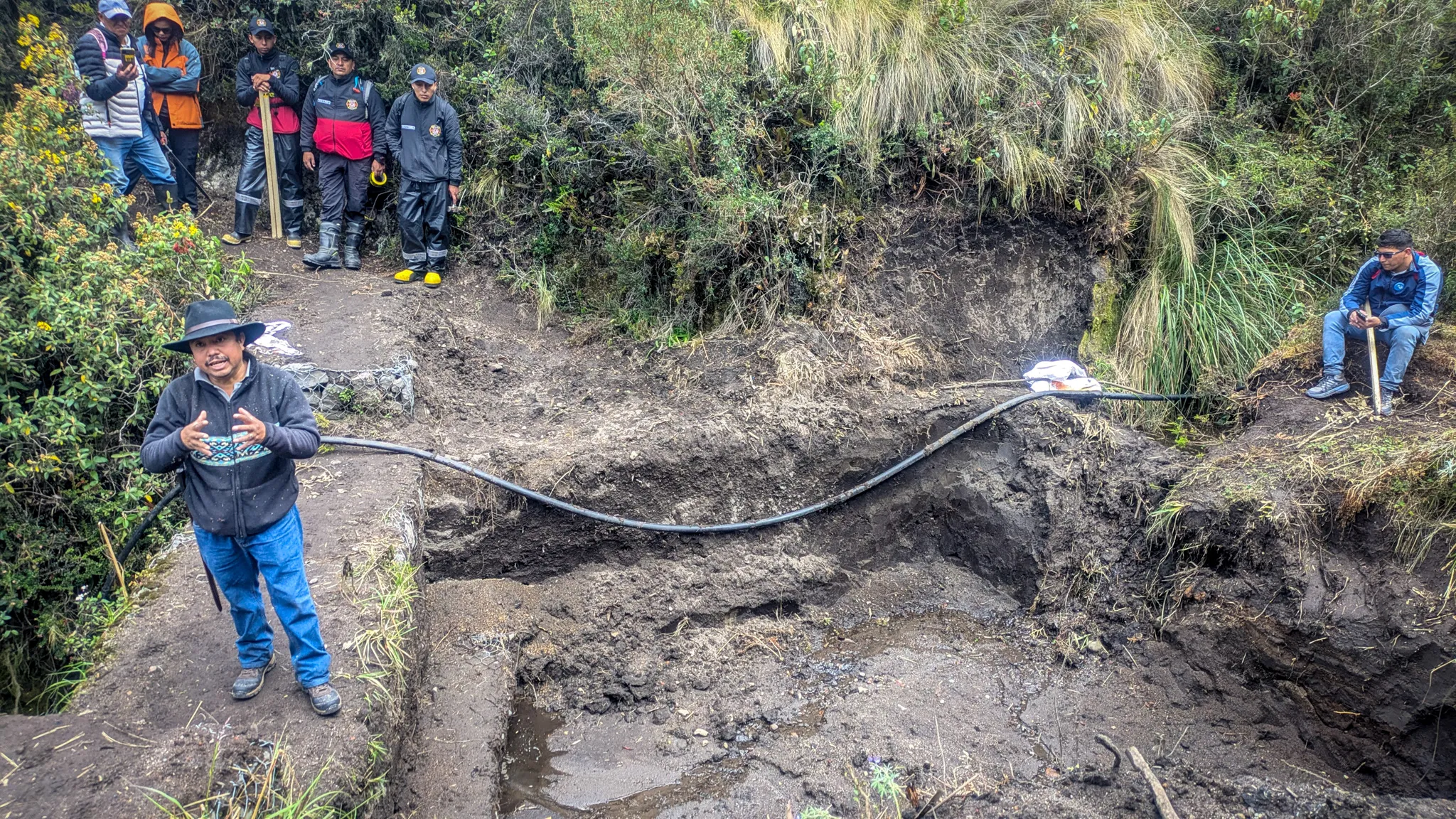
Hilario Morocho stands beside a large cut water reservoir, speaking to a group of firefighters and volunteers during a community work day.
Hilario explains how hand-built trenches and reservoirs retain water in the soil to partners, firefighters, and fellow minga volunteers. Photo: Becca Mountain/CARE.

And that work is, well, working. For the past 30 years, the principality of La Esperanza, along with Hilario, community members, and the water board, have been working on this hillside without chemicals or machinery. Hilario believes this is what has helped keep his beloved landscape healthy. They call it a “demonstration territory,” and hope that it can be an example of how the thoughtful application of traditional and regenerative practices can build resilience and prevent disasters.

“What we do here is collective learning,” he explains. “When we work together, we are stronger than a machine.”


CARE Ecuador has worked to strengthen climate resilience and protect vital water sources in the Pedro Moncayo canton since 2016. Through locally led projects, CARE has helped communities reduce local vulnerability, conserve the páramo ecosystem, and improve water security across the region. Activities have included establishing agroecological plots, supporting women’s entrepreneurship, strengthening local water boards, and contributing to key public policies like the Mojanda Water Conservation Area and Pedro Moncayo Water Fund creation ordinances. Current efforts in the area focus on implementing green infrastructure and advancing advocacy and institutional capacity to secure equal, long-term water management.

Local leadership matters.

Learn how CARE partners with communities around the world to protect water, prevent disasters, and build resilience.

Learn more.
Back to Top