“The whole house was flat”: Six months after Hurricane Melissa, Carrol is rebuilding in Jamaica

By Azaria Yogendran and Becca Mountain April 28, 2026

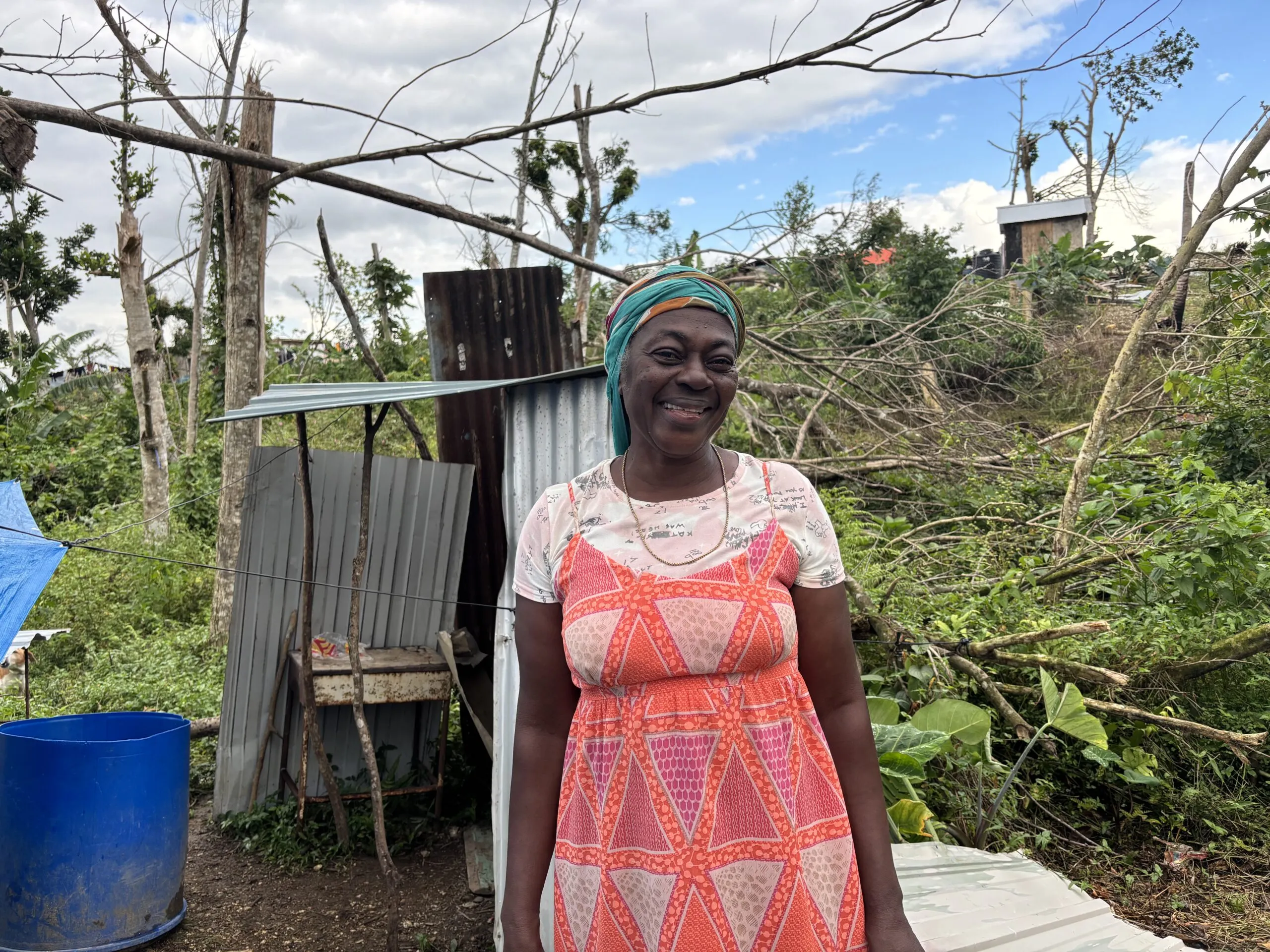
A woman stands outdoors near storm-damaged land and a small structure in rural Jamaica after a hurricane.

Carrol Clemming of Westmoreland Parish, Jamaica, stands near the home Hurricane Melissa destroyed. All photos: Azaria Yogendran/CARE.

“I experienced other hurricanes but not like this one. This was much, much stronger,” Carrol Clemming said of Hurricane Melissa, which struck Jamaica in late October 2025. “This one was far worse. This was terrible.”

Want more stories like this?

Sign up for the CARE News & Stories email newsletter to find out more about what’s happening around the world through vibrant, engaging stories that put humanity at the center.

Subscribe

The costliest storm Jamaica has ever faced, Hurricane Melissa unleashed torrential rain and relentless winds that triggered landslides, swept through coastal towns, knocked out power and communications, and left many people displaced, isolated, and struggling to access clean water, food, and basic medical care. In its wake, families were left to rebuild amid the ruins of homes and infrastructure torn apart by the storm’s fury.

Among them was Carrol, a single mother living in rural Westmoreland Parish. Before the hurricane, she lived in a one-room house. Her adult son and her 12-year-old grandson were both staying with her at the time. When news of the storm came, they packed what they could and covered their belongings with tarpaulins, never imagining how strong it would become.

As the winds intensified, the zinc roof began to lift and the house started shaking.

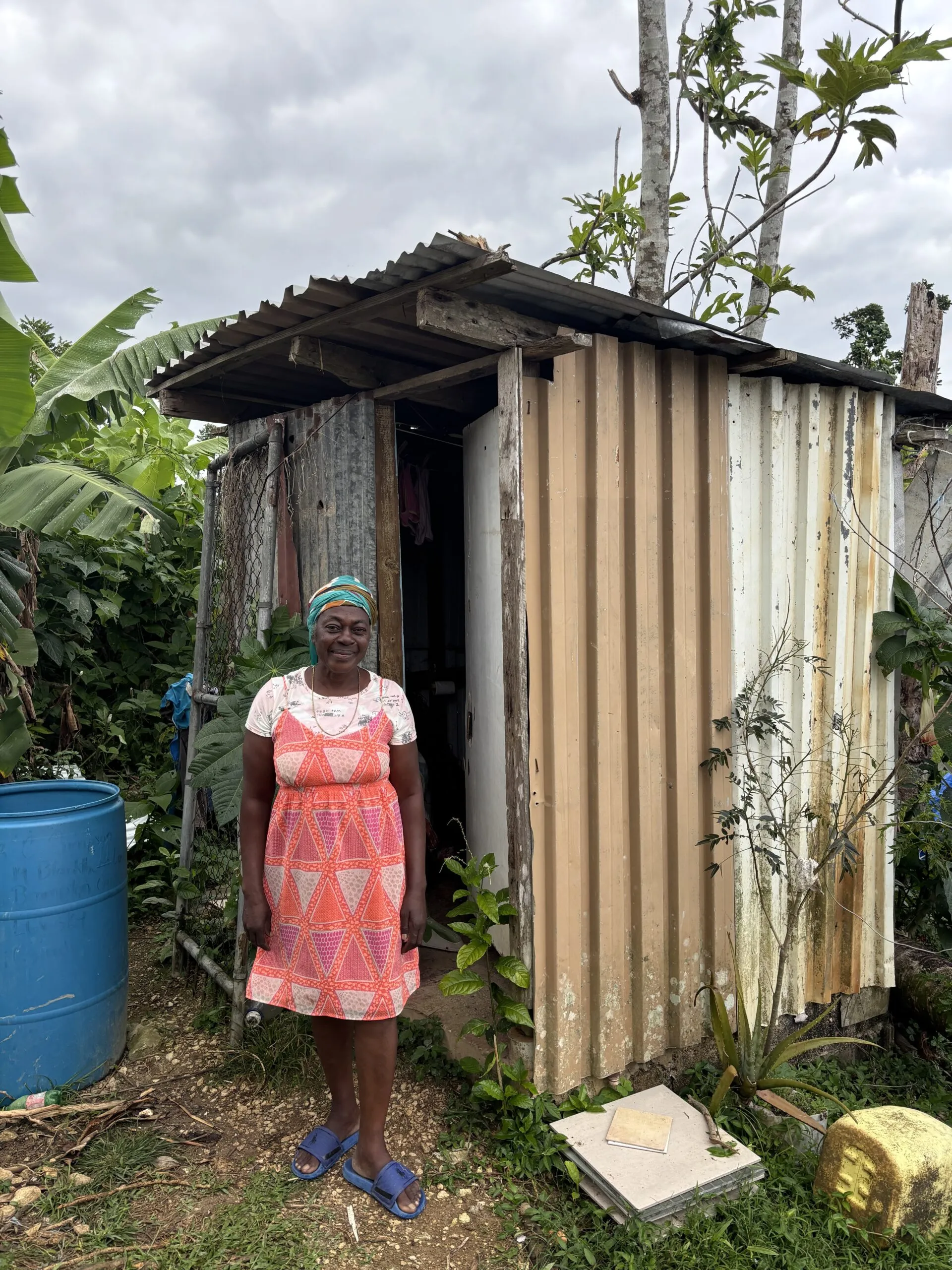
“We came out of the house and locked the door,” Carrol recalled. “We have a toilet outside, so the three of us went in and stayed there for the whole hurricane.”

For more than six hours, they sheltered in the small concrete outhouse as the storm tore through their community.

“While we were in there, we watched pieces of the house start to fly around,” she said. “When we looked again, the whole house was flat and everything had started blowing away.”

They tried to leave their small shelter and run to a neighbor’s house three times, but the winds, which were strong enough to tear off the outhouse’s zinc roofing, made it too dangerous.

“It was a feeling inside me that something would happen to us if we went out,” Carrol said. “So, we stayed inside and got soaked.”
After the storm

A woman stands next to a small outdoor structure used as shelter during a hurricane, with storm damage visible around her.
Carrol stands beside the outhouse where she sheltered with her son and grandson as Hurricane Melissa ripped the roof off their home.

When the storm eased, a neighbor called out and brought them to safety inside their house.

“She gave us dry clothes to wear and cooked us some food,” Carrol said. “Then she opened a family member’s house so we could rest for the night. We didn’t have anything with us. I even came out barefoot, no shoes.”

The next morning, Carrol and her son returned to where their home had stood.

“When we looked across the whole place, there was nothing green left. Everything was brown like it was roasted,” she said. “I saw trees, houses, everything flattened to the ground. Most peoples’ roofs were gone.”

Across Jamaica, countless families faced similar losses. Homes were damaged or destroyed, and many people were left without access to safe shelter, clean water, or basic supplies.

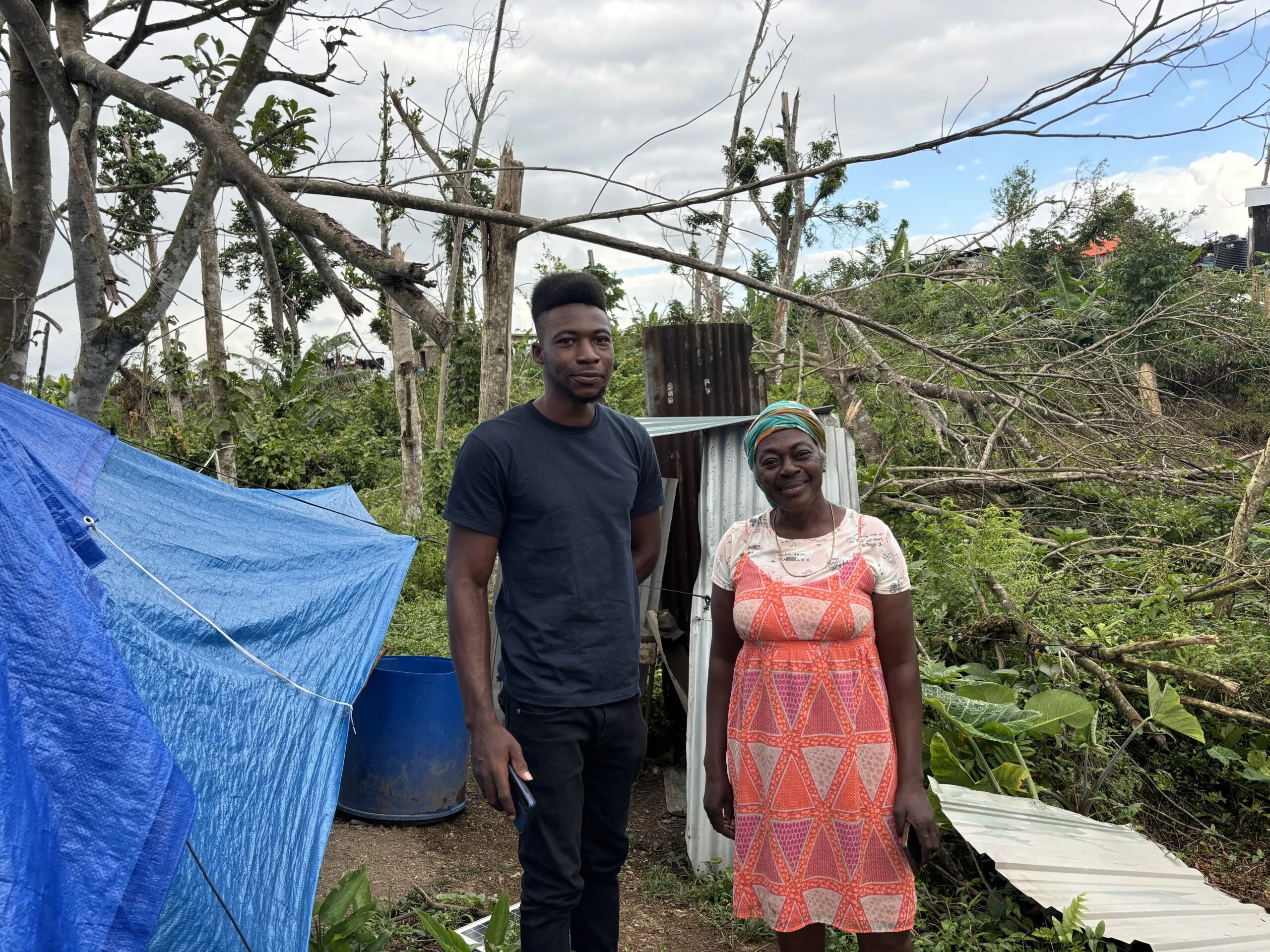
In the days that followed, Carrol and her family searched through the debris and found a tent. They set it up on the same spot where their home once stood.

“We started to pick up boards and put them around and said, ‘Yes, now we have a house,’” Carrol remembers.

For more than three months, they lived in the tent, gradually using whatever they could to make it more stable.

“I feel good because I’ve made the place like a real house,” Carrol said. “I’m not getting water leaking into the tent anymore, so I’m comfortable.”

Daily life remains difficult despite Carrol’s positive attitude. During the day, the heat is intense. At night, they sleep on the floor. There is no running water or electricity.

“When the rain falls, I catch water off the tarpaulin to wash my dishes and do laundry, and I buy water to drink,” she explained. “We have no power, but we use a solar-powered charger and sometimes go to a shop to charge phones.”

To cook, Carrol built a small outdoor kitchen using fallen wood and zinc panels. She uses scrap wood and debris as fuel for her fire. But when heavy winds return, the structure is prone to collapsing again, forcing her to rely on dried food until conditions improve.

Early response and ongoing support

Carrol and her son, Frandido, have added tarps, wooden supports, and plastic coverings to their temporary shelter.

Even before Hurricane Melissa made landfall, CARE and partners in the Caribbean were preparing to respond. Building on previous emergency responses in Jamaica, including recent hurricanes and flooding, local partner organizations mobilized quickly. They prepared and positioned supplies (including tarps, chargers, flashlights, and first-aid kits) for the communities forecasted to be hit hardest.

In the immediate aftermath of the storm, CARE worked with organizations including the Jamaica Network of Rural Women Producers (JNRWP) and members of the Caribbean Gender Alliance to provide emergency assistance.

“Immediately after [Hurricane] Melissa, we didn’t have to wait for a shipping container,” says Tamisha Lee, JNRWP president. The partnership with CARE ensured that they “had the cash ready to provide food and water within hours.”

Families also received essential items such as food, clean drinking water, hygiene and dignity kits, and basic shelter materials like the tarpaulins Carrol uses for shelter. These early supply deliveries helped people meet immediate needs in the days following the storm.

Before the partnership with CARE, Lee says that disaster response in Jamaica was often about “what others thought we needed. Through CARE’s support, we have flipped that script.” The biggest change since working with CARE, she says, “is dignity and choice.”

As communities began to recover, CARE and partners expanded their support to help families rebuild their lives. This has included providing repair materials for homes along with essential household items like cooking supplies and bedding. In some cases, families have also received support to help restore livelihoods and regain their previous sources of income.

“We have moved from being passive recipients of aid to active managers of our own recovery,” Lee continued. “We now have 150 women receiving cash transfers, giving them the power to prioritize their own families’ needs, whether that’s medicine, school books, or seeds.”

For families like Carrol’s, these sorts of support are the difference between being able to imagine a temporary future and a permanent one.

CARE’s response in Jamaica

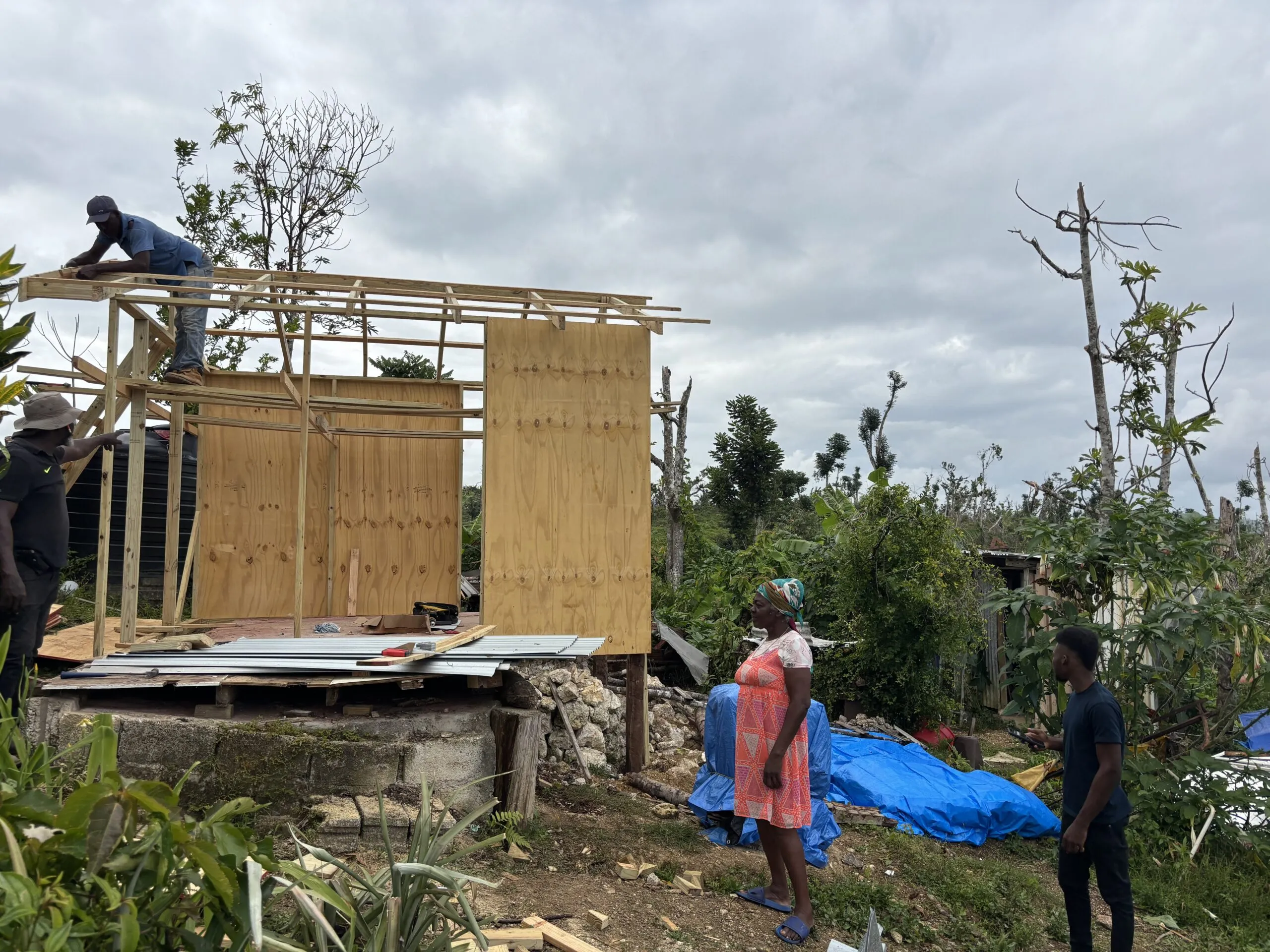
A construction team works to rebuild a home in rural Jamaica.
Local partners, including the Jamaica Network of Rural Women Producers, are supporting families as they rebuild after Hurricane Melissa.

Six months after the storm, recovery is still underway. Daily life has been upended on a massive scale: roads were blocked, power and communications were knocked out in many areas, and health services came under heavy strain. Many families are still working to repair or rebuild their homes and livelihoods.

“What comes next is a shift from relief to resilience,” says Lee. “We have made incredible strides… but we still have members with nowhere to live. Months after Hurricane Melissa, some of our women are still staying with relatives because their own houses were completely leveled. For them, the ‘emergency’ isn’t over. It’s a daily struggle for survival.”

Safe access to shelter remains one of the largest ongoing needs. Other people and families continue to face challenges accessing reliable sources of clean water, and the mental and emotional distress of the disaster is still acute.

“The trauma of losing everything, of being homeless in your own community, takes a heavy toll,” Lee told us. “Our women need sustained emotional support as they navigate the long, exhausting road of reconstruction.”

CARE and its partners continue to work with communities to support recovery efforts around the island, focusing on shelter, water and sanitation, and helping families recover economically and emotionally.

“The situation is still very bad, but it could have been worse. God has spared our lives,” Carrol said. “Nobody was prepared for such a storm as this until it happened.”

JNRWP and other CARE partners are already planning ahead for future of disaster preparedness and response on the island.

“We are moving past the days of waiting for aid to arrive weeks after a storm,” she says. “The future of Jamaica, and specifically for our rural women, is built on speed and local agency. We’ve proven that when we have pre-positioned funds and digital financial tools, our women don’t just survive. They lead the recovery. We are deepening our partnership with CARE to ensure that pre-positioning isn’t just about money, but about power. We aren’t just rebuilding what was there before; we are building a Jamaica where rural women are the strongest link.”

Carrol, one of those strong rural women looking forward to a more resilient, more equal Jamaica, remains hopeful about the future and the home she is rebuilding. Remembering the support she’s received so far, she said, “When I was told I was going to receive something, I said thank God. God bless those people. I don’t know them, but I thank them.”

Support hurricane recovery in the Caribbean

Learn how CARE and local partners are helping families rebuild after Hurricane Melissa.

Learn more
Back to Top