A young woman’s new normal in the West Bank

By Deniz Dönmez September 5, 2025

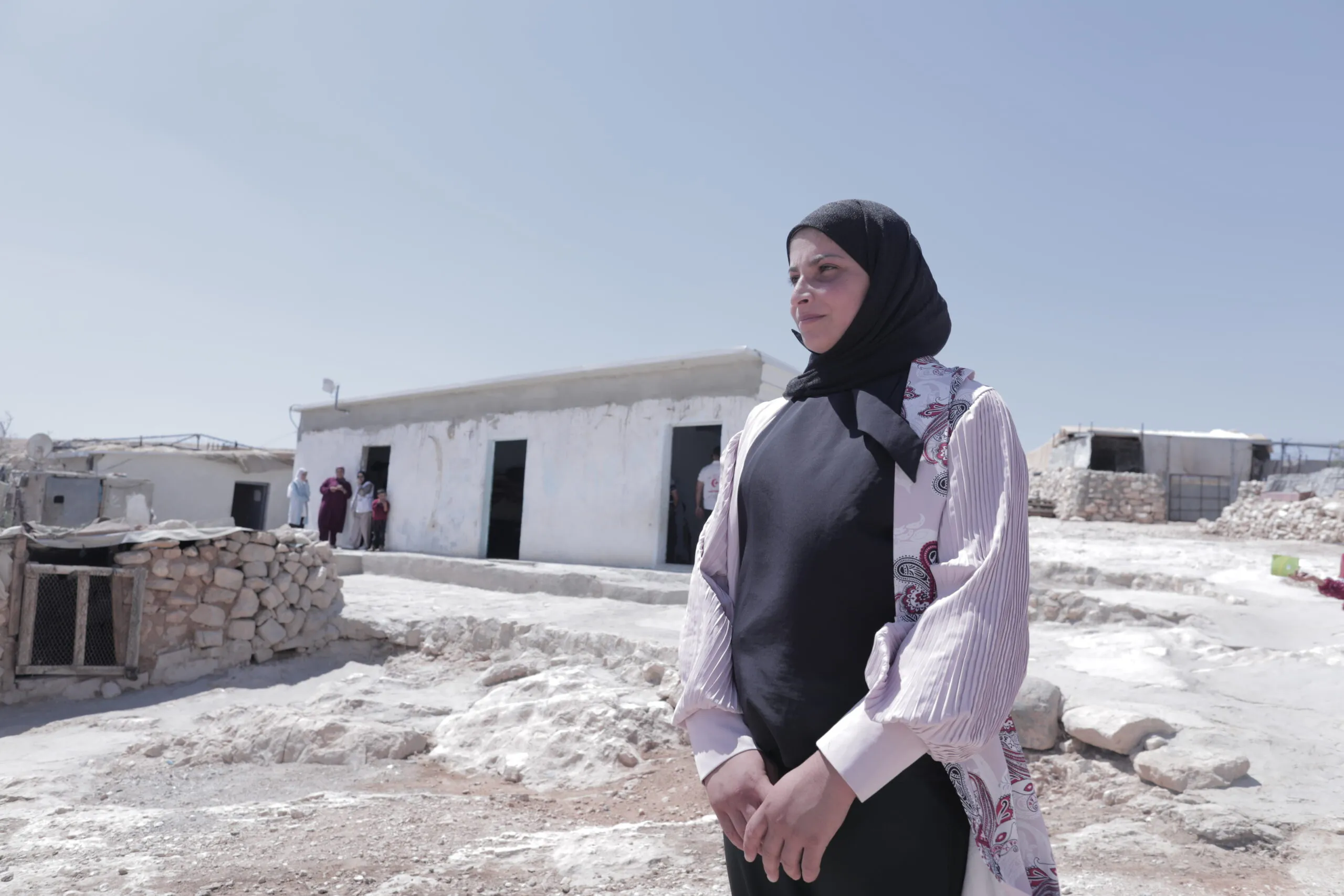
A young woman in a black headscarf looks out over rubble

Noura looks in the direction of where her old school used to be. All photos: 4K Media/CARE

Crisis in Gaza
CARE is responding to the crisis in Gaza
Learn more

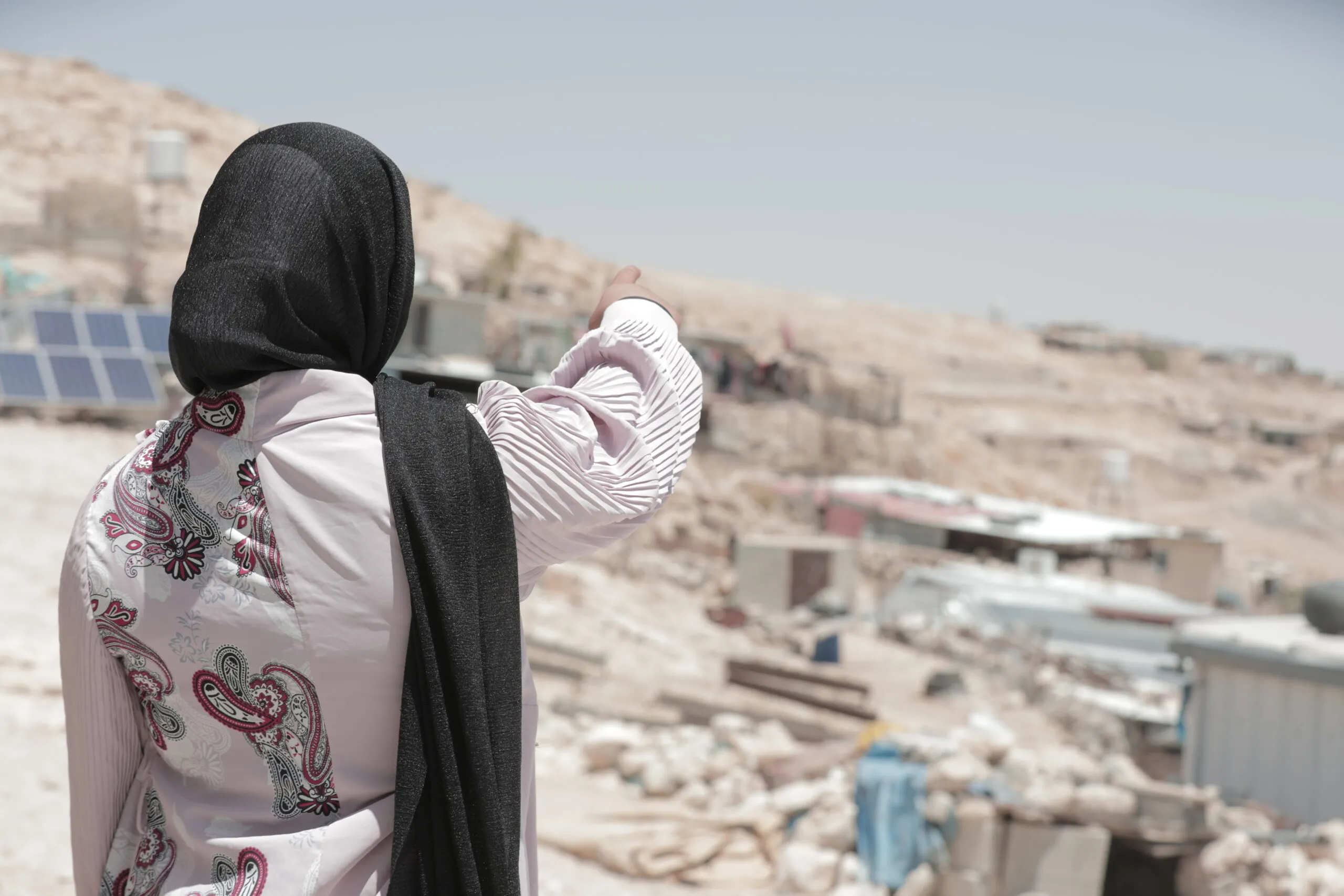
From the hill just above her house, 17-year-old Noura* looks across the dry slopes of Masafer Yatta in Palestine’s West Bank. At first glance, there's little to see. But then Noura points to a pile of scattered stones. “That's where my school used to be,” she says. “Only 200 meters away. The Israeli army came and destroyed it.”

Want more stories like this?

Sign up for the CARE News & Stories email newsletter to find out more about what’s happening around the world through vibrant, engaging stories that put humanity at the center.

Subscribe

Noura lives in one of the Palestinian communities tucked into the rocky hills of the southern West Bank where she shares a house with her family. Their home, like most here, is simple: a few rooms built with stones and cement blocks. There is no playground nearby, no shop around the corner, and now no school within walking distance.

Masafer Yatta lies within what Israel calls “Firing Zone 918,” a 7,400-acre area designated as a military training zone in the 1980s. Since then, the nearly 1,200 Palestinian residents have been under the constant threat of eviction, home demolition, and forcible transfer. About 20% of the West Bank has been designated as military zones like this. Masafer Yatta falls in Area C, the part of the West Bank under full Israeli control. In 2022, Israel’s high court ruled to allow the eviction of more than 1,000 Palestinian residents from the area — a decision immediately condemned by human rights experts, who warned it could constitute “forcible transfer” — a de facto breach of international humanitarian law.

The International Court of Justice has since reaffirmed that Israel’s occupation of the Palestinian territory, including the West Bank, Gaza, and East Jerusalem, is unlawful.
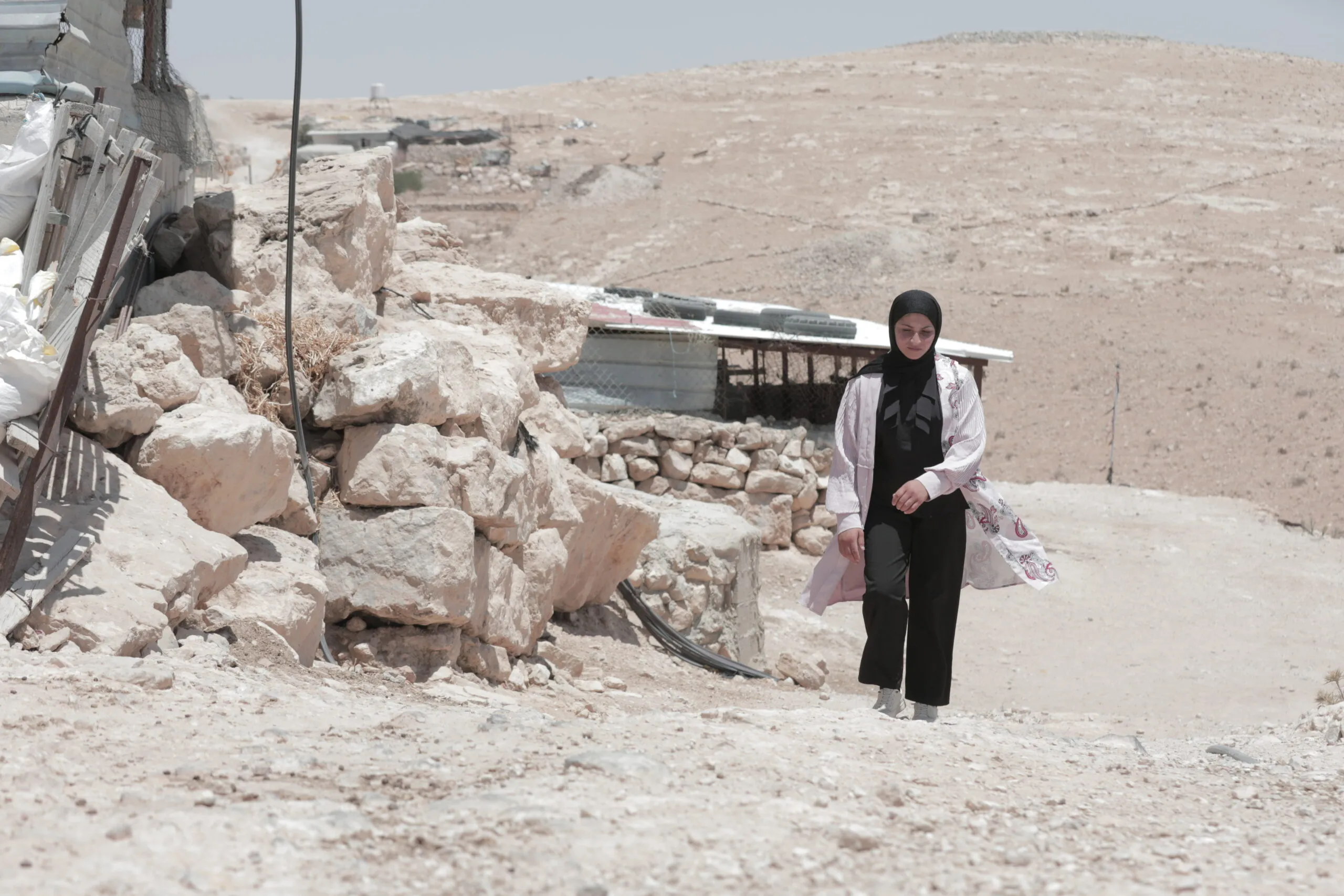
Noura walks through her village, which has been under direct Israeli control since the 1980s.

In Masafer Yatta, daily life has become even more fragile in recent years. Settler violence is rising, military raids are more frequent, and homes, schools, water systems and health clinics all face demolition orders. Families live under the constant threat of forced expulsion. Even CARE’s mobile health clinic in Noura’s community — the only reliable access to medical care for many residents — is at risk of being demolished.

Inside her home, Noura’s days begin with a basic routine. “I wake up, I pray, and I help my grandmother,” she says. “I do the laundry, clean the house, help her with what she needs.”

Like many girls her age, she juggles household responsibilities with her education, or tries to. She rarely leaves the house anymore. “I don’t really hang out with friends,” she says. “Just my cousin. She’s the only one I talk to about what’s happening to us.”

Before her school was demolished, things were different. “It was close. It felt normal,” she says. “Now, if our old car works, we use it. If not, we walk for three hours. We come home red from the sun.”

Noura points in to where her school used to stand. Now, she has to walk for three hours to reach a school.

But it’s not just the heat and the distance that make the journey difficult.

“Once, a drone flew above us,” she remembers. “I was so scared, I fell and hit my nose. I started bleeding. I ran home. I didn’t know what was happening and just wanted to get away.”

Other times, settlers block their way. “They stopped us, put us in cars. I didn’t know where they were taking us. I was scared.”

After months of this struggle, Noura stopped going to school altogether “I left school for two years,” she says. “It wasn’t just the road or the settlers. The army was there too. Sometimes we’d leave home in the morning and get back at midnight.”

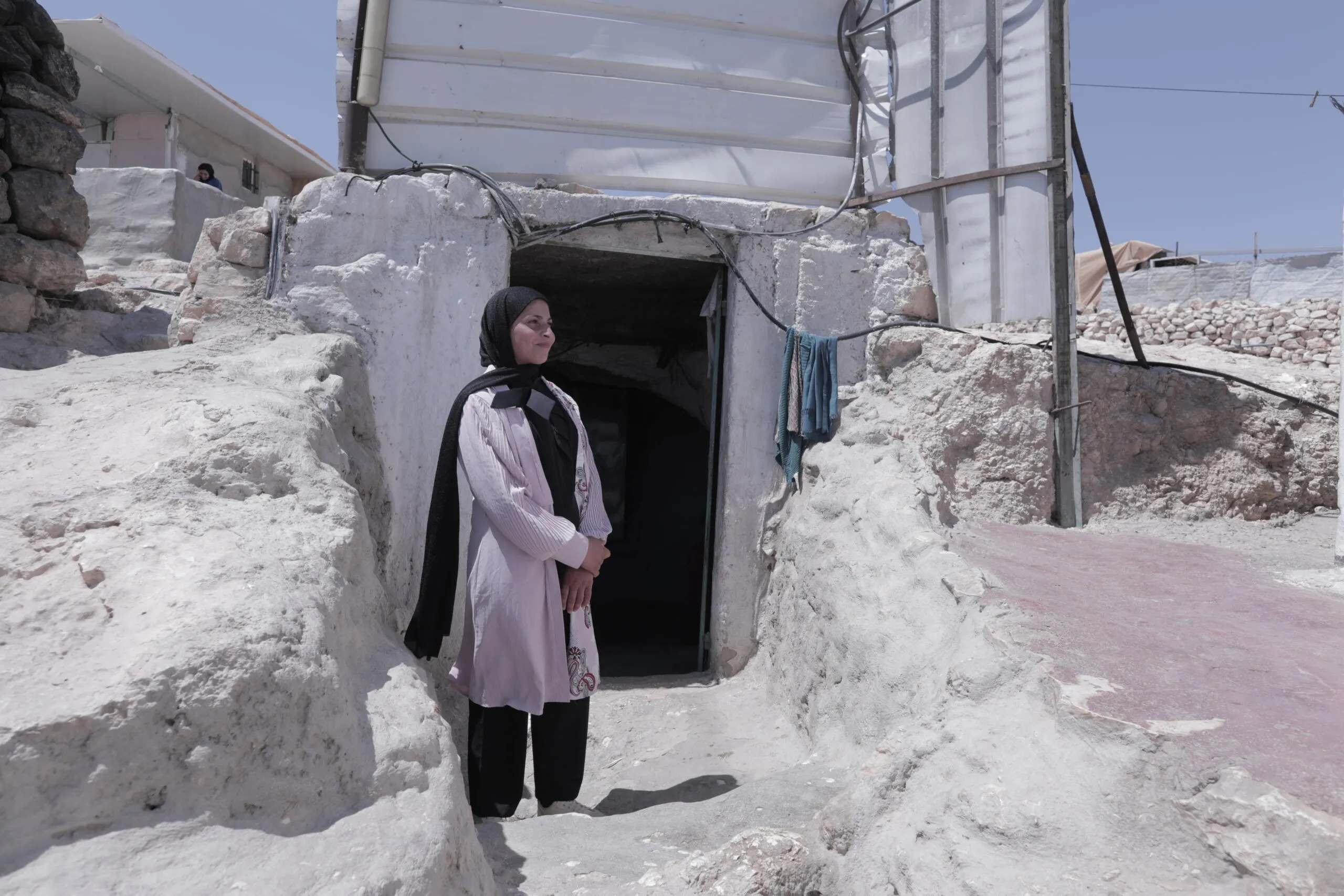
Home doesn’t always feel safe, either. “One night, they came at one in the morning — the settlers” she recalls. “They pulled us out of our house. It was freezing. They didn’t let us bring blankets. They broke things. They took money from my uncle and my grandparents.” She folds her hands in her lap and looks down. “They hit my uncle. They hit me too. I was terrified. I didn’t know whether to cry or run.”

With help from psychosocial support sessions in her community, Noura found the courage to return to her education. She now attends a school nearly three hours walk from her home. “Even though I’m scared,” she says, “I want to change my life.”

When asked what she hopes for, her answer is simple: “I want to study. To work, to go out, to live. I want to travel, to Tunisia, maybe. I want to make something of myself. I’m not giving up,” she says. “Even if I’m scared.” And what would she say to other girls in her position? “I’d tell them: don’t give up. Even if you’re afraid. Keep going. We deserve better.”

Noura stands in front of her home, where she and her family were attacked in the past.

The daily lives of girls in Masafer Yatta reflect a broader crisis across the West Bank. Since the escalation of hostilities in Gaza in October 2023, settler violence has reached record levels. In the first six months of 2025 alone, more than 1,200 Palestinians, including over 600 children, have been forcibly displaced. Hundreds of Palestinian homes and schools across Area C have been demolished this year alone.

In August, 2025,  Israeli bulldozers leveled the Bedouin community of Ein al-Hilweh, where CARE had been supporting herding families with essential supplies. Five of those families lost every structure they had in a single day. When they tried to rebuild, settlers attacked and threatened them, halting reconstruction.

Across the West Bank, access to basic services like health care, education, and protection is disappearing fast. Humanitarian needs are rising as roads are blocked by settlers or closed by military checkpoints, but aid workers too face mounting challenges. And for families like Noura’s, the space to live, study, and feel safe is shrinking by the day.

For children, the impact is immediate. Walking to school has become a dangerous daily ordeal. And for girls like Noura, the struggle goes beyond studying. Now, it’s about holding onto hope for a safer, better future.


*Noura’s real name has been changed to protect her identity.

Make a difference today.

Education is essential to breaking the cycle of poverty. Your support matters.

Donate now.
Crisis in Gaza

How you can help

The scale of suffering and need in Gaza is at a level we have never seen. Your gift reaches innocent women and families surviving war and starvation in Gaza with lifesaving aid.

Learn more
Back to Top