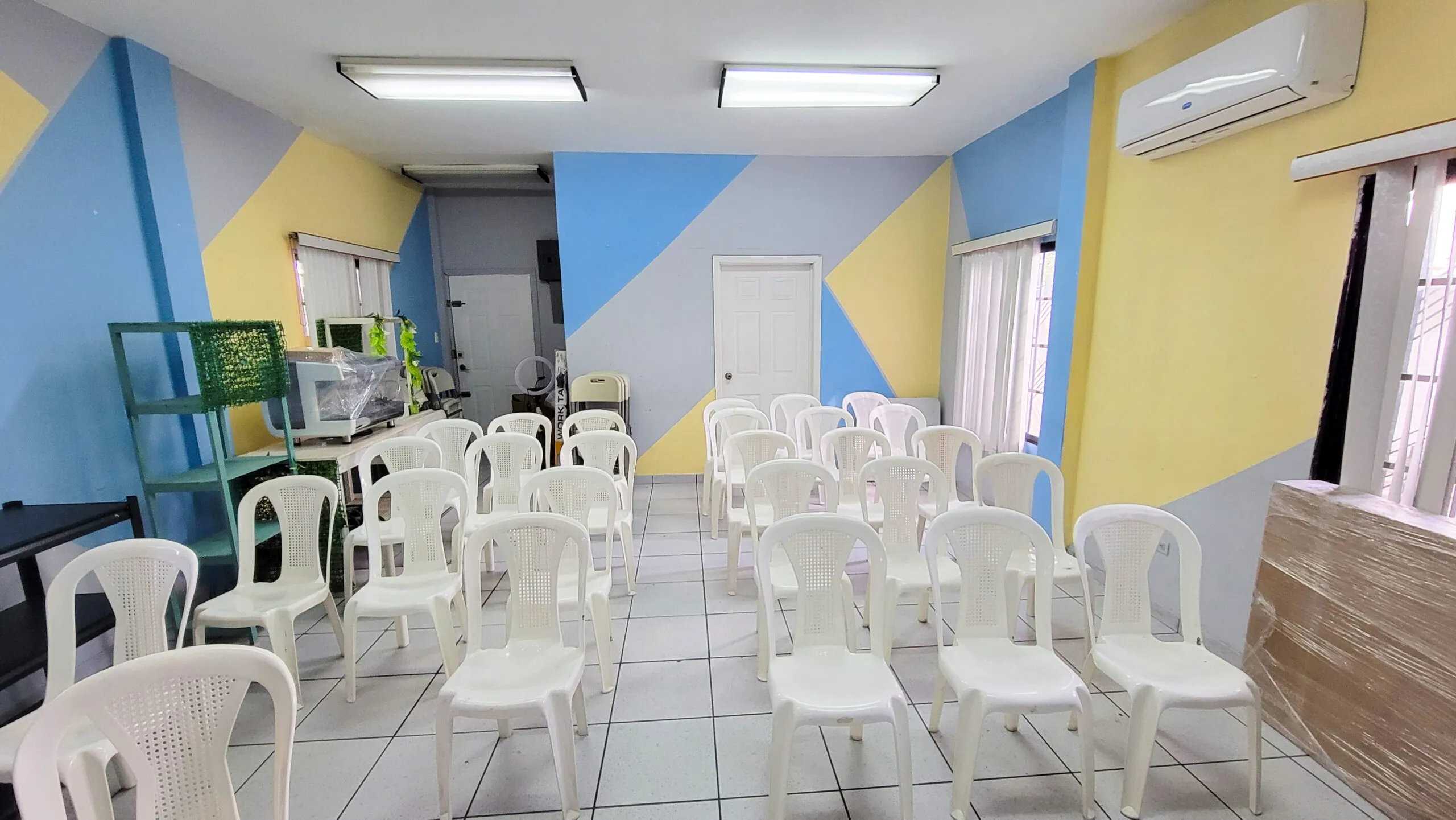
An empty classroom at the Business Development Center for MSMEs in San Pedro Sula, Honduras.

A once bustling training room at the Business Development Center for MSMEs in San Pedro Sula, Honduras now stands empty after funding cuts shuttered many of its program offerings. Photo: CARE Honduras.

For more than a decade, the Business Development Center for micro, small, and medium enterprises (MSMEs) in San Pedro Sula worked in partnership with CARE and other international organizations to help women, youth, and returned migrants build stable, dignified futures. Our work showed what is possible when communities are supported. And it also shows what is lost when that support is taken away.

The power of possibility

Many women and young people in our region face enormous barriers to education, employment, and safety. Our work was born from a simple belief: with the right support, people can build stable, dignified futures for themselves and their families.

Together with our partners, we created opportunities through employment, entrepreneurship, and skills training, especially for women, youth, returned migrants, people displaced by violence, and people with disabilities.

Over the years, the Center became a steady source of support in our communities. We created safe, empowering spaces where women and youth could access counseling, skills training, and practical support that helped them see themselves as leaders, entrepreneurs, and active contributors to their communities.

Because of this work, many women and young people escaped violence, started small businesses, or found meaningful employment.

One story that has stayed with us is that of María Hernández.

In 2023, María lived in a community heavily affected by crime in San Pedro Sula. She owned a small food business but was regularly subjected to extortion by territorial criminal groups called maras. As a single mother of three — her eldest only 14 years old and already experiencing threats and intimidation — María felt she had no choice. With no support network and fearing retaliation, she made the painful decision to leave her home and migrate to the United States.

At the beginning of 2024, María returned to Honduras. She came back without resources to support her family and still carrying the emotional weight of her journey. Uncertainty and instability followed her home.

A few days later, she connected with the Youth Convergence Network (Red de Convergencia Juvenil), which shared information about programs run by the Business Development Center for MSMEs – RVS (CDE MIPYME RVS) for returned migrants. Through this referral, María enrolled in a barista skills training program funded by the United States government.

After completing her training, María secured stable employment. Today, she can provide food, housing, and education for her children. Her experience, and that of many other women in our programs, shows what is possible when people are given the tools to rebuild their lives. We help create stability, generate hope, and reduce the likelihood of repeated migration by supporting women and young people to build a future in their own country.


Building confidence and economic independence

For twelve years, the Center offered diverse opportunities for women and young people to learn, grow, and achieve their goals. Our work reached thousands:

  • 2,400 women strengthened their leadership and business skills
  • 400 new businesses were launched through the Empréndelo startup program
  • Hundreds more received job readiness training, internships, and psychosocial support

We helped women prepare for employment through hands-on training, real-world private sector experience, and emotional support for those affected by violence.

One participant, Leonela López, joined an entrepreneurship initiative funded by the United States. She learned how to identify her target customers, improve her products and services, and develop strategies to stand out in the market. These skills gave her the confidence to design a sustainable business model.

During her training, Leonela showed signs of emotional strain. Recognizing that entrepreneurship requires both technical skills and emotional resilience, the program provided psychosocial support. This guidance helped her manage stress and face challenges with greater stability.

At the end of her training, Leonela received USD $1,000 in seed capital. She used it to purchase equipment, register her business, and develop a brand identity. Today, her business generates approximately $500 USD (about 12,000 Honduran lempiras) each month, significantly improving her quality of life.

Leonela’s story reflects our holistic approach: combining practical training, emotional support, and financial resources so women can transform their lives and strengthen their communities.


When the funding stopped

For years, these programs built stability and possibility.

Everything changed on Friday, January 24, 2025, when the Center’s funding was suddenly cut. Nearly half of our projects were supported through international assistance, particularly from the United States. Overnight, suspension notices arrived, followed quickly by permanent terminations. Our entrepreneurship, counseling, employment, and training programs were forced to stop. More than 2,400 women and young people were affected.

The hardest part was knowing we could no longer support the people who were actively building stability through our programs. Staff contracts ended. Systems shut down. Internships, training, education, employment pathways, and psychosocial services disappeared. U

SAID had been one of our most vital partners through programs that supported women affected by violence, strengthened local economies, promoted environmental sustainability, and created job pathways for returned migrants. Thousands of women completed their studies, secured employment, and brought dignified incomes to their households.

These projects focused on four core areas:

  • Entrepreneurship: Helping women and youth start businesses and build economic independence
  • Employability: Preparing participants for the job market through training, internships, and private sector connections
  • Specialized technical training: Developing skills in high-demand sectors
  • Reintegration into education: Supporting those who had left school to complete their studies

When that support ended, a critical lifeline was removed.


Immediate and lasting consequences

We faced two painful realities: telling participants that their programs would not continue, and laying off dedicated staff who had worked tirelessly to support their communities. Each conversation carried the weight of interrupted dreams. These were not abstract impacts. We heard things like:

  • “My household income will never be enough to continue my studies.”
  • “Private psychological services are too expensive. I can’t afford them.”
  • “Without seed capital, I’ll never achieve financial independence.”
  • “These programs helped us believe in our dreams, even as women over 45.”

Since losing funding, we have worked urgently to find alternatives. We applied to Spanish Cooperation, the European Union, and German Cooperation. We contacted the U.S. Embassy in Tegucigalpa about future opportunities. We also began offering consulting and training services to private sector clients to sustain part of our work.

But rebuilding takes time — and the consequences of lost funding are immediate.

The support we once received from the United States government changed lives that might otherwise have remained trapped in cycles of poverty, violence, and limited opportunity. Every dollar invested meant far more than a figure in a budget. It meant a mother finding steady work, a migrant launching a small business, a young person building the skills to secure a stable future. These programs reduced migration, lowered unemployment, and helped prevent economic violence, especially among women and young people vulnerable to gang recruitment.

When assistance is withdrawn, we are not talking about spreadsheets or percentages. We are talking about people losing access to education, food security, economic opportunity, and hope. Community centers close. Programs stall. Families who had achieved stability fall back into uncertainty. Each cut interrupts a story of progress and possibility.

Continued investment in women and young people is not charity. It is one of the most effective ways to build safer communities, reduce forced migration, and create lasting economic stability.

My message is simple and urgent:
Your support changes lives. Your investment builds futures. And when that support is withdrawn, the consequences are real, painful, and often irreversible.


Back to Top