This local network has granted us access to communities that other international organizations cannot reach. Through this access, CARE delivers essential, community-based health services alongside broader humanitarian assistance, including in Gaza, where CARE is one of the few organizations that has continued to deliver frontline health services throughout the conflict. CARE also works with Palestinian communities to improve healthcare, water and sanitation, and to promote sustainable agriculture and livelihoods.
Relief efforts in Palestine (West Bank/Gaza)
Over the years, CARE has worked closely with local government and community-based organizations to strengthen democracy and civil society, with a particular focus on meeting the needs of poor, at-risk, and marginalized people in Gaza and the West Bank, including East Jerusalem. A central pillar of CARE’s work is the delivery of essential health services, particularly for women, children, and populations facing barriers to accessing public health facilities. We work with local organizations to increase the participation of women and marginalized groups in decision-making at all levels throughout the region.
CARE and its partners manage programs that benefit half a million Palestinians each year across Gaza and the West Bank, including East Jerusalem. Our programs include assisting the most impacted families in meeting basic food needs; supporting farmers and producers with improved techniques; empowering women to earn an income; supporting women’s leadership; preventing and responding to violence against women and girls; direct delivery of primary healthcare and reproductive health services; and improving the mental health of children traumatized by conflict. Health programming, including maternal health, nutrition care, mental health, and psychosocial support, is a core component of CARE’s response across both Gaza and the West Bank.
How is CARE responding to the current crisis?
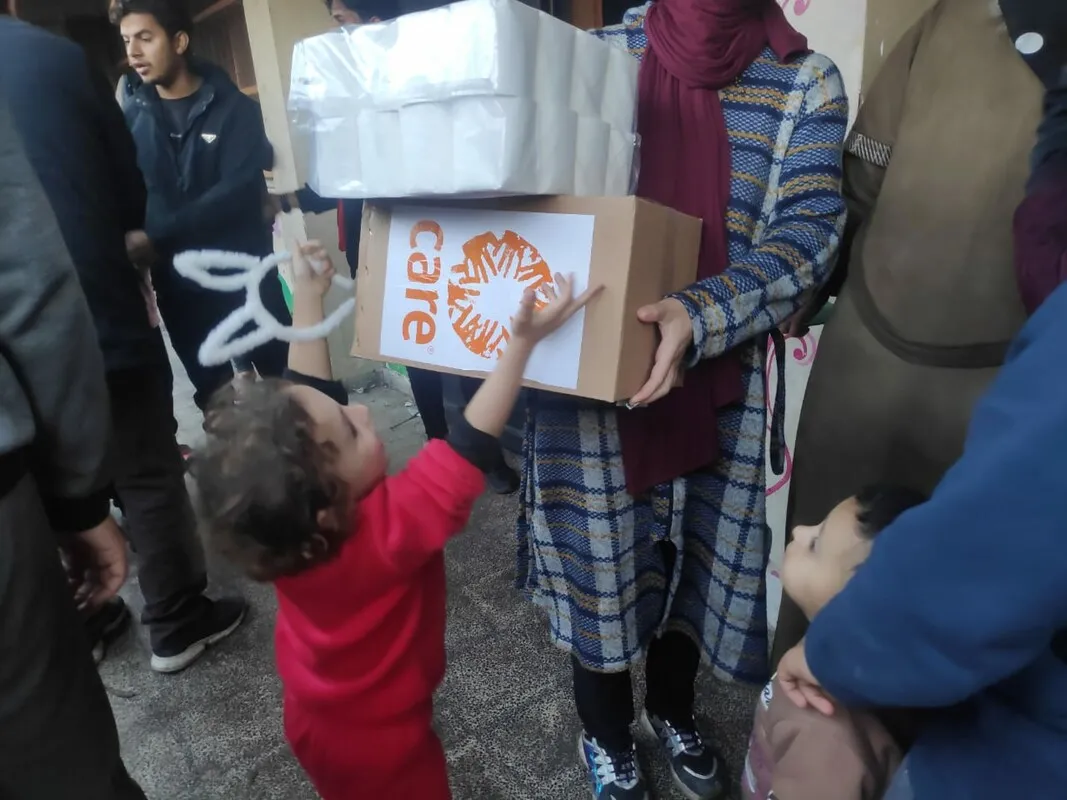
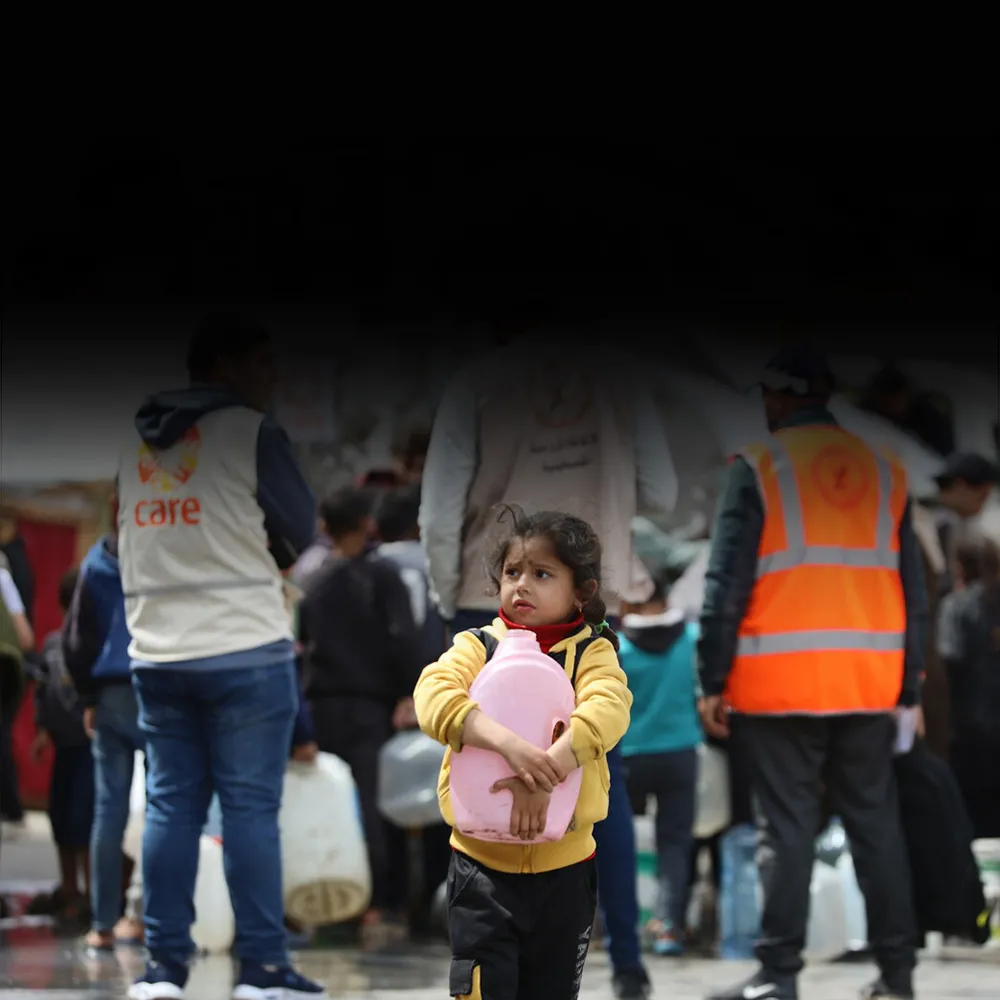
CARE was one of the first international organizations to respond to the recent Gaza crisis, distributing pre-positioned water, medical, and hygiene supplies. In addition, CARE provided direct primary healthcare services, including care for communicable and non-communicable diseases, psychological support, and primary care medications. CARE delivers these services through its own health facility in Gaza, providing maternal and reproductive health care, nutrition support, basic testing, and first-line trauma care, and is planning to expand its health footprint to respond to escalating needs. This includes maintaining maternal and reproductive health services at a time when routine pregnancy check-ups, care for new mothers, basic scans, and essential testing have become largely unavailable.
CARE also installed emergency latrines, provided support for solid waste management, and raised awareness about proper hygiene practices. Furthermore, CARE offered basic shelter materials, food baskets, cash assistance, and individual food rations. CARE also sourced additional relief materials through its trusted vendors.
Together with our local partners, CARE has launched a comprehensive emergency response to address the extreme levels of humanitarian need now and support the long-term recovery of affected communities. This includes sustained delivery of essential health services, with a particular focus on maternal health amid the near-collapse of maternal health services across Gaza.
In the West Bank, CARE and its partners support the use of mobile clinics offering comprehensive and quality primary healthcare services, reproductive health services, and psychosocial support. CARE’s mobile clinics reach hard-to-access communities, offering basic medical care, support for pregnant women and mothers, and mental health support. We also donated medical supplies to health facilities and provided funds to the Ministry of Health for emergency and medical equipment. CARE also supports more advanced medical care through services such as mobile eye clinics and basic diagnostic support, helping people in underserved communities access life-saving treatment. We have developed a response strategy for the West Bank and aim to run a partnership approach and fund critical key areas such as health, water and sanitation, shelter, health, and protection.
We have rigorous practices to ensure that dollars and supplies reach the intended program participants, and to date, we have never had an instance of aid diversion.