Kyiv, November 12, 2025 – As Ukraine heads into its fourth wartime winter, escalating strikes on power and transport systems are putting millions at risk of freezing temperatures and prolonged blackouts. With more than 200 civilians killed each month since June, CARE warns that immediate action is needed to protect people from direct attacks and the humanitarian consequences of being exposed to frigid temperatures.
In recent weeks, massive waves of missile and drone strikes have hit power plants and rail lines across the country, triggering widespread blackouts and disrupting fuel and water supplies. Damage to railway infrastructure is hampering the transport of coal, timber, and lifesaving supplies, further threatening the survival of civilians on the frontlines of this war and beyond.
“Every winter is another test of endurance for people already exhausted by four years of war. Recent strikes on energy and transport networks have created a perfect storm. Staying in a cold house, without light or heat, and plywood boards instead of windows, is a daily struggle for many Ukrainian families,” says Michael McGrath, CARE Ukraine Country Director. “Our partners are racing against time to deliver insulation materials, heating equipment, and aid before the first frost – as forecasters predict this winter will be one of the most severe ones in recent years. We need governments and donors to step up: lives depend on how fast help reaches those most in need.”
In towns and villages on the frontlines, women bear the brunt of inadequate shelter and energy shortages. Many are heads of households and bear the responsibility of caring for children, older family members, and people with disabilities, often in damaged homes with limited access to heating or safe fuel.
In Izium, 72-year-old Nina and her bedridden husband survived last winter by insulating broken windows with old coats and plastic sheets after their house was hit by shelling. “I was prepared to go through another winter with no windows,” she said.
Thanks to CARE’s local partner CFSSS, her home was repaired before temperatures dropped. According to the humanitarian needs assessments for the coming winter, aid organizations aim to support 1.7 million Ukrainians, 77 percent of whom live in frontline communities. Local authorities estimate that nearly 900,000 people in these areas will require immediate assistance to survive sub-zero temperatures.
Long-term weather forecasts for the winter of 2025–2026 indicate that Ukraine, and much of Eastern Europe, will likely experience an exceptionally cold and severe winter, marked by periodic Arctic outbreaks and substantial snowfall, especially in the first two months of next year.
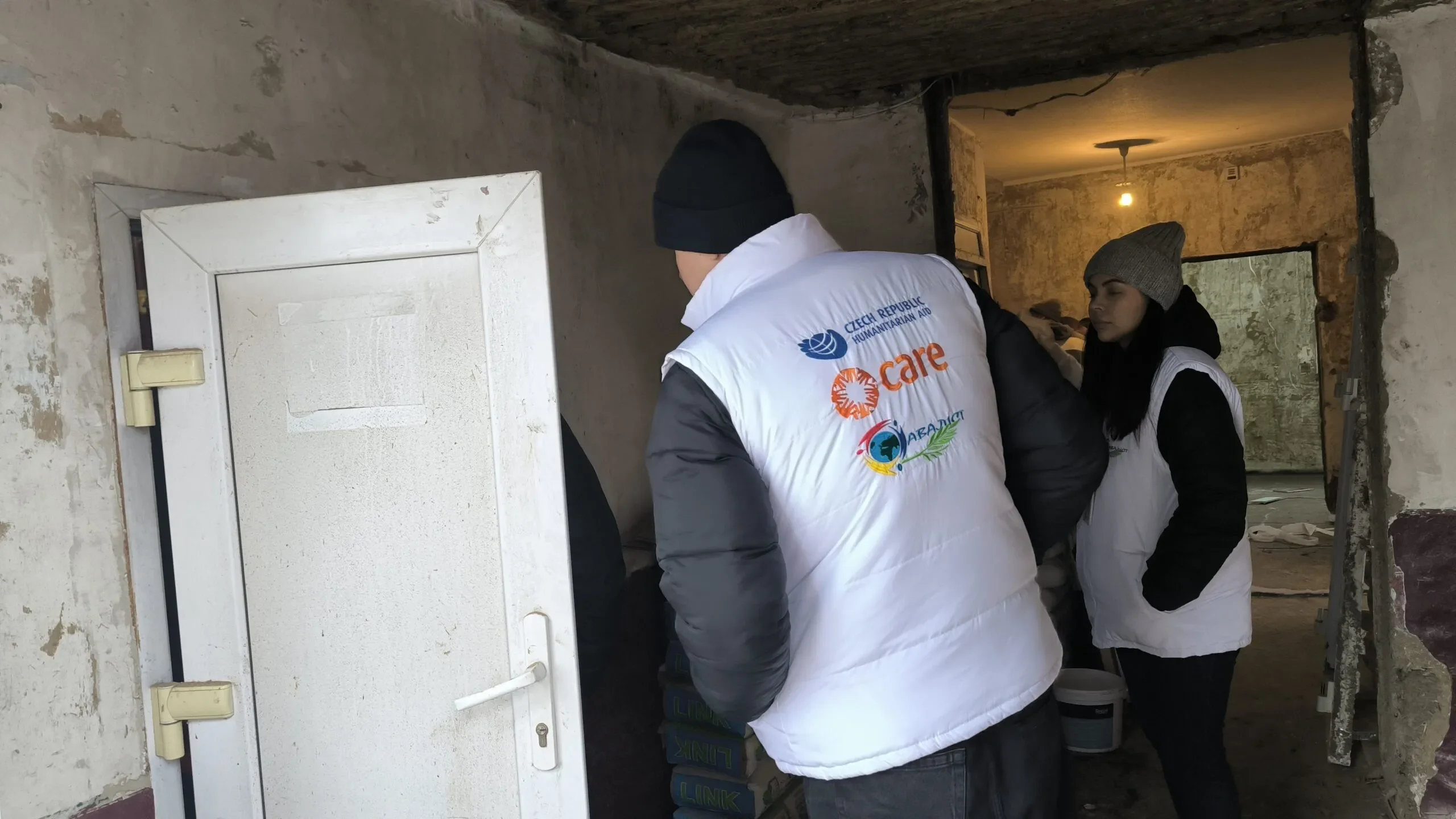
Severe cold spells often trigger new waves of displacement, especially among women and children, who seek safer and warmer places to make it through the winter. In the Donetsk region, where CARE and its local partner Avalyst are delivering repair supplies for home restoration, families are already preparing for the cold season amid ongoing shelling.
“Life in the village has never been easy,” says 53-year-old Svitlana from Donetsk region. “We don’t have central heating or gas, and gathering firewood in the forest, as we used to do before, is now extremely dangerous due to the landmines. The damage to our house because of the shelling puts us in a very difficult situation before winter. But thanks to the materials we received from Avalyst and CARE, we were able to quickly board up the damaged windows to at least temporarily keep the heat in the house.”
CARE and its local partners emphasize that timely and coordinated support to families in need before the winter sets in are critical to prevent a large-scale humanitarian crisis. The international community must not abandon Ukraine. Diplomatic efforts to ensure the protection of civilians are now more critical than ever. This war, like any war, cannot be normalized. We call on donors and humanitarians to accelerate funding and support, so that communities on the frontlines of the war in Ukraine can survive the months ahead with dignity and warmth.
For media inquiries, please email usa.media@care.org or contact Halyna Bilak, Communications Coordinator at CARE UKRAINE, Bilak@care.de