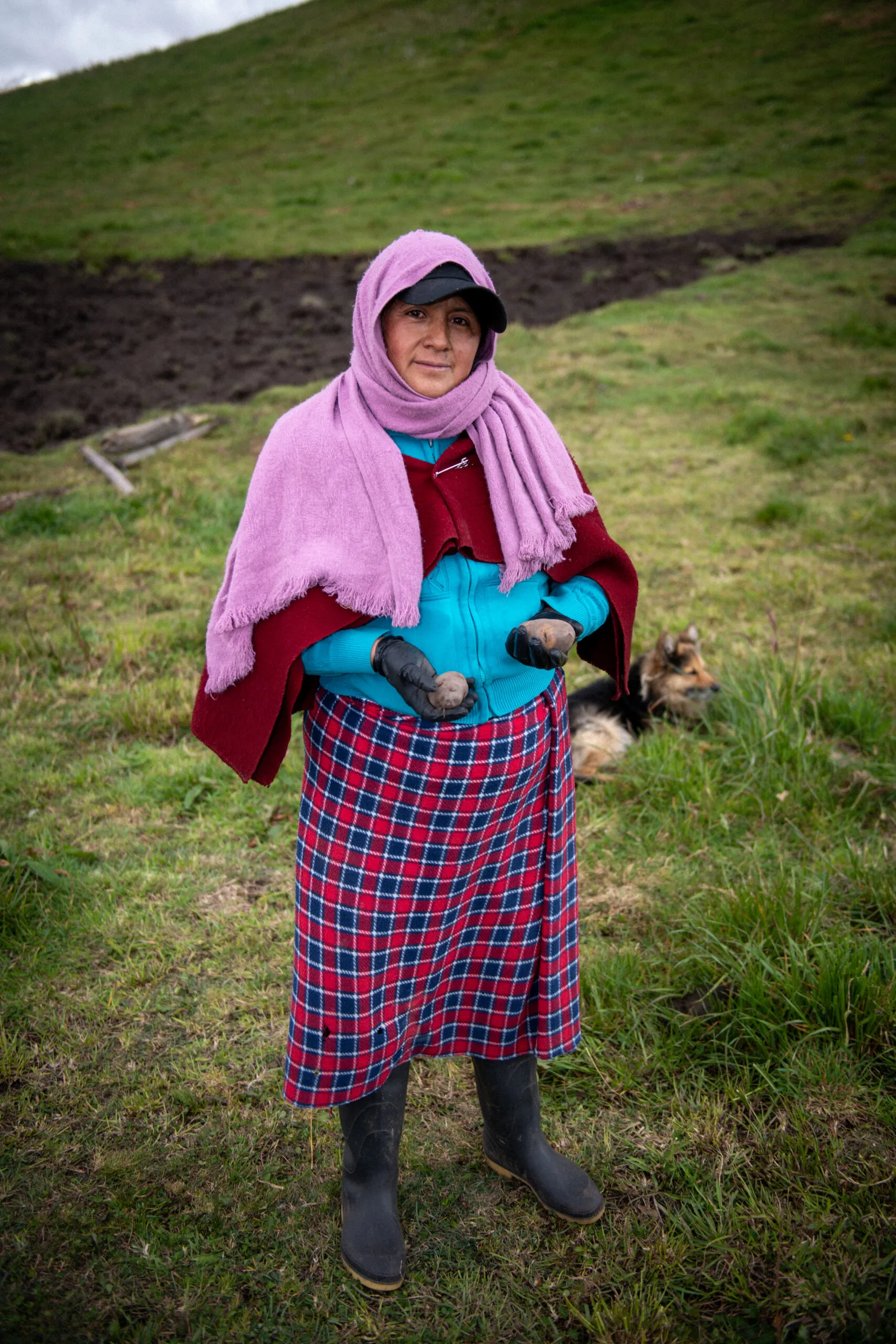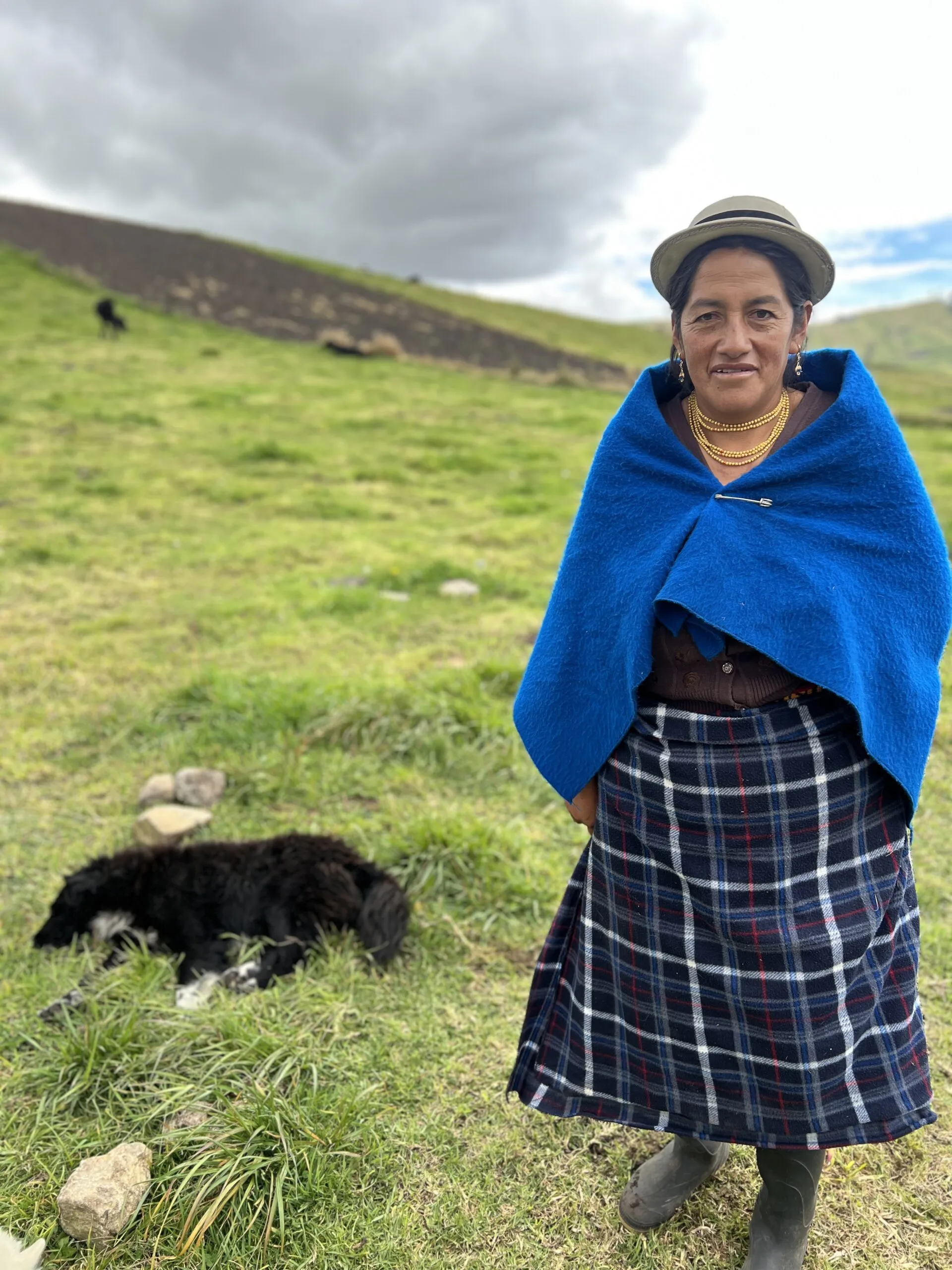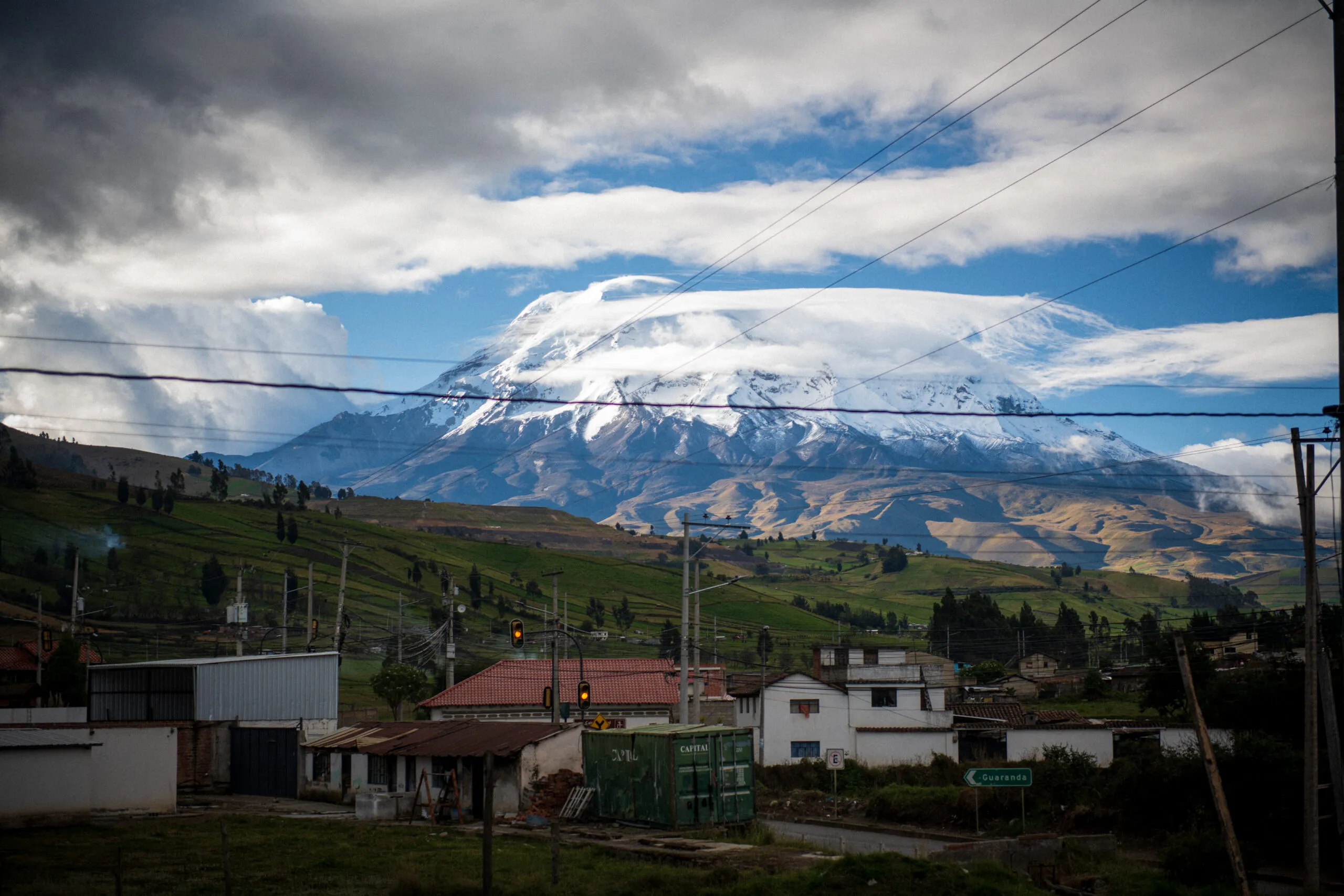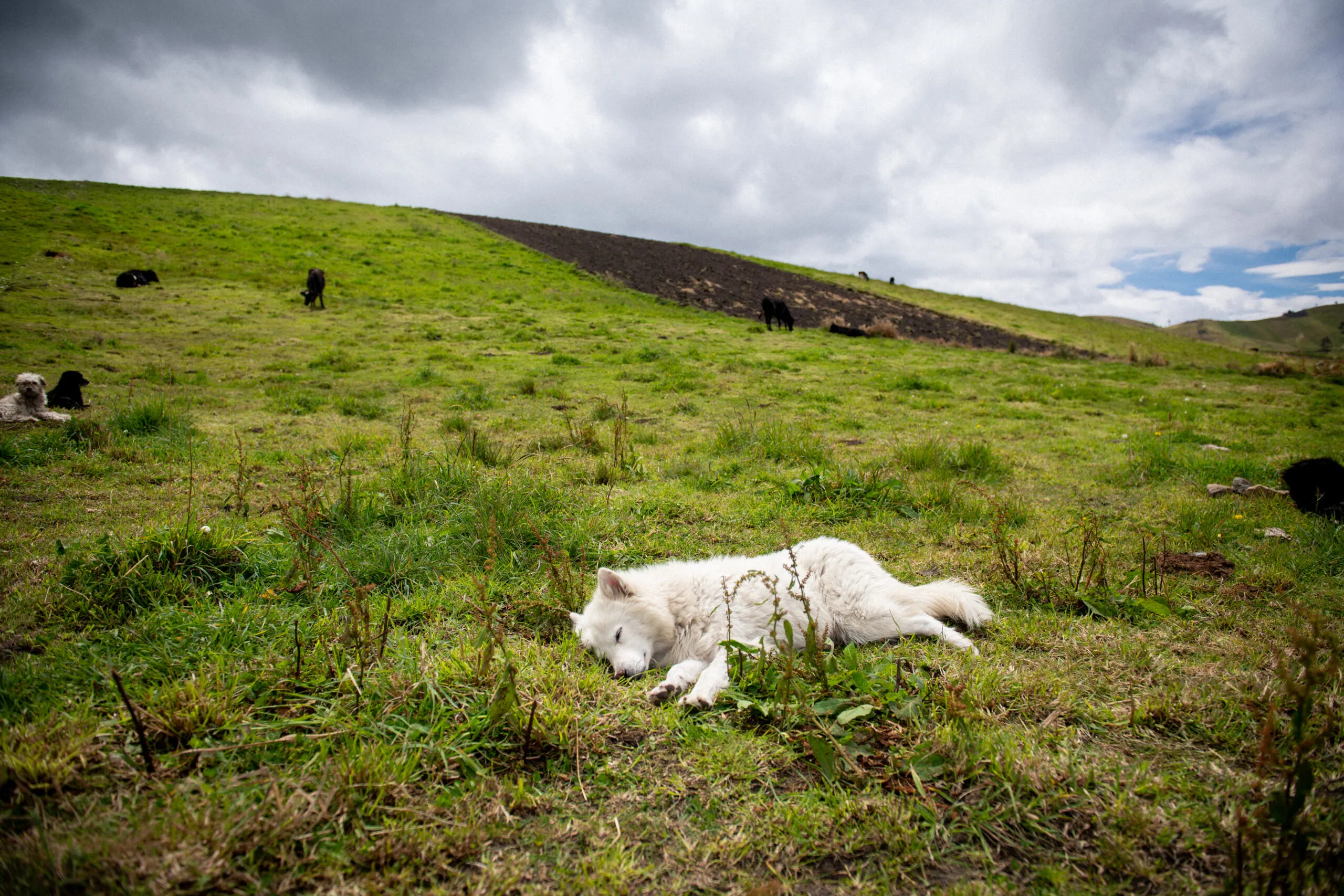

Dogs of all shapes and sizes trail behind the members of the San Juan Women’s Group, at least one for every farmer. Some boast more robust entourages of two or three scampering mutts, who flop happily onto tufts of bright green grass or into the freshly turned earth, napping in the sun while their humans toil. Rising just over the ridge, the snowcapped, volcanic peak of Chimborazo watches silently over their work.
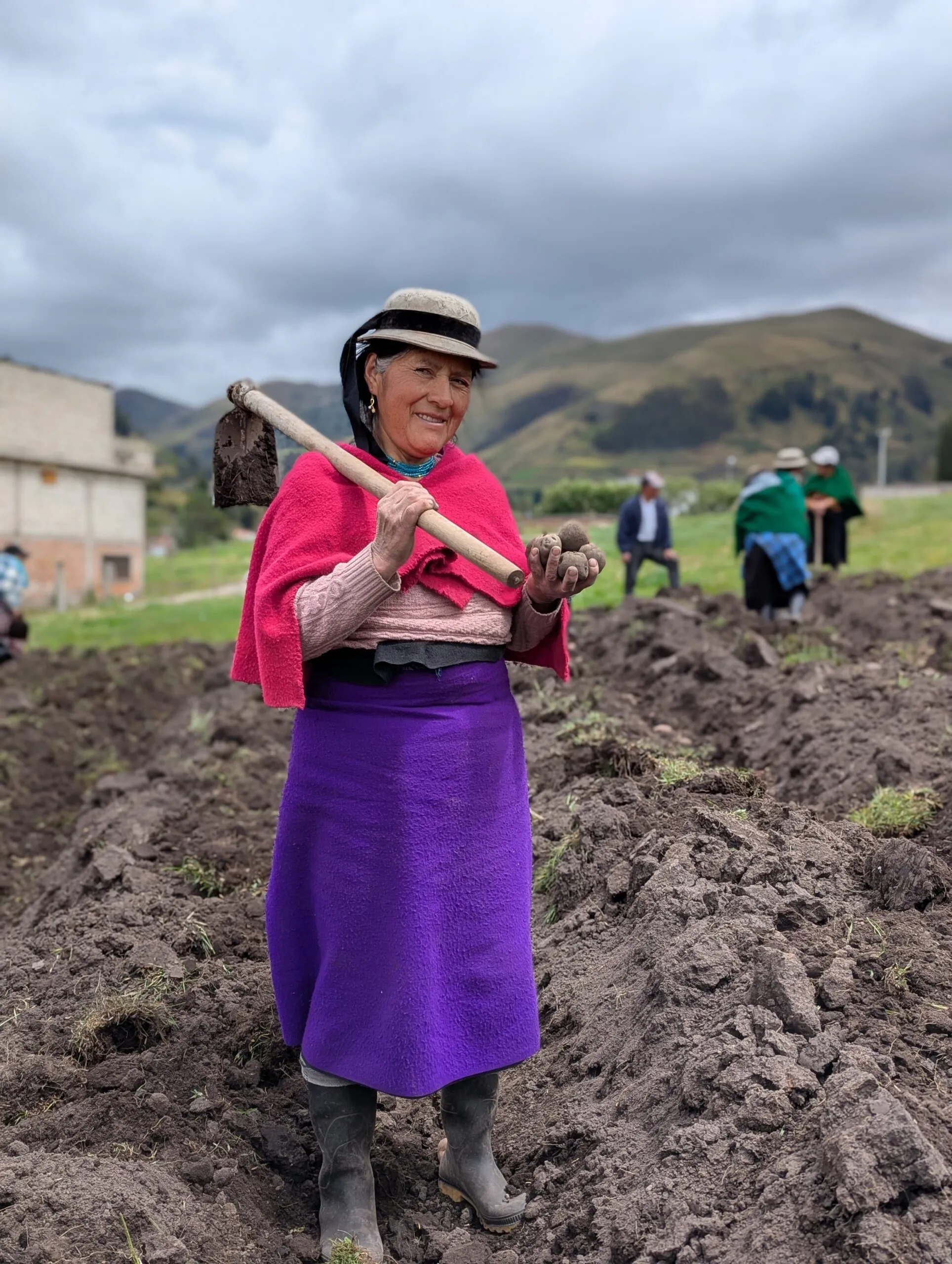
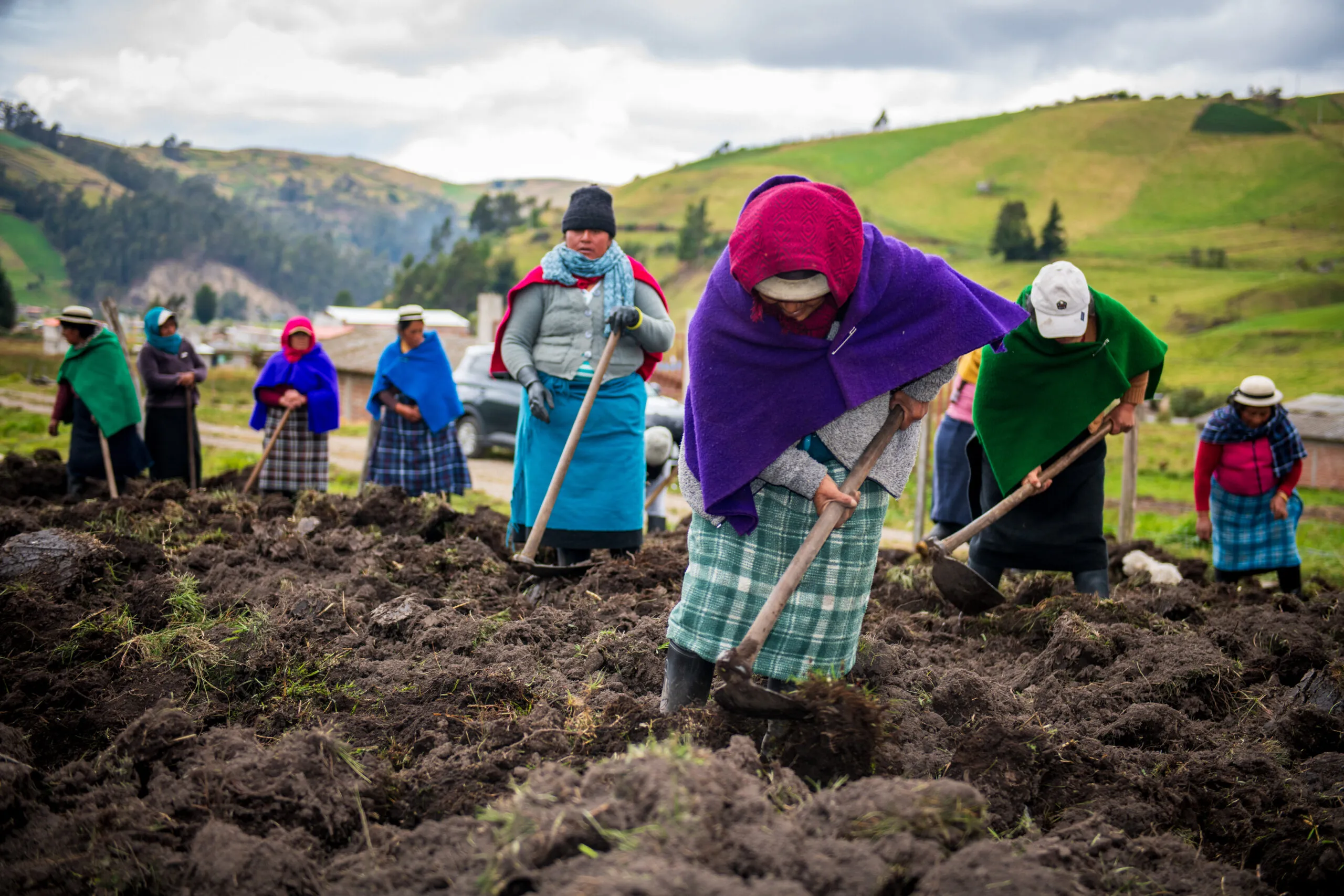
Here at nearly 10,000 feet above sea level, the soil is rich but stubborn. The farmers, most in woolen skirts and brightly colored shawls, labor with broad-headed hoes. Step by step, they turn over the dark earth lent to them by a local landowner. Their strong, sure strikes carve diagonal furrows designed to catch just enough moisture without letting the potatoes rot.
“This variety is called shungo,” says Ana Hortensia Tacuri Socas, smiling as she holds up a small purple tuber. It looks almost black in her strong, work-hardened hands. “Shungo means ‘heart’ in Kichwa. When you cut it open, you see a little corazoncito inside.”