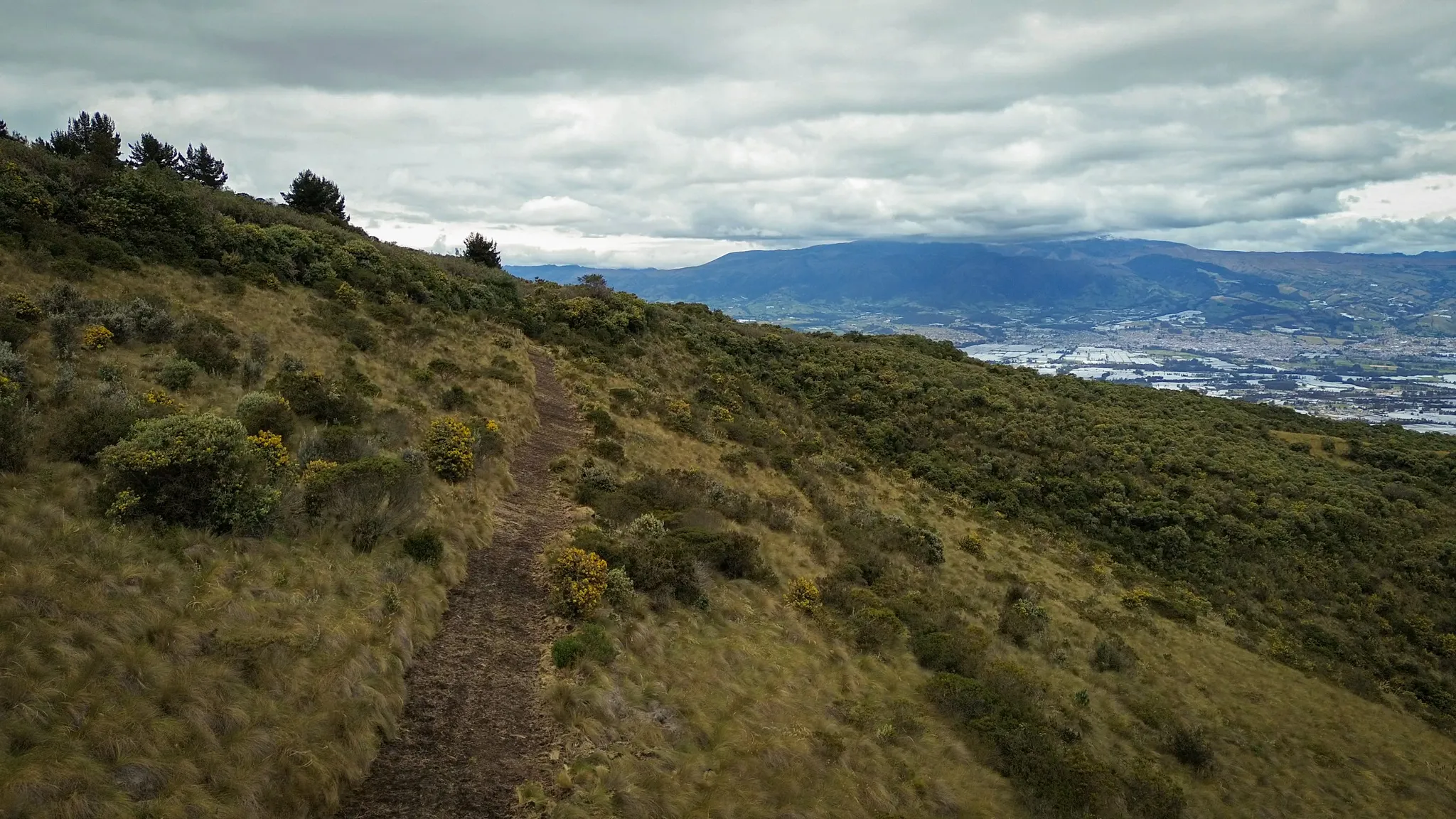
The wind whips cold and sharp across the páramo, high above the town of La Esperanza in Ecuador’s Pedro Moncayo canton. The sky is a piercing blue, so clear it feels close enough to touch. At 10,000 feet above sea level, the air is thin and dry, the kind that burns unprepared lungs. Clusters of scrub and tall grasses dance in the gusts, their roots sunk deep into the soil that guards this land’s most precious resource: water.
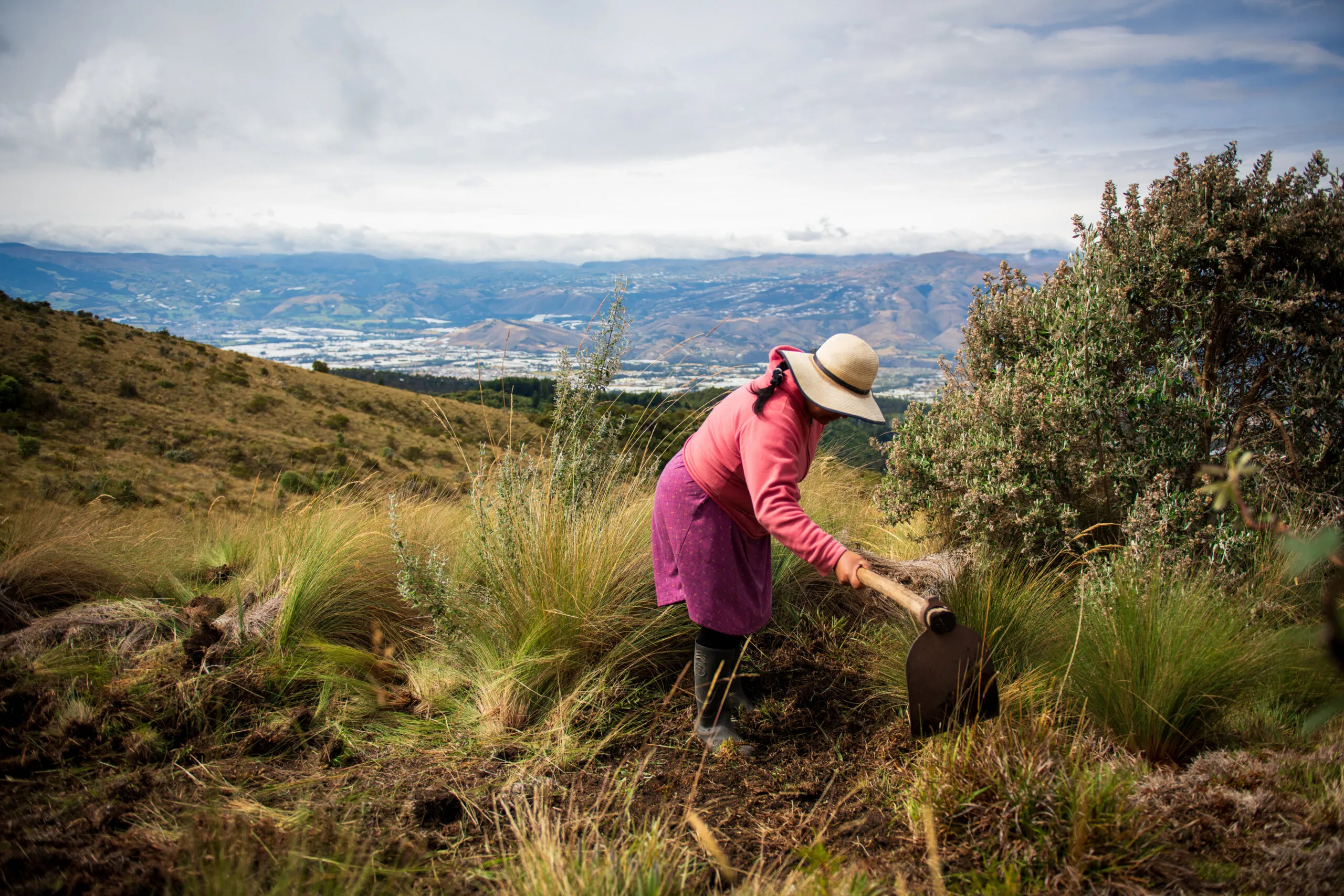
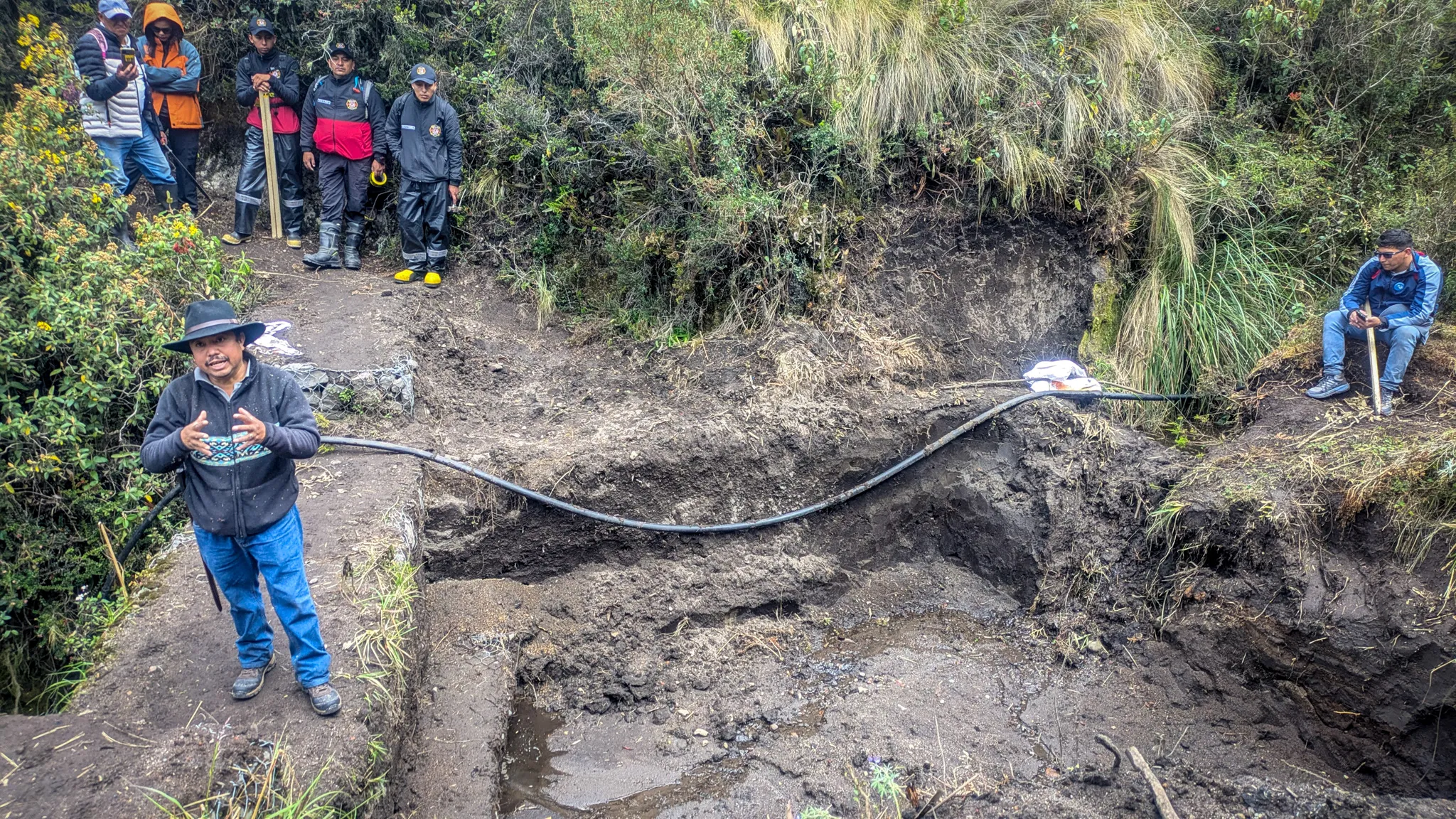
On the hillside, a group of men and women work in rhythm. Broad-headed axes flash in the sun as they cut back grass and brush to expose dark, rich earth. Calloused hands and wind-burned faces move steadily, joined by children and elders lifting soil, shifting brush, carrying tools. It is hard work, and everyone knows it. Hilario Morocho only shrugs.
“Today’s work is very light,” he says.
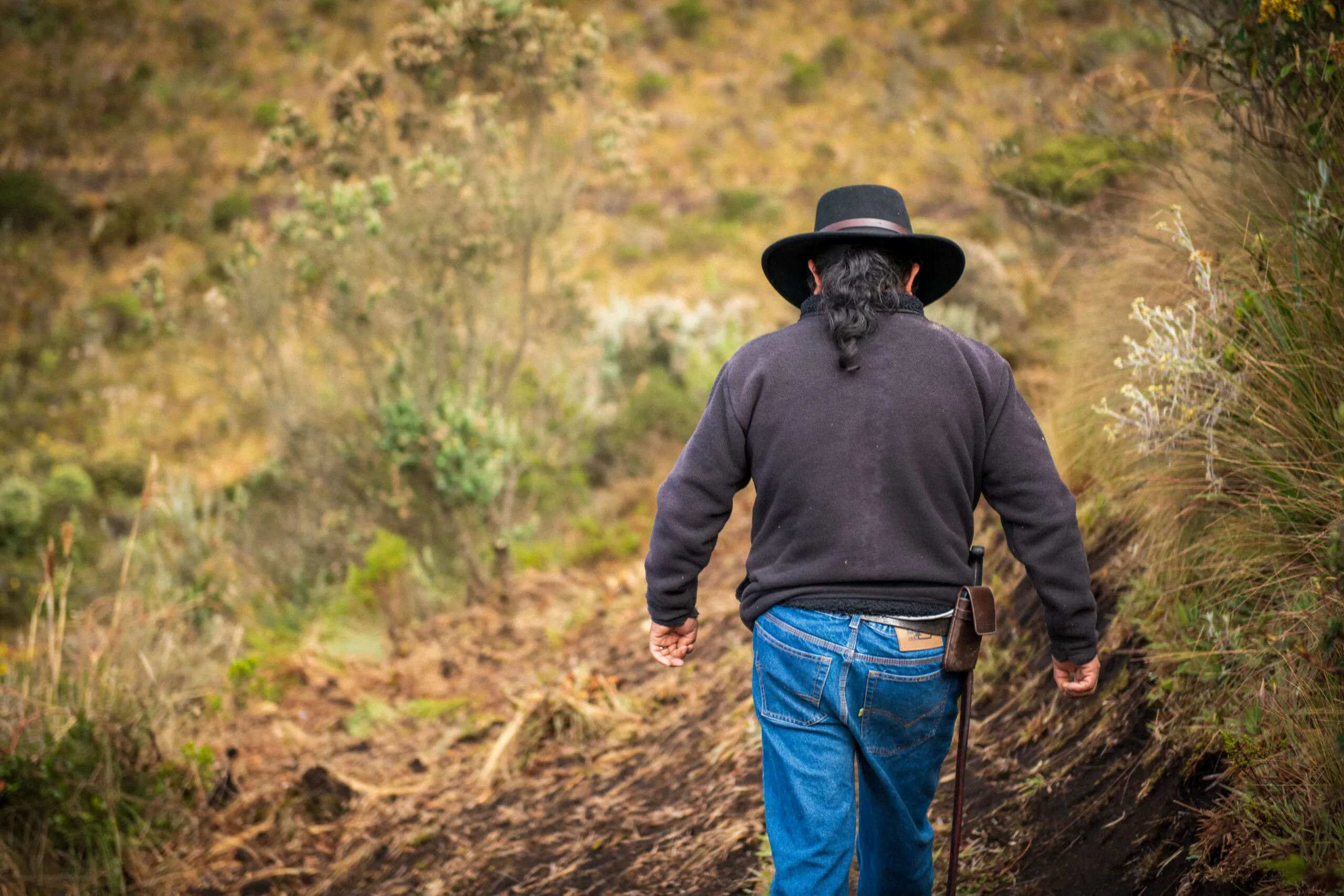
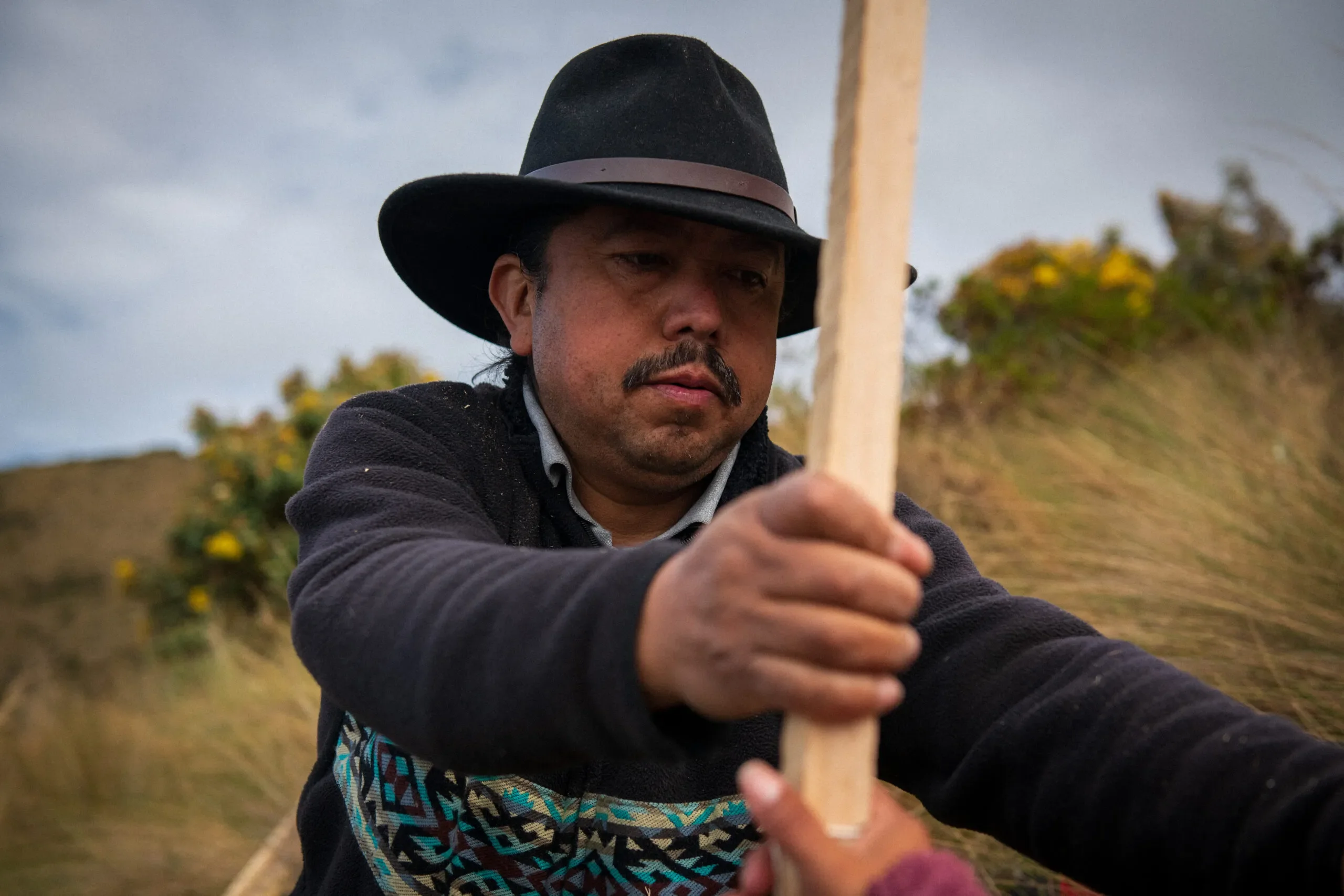
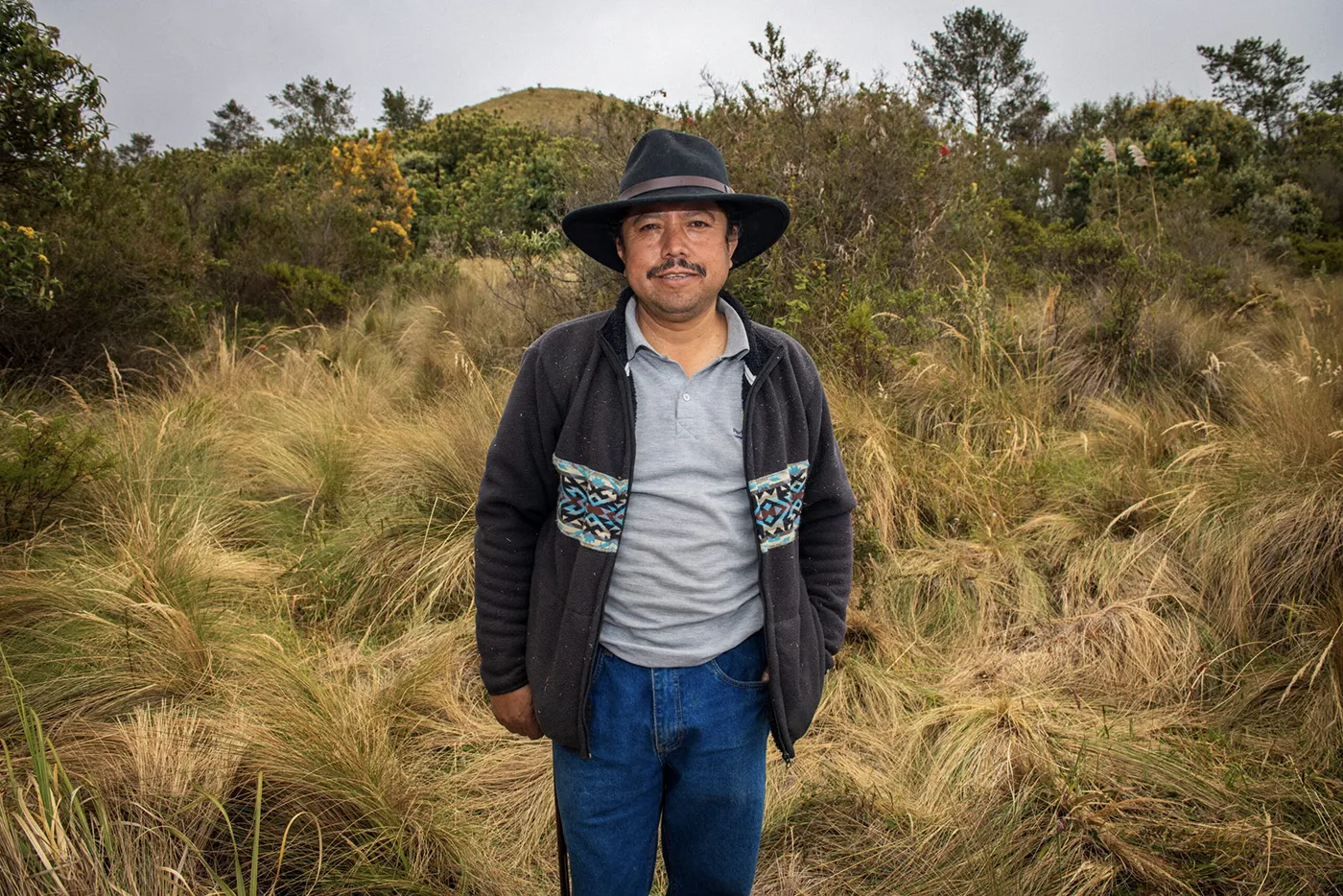
It isn’t. The hillside is steep, the labor is grueling, and Hilario has a hernia. Still, the 52-year-old moves with quiet authority, his jeans worn soft, boots caked with earth, a knit sweater pulled against the chill. His black hair, just barely salted with gray, is tied at the nape of his neck. A leather cowboy hat shades his eyes, and a machete hangs from his belt.
Everyone here knows him. When asked his title, Hilario shrugs again: “I am a farmer.” Laughter ripples through the group. He is a farmer, yes, but also a father, teacher, hydrologist, construction expert, firefighter — and today, as on so many days, a leader.