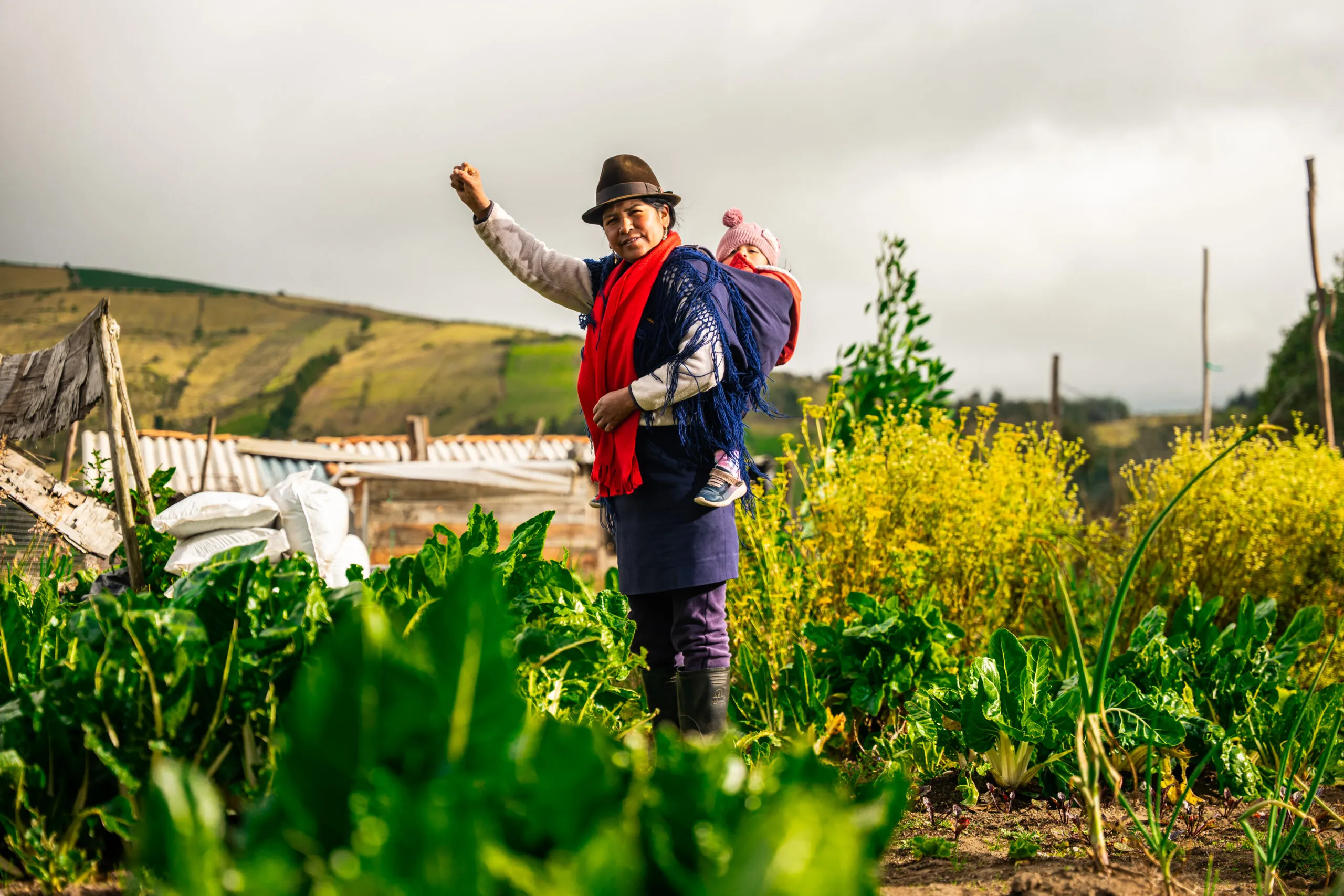
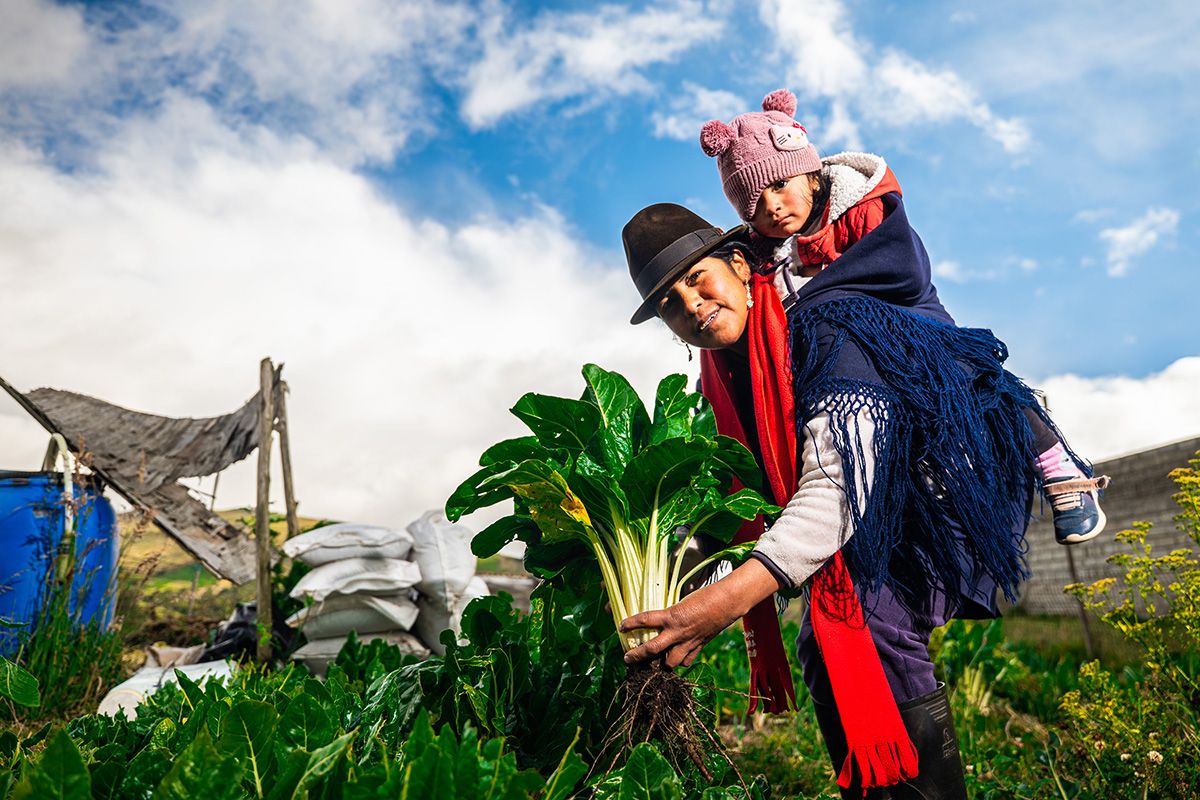
In 1983, when Ermelinda was 10 years old, Diocelinda Iza and four other women started sowing a new future for women and girls in the Cotopaxi province. They established what is today known as the Organización de Mujeres Indígenas y Campesinas “Sembrando Esperanza”—the Organization of Indigenous and Peasant Women “Sowing Hope,” in English—known more simply as OMICSE. The organization started with 15 women (and, at the time, was called the Organización de Mujeres de la UNOCANC), and Diocelinda served as its first president.
Over the years, OMICSE, with support from organizations like CARE Ecuador and the Cotopaxi Foundation, has defended women’s rights and promoted gender equality throughout the region.
Breaking generational cycles of inequality and oppression
The eighth of 10 children, Ermelinda grew up close to the land in Planchaloma, a central town in the Cotopaxi province, where OMICSE’s headquarters now stand. She worked alongside her family on the farmland of the community cooperative they were a part of, often caring for the cattle and their calves. She never had the opportunity to go to school or receive a formal education.
A woman of the Pueblo Kichwa Panzaleo and the current vice president of OMICSE, Ermelinda carries herself with a gentle confidence and warm humility. Her shoulders are relaxed but upright, and she leans into conversation, attentive and unguarded. She shares her story openly, not to center herself, but because she understands it can encourage other girls and women.
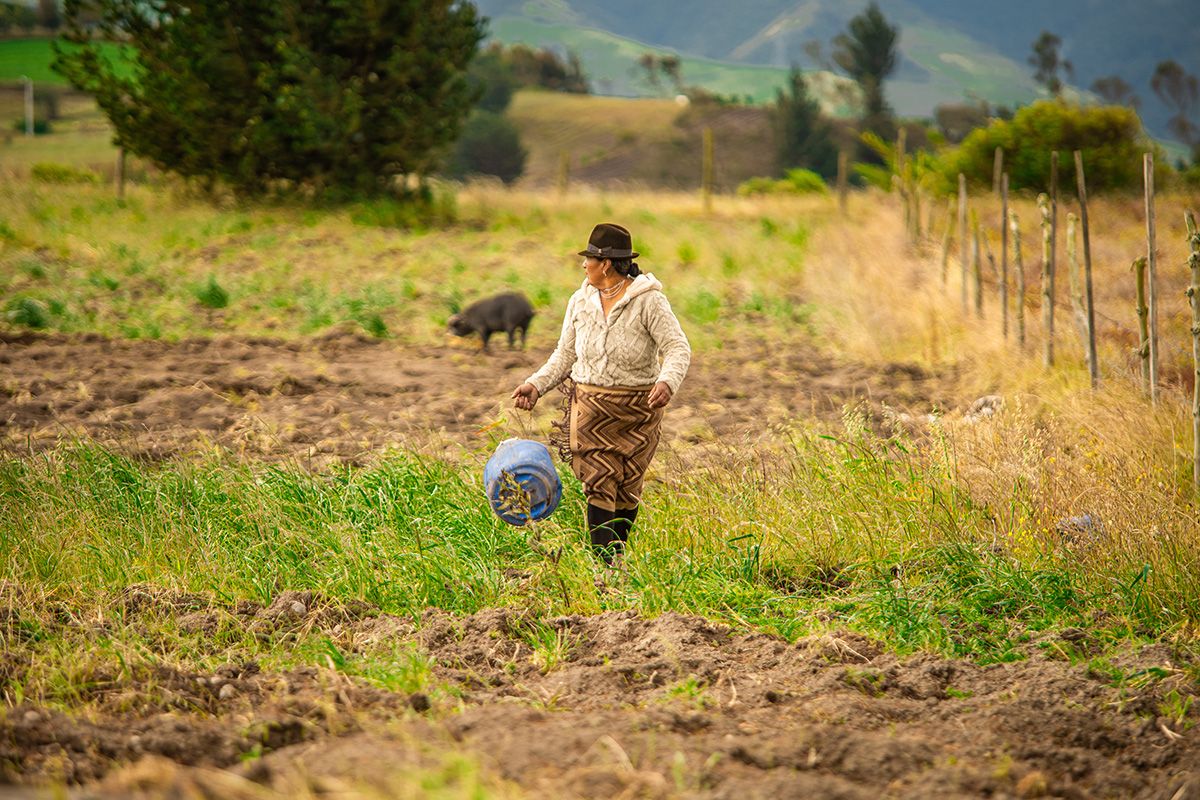
Janeth Cajía, 50, a former president of a community chapter of OMICSE, lost her mother when she was seven years old. Her father made sure she attended school, and alongside her studies, Janeth also helped care for the animals of the community cooperative.
She carries a different but equally powerful presence to Ermelinda. As she speaks, a bold, quietly commanding strength captivates those around her. Measured and thoughtful, Janeth talks with deep passion about the role of girls and women in society—and the intertwined fight for Indigenous and women’s rights. Though her voice is calm, Janeth’s conviction is unmistakable.
Both Ermelinda and Janeth encountered women’s organizations in their communities around the age of 12. Those organizations led them to OMICSE.
Ermelinda formed the connection through her sister, and Janeth notes, “The older women invited me to join. They said, ‘You must come represent your mother.’ […] My mother wasn’t there, but they took me into account. I stayed, and I’ve been in the organization ever since.”
Creating a structure and system of support for girls and women
For more than 40 years, OMICSE has expanded and strengthened to a network of approximately 25 grassroots organizations comprised of roughly 1,300 women, ranging in age from 14 to 80 years old from various communities in the Cotopaxi province.
“OMICSE was created to exercise a right, to recognize women’s right to live free from violence,” says Maritza Salazar, an activist within the Indigenous movement in the Cotopaxi province. “The hacienda system was extremely violent against women. Young women, like Ermelinda’s sister—and surely the mothers and grandmothers of these women—decided that enough was enough.”
Today, OMICSE—and the organizations under its umbrella—is the only formal Indigenous women’s organization in the province. The organization has a board of directors, its own headquarters in Planchaloma, and strategic alliances at the local, national, and international levels, including those with CARE Ecuador and the Cotopaxi Foundation.
From the beginning, OMICSE has focused on two fundamental areas: women’s education and women’s rights. Members gather through monthly assemblies during which decisions are made and through more frequent workshops focused on leadership, education, and capacity building.
Through the workshops, the women share knowledge and experience about a number of topics: leadership and participation within their communities; business and entrepreneurship; and agroecology and livestock.
“In the workshops, I’ve learned to be decisive, to be determined, to express myself and not be afraid,” says Janeth of the sessions that focus on women’s rights. “I’ve learned how to face anything.”
“The organization is fundamental for us,” she continues. “It has gotten us out of everything. There used to be a lot of abuse at home, but now, thanks to the organization, we as women can also claim our rights. We know that we have every right to do things—to go to the workshops, to go to the meetings, to be leaders.”
On the business and farming side, the women of OMICSE support one another through programming focused on understanding and refining the creation of a seed library, the development of biofertilizers, the growth of seedlings in greenhouses, and the production of herbal teas.
Expanding opportunities and strategy with support from CARE Ecuador
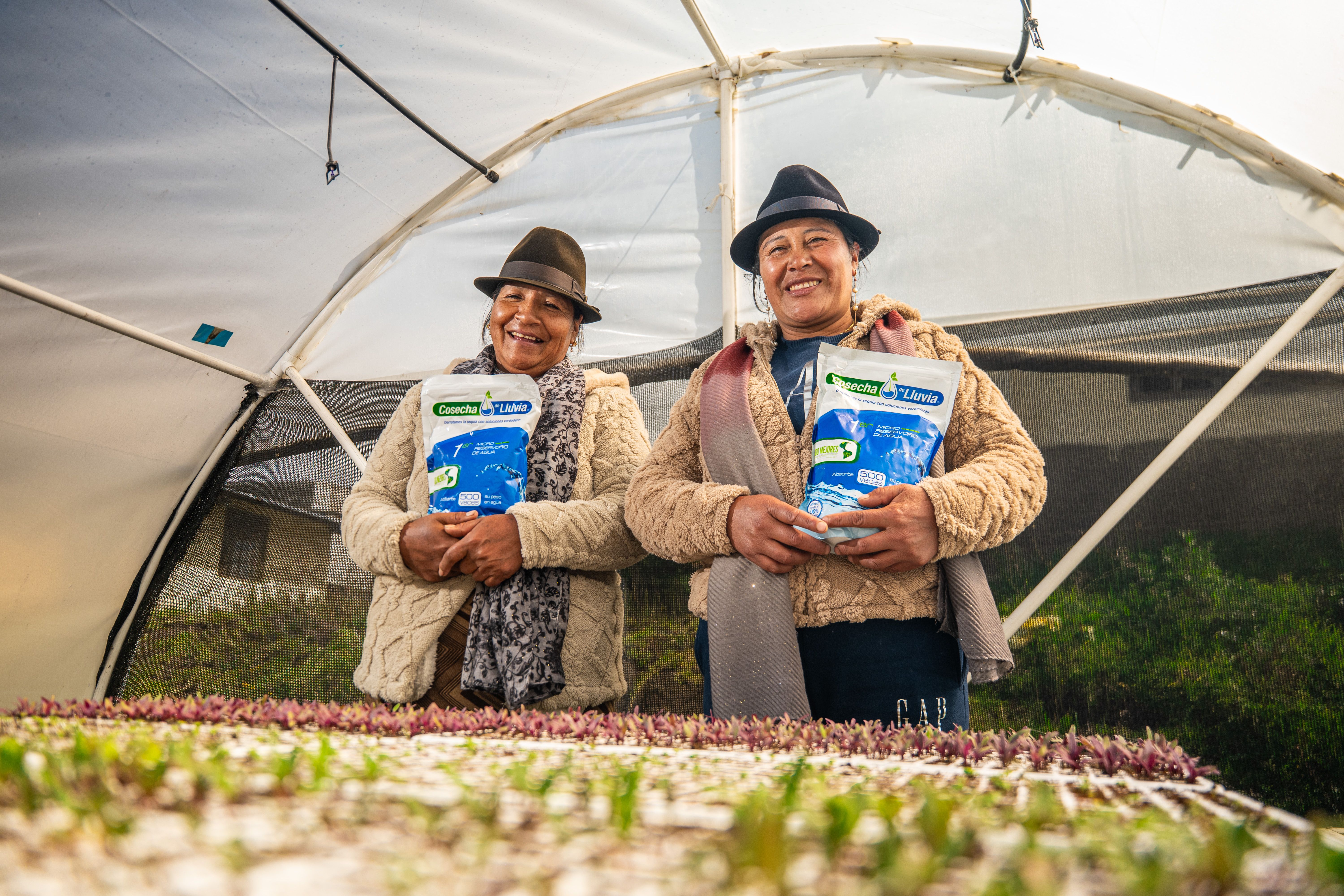
Funding from CARE Ecuador and the Cotopaxi Foundation supports the biofertilizer, dehydrated tea, and greenhouse initiatives. CARE and Cotopaxi have helped OMICSE develop business plans, management models, and marketing plans for these initiatives.
This helps the women to see these practices as businesses, not just as activities that benefit them or their communities, but as something that can generate profit for them, their families, and their communities. In part, the workshops teach the women how to improve upon the various initiatives and turn them into microenterprises that create income.
Janeth oversees the biofertilizer initiative. “Nowadays, nothing is natural,” she says. “It’s all chemical. That’s why we want to move the biofertilizers forward. We want to share the biofertilizers with our fellow members, so they can grow plants and produce with them. That way, the food for our children and families will be more natural.”
As Janeth works to get the biofertilizer initiative off the ground, the OMICSE members who take and use the biofertilizers are not charged. Instead, they’re encouraged to try them out, see how they work, and give feedback to Janeth and her colleagues, especially since plots and soil within the province differ. It’s an opportunity for Janeth and the women to learn and refine their product before taking it to market.
“We have to keep making the product [the biofertilizers] and promoting it,” Janeth says. “If we only make it once, it stagnates; we don’t move forward. Instead, we have to continue working on the other tanks and preparing the biofertilizers to ensure there’s enough for our colleagues [the members of OMICSE].”
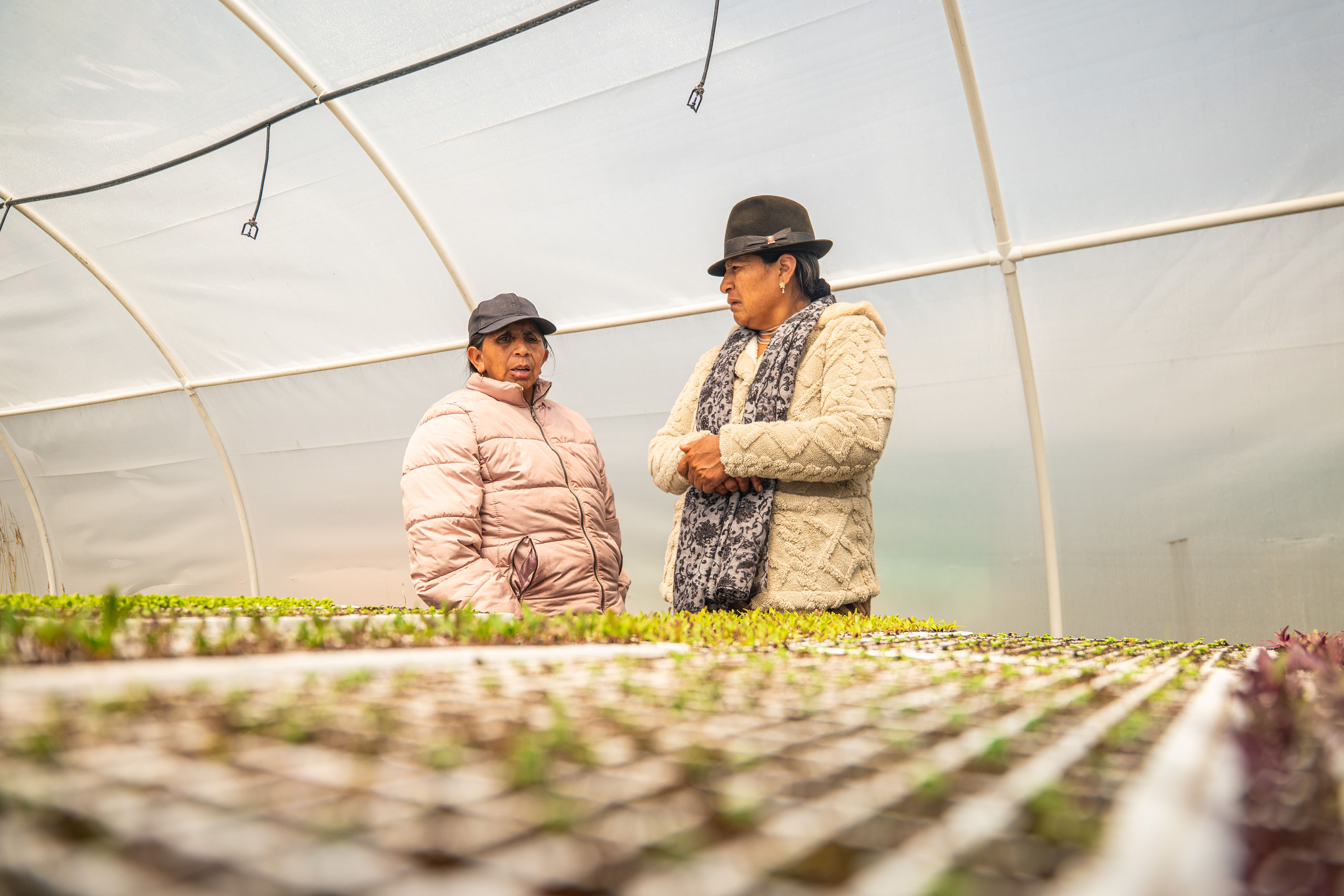
Similarly, Ermelinda is a leader within the greenhouse initiative through the women are learning to plant and grow seeds, rather than going out and buying plants and produce. In the greenhouses, Ermelinda and her colleagues track the conditions, note how the seeds are growing, and discuss and test areas for improvement.
The goal with the greenhouses, like the biofertilizers, is to create a sustainable cycle of production that supports the women of OMICSE in growing, marketing, and selling their seedlings and plants within their local communities.
Planting seeds for female-owned and female-run businesses
Moving forward, OMICSE is focused on how it can continue as a social impact organization and also grow its initiatives. As the education, knowledge, and shared experiences among the women expand, leaders and members also want to grow the business or entrepreneurial side of OMICSE to support them as they start to bring different products to market for profit.
“The challenge for OMICSE is to see itself as a business, a business that will belong to OMICSE,” Maritza says. “That implies that it [the business] must also have a community-based approach in some way. So as the commercial side moves forward, it has to have a link to the organization because it belongs to the organization.”
OMICSE leaders and members are currently discussing the future of the organization—and amendments to its bylaws and structure—to support the future growth of OMICSE and its members, their families, and their communities.
The investment of leaders and members over the past 42 years, along with that of organizations like CARE Ecuador and the Cotopaxi Foundation, has enabled OMICSE to reach this moment where the women have learned as a community, established a foundation, developed strategic plans, and are ready to scale further to become more self-sustaining.
“OMICSE isn’t going to stop helping the community organizations,” Maritza says. “We need to have other avenues, avenues that allow us to diversify livelihoods in a much more direct way.”
Sowing the next generation of girls and women into the movement
The organization also knows that to continue moving forward, it needs participation and leadership from younger women. As young women leave the countryside and move to bigger cities, there’s concern over the Indigenous communities and women’s leadership within them disappearing.
Though most young people leave, some return because their communities in the Cotopaxi province are their “safe place” or their “ayllu,” the Kichwa word for “community” or “family.” They are connected to the community within this region as well as the land.
Currently, 34% of OMICSE participants are 14 to 30 years old. OMICSE’s hopes and plans for the future depend on the involvement of younger women, and the idea of community empowerment and support that the organization was founded on is key to that.
Ermelinda recognizes the importance of young women’s involvement, especially for the fresh energy and perspective they bring.
“I’ve been thinking about what would happen if we don’t support our young female members,” Ermelinda says. “We’re not going to be around forever, and we need to talk so that, when we’re gone, they can sustain the organization. That’s why I’m making an effort to get them to come and participate in the workshops.”
“ I dream that this heritage of defending awareness will remain, will be strong. We’re not taking anything from anyone. We’re not trying to steal anything from anyone. We’re defending what is rightfully ours. Above all, we must be a group that clearly understands it deserves better conditions. ”
Now, as the women of OMICSE continue coming together to exercise their rights, pursue education and entrepreneurial opportunities, and step into leadership roles, they are nurturing more than their own growth. They are sowing seeds to create a future where their voices, their daughters’ voices, and their granddaughters’ voices—the voices of Indigenous women—are undeniably woven into the landscape of culture and society locally and around the world.
CARE Ecuador is a grantee of the Cotopaxi Foundation. With support from the Cotopaxi Foundation, CARE Ecuador collaborates with OMICSE on facilitating and funding the organization’s programming related to biofertilizers, greenhouses, herbal teas, and a seed library or nursery. To learn more about CARE Ecuador, visit care.org.ec.
Originally published on Cotopaxi Stories.