In Syria, women and children carry the burden when funding is cut

By Sarah Easter and Becca Mountain March 20, 2026

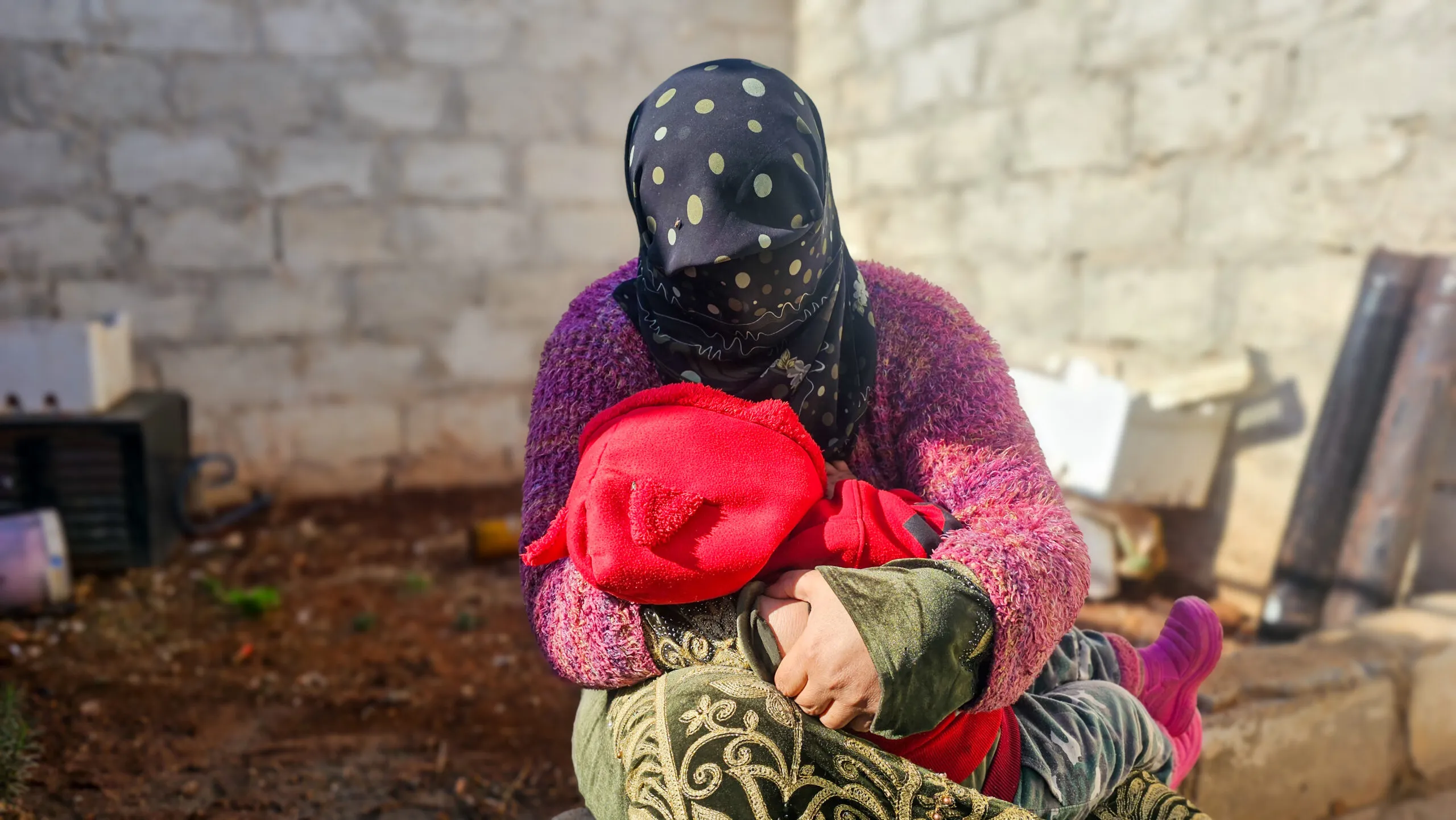
A woman in a dark headscarf cradles a small child in a read sweatshirt.

Yasmin* cradles one of her granddaughters near their home in northwest Syria. Photo: Sarah Easter/CARE.

Yasmin* learned her husband was dead when she saw his body on a phone screen. A relative showed her a video of a mass grave in Aleppo. “I recognized him by the clothes he was wearing and the shape of his face,” says the 41-year-old mother of six. “I knew it was him. A sniper killed him. From then on, I was a widow.” That was 13 years ago.

Yasmin’s youngest son was just three months old when, in 2013, her husband left their hometown in northwest Syria to look for work. After years of drought and country-wide conflict, jobs had vanished and food was scarce. Diseases like polio were surging, and millions of Syrians had been displaced from their homes.

Despite fighting that had already erupted in there, Yasmin’s husband headed for Aleppo, Syria’s largest city and his last hope for work.

He arrived in a city under bombardment and siege. Syria was sliding from uprising into a full‑scale, multi‑sided war. Infrastructure, markets, and supply chains were collapsing. Fuel and wheat subsidies had been disrupted, prices soared, and basic services like electricity, healthcare, and schooling deteriorated, especially in rural and provincial areas like northwest Syria.

“I waited for six days without hearing anything from him,” Yasmin remembers. At home, the family had no food. “We survived on some old biscuits we had in the house.”

Each day she expected him to return, or at least to get in touch. “Maybe tomorrow he would call,” she remembers thinking.

When no call came, she began searching for news. She contacted relatives and looked online, hoping to find any information on where her husband might be.

“I was going crazy,” she says. “On social media I saw so many dead people being thrown into the river in Aleppo. I was so afraid he was one of them.”
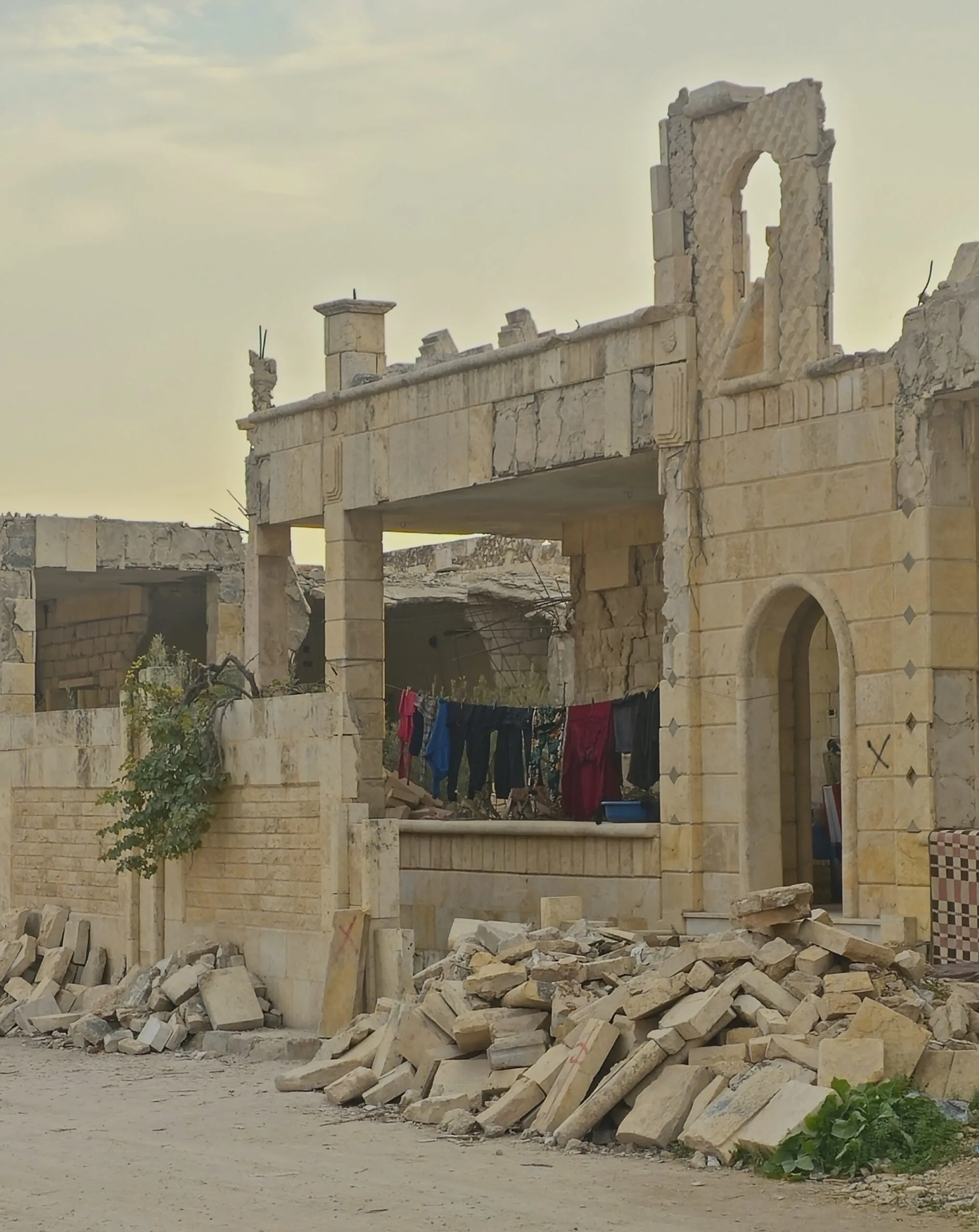
In Syria, people continue to live in the shells of destroyed buildings.
After over a decade of war, Syrians have learned to live amidst rubble and destruction. Photo: Sarah Easter/CARE.

More than a decade after conflict began, Syria remains one of the world’s largest humanitarian crises.

As of January, 2026, the United Nations estimates that over 16.5 million Syrians require humanitarian assistance. Years of conflict, displacement, and economic instability have left many families struggling to meet basic needs such as food, water, and electricity.

In northwest Syria, where Yasmin lives, the challenges are especially acute. Many communities have been displaced multiple times, while damaged infrastructure, limited job opportunities, and rising prices have made daily life increasingly difficult.

Food costs have increased sharply in recent years, while drought has reduced agricultural production and seasonal work opportunities in rural areas. For families who depend on daily labor, even small increases in the price of bread or water can make survival uncertain.

Women-headed households are often among the most economically at-risk. When income disappears or assistance runs out, many mothers are left to find ways to feed their children with few resources and little support.

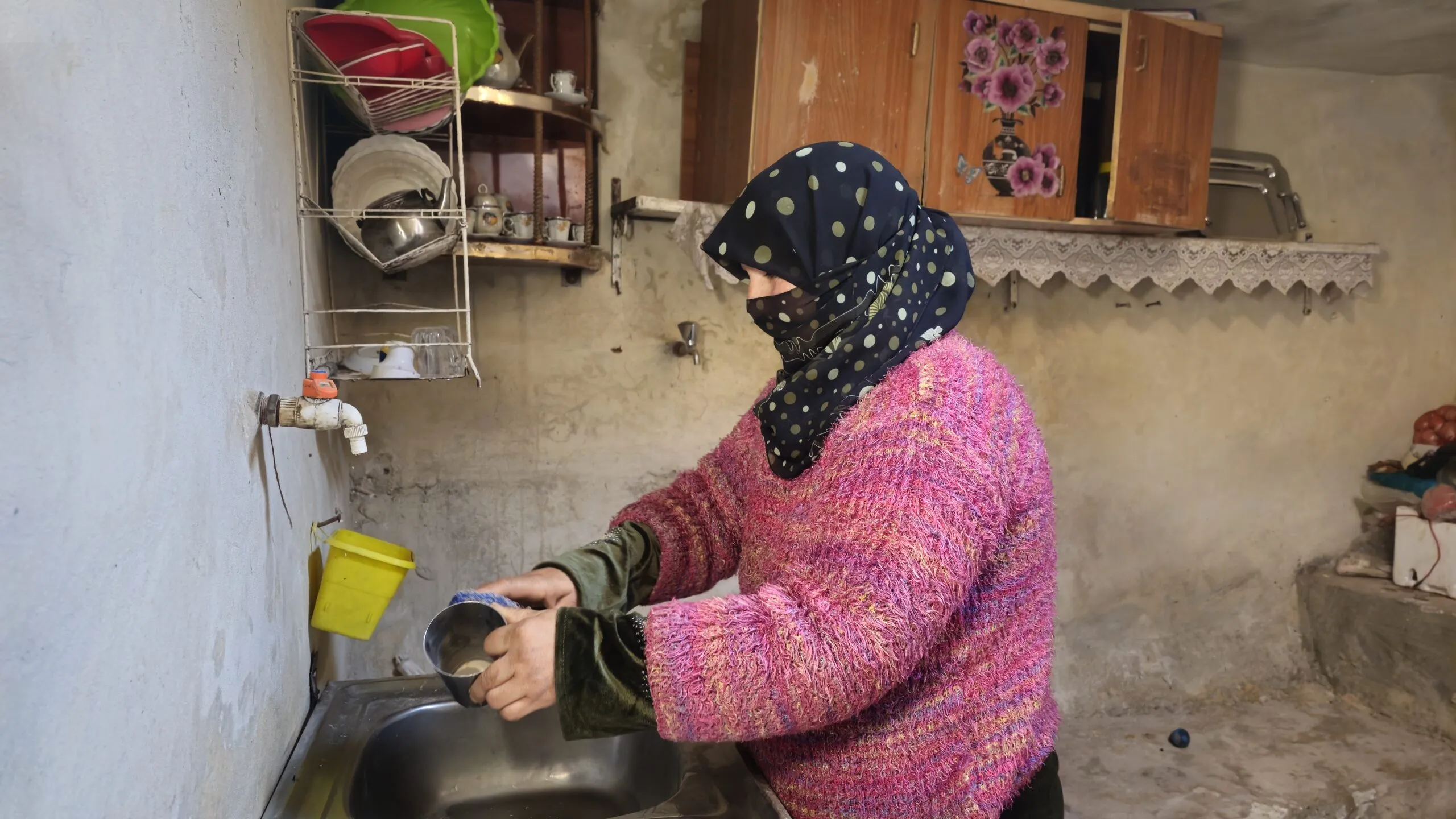
Despite overwhelming dangers and hardship, Yasmin has protected and supported her family ever since the death of her husband. Photo: Sarah Easter/CARE.

For Yasmin, those realities became clear soon after her husband died.

“We only ate bread for weeks and months,” she says. Her brother helped when he could, but he did not have the means to support a household of seven. It quickly became clear that if nothing changed, Yasmin and her children would not survive.

“I found work for myself,” Yasmin says. “I went to the fields to harvest crops, even though my husband’s family did not allow this. They did nothing to support us or make sure we would not starve, so I went to work despite them. There was no alternative.”

Her brother tried to step in when conflicts arose. One day, her husband’s family saw her climbing onto the back of a pickup truck taking workers to the fields. They told her to stop working immediately, calling this sort of behavior shameful for a woman. Her brother intervened, telling them she could do whatever was necessary to survive. After that, her husband’s family cut off all contact.

“Everything I do is for my children,” she says, straightening her back. “They were hungry all the time. I could not help them, and I could not watch them die!”

Years later, as violence intensified, Yasmin and her children were displaced once more, forced to live in small tents in a camp near the Turkish border. Her husband’s family, now displaced themselves, finally understood the hardships she had been navigating alone.

“They experienced for the first time what it meant to be hungry and to struggle to find food and money,” she tell us. “They understood that I had to do whatever was possible. That I had to find work or die.”

In 2023, Yasmin made another difficult choice. Life in the camp was no longer sustainable. There was not enough work, not enough income, and not enough food. She decided to return to her hometown with her family, even though it would be dangerous.

“I had to hide my children, or they would have been taken from me and conscripted,” she says.

For two years, her older sons stayed inside, unable to leave the house for work or school for fear of conscription.

“It was me who did everything outside. I worked in the fields. I found the food. I took care of them. Being a woman was a benefit this time, as I was able to move freely to find work opportunities,” Yasmin says. “It was dangerous, yes, but it was our way of survival.”

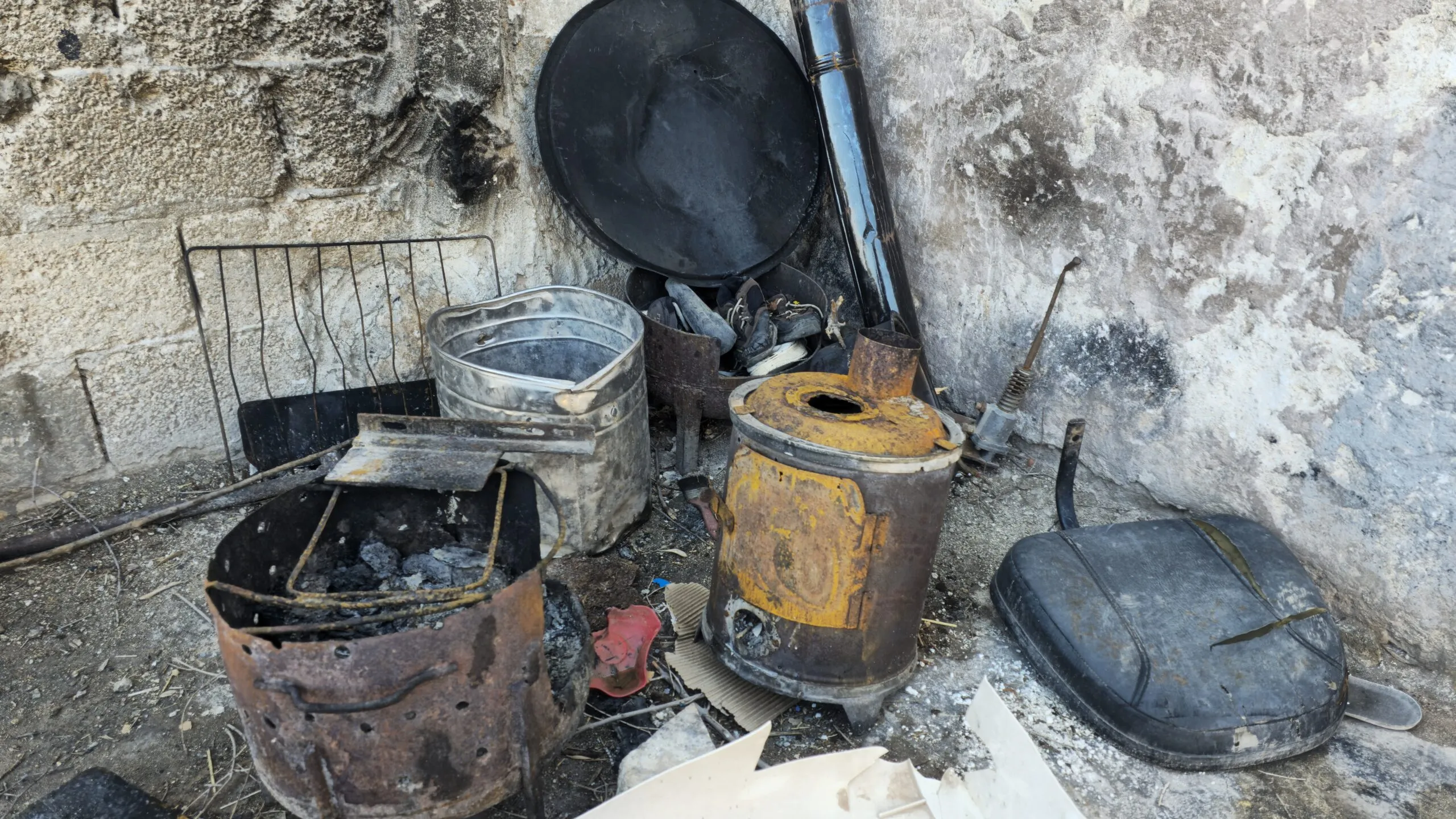
Yasmin has to be resourceful. She collects rainwater for when the plumbing is shut off and collects trash to burn when her family can't buy other fuel. Photo: Sarah Easter/CARE.

When the Assad government fell in December 2024, Yasmin heard the news early one morning through the loudspeakers of the local mosque. “I cannot even describe the happiness we felt,” she recalls. “At first, I could not believe it when I heard it. But then I listened more closely, and I was so happy.”

Over the past few years, some opportunities have grown in Yasmin’s area, but basic necessities remain a daily struggle.

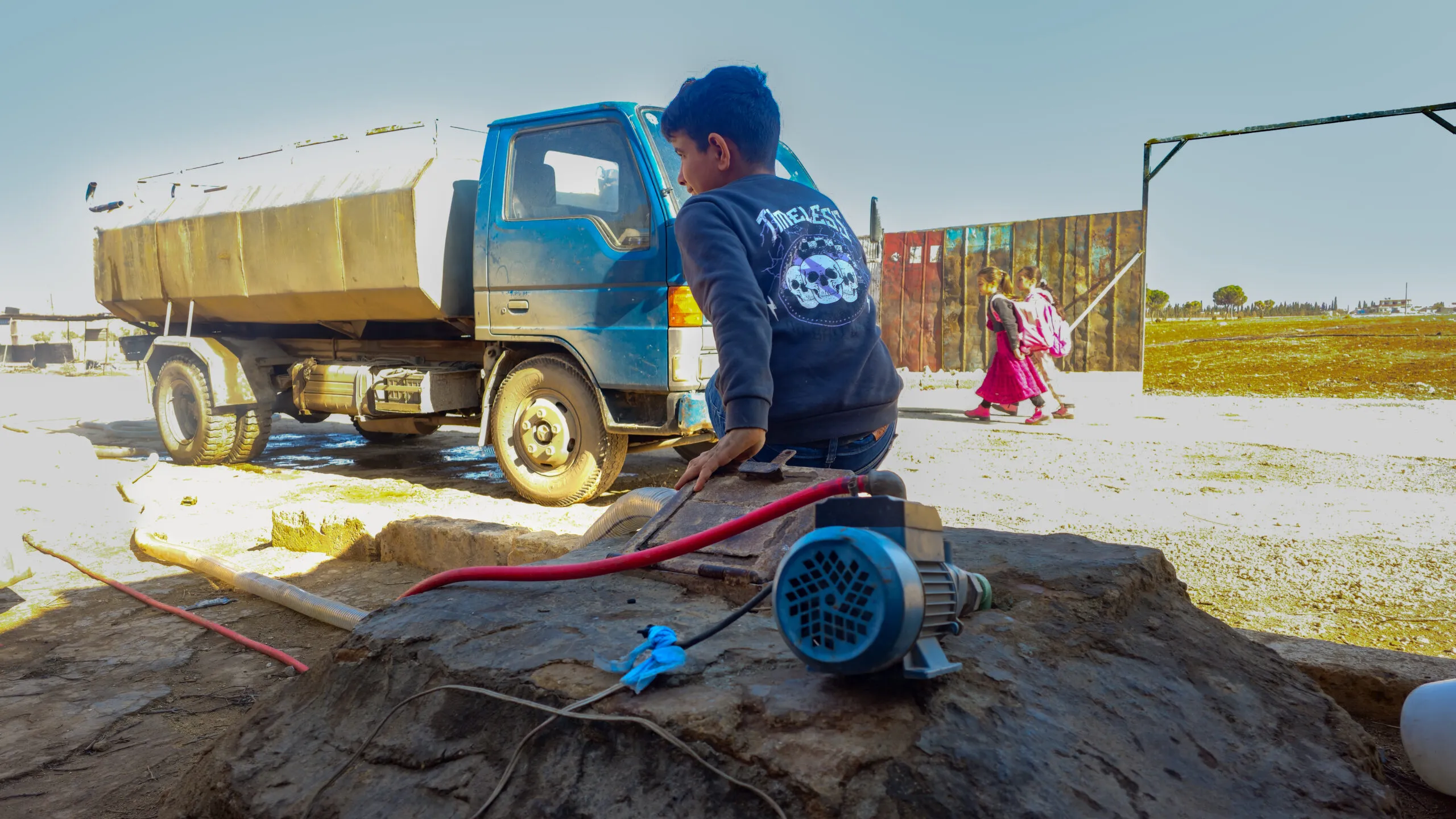
Filling her water tank now costs $10, up from about 20 cents previously. A bundle of bread that once cost 100 Syrian pounds now costs 5,000. “We need approximately $1.50 every day to buy bread for everyone. That is the minimum for our survival,” Yasmin says. Recent droughts have reduced harvest work, forcing her to borrow money just to buy bread.

CARE supports Yasmin and 1,100 families like hers in northwest Syria with cash assistance. The program, funded by the European Union, prioritizes women-headed households, child-headed households, displaced families, pregnant women, orphans, the elderly, and those with disabilities and/or chronic illnesses.

Yasmin says that the $100 she receives every month is “not enough to cover all our needs, especially if I want to send my children to school, but it helps us survive.” The first payment she received went to repay food debts. The second covered weekly water delivery, ensuring her family’s tank is full enough for drinking and cooking.

Still, she improvises whenever possible. Even with those weekly water deliveries, she collects rainwater. A recent rainstorm filled half a barrel placed beneath the eves of her house. She’ll use that water to wash clothes. For electricity, her family relies on small solar panels, so during storms, they cook over an open fire using sticks, paper, leaves, or cow manure. Nearby, a container of old shoes waits to be burned.

“I use everything I can find for fuel,” she says. “It is what I have had to do for the last 13 years.”

Yasmin's youngest son was just three months old when his father was killed. Here, he watches as a water truck refills their family's reservoir tank. Photo: Sarah Easter/CARE.

Yasmin is accustomed to worrying, but that doesn’t make it any easier to face an uncertain future. Funding for humanitarian assistance in Syria is being cut, and the cash assistance program is expected to end soon unless additional support can be secured.

For now, Yasmin knows exactly how much time she has left: two months of support. Two months where she can purchase bread with confidence and fill the water tank without choosing between drinking and washing.

After that, survival will once again depend on what she can find, borrow, or carry alone.


*Names have been changed and faces have been hidden for individual safety.

Back to Top