Who Cares? Stories of resilience, strength, and hope from around the world

By CARE Staff April 2, 2026

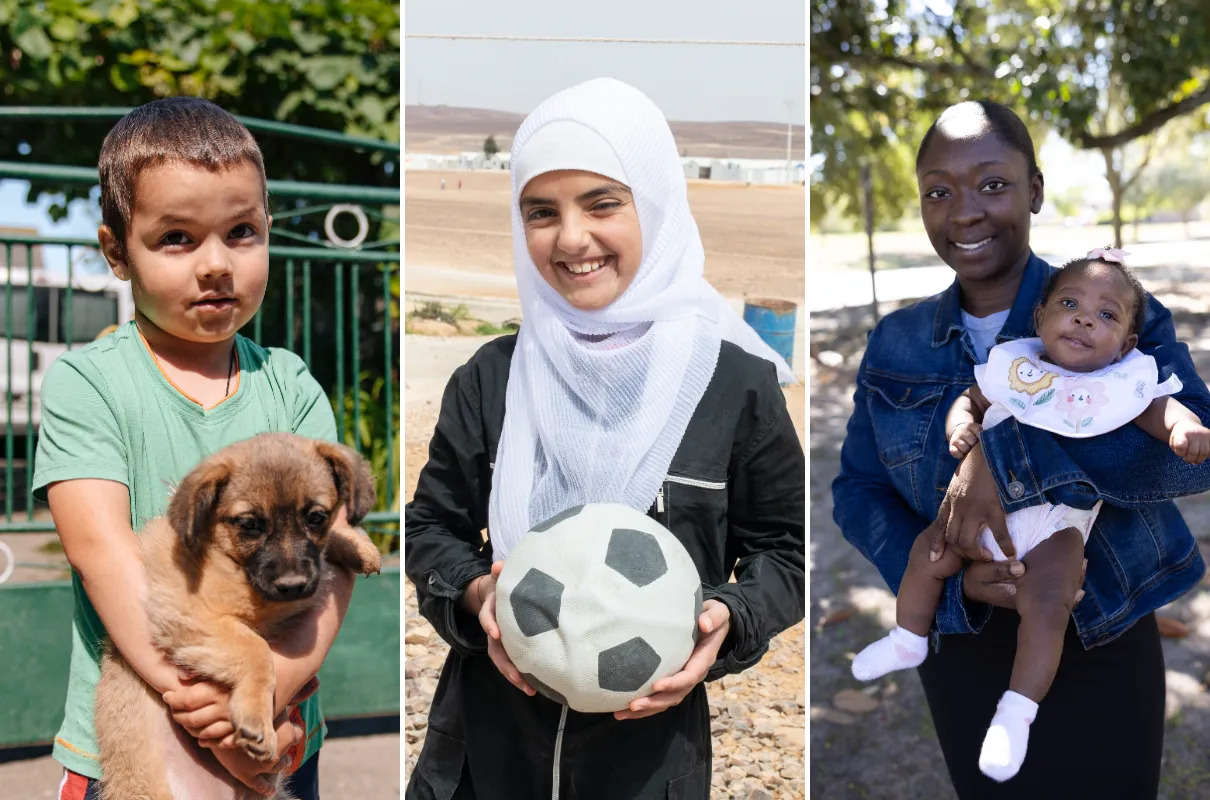
A triptych showing an image of a Ukrainian boy holding a puppy, a Syrian teenager holding a soccer ball, and an American mother holding her newborn.

This is a story about what it means to care, even when the world makes it difficult.

WHO CARES?

You do, and so do we. For nearly a century, CARE has been there, every day and in times of crisis. Read inspiring stories and sign up to learn more about CARE and the people we work with.

Join us

A little boy who flinches at unfamiliar sounds. A girl in a refugee camp dreaming of becoming a lawyer. A mother, once ignored, who finally feels heard. Who cares? You do, and so do we.

CARE works in more than 120 countries, including in the United States, because the need to care doesn’t stop at any border. Every day, we support people navigating crises that are vast in scale but deeply, painfully personal. These are three of their stories.

Who cares about children caught in conflict?

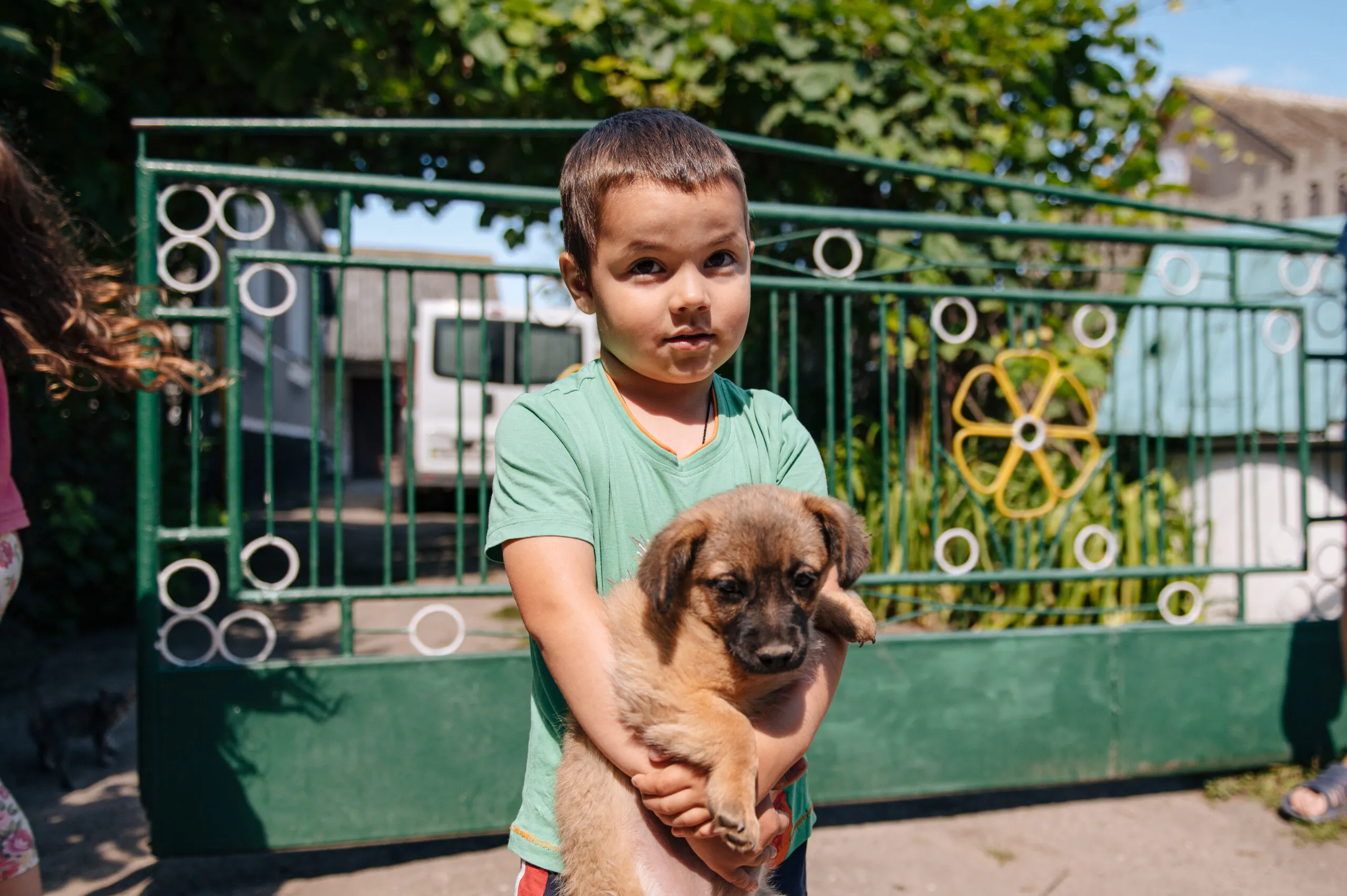
Ilya, who barely remembers life before the war in Ukraine, still struggles to find the simple joys of childhood. Photo: Laura Russ/CARE

When the fighting reached her home in Chernihiv, Ukraine, Tatiana was heavily pregnant. Fearing for their eight children and the one still to be born, she and her husband took their family and fled. They traveled to Kyiv, more than 100 kilometers away, through checkpoints and curfews, unsure at every turn whether the road ahead was safe.

Outside the capital, Tatiana delivered her daughter, Dazia, with the help of a few doctors and nurses who had stayed behind despite evacuation orders. Early the next morning, the family were on the road again.

Her youngest son, Ilya, still cries when he hears unfamiliar sounds: “The tanks, the tanks are coming!”

Ilya’s story is one among millions. Since the invasion began in 2022, over 3,200 Ukrainian children have been killed or injured. Nearly 1.7 million Ukrainian children are refugees, 2.2 million Ukrainian children need humanitarian support, and more than 1,600 schools have been damaged or destroyed, leaving millions of children without access to education. The mental health toll on families and children may be invisible, but it’s there. One in five Ukrainian children has lost a family member or friend, and many, like Tatiana’s older children, struggle to play or sing again.

CARE and partners provide psychosocial support, recreational activities, mental health support, and moments of ordinary joy for families like Tatiana’s.

Sometimes, caring is as simple as helping a child feel safe to be a child again.

Who cares about girls who refuse to give up?

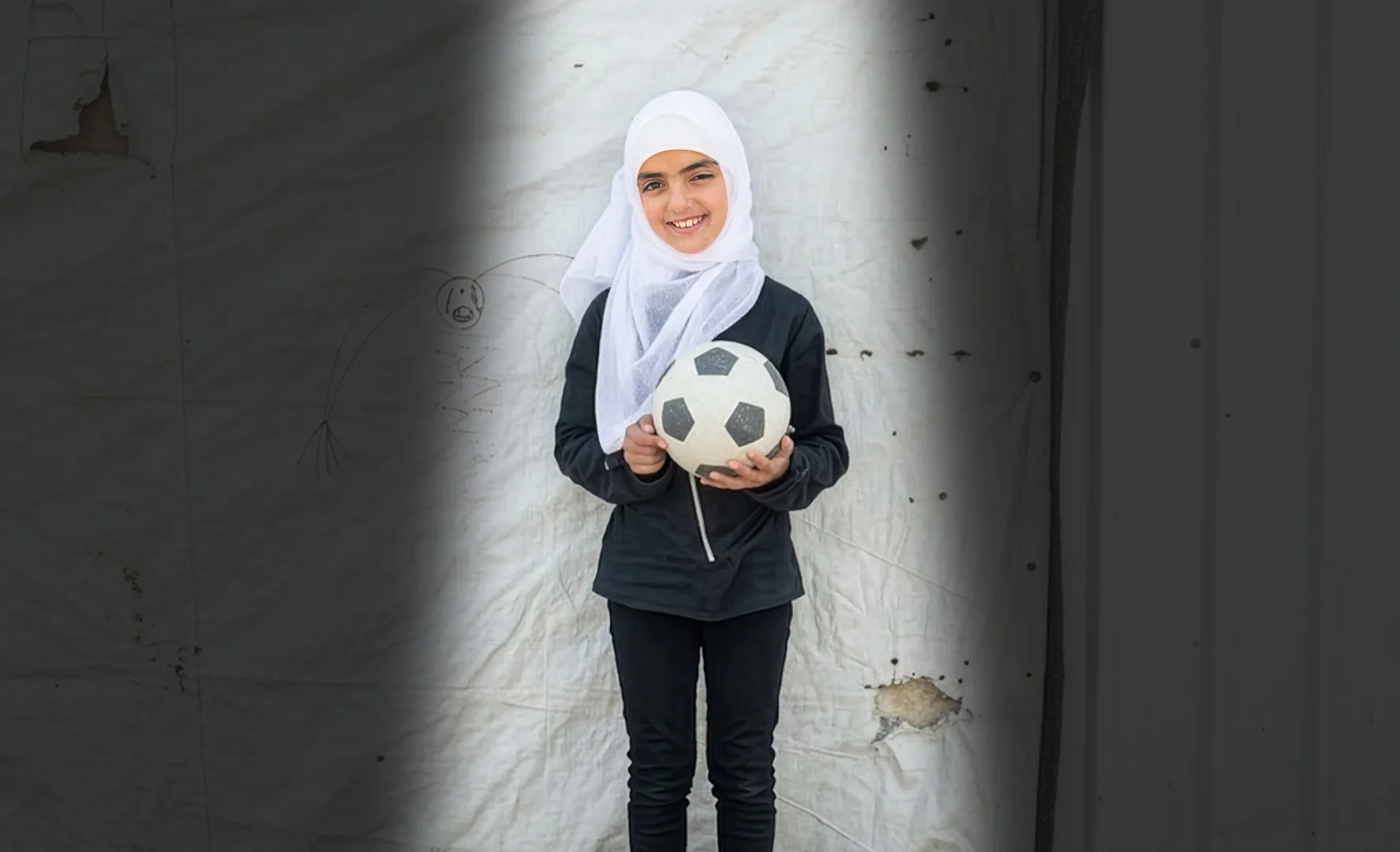
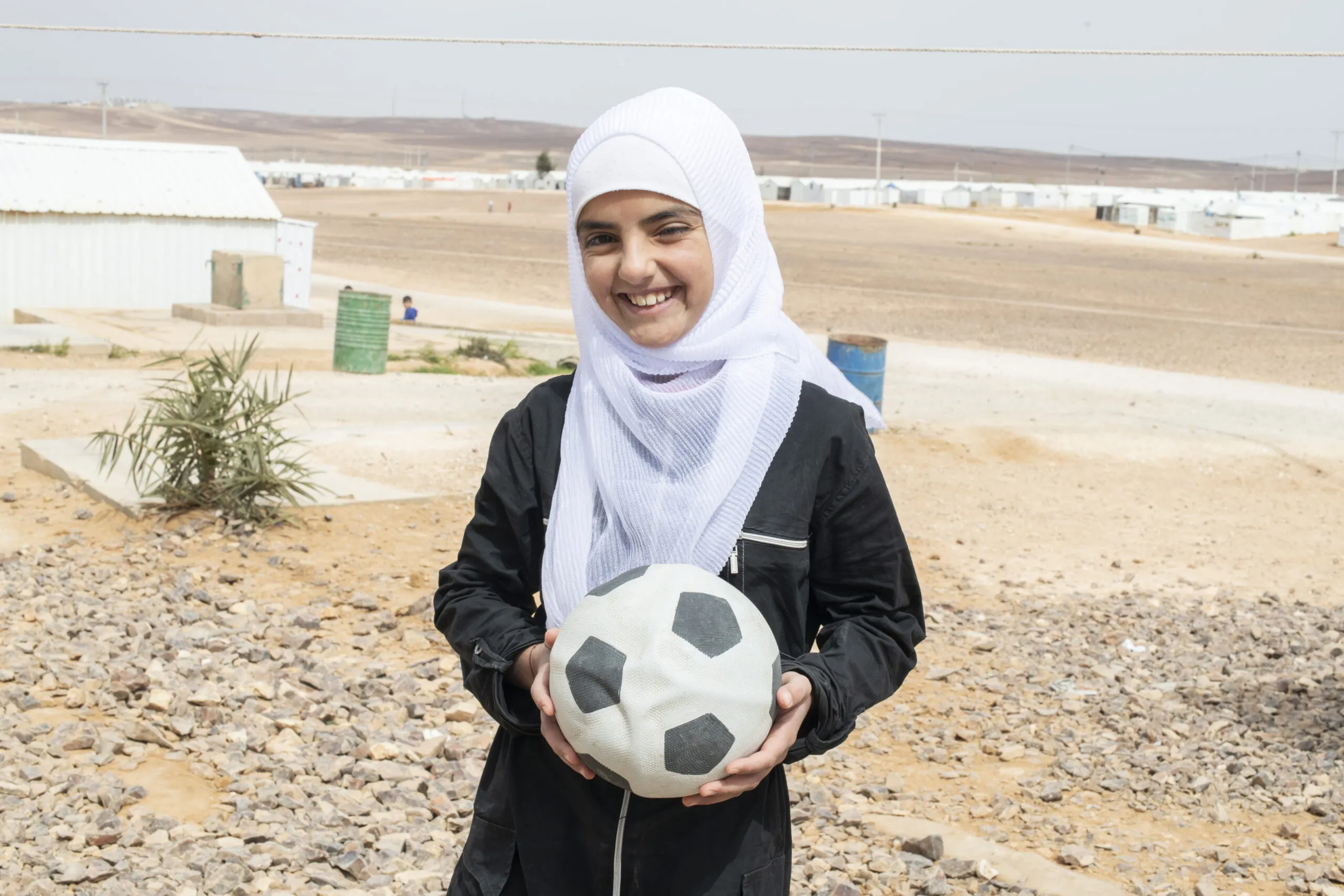
A young Syrian teenager in a headscarf holds a soccer ball at Azraq refugee camp in Jordan.
Born in Syria, Ala grew up as a refugee in Jordan’s Azraq Camp. Photo: Sarah Easter/CARE.

Ala was just three years old when her family escaped increasing violence in Syria. They started over across the border in Jordan at the Azraq refugee camp. Now a teenager, Ala finds joy in simple things like studying Arabic and playing soccer with her friends. “Sometimes, I’m even better than the boys,” she says proudly.

Conflict in Syria led to one of the world’s largest refugee crises. More than half of those who have been displaced are children. Refugee children are five times more likely to be out of school, and refugee girls are only about half as likely as boys to attend secondary school. Around 35% of displaced Syrian girls will get married before they turn 18. Reliable access to education is one of the most powerful ways to change that.

CARE works across camps and communities to keep girls like Ala in classrooms, addressing barriers of distance, safety, and social pressure. Ala knows she’s lucky to be able to attend school regularly. She dreams of using that education to become a lawyer. “I want to defend the weak,” she tells us.

Sometimes, caring looks like protecting a girl’s future before it’s taken from her.

Who cares about mothers who deserve better?

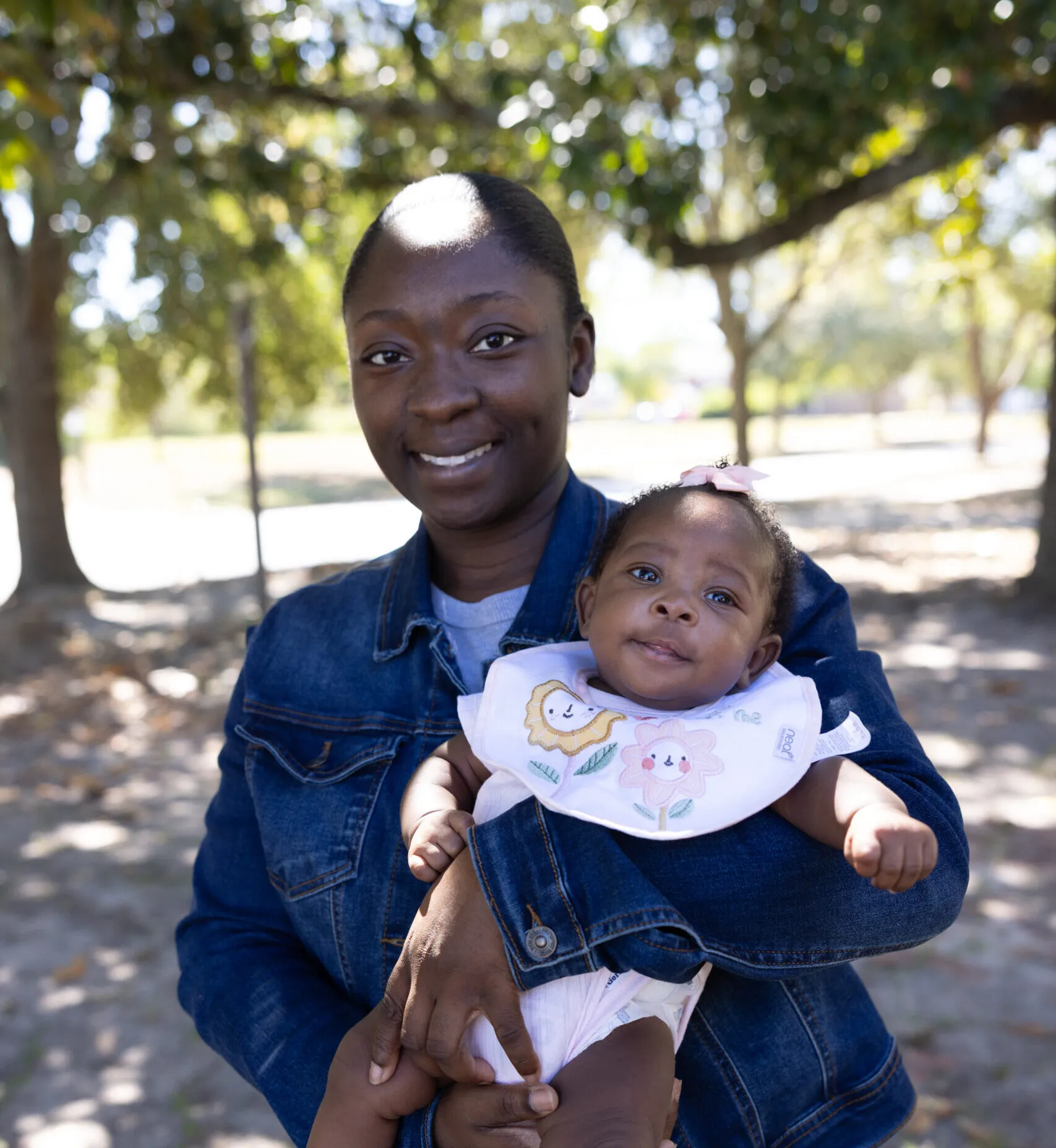
A black American mother holds her young baby.
Melvina, a mother of two from Albany, Georgia “really struggled” without support during her first pregnancy. Photo: Ben Morgan/CARE.

“It was really hard,” Melvina said of her first pregnancy. “I really didn’t have anywhere else to turn.” During her second pregnancy, she knew she wanted to do things differently, but she didn’t know where to start.

Through a partnership between CARE, the AbbVie Foundation, and Morehouse School of Medicine, Melvina received holistic support: guidance from a community health worker, nutritious food deliveries, transportation to appointments, and flexible financial support.

“Being in this program helped me see the different steps,” Melvina said. “It makes you feel heard, makes you feel listened to, makes you feel seen.”

In the U.S., maternal mortality is higher than almost every other high-income country. That danger isn’t shared equally, with Black women alone making up about 44% of maternal deaths in 2024. But according to the CDC, more than 80% of pregnancy-related deaths in the U.S. are preventable. CARE’s model shows that addressing real-life challenges to promote access alongside clinical care can save lives.

“The most important part about CARE and Morehouse putting these programs together is the doula service,” she said. Speaking of Sherri, the doula she’s worked with throughout her pregnancy, Melvina said “She always made me feel like everything is going to be okay.”

Sometimes, caring looks like making sure no mother has to navigate pregnancy alone.
What about you?

Tatiana and Ilya’s family are trying to rebuild and find the simple joys of childhood while surviving an ongoing war. Ala is learning, dreaming, and building a future where she can protect those who need her help. Melvina and Sherri are shaping healthier futures for mothers in the United States. Across continents, caring looks different, but it is always transformative.

With your support, we can stand with millions more.

Who cares? We do. And you do, too.

Together, we are CARE. Always there.

Back to Top