Disaster relief, reimagined: The CARE PACKAGE® for Emergencies is unlike anything else

By Whitney Ayres Kenerly May 21, 2026

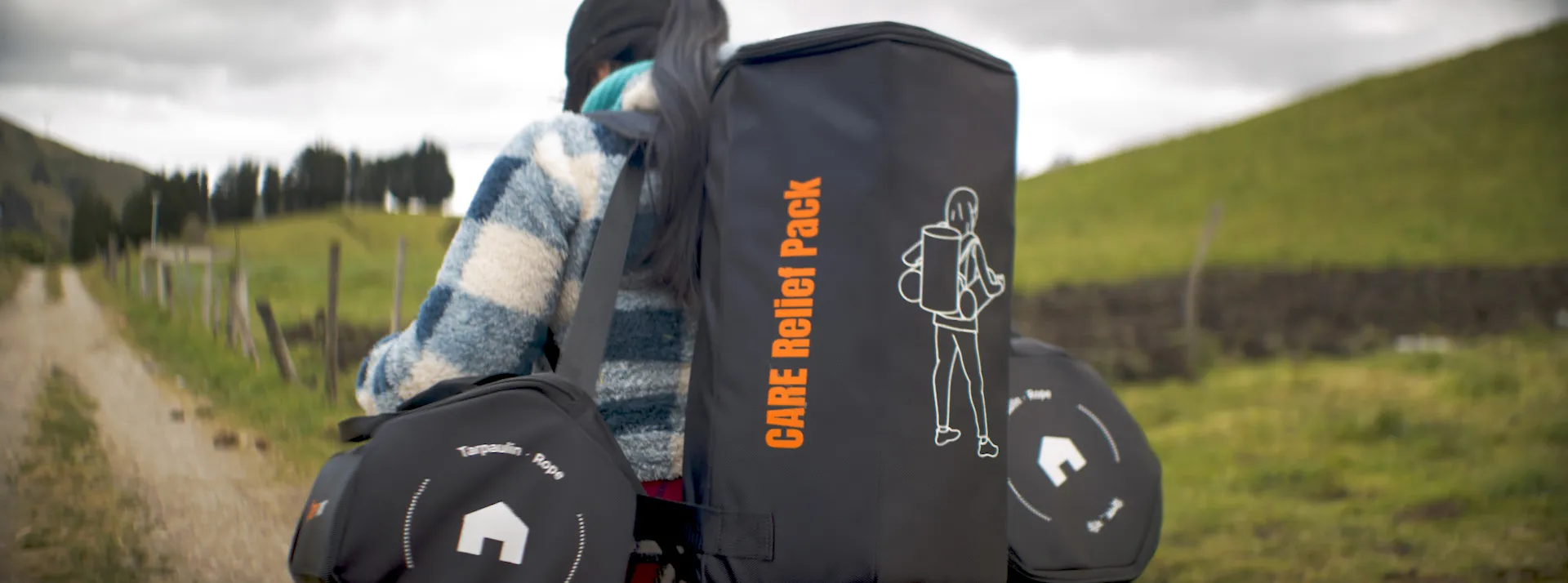
Woman carrying a CARE PACKAGE for Emergencies along a rural hillside road in Ecuador.

A woman in Ecuador carries a CARE PACKAGE for Emergencies up a hill. Photo: CARE

The new CARE PACKAGE® for Emergencies was designed to do what few disaster relief kits have managed before: address multiple survival and dignity needs in one portable package. Directors from countries where the package has been tested say it is already changing how communities experience disaster response.

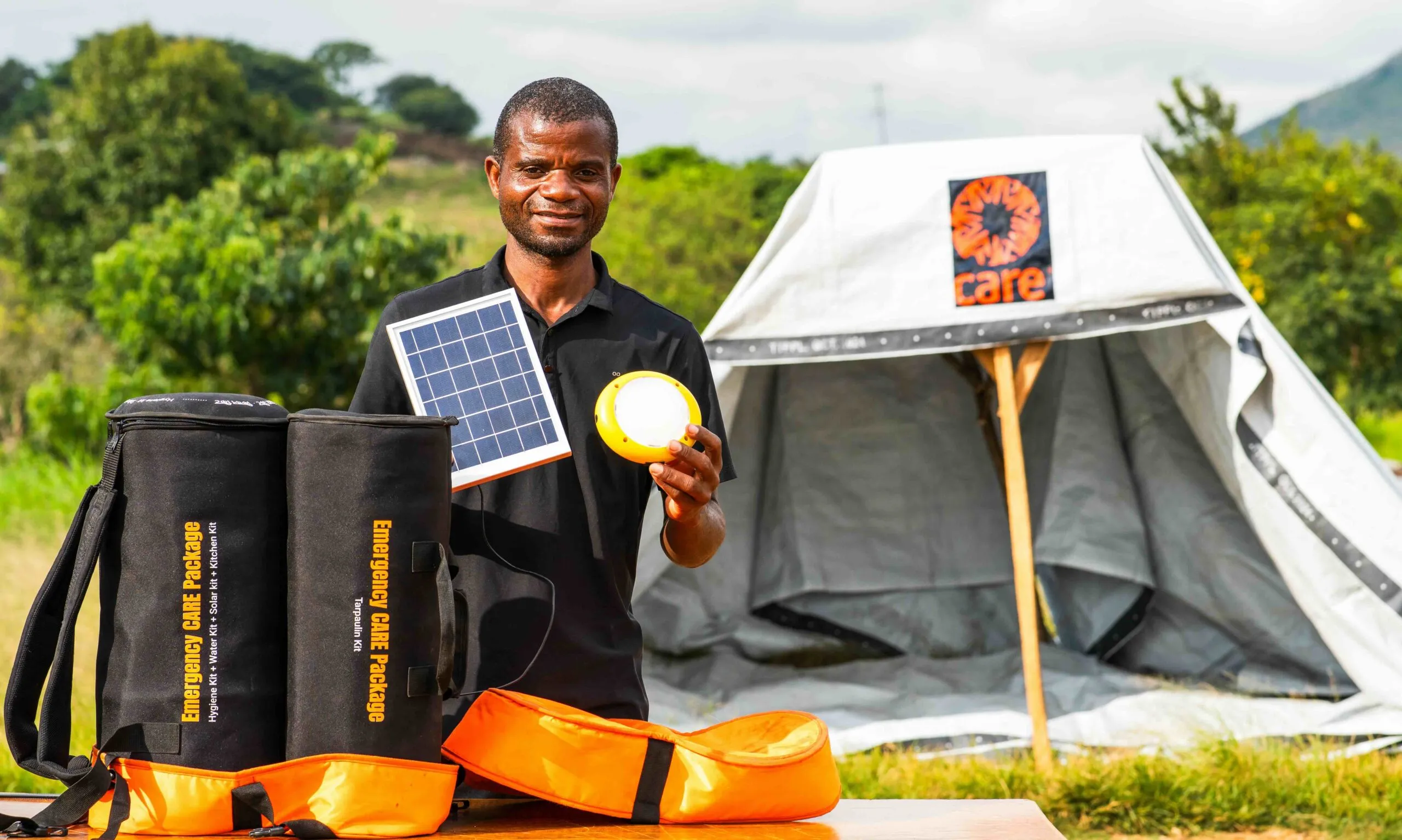
Samuel Zonda demonstrates a solar charger and emergency light included in a CARE PACKAGE for Emergencies in Malawi. A temporary shelter made from a CARE tarp is in the background.
In Malawi, Samuel Zonda demonstrates how the solar charger in the CARE PACKAGE for Emergencies is used to charge the emergency light. Behind Samuel, the tarp included in the kit is used as a shelter: CARE Malawi

More than an emergency kit

Faces crowd around a small black phone screen as sheets of rain pound against a tarp overhead. For a few long seconds, nobody speaks. A grandmother presses her palms together beneath her chin. A child leans forward so close that his breath fogs the glass.

Then, at the bottom corner of the phone screen, a tiny battery symbol flickers to life.

The family exhales all at once.

A few moments later, a familiar voice breaks through the sounds of static: We are here. We’ll be there soon.

In the chaotic hours after disasters strike, relief isn’t always a dramatic action. Sometimes it is a soft light inside a dark tent. Sometimes it’s the simple reassurance that someone knows where you are.

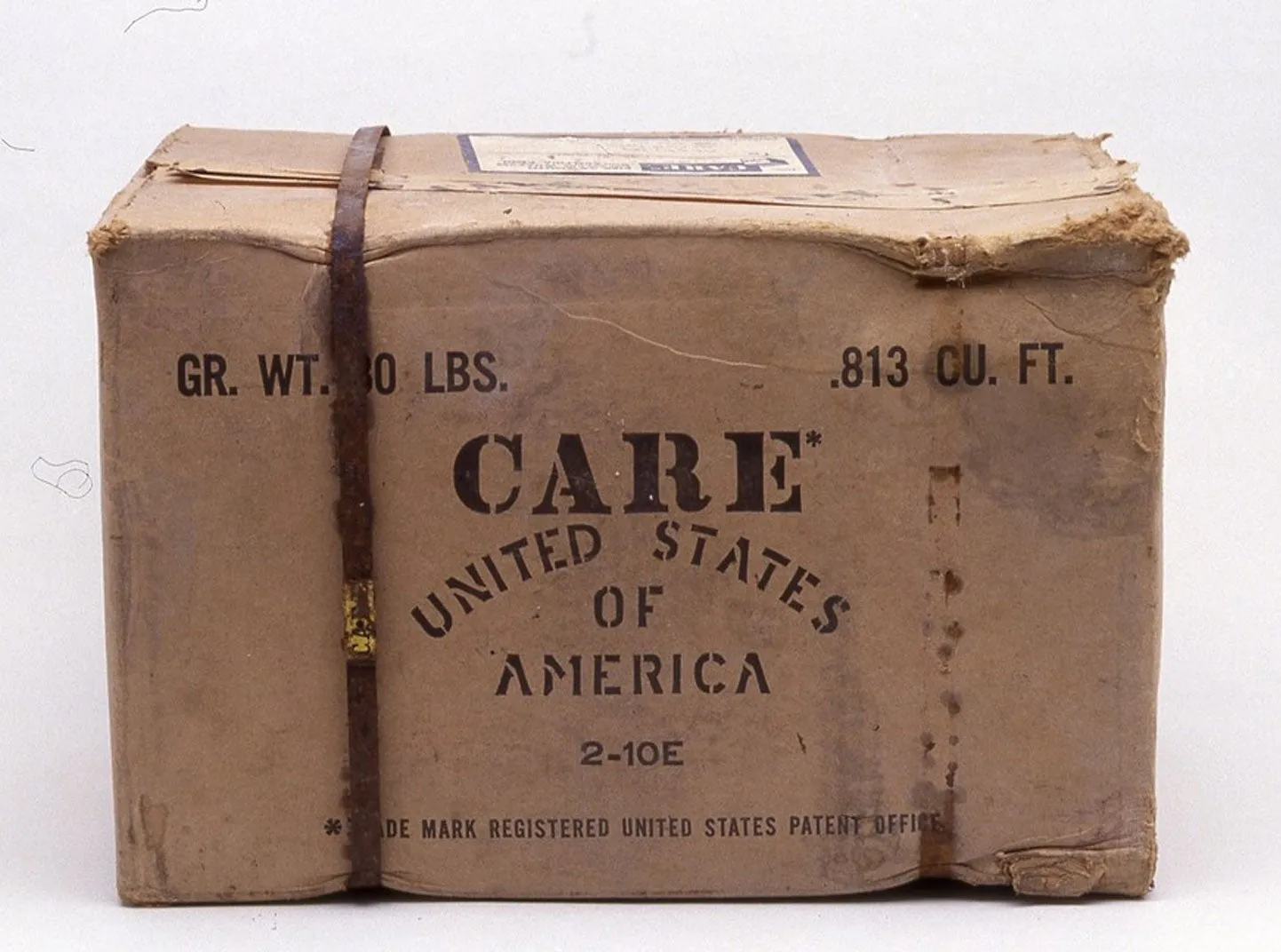
A moment of connection like this one is possible through one of the solar-powered chargers included inside the new CARE PACKAGE for Emergencies. The kit is a modern reimagining of the iconic CARE PACKAGE first delivered to families recovering from World War II in 1946.

Eighty years later, our world is shaped by floods, storms, displacement, and other emergencies that unfold one after the other. The CARE PACKAGE for Emergencies has been designed for the crises of today.

The CARE PACKAGE for Emergencies contains up to 40 carefully selected items packed inside three lightweight, waterproof bags. The supplies create five different kits designed to help a family of four survive the first month after disaster strikes:

  1. A shelter kit with fireproof tarps and ropes for setting up a temporary shelter
  2. A wash kit with hygiene supplies and containers for portable bathing
  3. A kitchen kit with pots and a portable stove
  4. A dignity kit with sanitary pads and undergarments
  5. An energy kit with a solar charger and emergency light

These kinds of things sound ordinary until you no longer have them.

For CARE teams responding to emergencies around the world, the package has become more than an emergency kit. It is a compact expression of something greater: the belief that people don’t just need things — they need to know they matter.
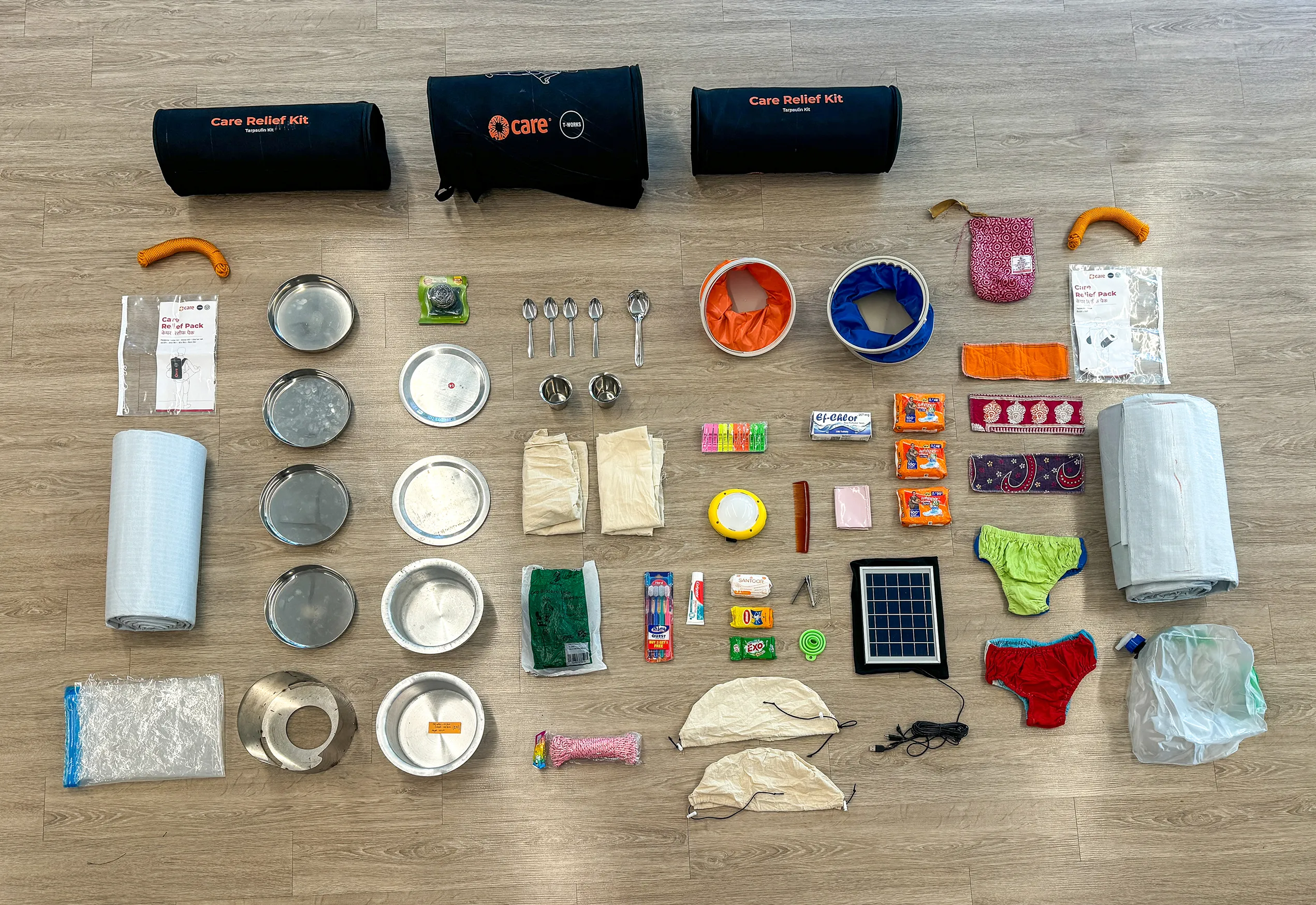
Flat lay showing the contents of a CARE PACKAGE for Emergencies, including shelter materials, cooking supplies, hygiene items, water purification tools, clothing, and solar-powered lighting for a family of four.
The CARE PACKAGE for Emergencies includes items to address shelter, energy, cooking, water purification, and hygiene needs for a family of four for up to a month. Photo: CARE

Developed for real people in real emergencies

The idea for the CARE PACKAGE for Emergencies began with a frustration that resurfaced disaster after disaster: why does it take so long for families to receive the basic things they need to survive with dignity?

In May 2022, catastrophic floods rushed across northeastern India and Bangladesh, affecting more than nine million people and leaving entire communities stranded on rooftops and trapped on isolated patches of dry land for days. As local governments and humanitarian groups launched rescue operations by boat, CARE staff on the ground began thinking about a different kind of problem unfolding alongside the emergency itself. They saw that, even when families were rescued, the essential relief supplies they needed were often too bulky, fragmented, delayed, or difficult to quickly transport into devastated areas.

What if there were a different way?

That question became the foundation for the CARE PACKAGE for Emergencies: a lightweight, modular survival kit designed to help families navigate the most difficult and chaotic first days after disaster strikes. This is when people need support immediately, but supply systems are often still mobilizing.

CARE partnered with one of India’s largest prototyping companies, T-Works, to design and test what would eventually become the CARE PACKAGE for Emergencies. Early versions were field-tested following the November 2023 earthquake in Jajarkot, Nepal. During that response, teams saw how important the shape and weight distribution of bags were for families carrying them across damaged and difficult terrain.

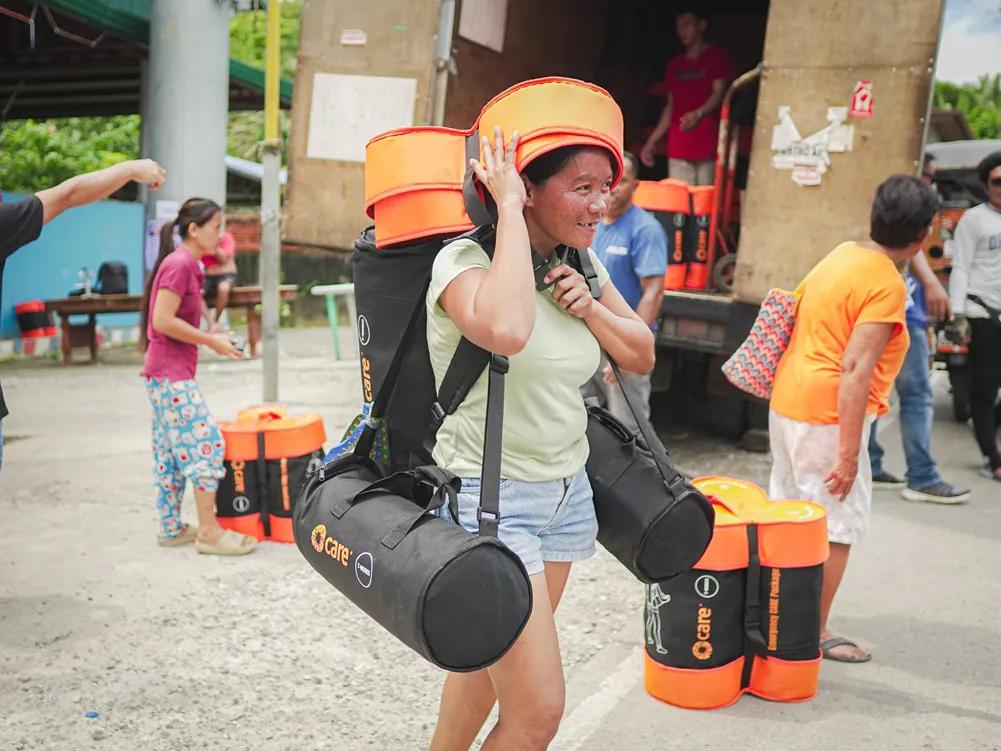
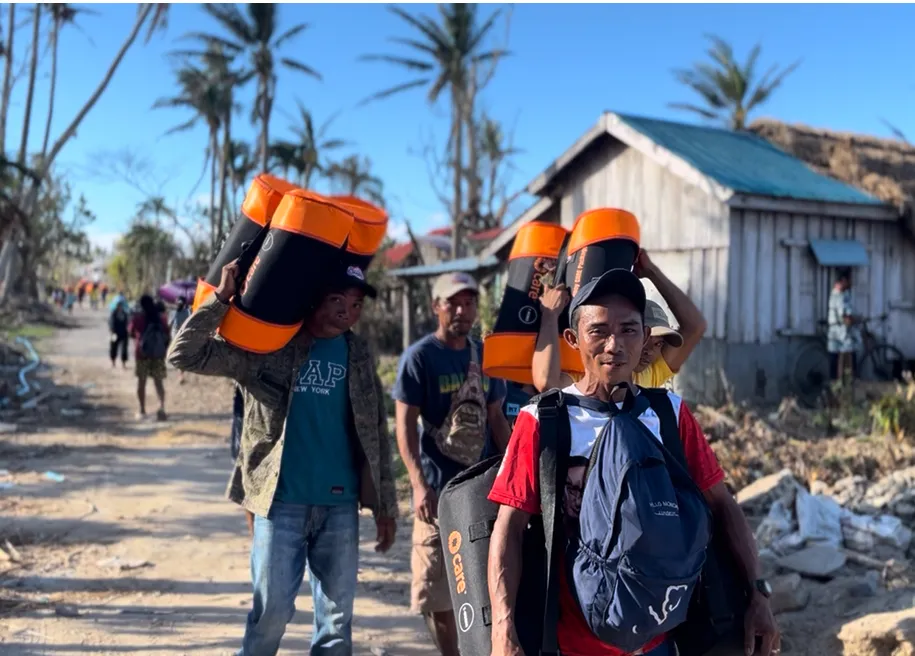
After early testing revealed that a single large bag was too heavy for many people to carry long distances, developers shifted to a lightweight three-bag system. The design was inspired in part by stacked cylindrical tiffin containers commonly used across India to transport meals. This format more evenly distributes the weight of the bags while allowing the person carrying the package to keep their hands free.

With this design, people crossing broken ground can catch themselves if they stumble. Families can keep their hands free to carry children, collect fuel for fires, work on handcrafts, or complete other tasks as they move from place to place.

The final package reflects hundreds of small decisions shaped by the realities people face after disasters. Feedback from families in Nepal, Bangladesh, Malawi, Mozambique, and the Philippines influenced everything from portability to hygiene items to cooking supplies. In Mozambique, mosquito nets and blankets were added while extra tarps were removed. In Malawi, CARE added capulana cloths, which are traditional fabrics made from cotton that are commonly used by women as clothing, headwraps, or for carrying items.

Disasters aren’t identical, and neither are the needs of the people living through them.

For CARE leaders, that understanding matters. Disaster changes the meaning of ordinary objects. A tarp becomes shelter. A solar charger becomes contact with family. A light becomes safety. A bucket becomes a way to carry water, belongings, or food after everything else has been swept away.

“The CARE PACKAGE for Emergencies is designed to support families at the early stage of an emergency,” said Dilip Niroula, deputy director of Humanitarian Operations at CARE. “It is not just a collection of supplies but a package full of hope, and we have seen it bring smiles to people’s faces.”

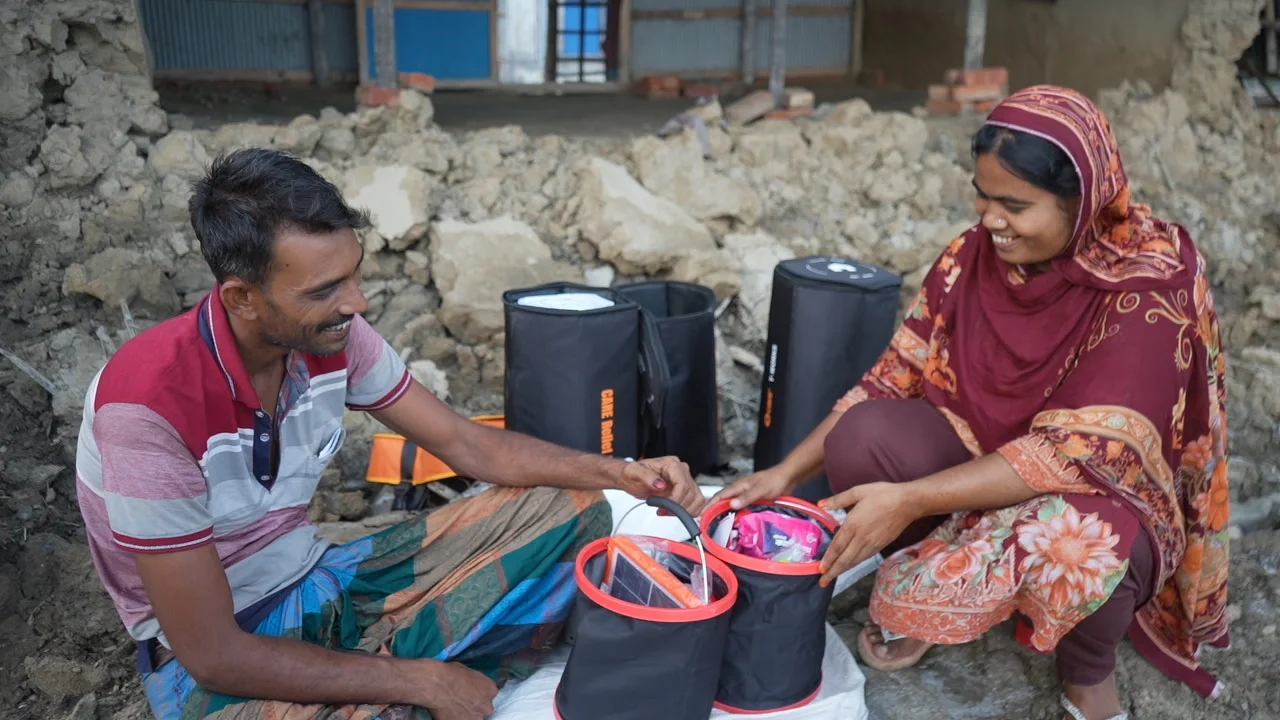
A man and a woman sitting amidst rubble, smiling as they look through the contents of two open CARE PACKAGE for Emergencies kits.
A couple in Bangladesh set up items from the CARE PACKAGE for Emergencies. Photo: CARE

Every item is intentional

The CARE PACKAGE for Emergencies was designed for portability. In many disaster-prone communities in Nepal, families must travel several hours to reach different distribution centers. By consolidating critical items into a single, compact package, the design reduces the burden of lining up for different kits for shelter, hygiene, or household supplies.

“It reduces the time that you spend outside queuing for other support,” said Mona Sherpa, CARE Nepal country director. “What communities want is the entire package, which can actually help them.”

Reiza Dejito, CARE Philippines country director, added, “You lose your dignity just going for hours.”

Families traveling for hours, or even days, to reach support are often on foot. They are carrying children alongside the few belongings they were able to save while fleeing their homes.

When you are suddenly forced to carry your life with you, there is little room for things that do not matter.

Every second counts after a disaster. By providing essentials for shelter, water, cooking, and hygiene in one package, the CARE PACKAGE for Emergencies can support a family of four through a single distribution. Because the packages can be pre-positioned and rapidly distributed through local humanitarian networks, CARE is often able to reach affected communities within 36 to 72 hours after disaster strikes.

CARE leaders say the package was also designed with women especially in mind because they are often the ones navigating the survival logistics for their families.

“Women are the ones who line up… receive these items… carry these items home…” Dejito said.

Providing items for multiple essential needs allows families to regain a sense of autonomy during one of the most disorienting moments of their lives.

“They do not just lose their belongings,” Dejito said of people experiencing emergencies. “They also lose that sense of safety, stability, and sometimes even hope and identity.”

A Filipina woman uses a CARE PACKAGE for Emergencies by carrying sections on her back and over each shoulder.
A woman in Cebu Province, Philippines, collects a CARE PACKAGE kit after an earthquake in October 2025. The Philippines was among the countries where the new CARE PACKAGE for Emergencies was piloted. Photo: Zhynnon Mar Mantos/CARE

Designed for the needs of families

For Sherpa, it was immediately clear that the CARE PACKAGE was designed with care.

“It was a genuine delight,” Sherpa said. “[The CARE PACKAGE for Emergencies] looks very small, but it contains 37 different items — all lightweight, all very well organized, and all essential for communities after disaster.”

Sherpa vividly remembers the times she unveiled the CARE PACKAGE for Emergencies to communities. She described scenes where people crowded around as, one by one, items emerged from a bag: a black rectangular solar charger no larger than a trade paperback, a round white emergency light, a pack of four toothbrushes, toothpaste, water purification tablets, a rolled-up tarp the color of wet stone, multi-use cloths printed in familiar patterns, menstrual pads, a portable stove, pots, forks, and other ordinary objects that become vital in an emergency.

People smiled as volunteers lifted each item from the bag. Some turned the emergency light on and off. Others examined the pots or quietly discussed what would help keep rain out of their shelters through the night.

“I remember the kind of smile and the joy that the community members had on their faces and in their eyes,” Sherpa said when describing people’s reactions to the items. “That was a very lovely thing to witness.”

Dejito sees something more inside the bags too: an acknowledgment that real life does not break neatly into categories of needs.

“Families do not experience disasters in sectors,” she said. “They don’t want things in fragments. They don’t only need shelter or only hygiene items. Families just want to stay dry, be comfortable, stay warm, be able to cook, be able to get water, protect their children.”

For both leaders, the CARE PACKAGE for Emergencies represents something larger than logistics or efficiency. It carries, as they describe it, “hope,” “solidarity,” and “the message of CARE itself.”

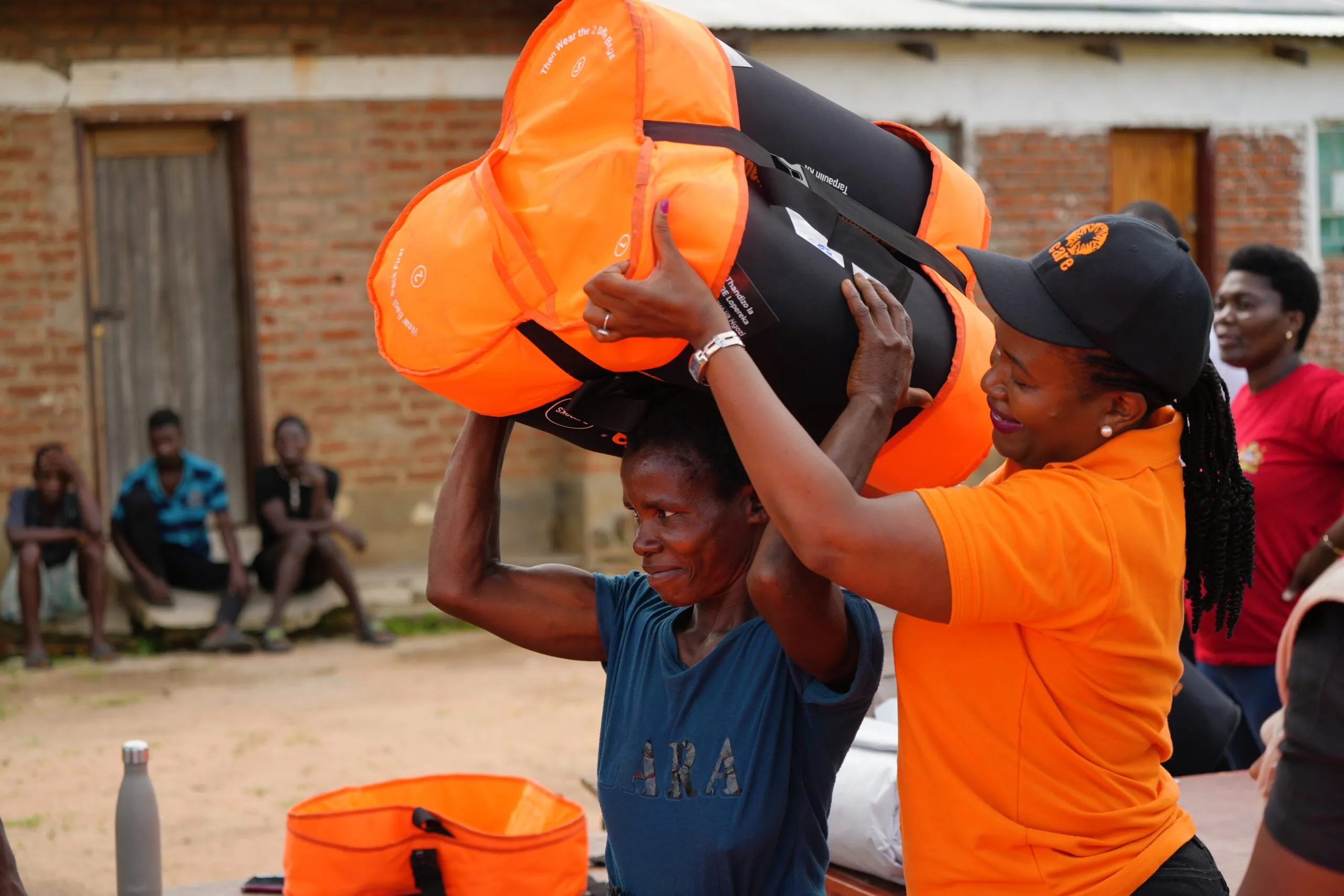
CARE Package distribution in Malawi
A distribution of CARE PACKAGE for Emergencies parcels in Malawi. Photo: Samuel Zonda /CARE Malawi

Every disaster is different

The CARE PACKAGE for Emergencies was not designed to be a ‘one-size-fits-all’ solution. Items vary according to needs, customs, and local preferences.

In the Philippines, CARE adapted the standard kits after learning that some hygiene items were not part of everyday routines for local communities.

“In the original list [of items], there was hair oil,” Dejito explained. “But Filipinos rarely use hair oil, so we replaced it with shampoo. It sounds simple, but that in itself is already dignified.”

In Nepal, teams are currently revising stove designs to better fit local cooking practices.

“Every disaster is different,” Sherpa said. “We should not be afraid to revise [the CARE PACKAGE for Emergencies] and adapt it again according to local needs.”

Dejito shared a story of a woman who went into labor just one day after an earthquake destroyed her home in the Philippines. With nowhere safe to go, her family pieced together a makeshift shelter outside the rubble while caring for a newborn baby.

Dejito reflected, “Can you imagine having a newborn and then you have nothing?”

When the family received a CARE PACKAGE for Emergencies, Dejito recalled their relief at finally having sturdy tarps, lighting, and basic household supplies that could help them stay dry and care for their child. “They said, ‘Finally we can sleep without having to worry about being drenched by rain.’”

Stories like this are why CARE leaders insist the package must continue evolving based on local needs.

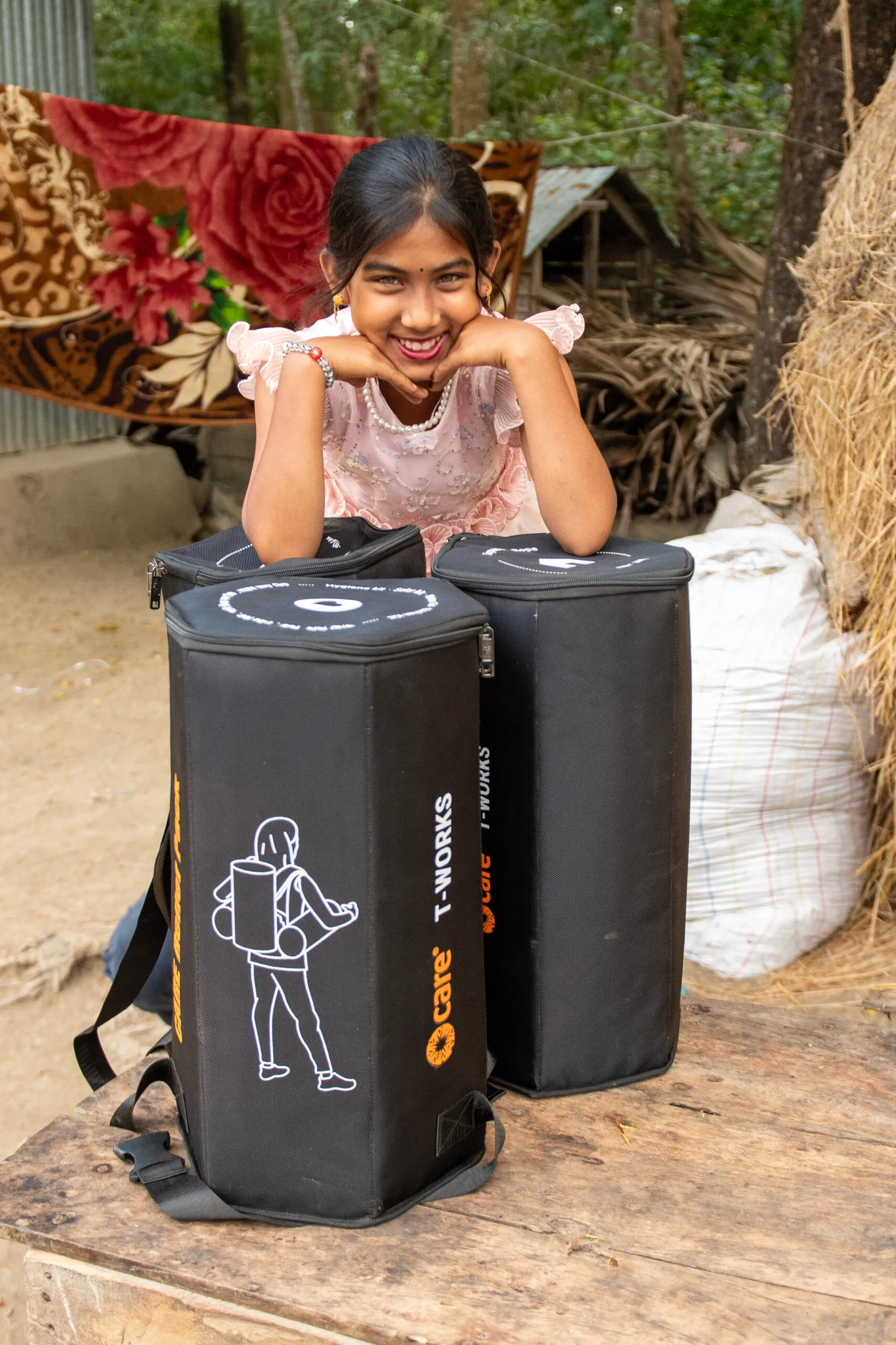
A smiling girl in a pink dress leans on two black containers labeled
A young girl in Bangladesh poses with the CARE PACKAGE for Emergencies. Bangladesh was one of the first countries where the parcels were tested. Photo: CARE

Not just for emergencies

What surprised CARE teams most was what happened after the immediate crisis had passed.

In Nepal, Sherpa visited communities where CARE PACKAGE for Emergencies kits had been distributed months before. She found that families were still using pieces of the kits in ways no one had originally anticipated. Tarps that once served as emergency shelters had been spread across the ground to dry corn harvests beneath the sun. Foldable water buckets were fastened to the backs of bicycles, carrying goods back and forth along mountain roads. Some families had even shared items with neighbors who were still struggling to rebuild.

In the Philippines, women began turning the kits into preparedness “go bags,” carefully tucking extra clothes and essentials inside so they would be ready when the next storm arrived.

“They folded these items into the daily rhythm of their lives,” said Sherpa.

Even during periods of displacement, the items from the CARE PACKAGE for Emergencies kits provided moments of everyday comfort. In the Philippines, families used the solar chargers to power radios so they could listen to serialized dramas together in the afternoons.

“They were recharging their radios… they listened to this radio drama… it gives us a sense of normalcy amidst all this chaos,” said Dejito.

A symbol of love

By design, the CARE PACKAGE for Emergencies includes as many locally sourced items as possible. In the future, Dejito and Sherpa envision sourcing items from Village Savings and Loan Associations (VSLAs) supported by CARE. These women-led savings groups help members build businesses that generate reliable incomes. Sourcing items from VSLA businesses would support local economies and turn the CARE PACKAGE for Emergencies into something that communities can help build for themselves.

In the Philippines, Dejito believes the package could eventually become part of anticipatory action systems that already help families prepare for storms, floods, or typhoons.

“My hope is that the CARE PACKAGE [for Emergencies] becomes part of how communities prepare, not just how they respond,” she said. “In the Philippines, we are both survivors and responders at the same time.”

By 2030, CARE plans to distribute at least 250,000 CARE PACKAGE® for Emergencies kits, reaching one million people worldwide.

But for Sherpa, the package’s real significance may never be fully captured by numbers. She says the most important thing inside the bags are not the tarps, solar lights, or water containers themselves. For her, the package is a “symbol of love.” It’s a reminder that someone thought ahead, showed up, and cared.

“We can put items, messages, and love into the package,” she said, “and give it to communities who need it most.”

Back to Top