“If we have sick children, we walk”: Hunger and healthcare collapse in South Sudan

By Sarah Easter and Becca Mountain May 22, 2026

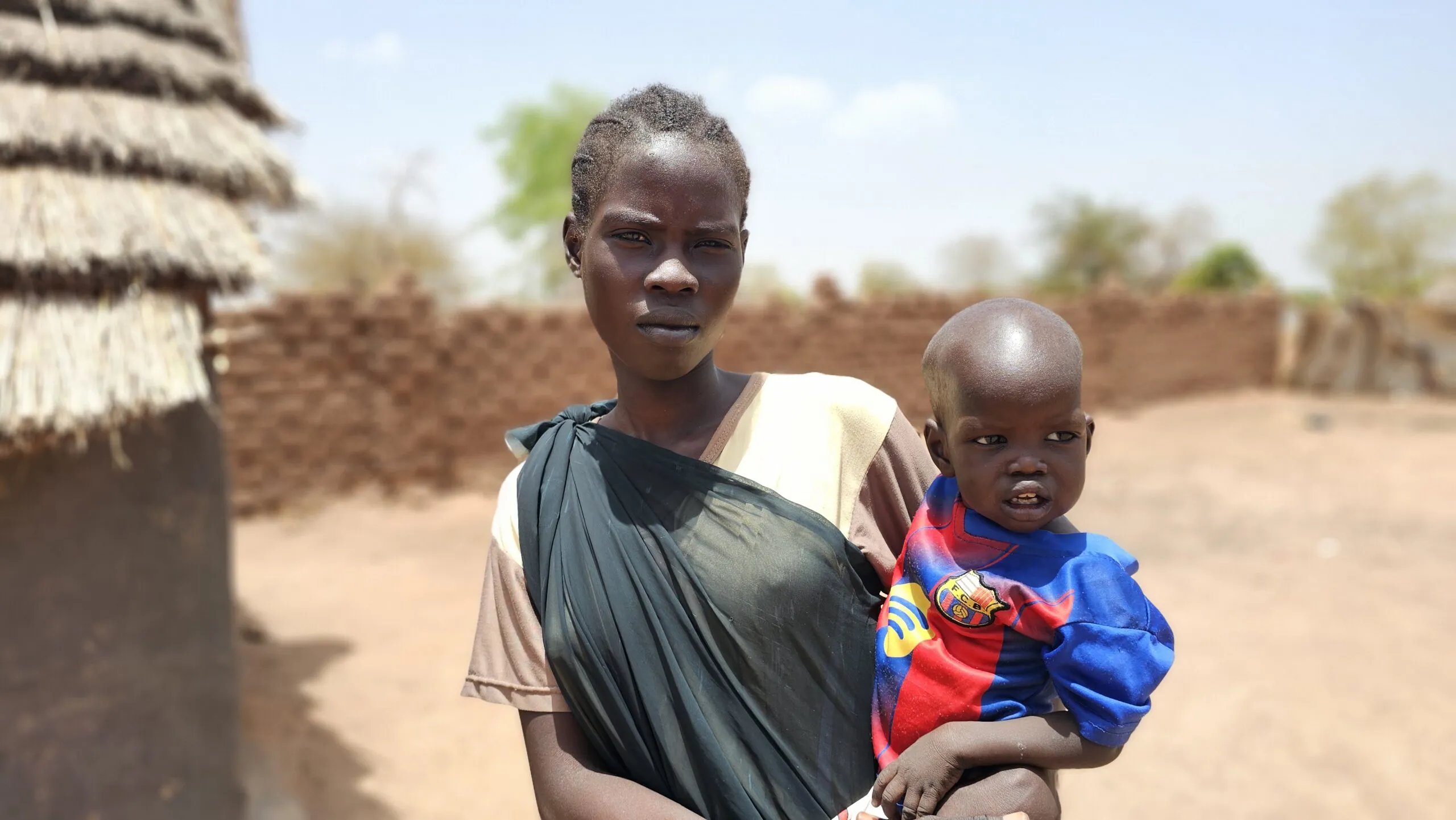
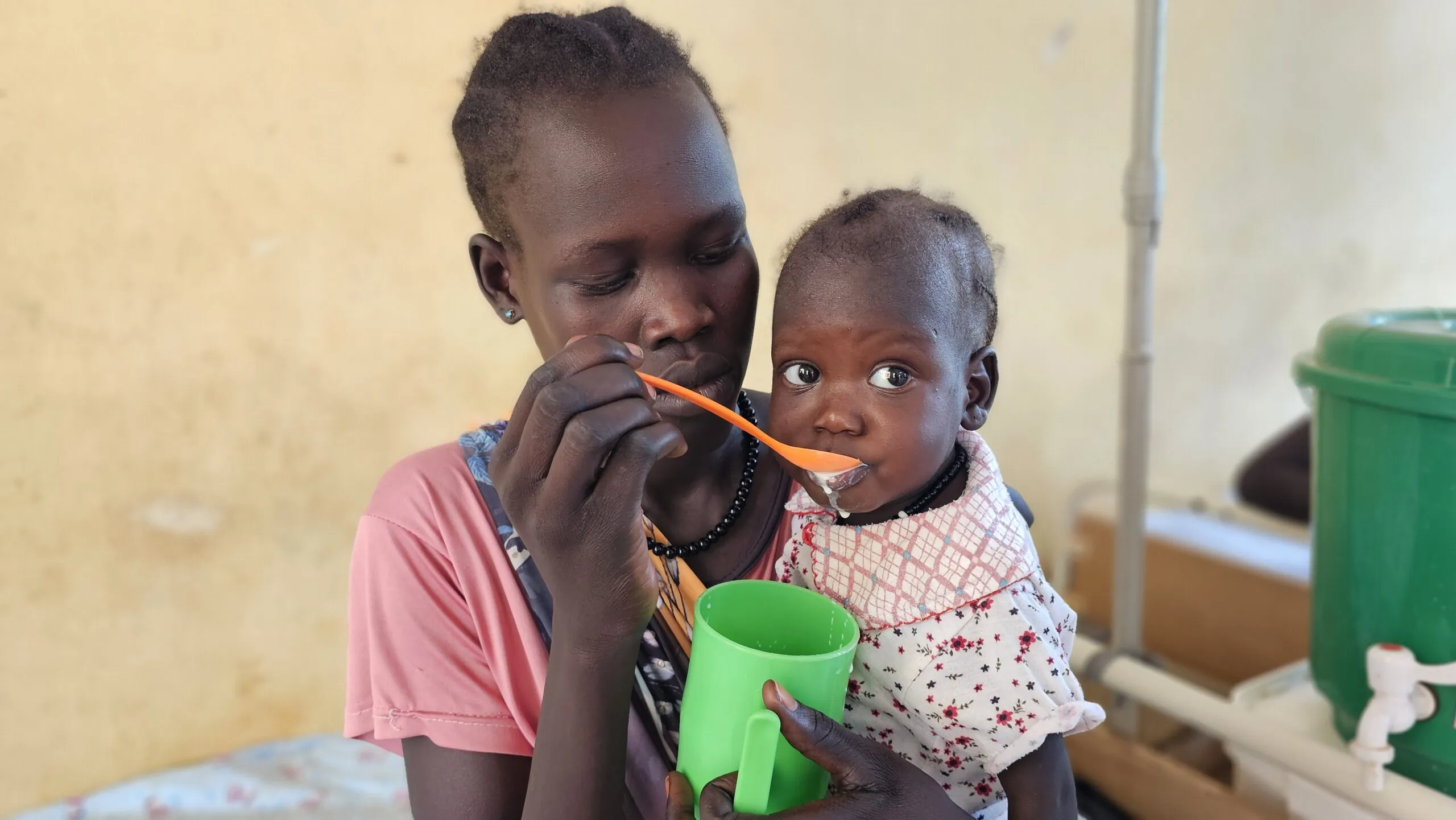
A mother holds her young daughter during nutrition treatment at a hospital in South Sudan.

22-year-old mother Athieng holds her daughter Athiei during nutrition treatment in Pariang. All photos: Sarah Easter/CARE

In South Sudan, hunger is becoming deadlier as conflict, displacement, rising food prices, and damaged health services leave families struggling to find food and care. CARE-supported health workers are treating children for severe malnutrition, but growing needs are pushing communities and clinics to the brink.

Be part of what CARE makes possible.

Get stories, updates, and actions you can take to support women and families worldwide.

Subscribe

In a hospital ward in Pariang, 22-year-old Athieng presses her one-year-old daughter, Athiei, against her chest as nurses check the colored band wrapped around the child’s arm.

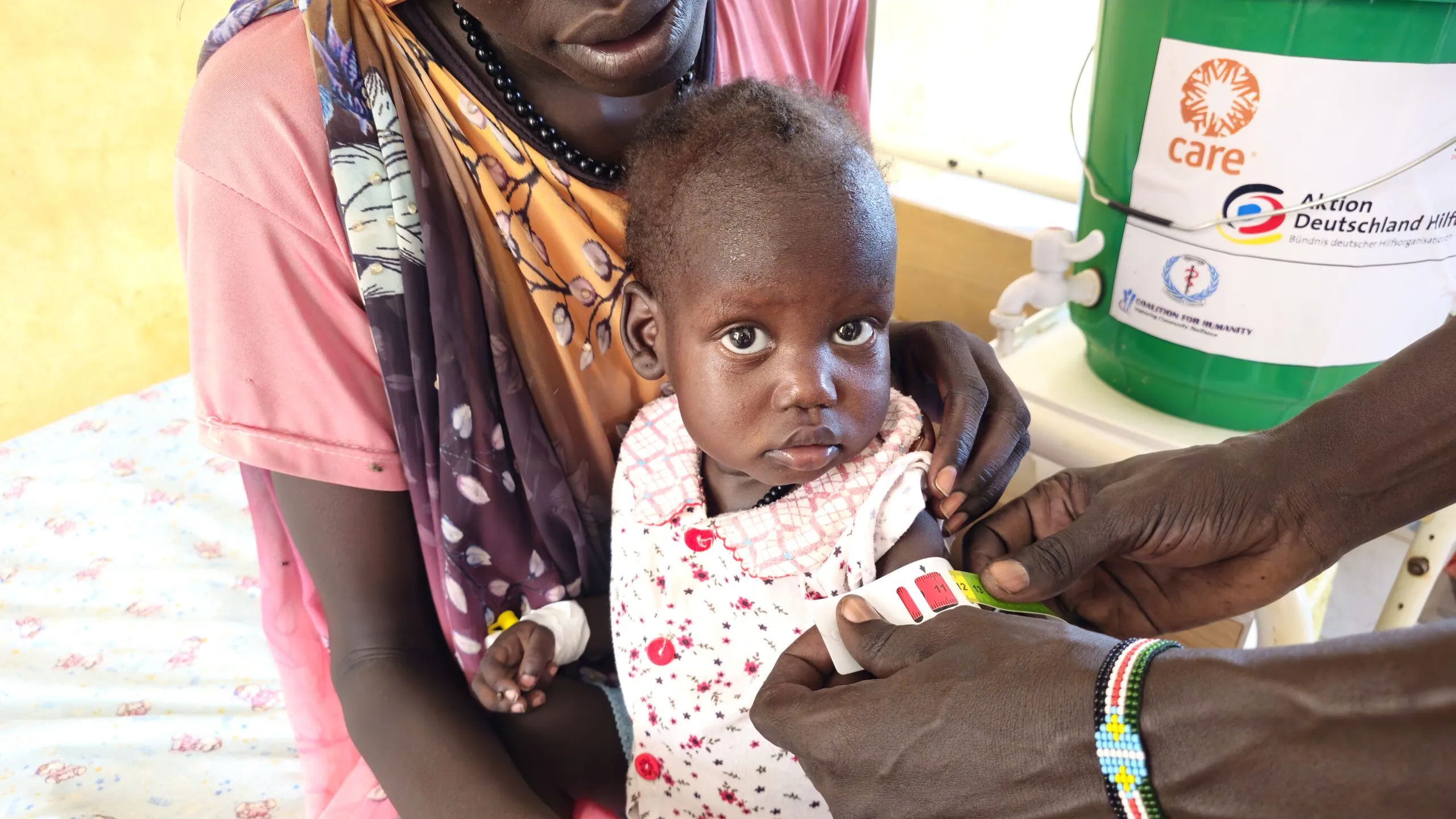
The result falls in the red zone: severe acute malnutrition.

“I came here because my child was sick,” Athieng says. “She was vomiting and had diarrhea. She also had a high fever.”

After two weeks of treatment, Athiei’s health has improved. Her fever has gone down, and her other symptoms have eased. Still, the multicolored mid-upper arm circumference (MUAC) band shows the one-year-old is still recovering.

Athiei’s story is one of many in South Sudan’s worsening hunger crisis. According to the latest IPC analysis, 7.8 million people in South Sudan — about 56% of the population — will face crisis levels of hunger or worse between April and July 2026. The IPC also estimates that 2.2 million children aged 6 to 59 months currently require treatment for acute malnutrition, along with 1.2 million pregnant and breastfeeding women who need nutrition support.

Malnutrition is more than a lack of food. When children do not get enough nutrients, their immune systems weaken, growth slows, and brain development can be affected. It can also make common illnesses like diarrhea and malaria far more dangerous. For pregnant and breastfeeding mothers, poor nutrition can increase health risks for both mother and baby and make recovery from illness or childbirth harder.
Why hunger is worsening in South Sudan

A nurse measures a young child’s upper arm with a nutrition screening band in South Sudan.
A nurse measures Athiei’s upper arm to monitor treatment for severe acute malnutrition.

South Sudan’s hunger crisis is being driven by multiple emergencies happening at the same time. Escalating conflict has forced families from their homes, interrupted farming, disrupted markets, and made it difficult for humanitarian organizations to reach at-risk communities.

At the same time, rising food prices and weather-related shocks have left many families unable to afford enough to eat. Flooding, dry spells, and reduced agricultural production have limited harvests, while weakened purchasing power has made even staple foods harder to buy. Many households rely on staple crops like sorghum for much of their daily nutrition. But rising prices have left families with fewer meals and fewer options.

The crisis is deepening as health and nutrition services come under growing pressure. In some areas, clinics have been damaged or destroyed by conflict. In others, facilities face shortages of supplies, funding, and staff. That means children facing malnutrition may also have less access to treatment for illnesses such as cholera, malaria, measles, diarrhea, and respiratory infections.

Without functioning health services, hunger becomes even more dangerous.

When families must walk for days to reach malnutrition treatment

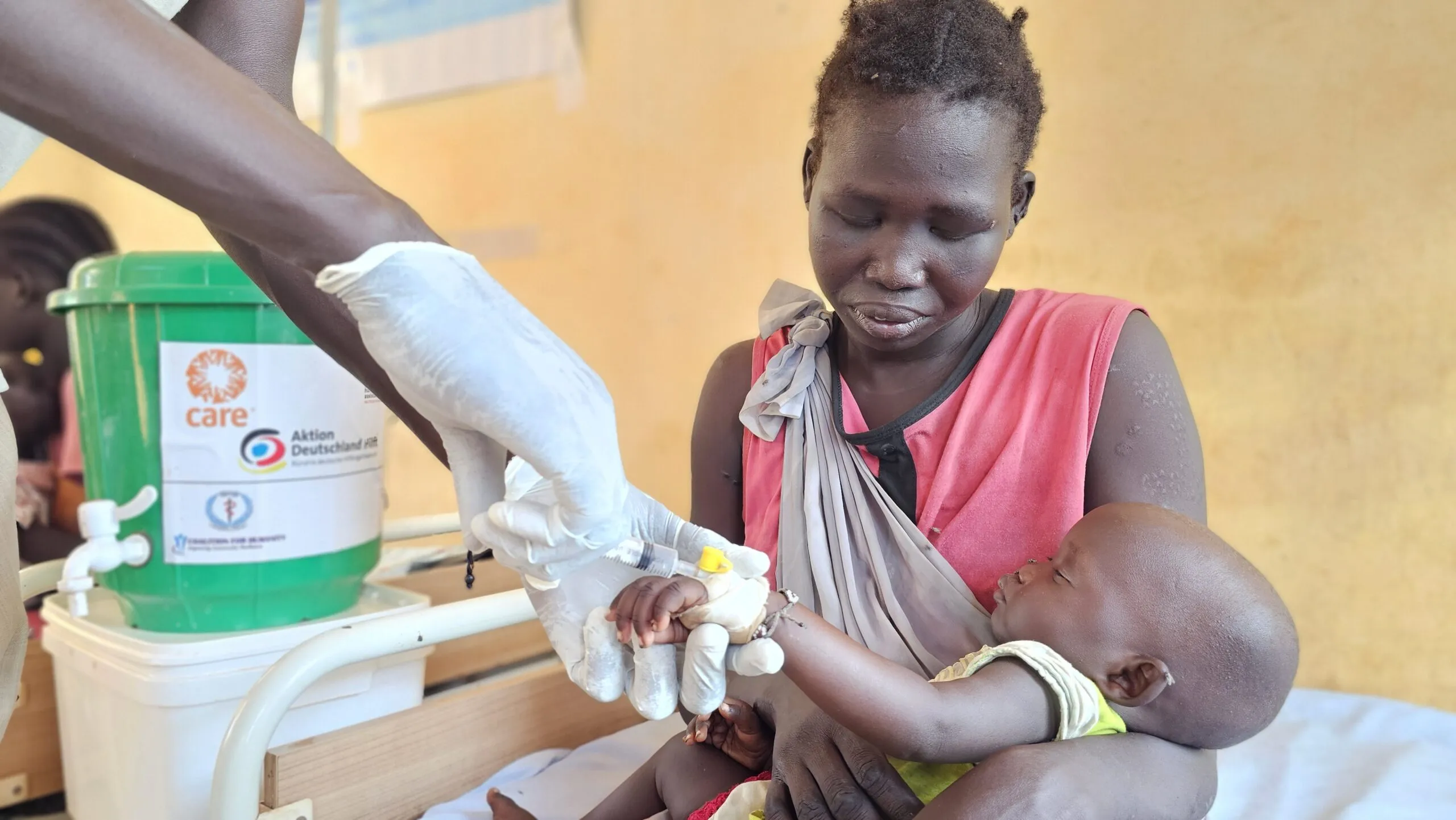
A mother holds her daughter while receiving care at a hospital in South Sudan.
Rebeca holds her daughter Nyabany while receiving care at a CARE-supported hospital in South Sudan.

Even when families recognize the danger, reaching treatment can take days.

In the same hospital room as Athieng and Athiei, 20-year-old Rebeca holds her daughter, Nyabany, as nurses provide medical care.

“We did not have enough to sustain ourselves,” Rebeca says. “We would collect firewood to sell it, but it was not enough to buy food.”

As Nyabany’s condition worsened, Rebeca knew she had to reach the hospital.

“Nyabany was dying,” she says. “She was so sick, and the fever was so high. She was not even breathing properly.”

Rebeca carried her daughter through two days of extreme heat to get treatment. She stopped only once, sleeping overnight in a stranger’s hut before continuing the journey the next morning.

For children facing severe malnutrition, delays can quickly become life-threatening.

“There is no other option than to come here, so she could survive,” she tells us, gesturing at the other mothers and their children. “We all must do it. If we have sick children, then we walk.”

When food is out of reach

A mother holds her young child as the child receives medical care in South Sudan.
Aker and Miawer at a CARE-supported nutrition center in Jamjang.

For other families, the crisis began at the market.

20-year-old Aker brought her son, Miawer, to another CARE-supported nutrition center in Jamjang after he became dangerously weak.

“He had a fever and I had no food or milk for him,” she tells us.

Aker says rising food prices have made even basic staples unaffordable. “We cannot afford to eat anymore.”

At the nutrition center, children like Miawer receive Plumpy’Nut, a shelf-stable, ready-to-use therapeutic food (RUTF) high in calories, protein, vitamins, and minerals. Since its development in 1996, RUTF has revolutionized the treatment of child wasting and severe acute malnutrition.

But ongoing funding disruptions have made it harder to get RUTF and medical supplies to the clinics and nutrition centers where families need them most. In some places, it has become harder to predict when supplies will be available, staff have been cut, and families who make long journeys for treatment may arrive to find limited stock.

Despite the strain, CARE-supported health workers continue treating children who arrive at hospitals and nutrition centers, often after long and difficult journeys. But treatment depends on more than therapeutic food. Clinics need steady supplies, trained staff, medicines, and safe access to reach children in time.
h2>Without healthcare, hunger cannot be treated

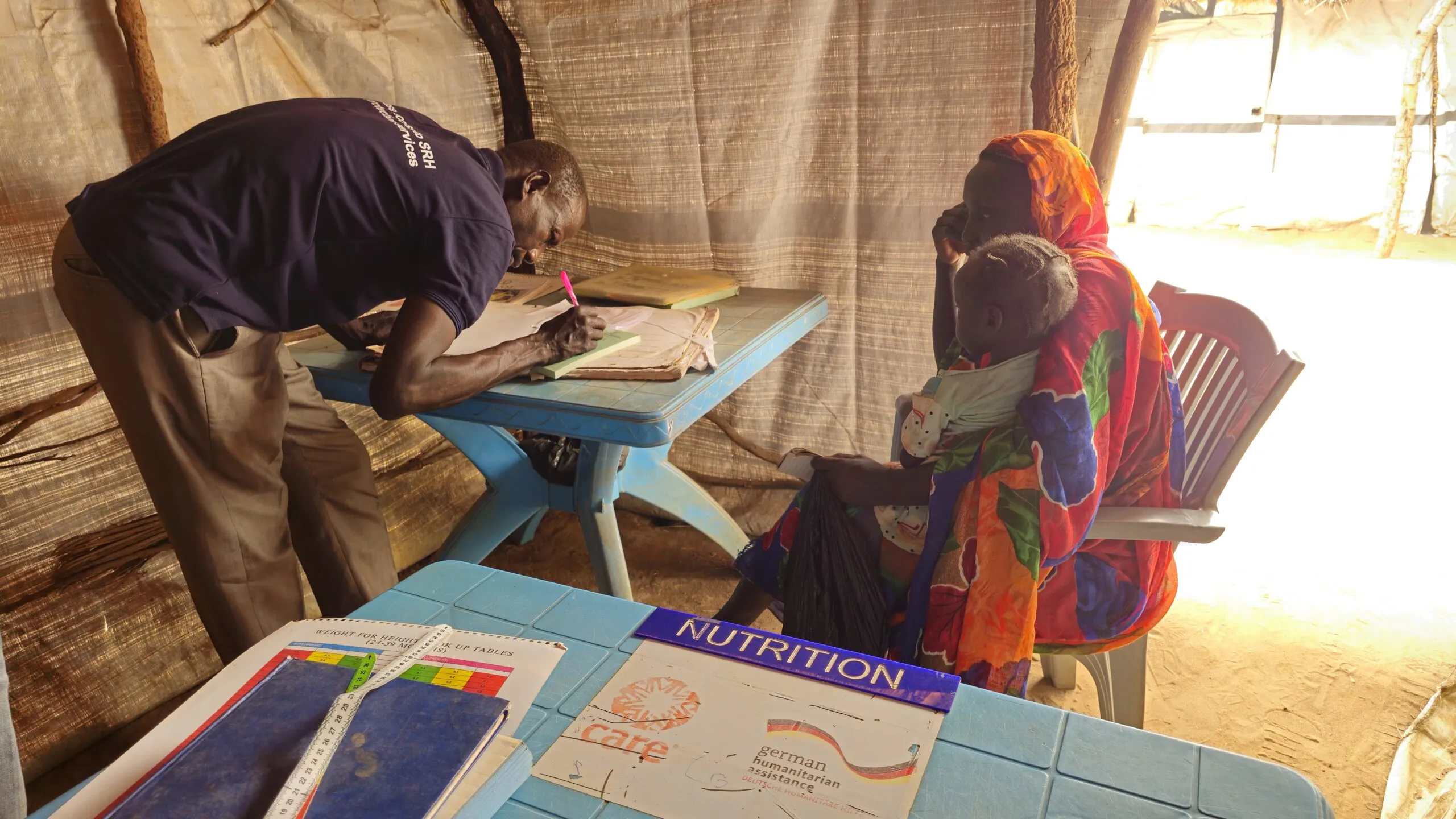
A nutritionist takes notes while speaking with a mother about her child’s treatment in South Sudan.
A nutritionist consults with a mother about her child’s treatment at a CARE-supported facility in South Sudan.

The same crisis looks different from place to place.

In Pariang and Jamjang, CARE staff continue to treat children for severe acute malnutrition. But in Akobo County, which the IPC has identified as at risk of famine, all 15 health facilities have been destroyed by conflict, leaving families with little access to care as hunger and disease rise.

The damage extends beyond one hospital. Across Jonglei State, health partners estimate that about 1.35 million people have lost access to essential health services because of damaged, looted, or disrupted facilities.

During a recent assessment of Akobo County Hospital — the county’s only referral facility — CARE South Sudan Humanitarian Manager Chandiga Kennedy saw the scale of the destruction after CARE staff and partners returned to the area following weeks of evacuation due to violence..

“When I walked into Akobo Hospital, it had been stripped of everything, beds gone, supplies looted,” Kennedy says. “It was a devastating sight,”

“Patients who had returned were lying on the cold floor waiting to be treated: some weak, some in pain, all waiting for care,” she continues. “It was heartbreaking, yet you could still see people’s determination to return to what they know and begin rebuilding their lives, despite everything they have endured.”

CARE and local partners continue supporting communities through food assistance, nutrition services, healthcare, water, sanitation, and other emergency response efforts where access allows. But insecurity, access constraints, and severe funding shortfalls are limiting the scale of the response.

“You cannot treat hunger without functioning health services,” says Akai. “Therapeutic food means very little if there are no clinics, no trained staff, no medicines and no safe access. If the health system continues to collapse, lives will be lost not only from lack of food, but from entirely preventable and treatable conditions.”

Across South Sudan, families are still making the journey to seek care. But as conflict, funding shortages, and damaged health facilities continue to strain the health system, reaching treatment does not always guarantee it will be available.

For children facing severe malnutrition, that uncertainty can become deadly.

Help CARE fight hunger.

Every 13 seconds, a child dies from malnutrition. Give today to help fight food insecurity and poverty in countries in crisis.

https://my.care.org/site/Donation2?df_id=47918&mfc_pref=T&47918.donation=form1&s_src=1726206JBF00&s_subsrc=FY26DFHBOTTOMBOX
Back to Top