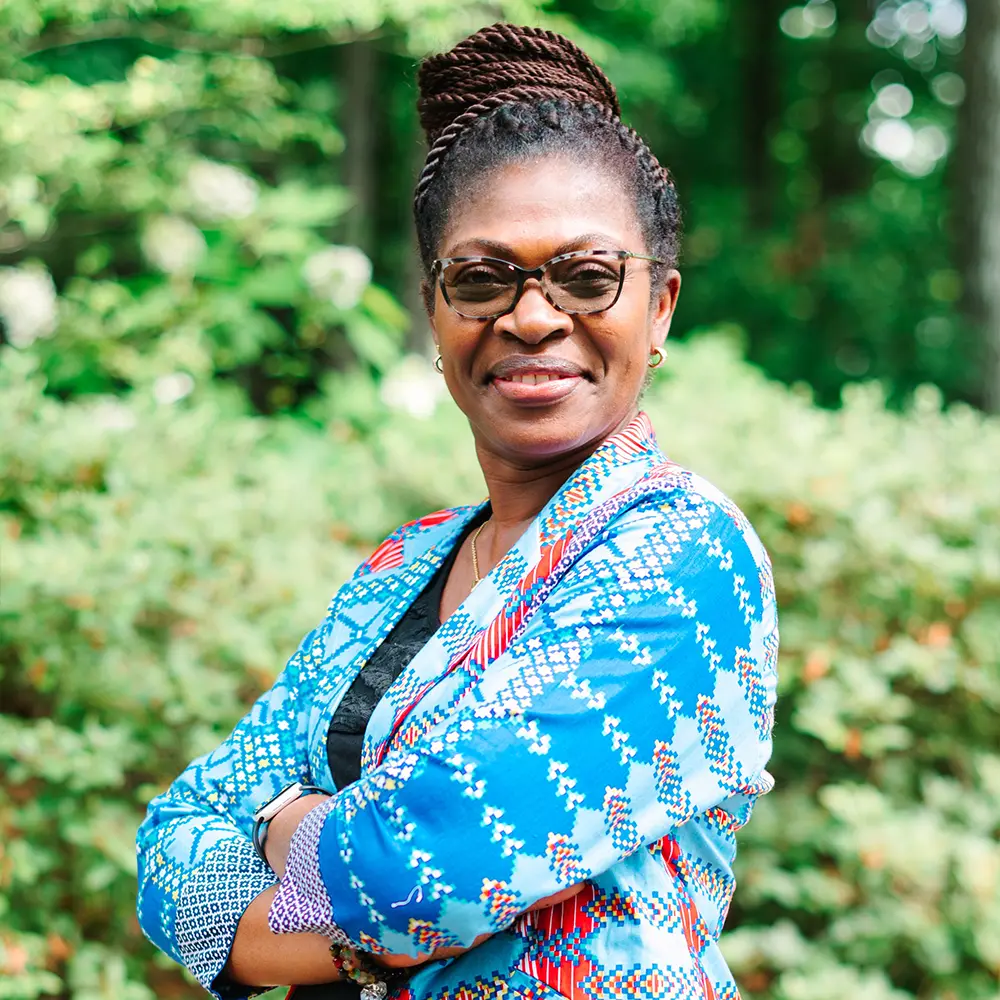
We sat down with Joyce to learn about her and what led her team to develop She Heals the World, a new global initiative to equip and empower 2.5 million frontline community health workers.
How has your personal journey influenced your work in supporting community health workers, especially women, in the Global South?
I was born and raised in a small town in Ghana to very traditional parents who had limited resources. They sent my brothers to private school while my sisters and I went to public school, because they thought parents should spend their hard-earned money on educating children they expected to “go far.” Boys were seen to have immense potential, whereas girls were expected to get married, stay in the kitchen, and have babies.
My days were shaped by this kind of discrimination, but it only strengthened my resolve to do well and create a better future for women and girls.
Tell us about your professional journey and what led you to CARE.
After graduating with a degree in nursing, I looked for opportunities within Ghana’s formal healthcare system to improve conditions for frontline nurses. Instead, I ended up at a nonprofit as a health educator, which launched me into community healthcare, i.e., family planning and childhood illnesses. I worked directly with women to identify and address issues affecting their health.
As my career progressed, I concentrated more on research in reproductive health, but I never lost my connection to women in communities. I came to CARE as a reproductive health advisor, and today I’m able to live my passion by leading and strengthening CARE’s health programs around the world.
How would you describe She Heals the World’s core mission?
CARE’s She Heals the World initiative invests in community health workers to bring proven programming and cutting-edge health delivery to underserved communities. Through a global effort, we will recruit, train, pay, and certify 2.5 million community health workers. Change at this scale requires using CARE’s network – working with partners, governments, and communities to remove barriers like discrimination, lack of pay, insufficient training, and exclusion from formal health systems. In doing so, we will bring critical health services to hundreds of millions of women across the Global South.