Tradition and Training: Midwives Fill Critical Healthcare Gaps

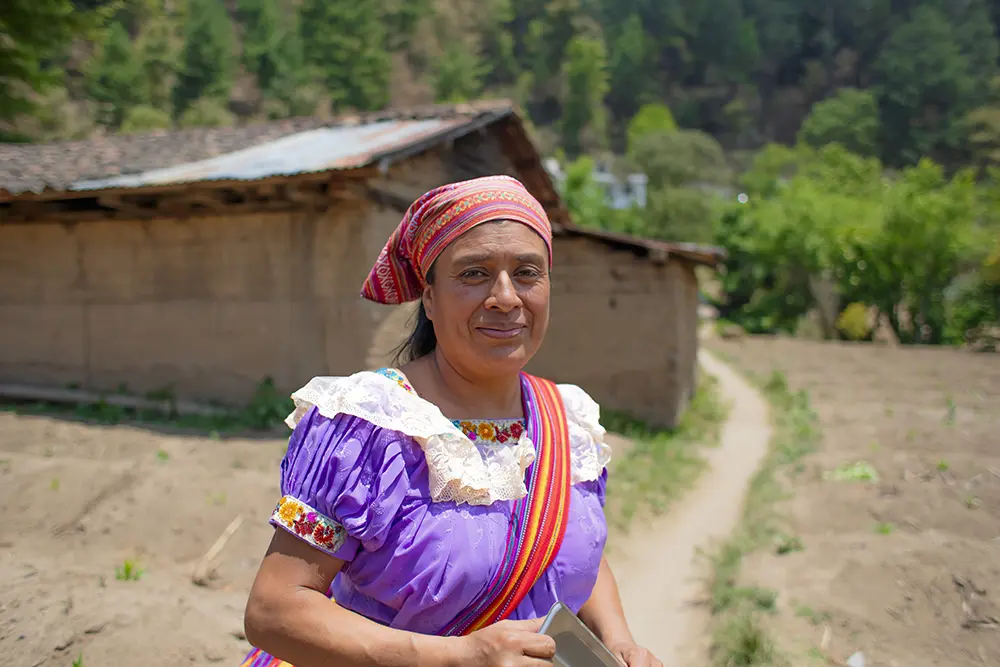
A Guatemalan woman with a bag slung over her shoulder stands on a path outside a small home.

Donata Zapata Tzul has been a midwife in the Pacán community of Totonicapán for 22 years. Photo credit: © 2024 Rodrigo Garcia / CARE Guatemala

Impact Magazine: Issue 32

In Guatemala, being an expectant mother who is also Indigenous carries great risk. Indigenous women represent 40% of the population but experience more than double the rate of maternal mortality of non-Indigenous women.

The disparity stems from low levels of prenatal and delivery care, especially in rural areas hours away from healthcare facilities. Helping to fill these gaps are thousands of traditional midwives, known as comadronas. Blending ancient holistic practices with modern training, midwives such as Donata Zapata Tzul provide a critical lifeline in these communities.

Donata has been a midwife in the Pacán community of Totonicapán for 22 years, delivering an estimated 450 babies and referring 30 more complicated births to health centers. “My grandmother was a midwife,” Donata says. “She used to say to me, ‘This is your heritage. You will take my place.’ She would explain all the problems that might happen and share everything that she knew.”

Years ago, Donata’s grandmother gave her a small doll that she used to show pregnant women and new mothers how to swaddle a baby. Now, Donata keeps the 70-year-old doll tucked safely in a skirt pocket. “It is always with me,” she says.
We pray, we use natural medicines, and we provide prenatal care and counseling. People in community trust us. And they know they can call us at any time.

Donata Zapata Tzul

Donata’s midwifery is deeply rooted in the Maya Cosmovision, with science and spirituality closely intertwined in everyday life. “We have a very close connection with nature, and we have faith,” Donata says.

“We pray, we use natural medicines, and we provide prenatal care and counseling. People in community trust us. And they know they can call us at any time.”

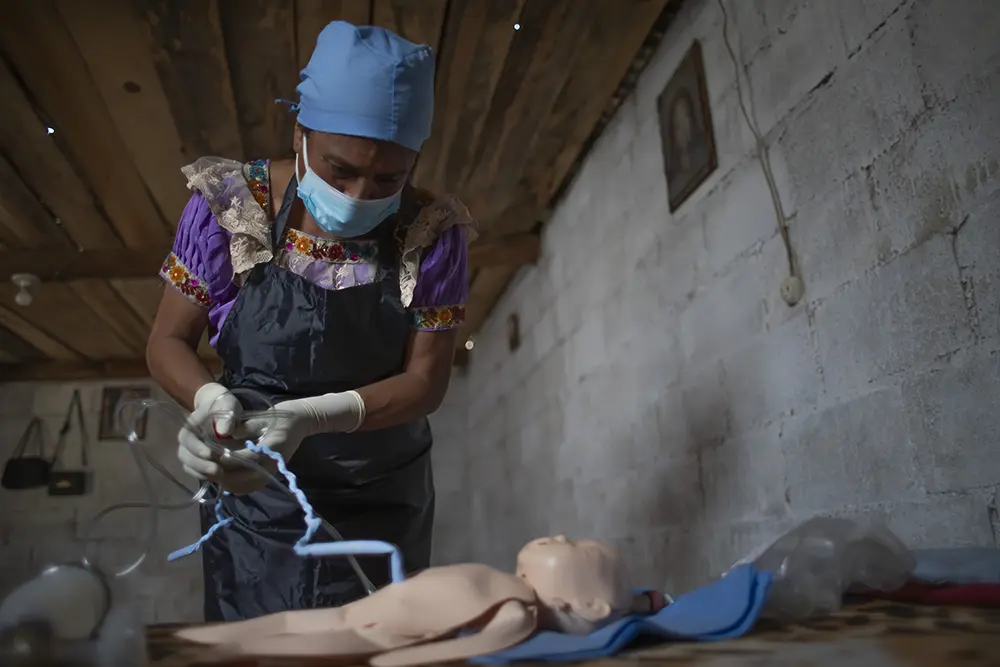
Families hire Donata to assist with pregnancy, labor, and the postpartum period. She has strengthened her skills in those areas through a project funded by the Rockefeller Foundation and implemented by CARE, the Association of Community Health Services, local partners, and Nim Alaxik, a national nonprofit movement of midwives. Donata also learned about the importance of vaccinations, including against COVID-19, and the full spectrum of reproductive rights. “It’s important that we know about those rights, because we need to be able to talk about them with our patients,” she says.

Donata joined Nim Alaxik five years ago, and last year she became its official representative in Totonicapán department. “I am proud to be a part of the movement,” she says, as they advocate for midwives to be treated with dignity and respect while providing safe and quality maternal care for Indigenous women. People in Mayan communities speak about 20 different languages, making local midwives an even more valuable resource. In difficult births that require delivery in a health facility, midwives serve as interpreters, bridging the gap between Spanish-speaking medical staff and local families.

Donata Zapata Tzul practicing midwifery skills. Photo credit: © 2024 Rodrigo Garcia / CARE Guatemala

Midwives are trusted advisers beyond childbirth. They offer advice on family planning, tend to general aches and pains, and even provide counseling as needed. “If you ask anybody about me down in the community, they can quickly show you where I live,” Donata says. “Everybody in the community knows and respects me.”

Donata’s 19-year-old daughter, Marisol, is finishing her studies at a high school that focuses on medicine. Next year, she hopes to go to nursing school or to college, carrying on the family tradition in her own way.