Manila, Philippines, December 5, 2025 – As the world spearheads 16 Days, an annual awareness campaign to prevent violence against women and girls that covers the period from November 25 to December 10, a new humanitarian analysis conducted by CARE in the Philippines reveals a stark reality. In Northern Cebu province of Philippines, thousands of women, girls, and boys are living and sleeping in the open. They have no walls, no lighting, and no sense of safety they once knew. “Living Without Fear” is CARE’s focus during the 16 Days awareness campaign.
The 6.9-magnitude earthquake that struck the region in late September, followed by tens of thousands of aftershocks, has forced families to abandon damaged homes and move into makeshift shelters across the municipalities of Daanbantayan, Medellin, and San Remigio. With darkness, displacement, and continuous tremors now part of daily life, women and girls face heightened risks of harassment, violence, and trauma.
“A world without fear is not only about freedom from violence; it is about having a safe home, dignity, and the ability to sleep at night without being terrorized,” said Reiza S. Dejito, Country Director of CARE Philippines. “In Northern Cebu, that sense of safety has been shattered. Women are holding their families together—acting as emotional anchors—while they themselves are living in fear of the dark, and of the ground shaking beneath them. We cannot talk about recovery if women are afraid to close their eyes at night.”
The assessment highlights how the crisis has disproportionately affected women and girls:
Loss of Safe Spaces: The destruction of homes, toilets and bathrooms has forced women to use makeshift latrines or bathe in communal areas with little to no privacy.
Increased Safety Risks: Women reported feeling unsafe relieving themselves at night due to poor lighting and the location of temporary latrines.
Mobility Restrictions: In San Remigio, the emergence of sinkholes has restricted movement, with mothers fearing for their children’s safety and their own as they navigate daily chores.
Disproportionate Burden: While men’s livelihoods in farming and fishing have been disrupted, women have taken on increased unpaid care duties, managing households in open fields while neglecting their own health, including recovery from childbirth.
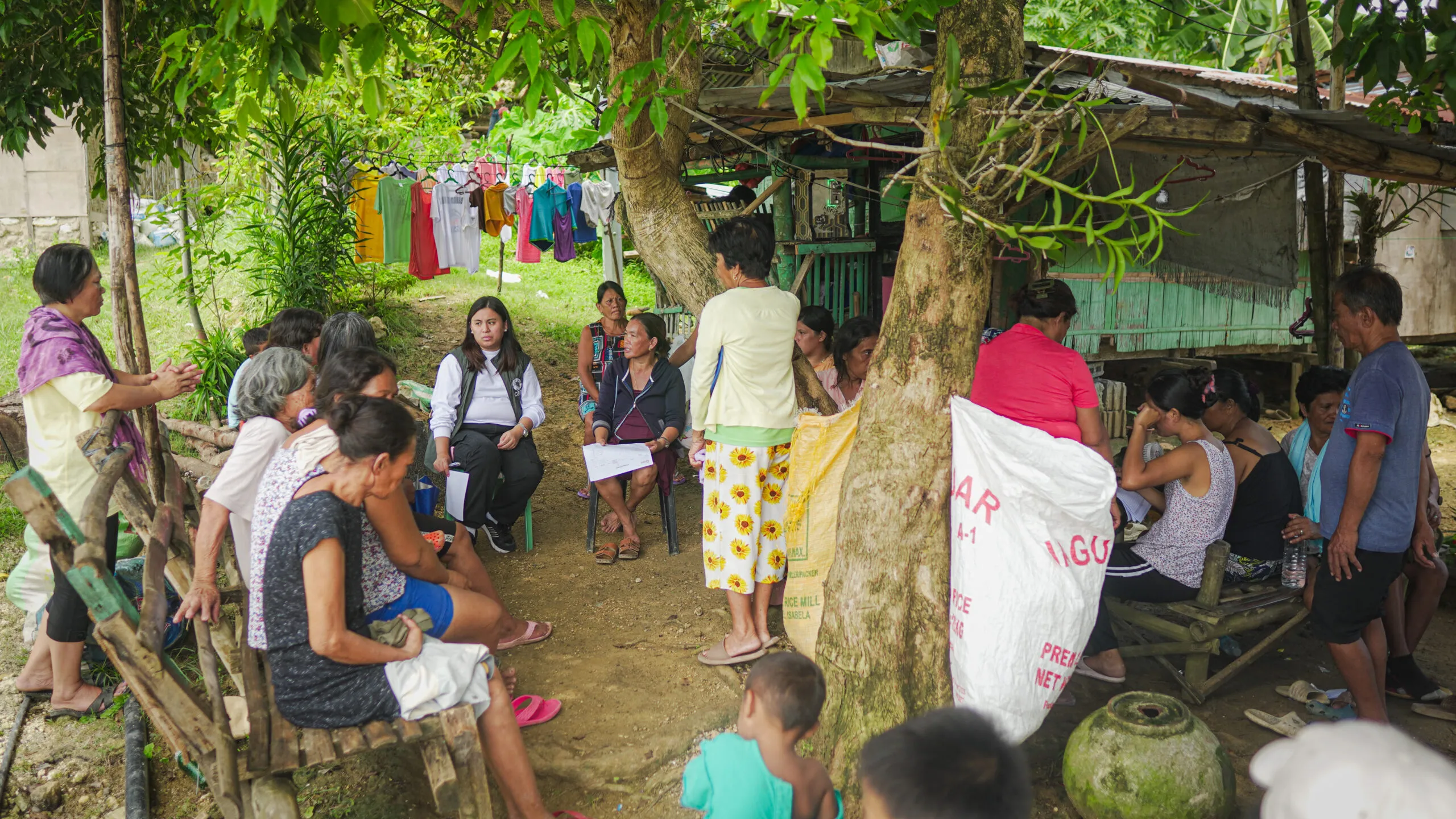
“We don’t stay inside the house anymore; we spend most of our time outside,” shared a woman from Barangay Bakhawan, Daanbantayan, during a focus group discussion. “We eat, wash clothes, bathe, and sleep outside because we are too afraid to go back in” she further added.
A call for protection-focused humanitarian aid
The findings reinforce the urgent message of CARE’s global “Without Fear” campaign: women and girls should never have to live in conditions where fear is normalized.
In the context of Northern Cebu, this means prioritizing:
- Well-lit bathrooms and toilets reduce risks at night.
- Durable shelters that help rebuild a sense of safety, privacy, and dignity
- Dignity kits and menstrual hygiene supplies tailored to women, girls, and boys.
- Mental health and psychosocial support, including psychosocial first aid, safe spaces for women, girls, and boys, caregiver support, and trauma-informed services that address the fear, anxiety, and distress triggered by continuous aftershocks.
- Cash assistance for urgent, self-identified needs, enabling families—especially women—to regain agency and make decisions that support their own recovery.
CARE Philippines, through the SAFER project, and its partners in the ACCESS Project, are providing cash assistance, hygiene kits, and shelter repair support in Cebu. However, more resources are needed to ensure that the unique needs of women, girls, and boys—from safety lighting to psychosocial support—are fully met.
“Recovery is not just about rebuilding structures; it is about rebuilding the peace of mind that allows a woman to live without fear,” added Dejito.
CARE delivers this assistance alongside local partners to ensure our work respects local culture and meets the needs of communities. In Cebu, CARE is working with the Central Visayas Network of NGOs to provide mental health and psychosocial support. This is part of CARE’s wider humanitarian response which includes collaboration with ACCORD Inc, AADC, MINCODE, KAMI, CorDisRDS, and TABI, alongside the 14-member ACCESS project consortium.
Notes to Editors:
- The humanitarian analysis, known as Rapid Humanitarian Analysis, was conducted by CARE in the Philippines through its SAFER and ACCESS projects from October 7–14, 2025.
- CARE Philippines has been operating in the country since 1949, focusing on disaster risk reduction, humanitarian response, and equality.
- Photos and interviews with affected women and CARE spokespeople are available upon request.
For media inquiries, please email usa.media@care.org or contact Mary Therese L. Norbe , CARE Philippines Communications Specialist at email: marytherese.norbe@care.org or cell number: +63919 911 7534.