
2025 Pakistan monsoon floods impact millions: CARE launches emergency response

By Hillol Sobhan and CARE Staff September 22, 2025

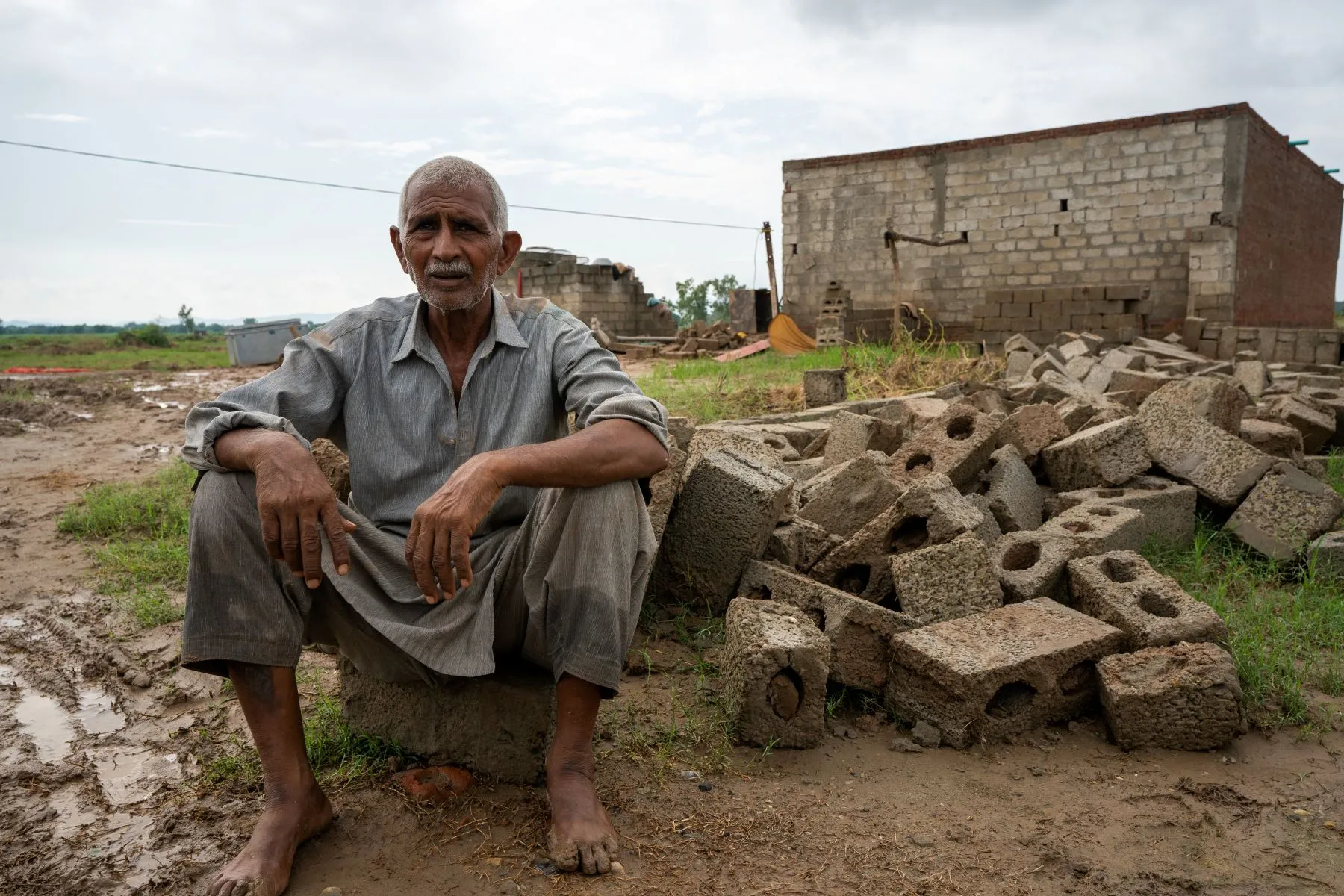
A weathered barefoot Pakistani man sits on broken cinder block in muddy, debris-strewn area with damaged building behind, under cloudy sky after disaster.

Since June, 2025, a total of 2.9 million flood-affected people have been evacuated; of these, 150,000 have sought refuge in the 1,580 evacuation centers established by provincial authorities. Photo: Muhammad Mudabbir Maajid/CARE

“In the early hours, at 2 a.m., floodwaters rushed in. I ran to the roof while my brother went back for our belongings but was swept away. He survived, but we lost everything, including our livestock. Now, I am staying with relatives,” says Parveen, a resident of Chakwal, Punjab.

Want more stories like this?

Sign up for the CARE News & Stories email newsletter to find out more about what’s happening around the world through vibrant, engaging stories that put humanity at the center.

Subscribe

The fear of that night still echoes across Pakistan’s flood-affected regions. Ameena Bibi, 40, a mother of five from Buner district, recalls the moment disaster struck: “Just one thunderclap and the entire city of Buner was wide awake all night.” She was washing clothes when floodwaters surged into her home. Within minutes, the water rose to chest level, forcing her to seek higher ground.

Since June 26, 2025, floods from cloudbursts, glacial lake outbursts, and swollen rivers have claimed more than 1000 lives, injured nearly 1,100 people, damaged over 12,500 houses, and washed away nearly 240 bridges. Over 6,500 livestock have died.
Repeated waves of disasters

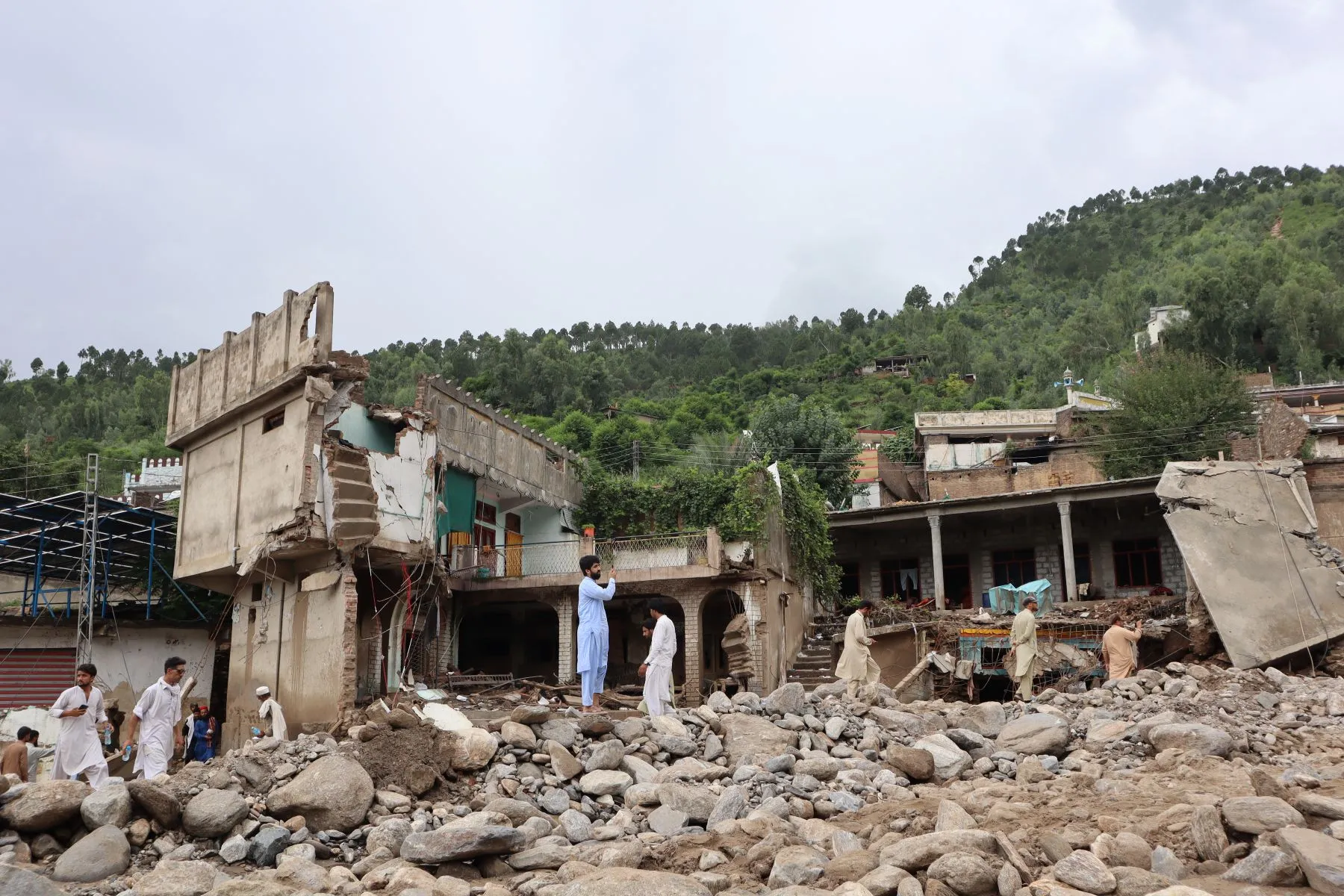
Men in traditional Pakistani clothing stand among rubble and large rocks, with a green hillside in the background, showing flood aftermath in a mountainous area.
Khyber Pakhtunkhwa, a northwestern province, has suffered the highest death toll so far, with over 500 lives lost, according to Pakistan’s National Disaster Management Authority. Photo: Ayesha Zubair/CARE

Over the following weeks, the crisis unfolded rapidly across multiple provinces. In mid-July, flash floods devastated communities in Chakwal and Jhelum City, districts in Punjab province in eastern Pakistan.

On August 15, intense flash floods struck Buner district in Khyber Pakhtunkhwa after a sudden cloudburst — a brief but heavy rainfall that can trigger rapid flooding and landslides. Floods killed over 200 people, carried large rocks that damaged houses, and filled them with mud, leaving many uninhabitable.

Between August 16 and 22, Gilgit Baltistan in northern Pakistan faced flash floods caused by glacial lake outbursts — sudden water releases from broken glacial dams that trigger rapid downstream flooding. More than 40 people have died.

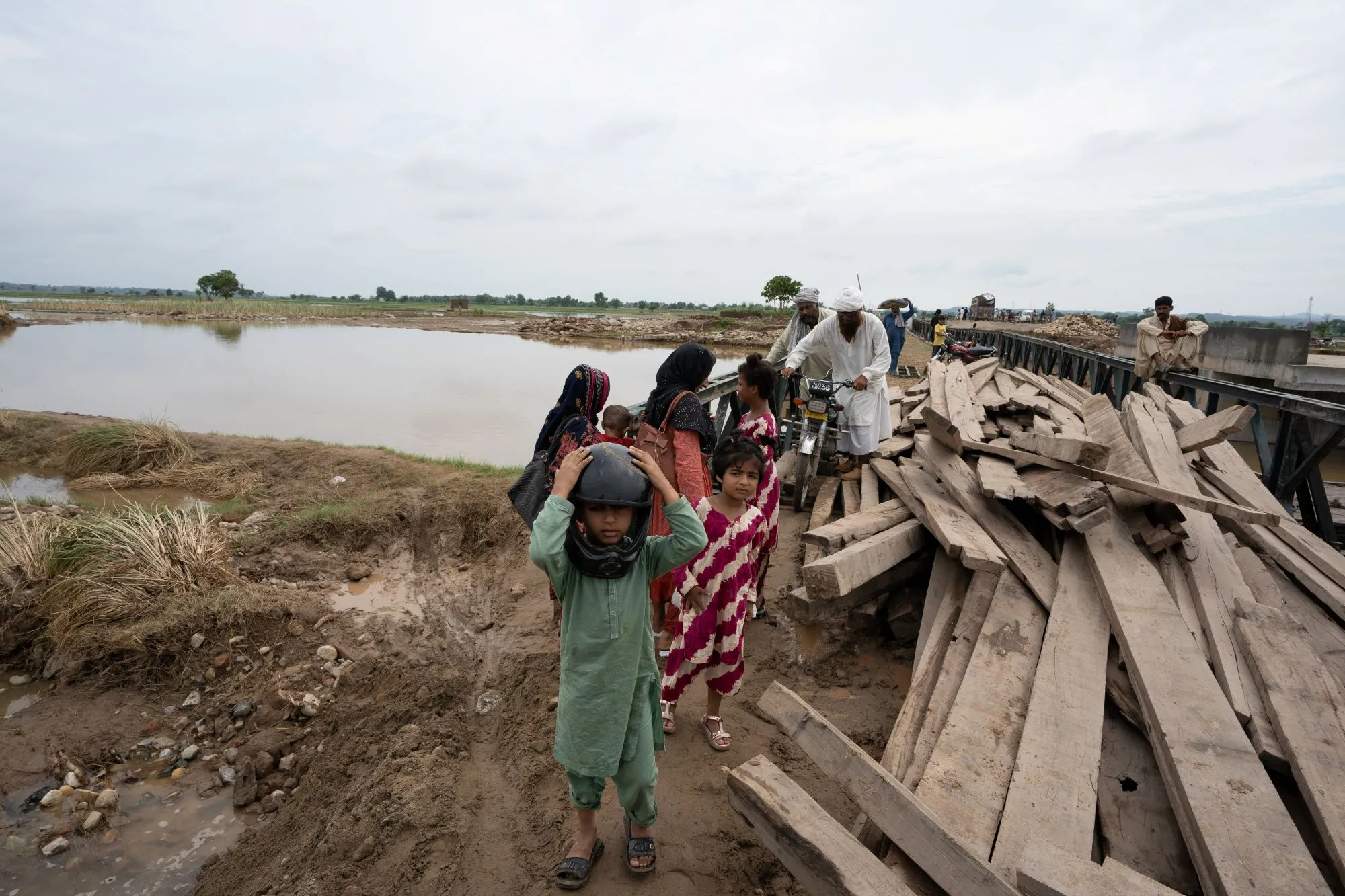
A group of Pakistanis, including children, walk a muddy path beside floodwaters and a damaged bridge. A boy in a helmet is in the foreground as a man in traditional white clothing pushes a motorcycle loaded with people and belongings across the bridge.
The 2025 floods have caused widespread destruction to bridges, roads, houses, and other critical infrastructure across the affected provinces. Photo: Muhammad Mudabbir Maajid/CARE

Since the last week of August, Punjab’s Sutlej, Ravi, and Chenab rivers have experienced moderate to severe flooding. Rainfall, combined with upstream dam releases from India, has impacted 4.7 million people in the province and continues to wreak havoc. Reports indicate mass displacement along the banks of the three rivers, with nearly 4,000 villages and major cities flooded.

“Every year since 2016, our area floods, and each time we must start over. This year has been especially devastating. We were told to evacuate our homes immediately,” says Mehvish from Punjab, who works with FDO, a CARE partner.

“Now, we are living with 5-6 families in one small room nearly five miles from our home. When my husband went back to check our house, he found snakes inside. The space in our host family’s home is so cramped that there is nowhere to sit or even stand.”

Just three years ago, Pakistan suffered devastating floods that affected more than 33 million people and killed over 1,700, marking one of the worst disasters in the country’s history. Families were still rebuilding homes, livelihoods, and futures when this year’s monsoon struck, setting them back even further.

Women and girls disproportionately affected

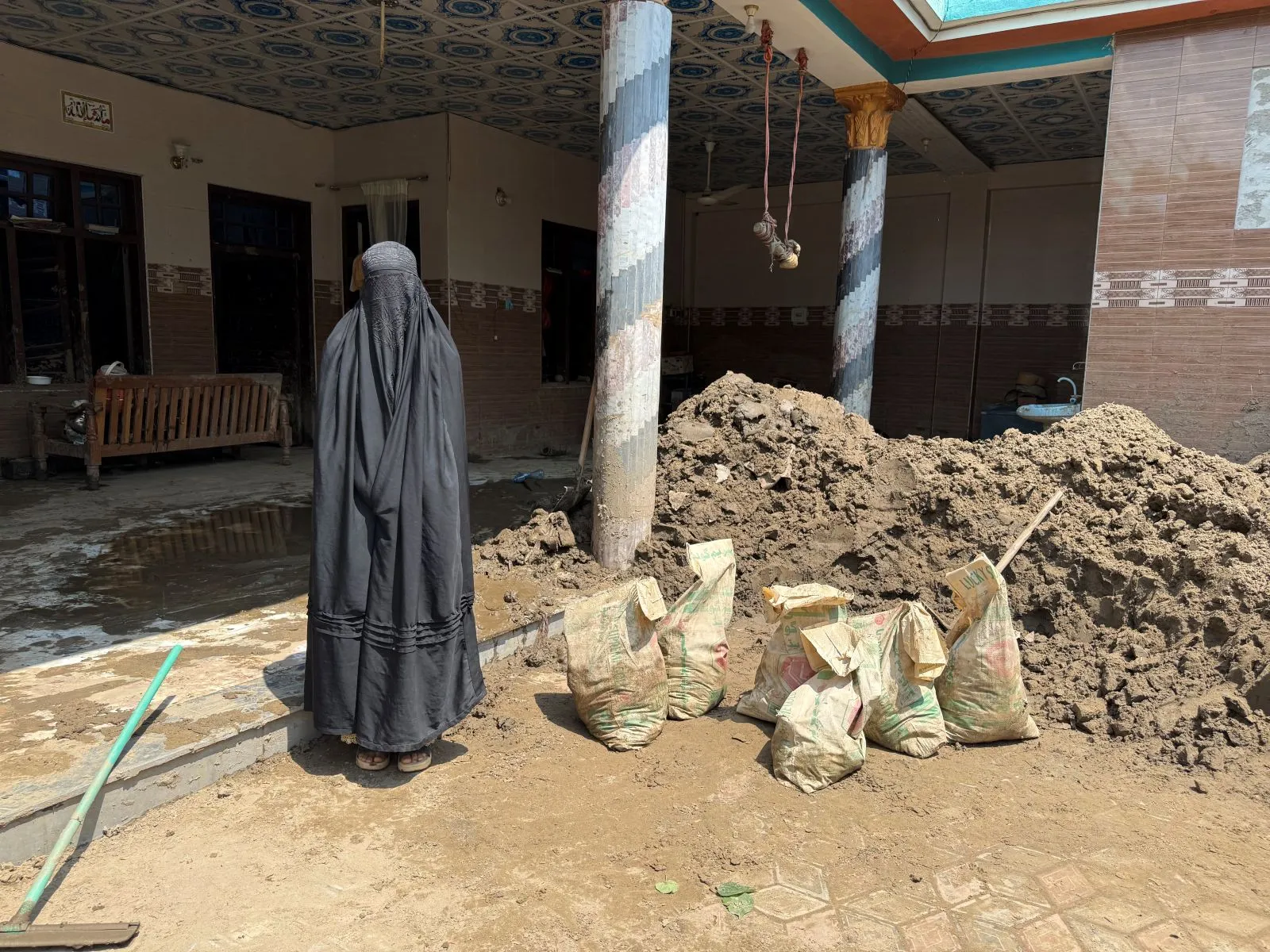
A Pakistani woman in a black burqa stands in a courtyard with muddy dirt and sacks. Behind her is a house with an ornate tiled roof and columns, and flood debris on the floor.
For 41-year-old Fozia, a mother of four, the floods brought new worries. She fears her children will fall behind in school after their books, uniforms, and bags are washed away. Photo: Maryam Imtiaz/CARE

The flood crisis in Pakistan hits women and girls hardest. Floods have damaged walls and doors, leaving many homes unsafe. Lack of privacy, safe toilets, and secure shelters put women and girls in daily danger. In relief camps, they face shortages of sanitation, clean water, food, and healthcare.

Pregnant and breastfeeding women struggle to access nutrition and medical care. Girls also face higher risks of dropping out of school due to displacement, trauma, and loss of school supplies.

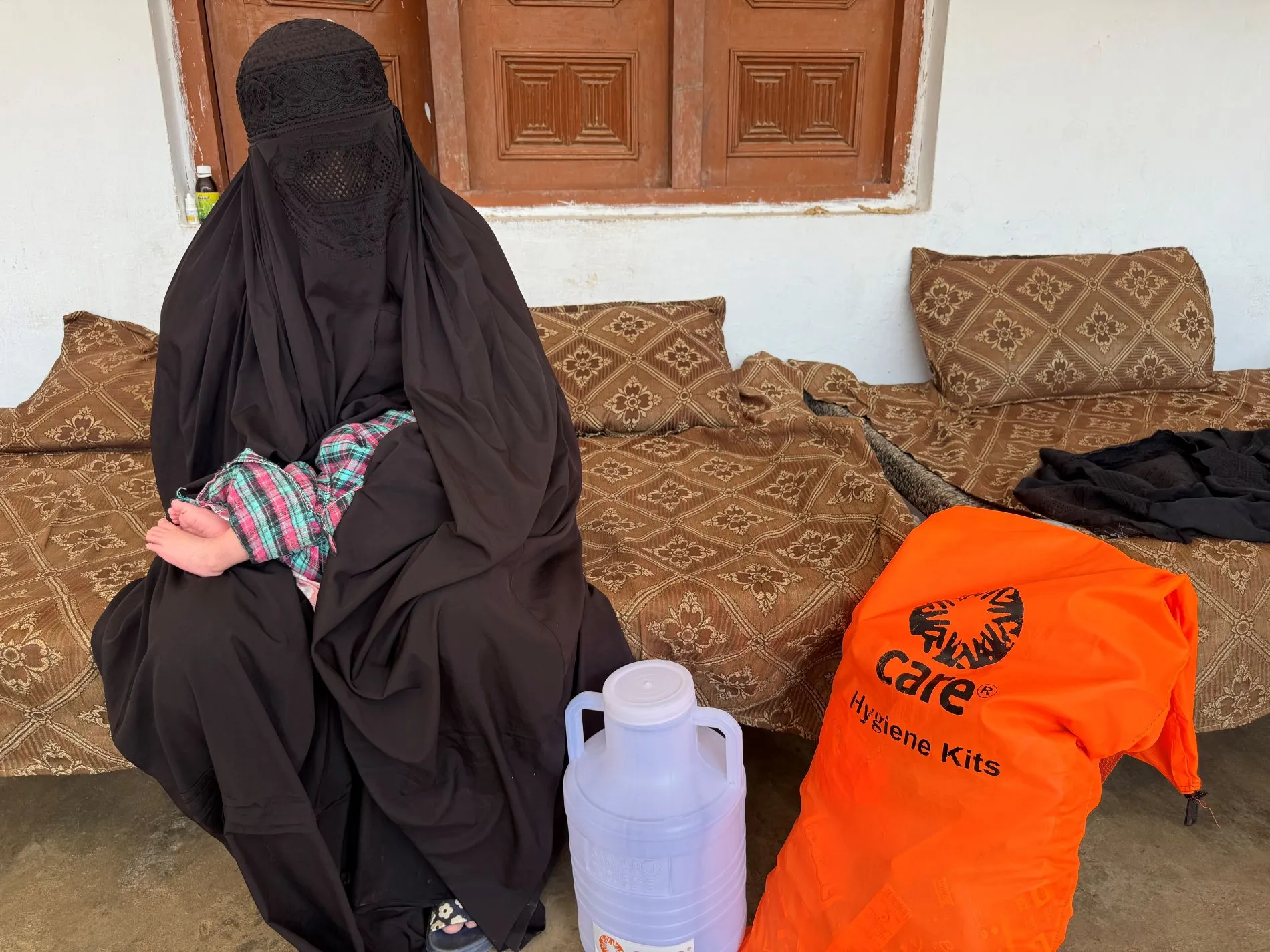
A Pakistani woman in a black burqa sits on a patterned divan, holding a baby wrapped in a plaid blanket. Nearby are a large white jug and a bright orange
Young mother Mahnoor, carrying an infant and a toddler, waded through chest-deep water with her newborn held high. Now displaced and without belongings, she worries: "How will I keep my sons safe and warm as winter approaches?" Photo: Maryam Imtiaz/CARE

Basic needs have become luxuries for many women managing families after the floods. Servia, 50, a mother of seven, lost her belongings, emergency grain supplies, and the small grocery shop that was their sole income. Their well is now contaminated, forcing them to buy water. “Buying clean drinking water is expensive, but we have no choice,” she says.

CARE, Always There: Delivering urgent lifesaving support

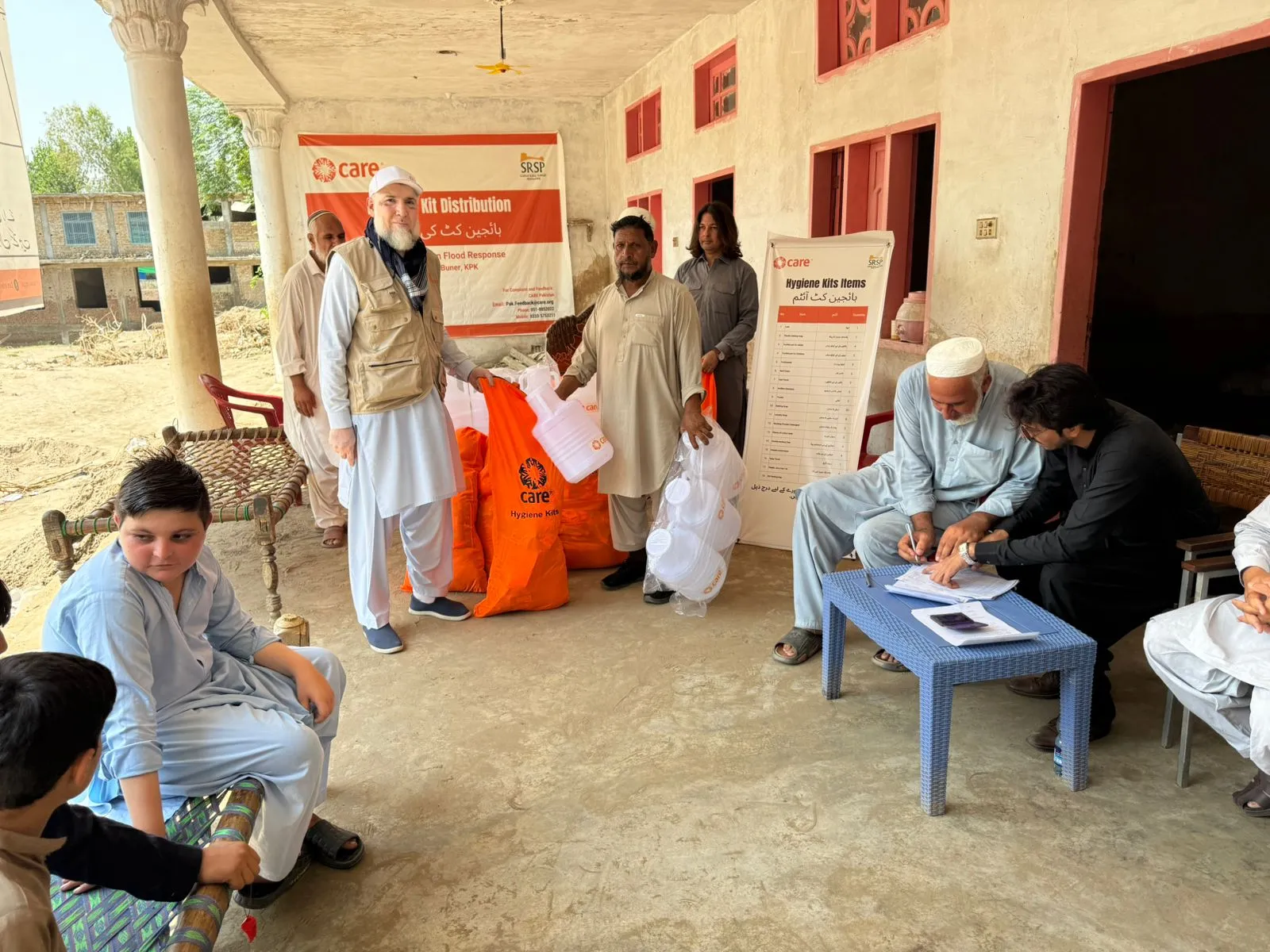
Pakistani men and boys gather under a porch for a flood relief distribution, with two men signing documents at a table. Orange
CARE Pakistan, together with its local partner Sarhad Rural Support Programme, has distributed 400 hygiene kits to families affected by the monsoon floods in Buner district. Photo: CARE Pakistan

In the wake of devastating monsoon floods, CARE Pakistan is providing immediate assistance and support to affected communities. In Buner (Khyber Pakhtunkhwa) and Diamer (Gilgit-Baltistan), CARE and its partners have already distributed over 600 hygiene kits to flood-affected families. Cash assistance assessments are underway in Buner, Diamer, and Chakwal to help families meet urgent needs.

Meanwhile, Sindh province faces a severe flood threat, with the National Disaster Management Authority (NDMA) raising alerts for 1.6 million people at risk. In Sindh, CARE is preparing to respond, repairing WASH facilities at evacuation sites and providing transportation to relief camps in Jamshoro, Thatta, and Sujawal districts.

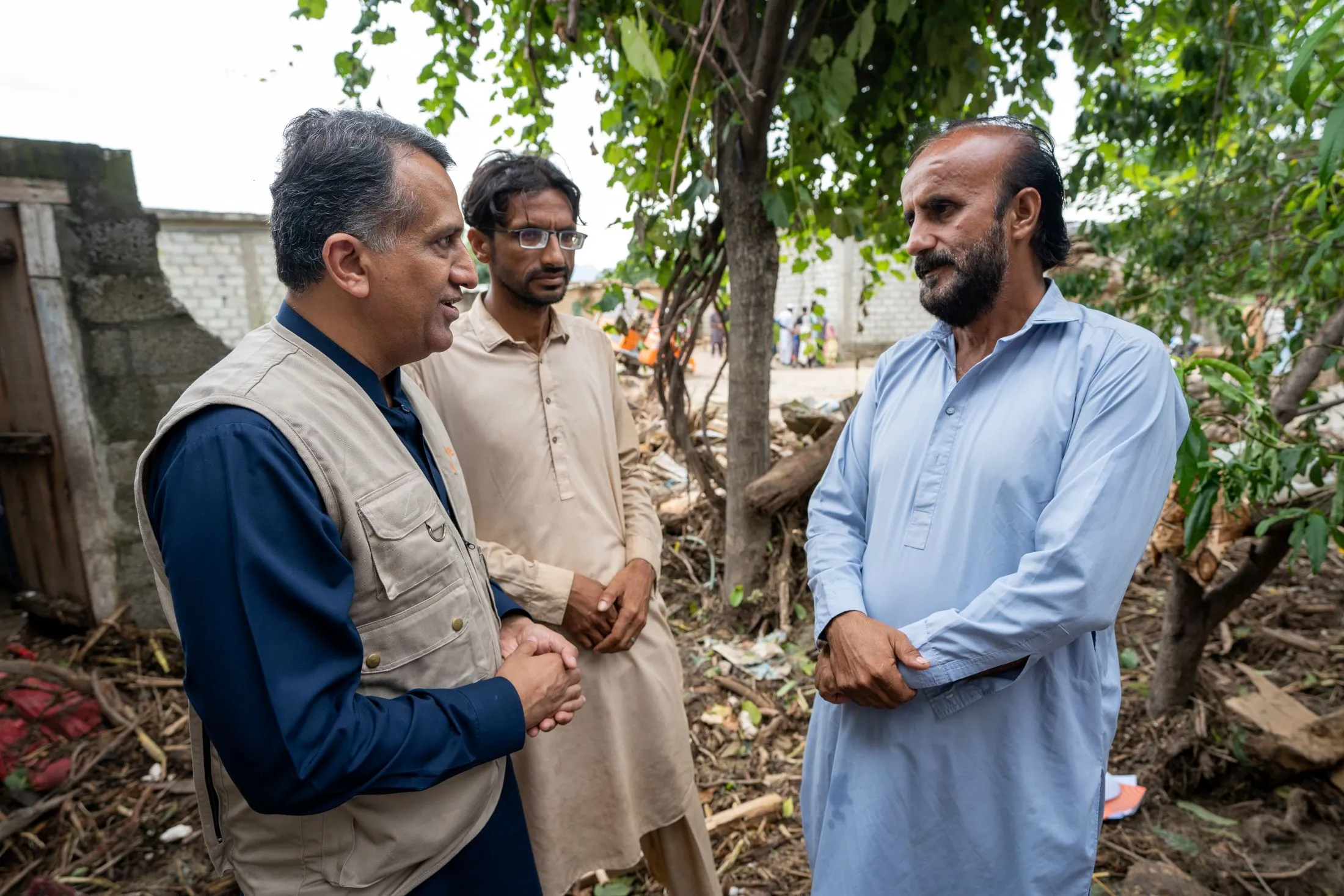
A photo shows three men standing and talking outdoors, surrounded by debris. The man on the left, who appears to be the CARE Pakistan country director, wears a dark shirt and a tan emergency vest. The man in the middle wears a light brown tunic. The man on the right wears a light blue tunic.
Country Director Adil Sheraz is visiting flood-hit areas to oversee the ongoing response and assess the scale of the devastation firsthand. Photo: Muhammad Mudabbir Maajid /CARE

CARE plans to distribute hygiene kits, livestock fodder, and mosquito nets to families in each district. In Jamshoro, additional support will include food assistance, clean water access, relocation of families to safer areas, installation of latrines at evacuation sites, distribution of non-food relief items, and mobile health camps to meet urgent community needs.

CARE has conducted a rapid needs assessment alongside local partner FDO and district authorities in South Punjab’s Multan, Muzaffargarh, and Jhang districts. Based on the findings, CARE is distributing emergency shelter kits, hygiene kits, food packs, and non-food items to more than 400 families in Jalalpur Pirwala, Multan, the most severely affected area. CARE is expanding its response to Muzaffargarh, Punjab, providing humanitarian assistance to 200 families.

Urgent appeal: Pakistan’s deadliest monsoon in decades

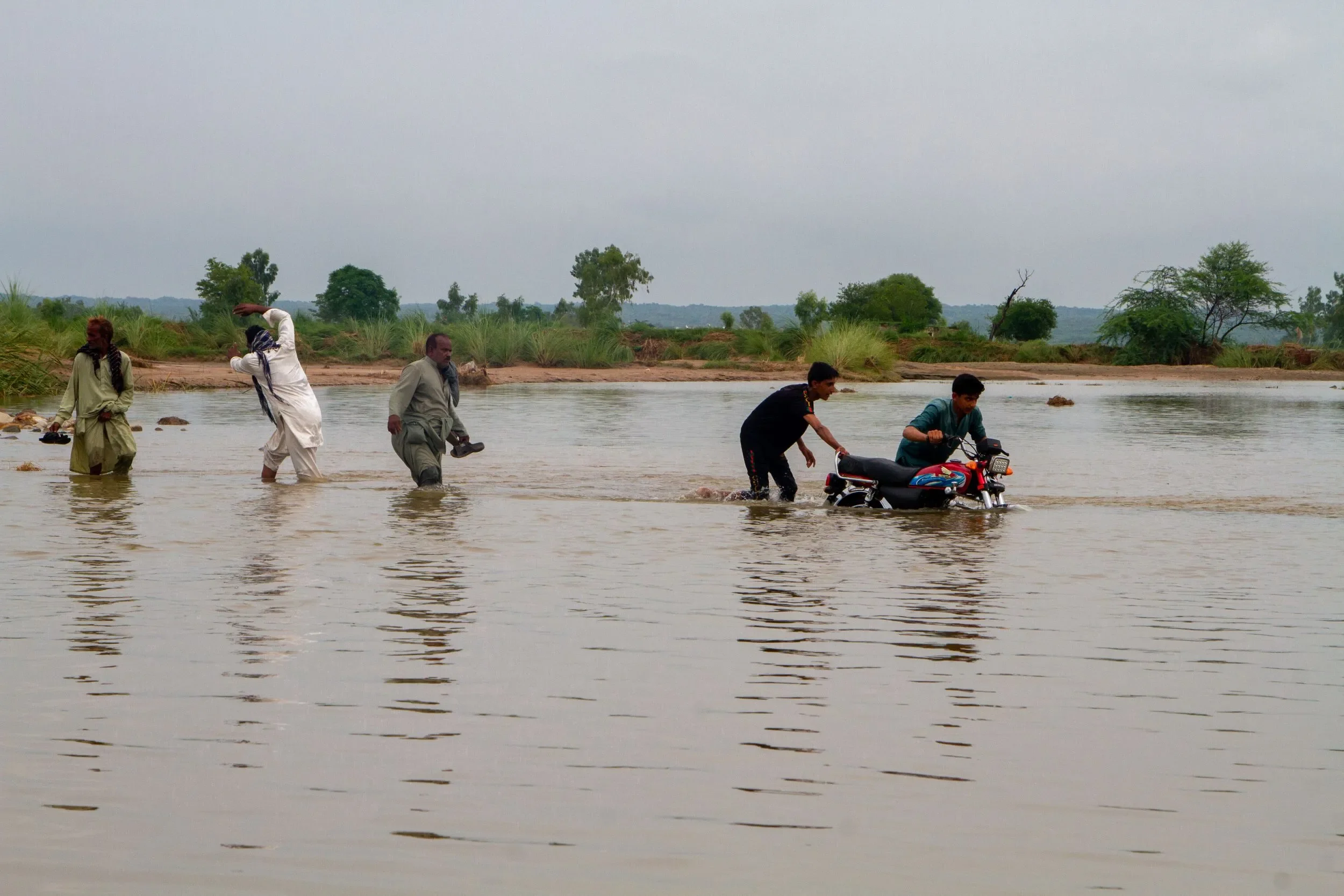
A group of Pakistani men wade through floodwater, pushing a motorcycle across a submerged roadway. One man lifts his white pants to keep them dry, while others carefully move the vehicle, with trees and brush visible on the distant shore under a cloudy sky.
Flood recovery must go beyond survival. It means rebuilding lives, restoring livelihoods, and equipping communities to better face future challenges. Photo: Muhammad Mudabbir Maajid/CARE

“The needs are immense. Across Pakistan, over 6.9 million people — especially women and children — urgently need shelter, food, safe water, and urgent medical support,” says Adil Sheraz, CARE Pakistan country director.

“We are racing against time. Each day without action pushes more families into crisis. Urgent funding support is critical to prevent a humanitarian catastrophe and to give families a chance to rebuild with dignity.”


About CARE Pakistan

CARE began working in Pakistan in 2005. Our work spans health, education, women’s economic empowerment, food security, nutrition, water and sanitation, and emergency preparedness and response. We have also provided life-saving assistance during major emergencies, including floods, earthquakes, and large-scale displacement. In 2024, CARE in Pakistan reached over 800,000 people through its programs.

You can help families in crisis.

Support CARE’s emergency responses around the world today.

Donate now.
Back to Top