
"Community is the medicine": CARE partners with local organizations in Spokane to help residents after the wildfires

By Ryan Bergeron and Becca Mountain October 5, 2026

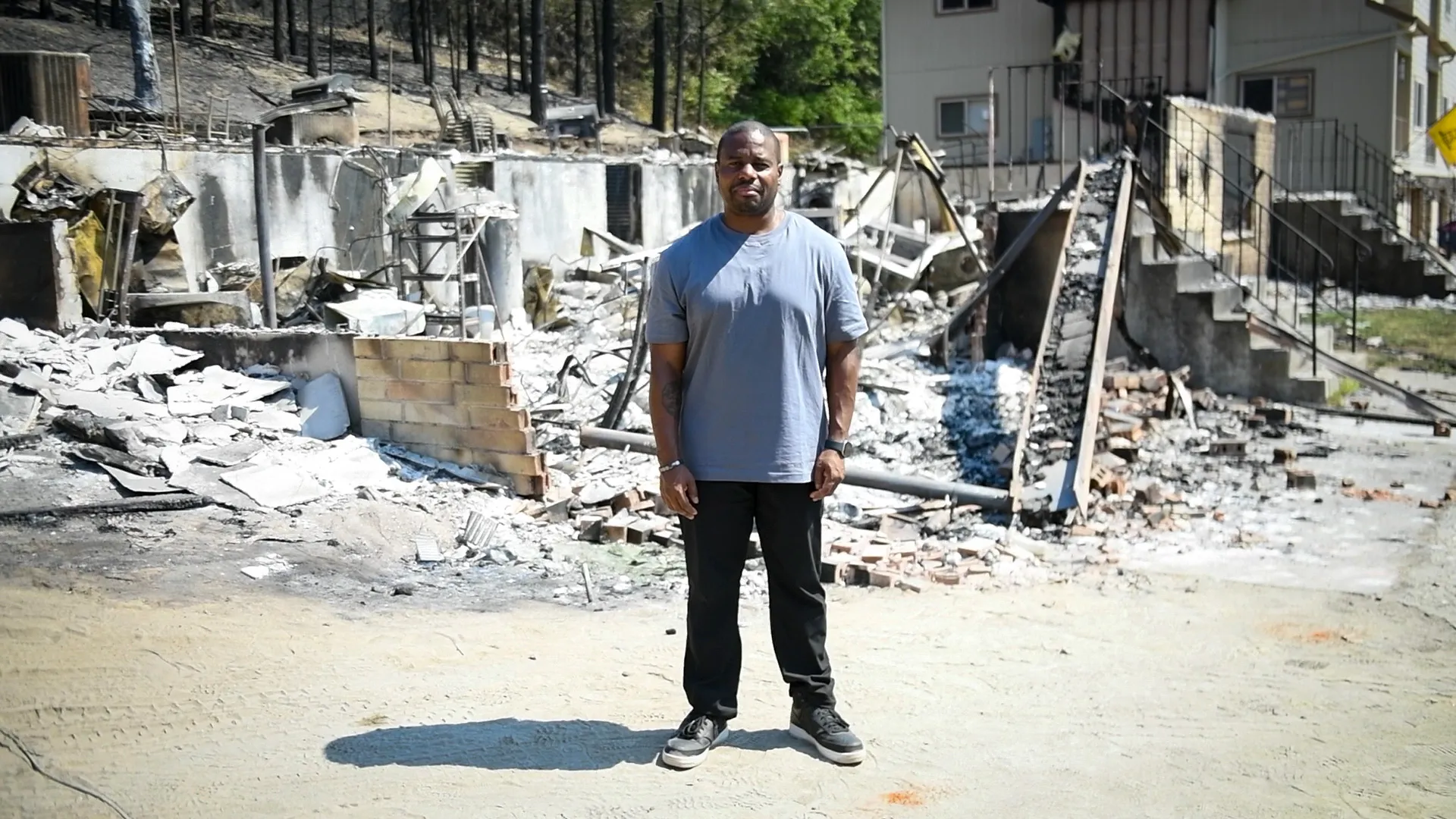
A man standing in front the burnt down remnants of his home.

Devon Traylor stands in front of the remnants of his home, destroyed by the Spokane wildfires. Photo: Brooks Lee/CARE

In August 2026, wildfires near Spokane, Washington, forced more than 65,000 people to evacuate and destroyed more than 600 homes. Many families were left without a safe place to stay and in need of basic supplies. CARE teamed up with trusted local partners to provide women, children, and families with emergency supplies. 

“I can see the fire across the street. Everything is on fire,” Devon Traylor remembers. “I said, ‘we’ve got to go, now.'”

Devon was taking a nap when a string of urgent phone calls woke him up.

“My son had called me, then my sister called me,” Devon recalls. “She’s like, ‘Do you know what’s going on?'”

Soon Devon could see the smoke and fire getting closer.

“All of a sudden it went to Level 3 within minutes,” Devon said, referencing ALERT Spokane, a local early warning notification system. “My neighbor is a single mom, so I went and helped her.”

Level 3 warnings usually indicate imminent danger and mean that residents should evacuate immediately.

As Devon and his neighbor fled, smoke engulfed their street. They tried to return to their homes to gather some of their belongings, but the smoke was so thick they could no longer breathe.

Luckily, Devon, his family, and his neighbors escaped, but the fire destroyed more than 850 structures, including Devon’s. Around 2,500 other structures were also damaged as the fires spread to burn an estimated 10,000 acres. An estimated 65,000 people were forced to evacuate quickly, and many fled with only the clothes on their backs.

Spokane Mayor Lisa Brown described the three converging fires as “the worst natural disaster our region has faced.”

“Thankfully, I have family that lives a little bit outside of town,” Devon said. “But there are people who have nothing.”

Displaced Spokane residents needed essential supplies, so members of CARE’s U.S. Programs team traveled to Washington to help with the response.

“By the time we arrived, the fires were pretty much contained and the city was getting back to normal — kind of in recovery mode,” said Brooks Lee, a CARE photographer who traveled to Spokane. “It was a rapid deployment to assist local partners already embedded in the community, who understand local needs and who could help accelerate recovery efforts.”
CARE responds: Spokane wildfires

When wildfire tore through Spokane, it hit the families who had the least room to absorb a disaster. CARE's U.S. Programs teamed up with Shades of Motherhood Network to get CARE PACKAGE® hygiene kits to families affected by the fires.

“Support is the new superpower”

In the aftermath of the fires, CARE partnered with two local organizations: Partners INW, a Spokane-based nonprofit that connects families with essential resources, and Shades of Motherhood Network (SOMN), one of the first Black maternal health organizations in Spokane. SOMN supports mothers and mothers-to-be with maternal services, counseling, and supplies like diapers.

Stephaine Courtney, executive director of SOMN, said that after the immediate threat of the fire was gone, many people were left in shock.

“Now they are in this place where they are saying, ‘Where do we go from here?'”

Beyond the dangers of the fires, the lingering smoke and soot also posed a significant health risk to pregnant women, infants, and young children. Displaced mothers and children needed basic hygiene items, diapers, and other essential supplies.

Sarah Thompson, CARE vice president of U.S. Programs, said that, during disasters, women and mothers often feel a disproportionate amount of the burden because they are the ones caring for children while also managing the uncertainty of displacement.

“Providing basic essentials means parents can focus on keeping their families safe, babies have the supplies they need, and women can maintain their health and dignity. That’s why CARE invests in trusted local organizations that know how to reach families quickly and compassionately.”

Already deeply rooted in the Spokane community and connected to many families affected by the fires, SOMN helped more than 120 families access diapers and other supplies. With CARE’s partnership, SOMN was able to grow that reach significantly. CARE provided SOMN with thousands of emergency hygiene kits, mother-and-baby kits, and other essential supplies to distribute during the recovery efforts and beyond.

“Support is the new superpower,” Stephaine said.

Lee saw that firsthand. Between setting up tables and hauling boxes alongside Stephaine’s team at a distribution event, he watched her field phone calls and solve problems for families throughout the visit. “She’s a superhero, truly,” he said of Stephaine. “It felt like a true partnership.”

“Community is the medicine”

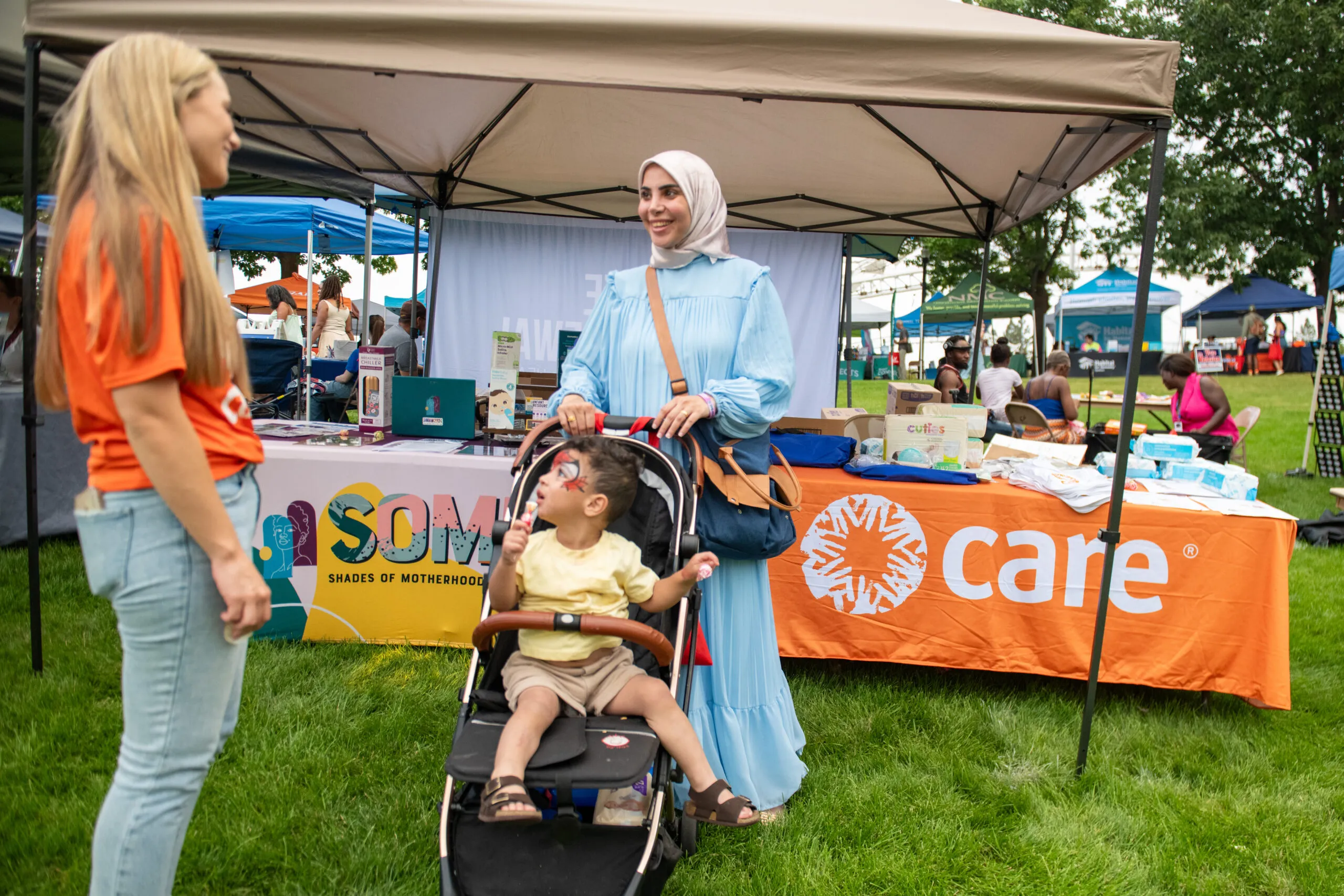
A woman in a CARE shirt speaks with a mother who is standing by her baby in a stroller.
CARE donated thousands of CARE PACKAGE® hygiene kits, mother-and-baby kits, and other supplies to the Shades of Motherhood Network and the Spokane community. Photo: Brooks Lee/CARE

For people like Devon, the recovery and rebuilding process will take a while. But he’s thankful that his family and neighbors got out safely.

“We’re going to miss a lot of things, but we still have a lot of memories,” he said, then gestured to the charred remains of what was once his house. “This is a physical structure. Home is still us.”

This is the first time Devon has been on the receiving end of help. He says it’s been a “humbling” experience.

“I’m always the one that’s helping people,” he said. “Now, people have to help me, and that’s a little bit different.”

Stephaine is used to meeting people who are uncomfortable asking for help. It’s something she’s trying to destigmatize in Spokane.

“People need to know that it’s OK to ask for help, it’s OK to receive help,” she said. “Spokane is considered the city of belonging, and we want to show that everyone belongs, no matter what.”

CARE’s support for organizations like Partners INW and the Shades of Motherhood Network doesn’t end when the emergency response does. As Spokane families like Devon’s start rebuilding, CARE will continue to invest in the local organizations best able to help those who need it.

“Community is the medicine and the answer,” Stephaine said. “Organizations that are really invested in community are doing something different.”

Spokane’s recovery from the fires isn’t over, and neither is the work of preparing for what comes next. In honor of Fire Prevention Week, CARE’s U.S. Programs team has put together a tip sheet of things to keep in mind and prepare for in case of wildfires:

  • Make an evacuation plan now. Identify safe places you can go, map backup routes, and pack a go-bag with essentials for your family. 
  • Evacuate as soon as you’re told to. Wildfires can spread within minutes. Keep car windows closed while traveling, and don’t return home until officials say it’s safe. 
  • Watch for health risks, especially for babies and pregnant women. Smoke and heat can put infants, young children, and pregnant women at higher risk. If a child struggles to breathe or eat, seek medical care right away. Ask your provider about extra precautions and additional protection if you’re pregnant.  

Support humanitarian workers around the world

Around the world, CARE staff continue serving families through conflict, disasters, and crises. Your help makes that work possible.

Back to Top