Sudan’s humanitarian crisis: A CARE leader’s journey home after 3 years of war

By Beatrice M. Spadacini January 5, 2026

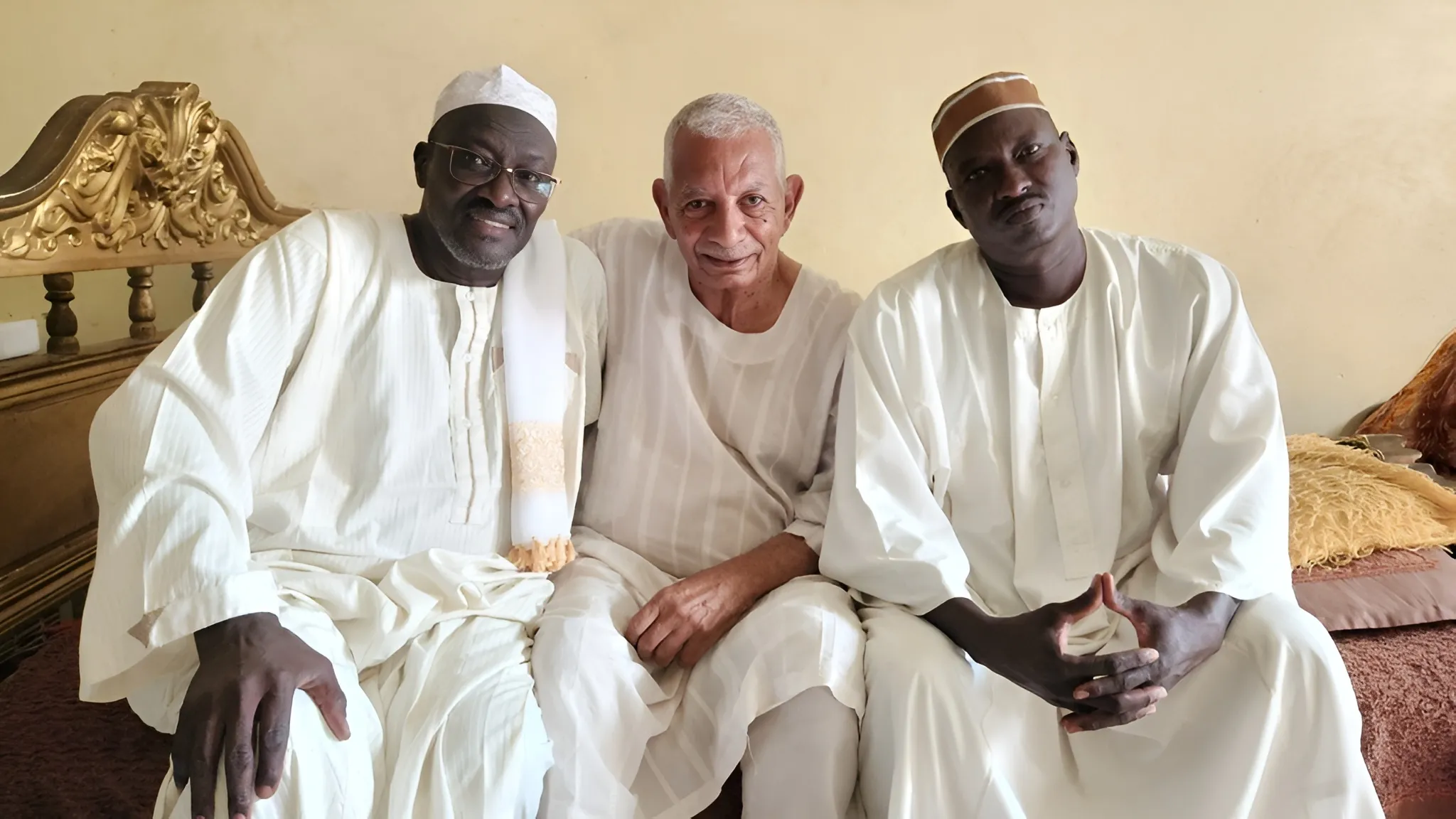
Three men sit together on a couch in Sudan.

Daw Mohamed (left) sits with family and friends during a visit home to Sudan. Photo: Daw Mohamed/CARE

The last time Daw Mohamed saw his mother was in October 2022, six months before war engulfed Sudan. For nearly three years, not a day passed without him worrying about her safety and wondering if he would see her again.

Be part of what makes CARE possible.

Get stories, updates, and simple ways to take action — all delivered to your inbox.

Subscribe

“I was born into a large family in a small farming village called Al Shihait in the West Kordofan region of Sudan, where the war is now raging,” Mohamed says. “All my relatives are trapped in a war zone.”

Sudan plunged into civil war in April 2023 after tensions that had simmered since the 2019 coup that ousted President Omar al-Bashir. Power struggles between the Sudanese Armed Forces and the Rapid Support Forces escalated into open conflict, displacing millions. Sudan’s humanitarian crisis has reshaped daily life for millions, including CARE staff whose own families are trapped in the conflict.

According to the United Nations, more than 12 million people have fled their homes since the start of the war. The situation is now considered the world’s largest humanitarian crisis. About 7.3 million people are internally displaced, while others have sought refuge in neighboring countries. More than 150,000 people have been killed, and over 30 million people need urgent humanitarian assistance amid famine and widespread atrocities.
A lifelong commitment to crisis response

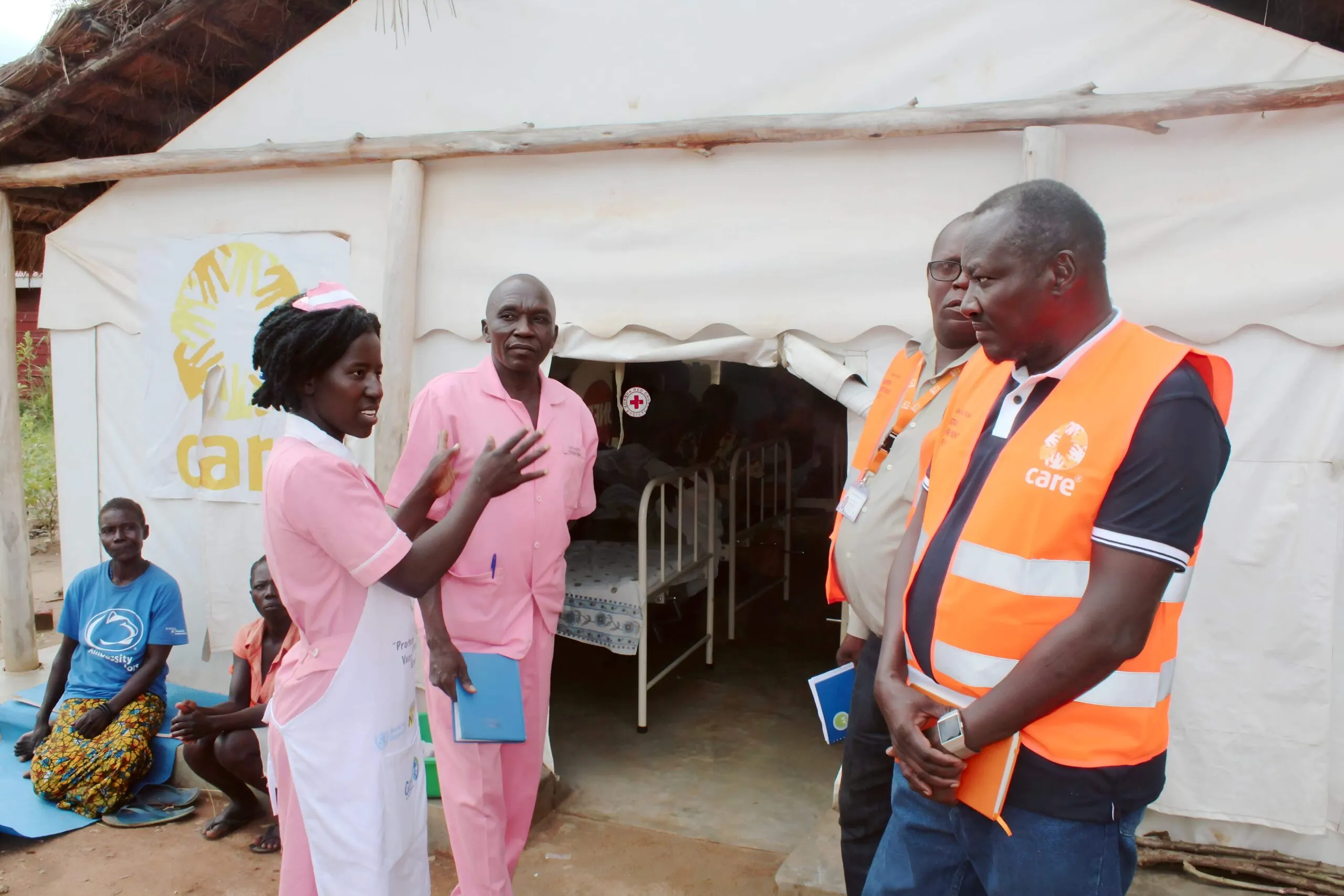
A man stands inside a health center, speaking with staff in a refugee settlement.
Daw Mohamed visits a health center in Imvepi Refugee Settlement, Uganda, in 2018. Photo: B. Murley/CARE

None of this diminished Mohamed’s determination to see his mother again. A veteran aid worker, he has served in some of the world’s most dangerous humanitarian settings, including Afghanistan, Somalia, Yemen, and Gaza. In 2025, he spent four months supporting CARE’s operations in Syria as communities began rebuilding their lives after the fall of the Assad regime.

Mohamed’s entire career has been with CARE. Recruited as a fresh graduate in May 1985, he was soon helping his own community during the drought that devastated Sudan and surrounding areas, leading to severe crop failures, widespread famine, and displacement. Mohamed and his new CARE colleagues responded with food aid, medicines, and health services for malnourished children and pregnant women.

“The opportunity to serve my own community was precious — a once in a lifetime chance,” says Mohamed, now a senior director on CARE’s global humanitarian team. His mother has been another reason he’s stayed in the sector. “Whenever I tell her that I am still with CARE, she is happy” he says with a chuckle. “She knows CARE well and doesn’t want me to leave.”

While working in Syria, Mohamed realized his mother’s health was deteriorating rapidly. They spoke daily, often for only a few minutes at a time due to poor phone connections. “Every time we talked, she cried and said she might not see me again before she died,” he says. “It was devastating. I couldn’t sleep.”

Mohamed’s Syrian assignment ended on November 5, 2025. The next day, he was on a flight to Port Sudan via Istanbul, one of the few routes into his home country. What he experienced when he arrived shocked him.

Navigating Sudan’s war

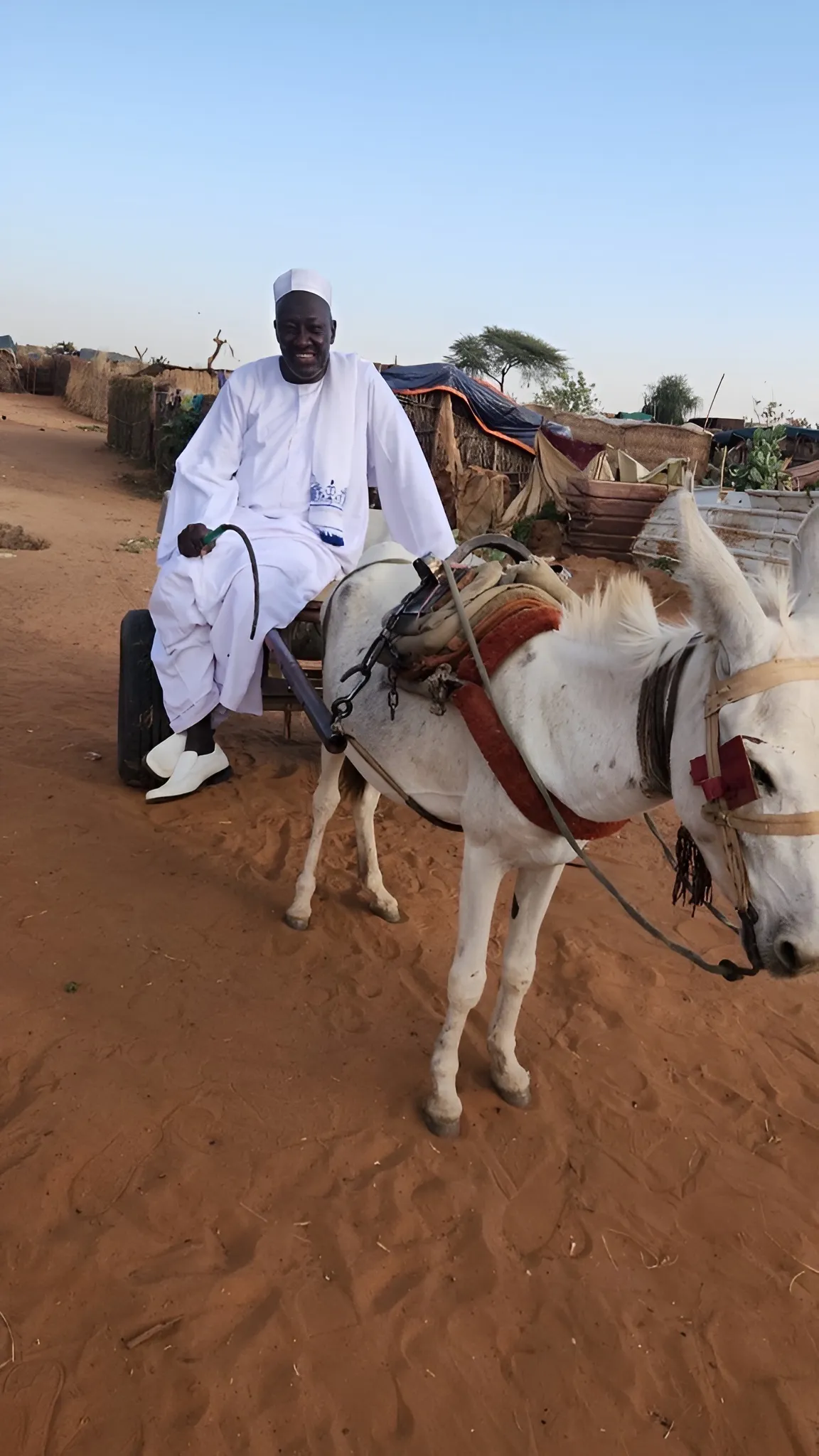
A man sits on a cart pulled by a donkey on a dirt road.
Daw experienced firsthand how travel through Sudan has become slow and dangerous as conflict disrupts roads and daily life. Photo: Daw Mohamed/CARE

Years in humanitarian service had prepared him for danger, but not for being personally at the center of an unfolding crisis.

“I have seen the worst disasters in the world, but this one is different. It is personal and very painful,” he says. “When it’s your country and your family, it’s deeply hurtful. You feel helpless.”

The journey from Port Sudan to El-Obeid, the capital of North Kordofan in the center of the country, where his family had relocated during the war, took seven days. Before the war, it would have taken one. Along the way, Mohamed encountered numerous checkpoints manned by armed youths.

“They took me off the minibus and interrogated me for five hours,” he says. “People disappear at those checkpoints. There is no rule of law.”

The young men accused him of spying. They confiscated his phone and scrutinized every video, every message. His dual Sudanese-American citizenship only heightened their suspicions. Mohamed remained calm, even feeling compassion for the boys. He knew that without education or other prospects, many were forced into the war.

He asked them thoughtful questions about their lives. Eventually, they relented and let him go. Exhausted but relieved, Daw continued to El-Obeid, sustained by the thought of hugging his mother again.

A family reunited

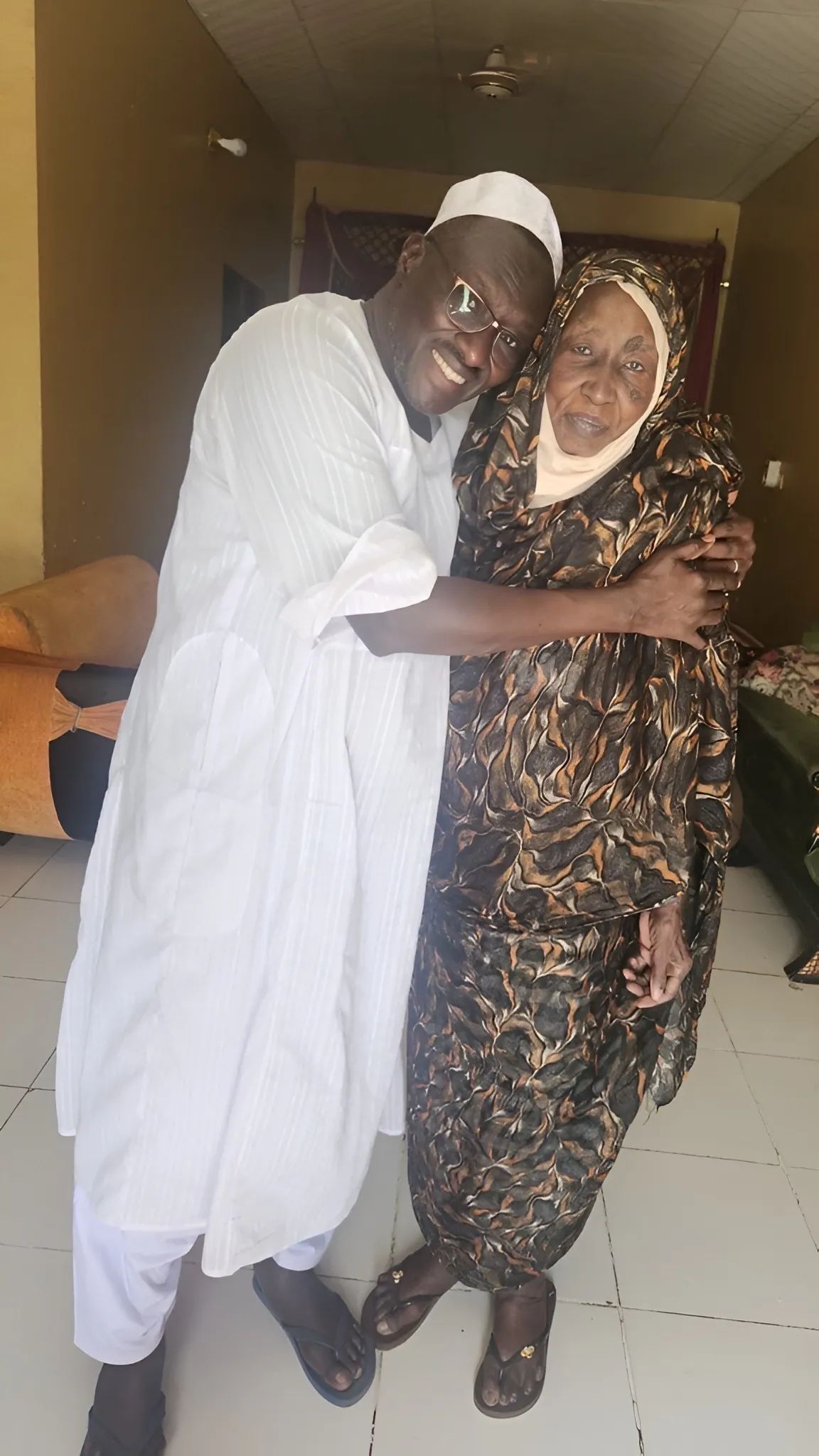
A CARE humanitarian embraces his mother in Sudan after three years apart.
After nearly three years apart, Daw Mohamed embraces his mother in El-Obeid, Sudan. Photo: Daw Mohamed/CARE

Their reunion, after nearly three years apart, was overwhelming. “We hugged for the longest time,” he says. For three weeks, he slept beside her bed. They stayed up late talking and laughing about the past.

His mother also recounted her perilous journey from their village to El-Obeid. It was the first time she’d ever left her hometown. She traveled by donkey cart with relatives throughout the three-week journey made ever more dangerous by the war. There is no electricity or running water where the family now lives.

During his visit, Mohamed witnessed the scale of suffering around him. “I saw women searching all day for a single meal for their children,” he says. “If they find one cucumber and a spoon of peanut butter, they’re lucky. People are starving.”

In the current crisis, CARE is providing drinking water and sanitation services, emergency food supplies, and healthcare to refugees and internally displaced people. Special attention is given to women and girls, who are often more at risk of exploitation and sexual violence, through targeted programs aimed at strengthening livelihoods.

Daw worries the war has deepened divisions and fears that a divided Sudan would destabilize the region. “Peace will require a miracle,” he says, “but I believe it is possible.”

Now back in Atlanta, where he has lived since 2010, Mohamed says his faith sustains him. “I pray daily: for myself, my mother, my family, and my country.”

Millions of families in Sudan and beyond need food, water, and safety.

Despite growing challenges, CARE is there.

Learn about our crisis response work.
Back to Top