

In Zaporizhzhia, Svitlana works to repair homes while living through war

By Becca Mountain September 21, 2026

Svitlana stands outdoors in front of a colorful illustrated backdrop in Zaporizhzhia, Ukraine.

Svitlana coordinates repairs to homes and buildings damaged by the war in her hometown of Zaporizhzhia. All photos: Svitlana Kim/CARE Ukraine

In Zaporizhzhia, Ukraine, Svitlana moves between ordinary routines and the realities of war: playing with her cat, grabbing a cup of coffee, and coordinating repairs to homes and buildings damaged by missile strikes. Like the people she serves, she is trying to hold onto everyday life as the war continues.

Svitlana’s hands prepare a breakfast sandwich on a kitchen counter.
Svitlana prepares breakfast at home every day, one of the normal routines she tries to maintain amid the war.

“The only thing you can control”

Like so many other people, Svitlana has a morning routine.

Today, breakfast is a sandwich with lettuce, meat, sliced yellow peaches, and light, white cheese. The meal itself is ordinary, and that’s the point.

“It’s really important to have a routine like this,” she says of her breakfast, “because, right now, that’s almost the only thing you can control.”

Svitlana lives and works in Zaporizhzhia, Ukraine. Russia’s full-scale invasion began in February 2022. More than four years later, Zaporizhzhia remains close to an active front. The city itself remains under Ukrainian control, while Russian forces occupy parts of the wider Zaporizhzhia region. Missile, drone, and aerial bomb attacks have continued to hit the area, damaging homes and infrastructure and killing and injuring civilians. In June and July 2026 alone, the UN documented more than 550 civilian casualties in Zaporizhzhia.

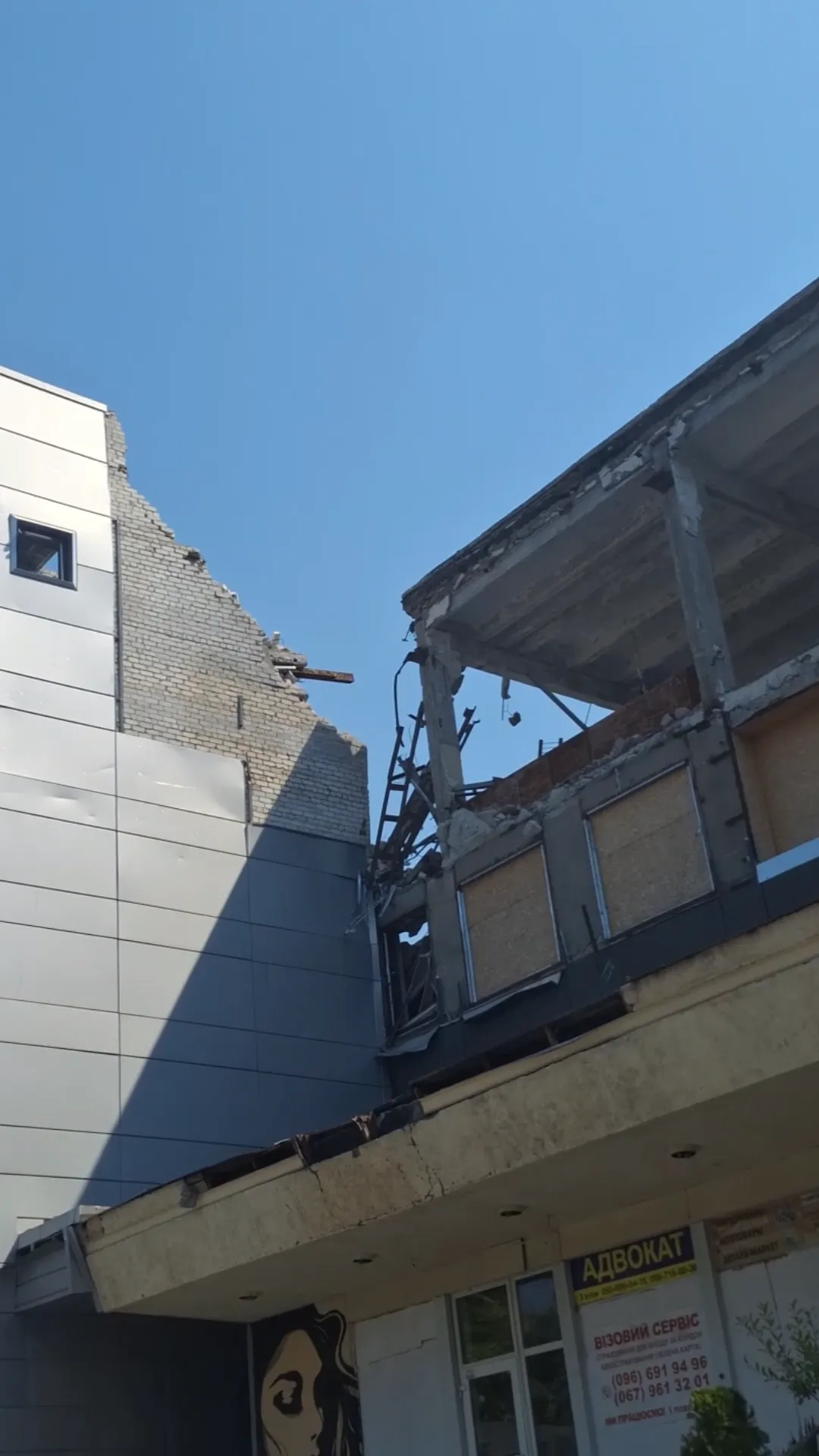
After breakfast, she grabs a cup of coffee. Again, this is part of a normal routine, one that millions of other people around the world follow every morning. But Svitlana’s favorite café is on the bottom floor of a building visibly damaged by a ballistic missile strike.

“There used to be a medical center here,” she tells us. While the medical center is gone, the coffee shop is still open for business. Svitlana is glad because she, like all those other coffee drinkers around the world, needs a little pick-me-up before she gets to work.

For Svitlana, routine creates a small pocket of predictability in a place where much of daily life cannot be planned. Breakfast can be cooked. Coffee can be purchased. A workday can begin — even when an air-raid alert may change what happens next.
Real People, Real Care: Svitlana

In Zaporizhzhia, Ukraine, Svitlana’s days move between ordinary routines and the realities of war. She grabs coffee, plays with her cat, joins meetings, and helps coordinate repairs to homes and buildings hit by strikes. As a regional coordinator for CARE partner Stabilization Support Services, she is part of the humanitarian response in the same place she lives. Near the front line, that means helping people repair, adapt, and hold onto daily life while facing many of the same risks and disruptions herself.

When humanitarian work happens inside the crisis

Svitlana is a regional coordinator for the Charity Foundation Stabilization Support Services (SSS), a CARE partner working in Ukraine. Between meetings, admin work, and coordinating repairs to homes and buildings damaged by Russian attacks, she stays busy.

Today, she and her colleague Dmytro are heading out to meet apartment owners whose windows have been shattered by drone and missile strikes.

On the way, they stop for fuel. Gas stations, Svitlana says, are increasingly coming under attack. It’s another ordinary errand complicated by war. Nearly 200 Ukrainian gas stations have been destroyed since spring 2026, and Zaporizhzhia is among the hardest hit regions.

Zaporizhzhia city itself has faced a string of major strikes this summer. In August 2026 alone, a combined missile and drone attack killed seven workers at a local steel plant and wounded dozens more. Separate strikes later in the month killed at least one more person, injured several others, and damaged homes, a hostel, and a local furniture shop.

The damaged buildings and warnings about attacks are familiar parts of Svitlana’s workday. But familiar does not mean harmless, or easy to live with.

Repairing what strikes break

A damaged multistory building in Zaporizhzhia has exposed walls, beams, and missing sections of its interior.
The building housing Svitlana’s favorite coffee shop Zaporizhzhia bears extensive damage from attacks on the city.

Svitlana’s work with SSS centers around helping households recover after strikes damage their homes or buildings. She coordinates repairs, registers families for support, and follows up to see the work through.

When she and Dmytro arrive at today’s location, they see shattered windows and damage to the building. They take notes on the damage before heading inside, where a resident shows them a broken window in her apartment.

The apartment’s residents, a retired couple engaged in volunteer work in the community, remember an air-raid alert and taking shelter in the hallway before the strike hit nearby.

“It started — bang-bang-bang — and glass shards came flying,” the woman tells Svitlana and Dmytro.

The damage was probably done by a guided aerial bomb (KAB). Attacking forces have used KABs alongside missiles and drones in repeated attacks on Zaporizhzhia city throughout the invasion.

“We’ll register you now and help install new windows for free,” Svitlana tells the resident, “so you’ll be warm and comfortable this winter.”

Nearby, SSS engineers are measuring windows at another building damaged by another guided aerial bomb.

“A lot of windows were shattered,” Svitlana says, adding that the organization’s team of engineers is always busy. “I hope we’ll manage to help everyone.”

Getting these repairs done can take weeks rather than days. First, a coordinator like Svitlana verifies the damage and registers the case, then an engineer documents and measures it, a contract is signed, and only then are replacement windows ordered from the manufacturer. Once they arrive, installation and finishing can go quickly. Once an engineer signs off on the repair, the case is complete.

So far this year, Svitlana’s team has completed 246 window repairs across three regions: 88 in Zaporizhzhia, 84 in Kharkiv, and 74 in Dnipropetrovsk. One of those repairs in Zaporizhzhia was this window, for this couple, which was completed soon after Svitlana’s assessment.

When the place you help is also home

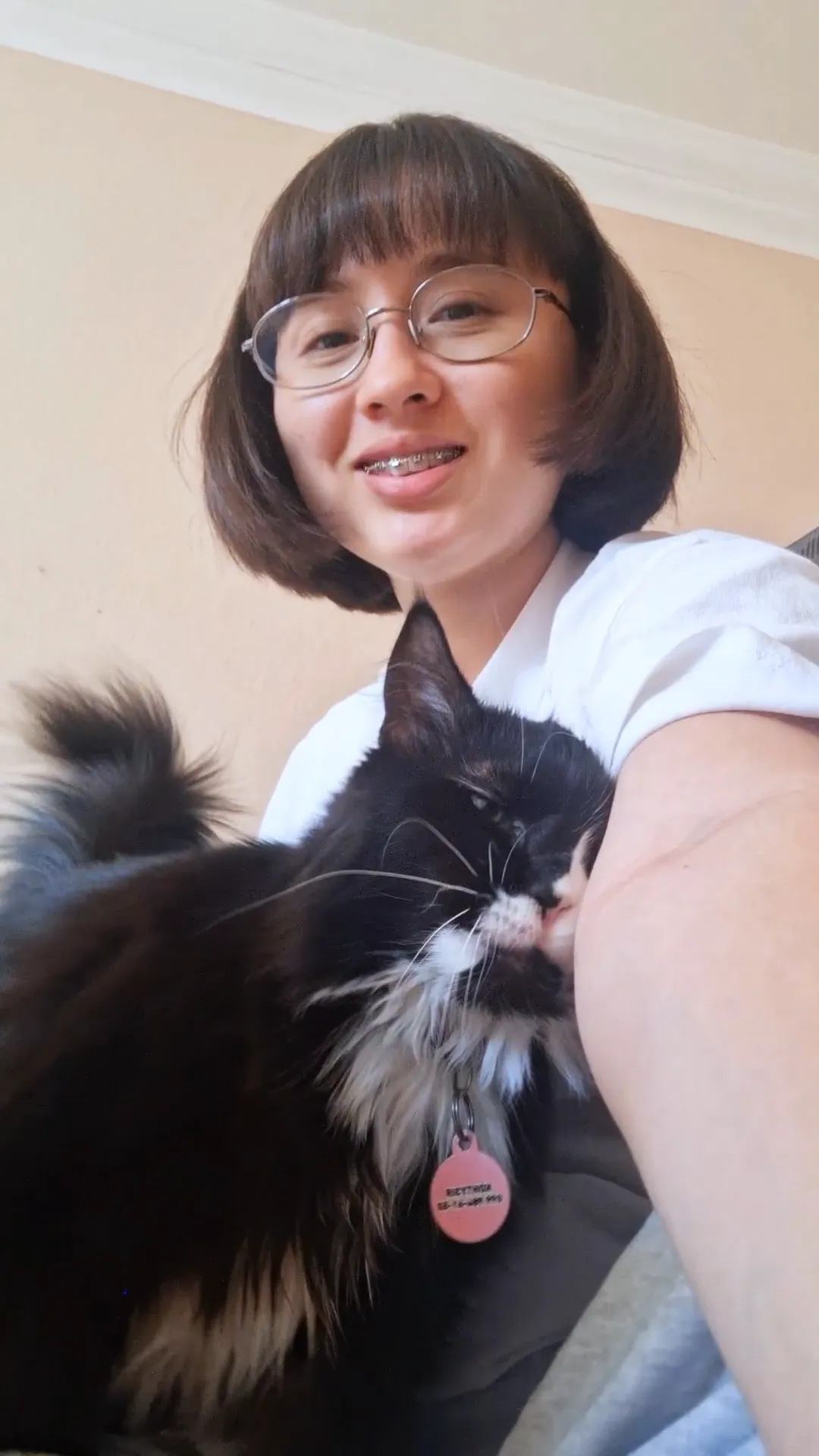
At home in Zaporizhzhia, Svitlana relaxes with her cat, Kontuziia.

The war is not confined to Svitlana’s field visits. It is part of life in the city where she works, sees friends, spends time at home with her cat, Kontuziia. The name, which means “concussion” in Ukrainian, comes from the fact that the black and white cat was rescued from a house destroyed by a missile strike.

She often finds herself wondering about her life and her future.

“Why do people stay in Zaporizhzhia?” she asks herself. “How can the feeling of being in your own place really outweigh the threat of death? Why is it more important to be home and with loved ones, even if home can no longer protect you?”

With each year, “things seem to be getting worse,” she says. “The rational choice is obvious: to escape the threat of death.”

Over four years of war, she has seen the front lines shift. She has seen guided aerial bombs become “an everyday reality,” and has seen communities she and her team were able to help only a year ago become inaccessible. Knowing where the nearest shelter is throughout her daily routine “has become a habit.”

“I am not safe here,” she tells us. “No one here is truly safe.”

“But social connections and the people close to us are more important than physical safety,” she says. “It feels as though the threat of death is outweighed by the strength of unity with family, loved ones, and friends.”

And so, she is staying, “like hundreds of thousands of other people.” She keeps working because she is “part of the community here. I am able to be useful to people.”

Humanitarian workers are often described by what they deliver: repairs, supplies, services, information. But in places affected by ongoing conflict, many of the people carrying out that work are also living with the same threats as the communities they support.

Finding room for ordinary life

Svitlana’s hands arrange paper clippings and illustrations in an open scrapbook on a table.
Svitlana works on a collage, prioritizing relaxation and creativity alongside her humanitarian work in Zaporizhzhia.

Living with repeated attacks does not mean that every moment is spent thinking about war.

Svitlana still works, sees friends, plays with her Kontuziia, and makes plans for future trips around the world. Recently, she received a travel notebook for her birthday, with a page for every country. It gave her a new hobby: scrapbooking.

Tonight, she sits down with tickets, papers, postcards, and other small reminders of a trip she took to Norway. She carefully fills in the journal page with details of her trip, pasting in the mementos and keepsakes.

“Under constant stress, it’s especially important to have something that helps you stop, switch gears, and just do something with your hands,” she says. “For me right now that’s scrapbooking.”

When living through an ongoing crisis like the war in Ukraine, safety isn’t just the absence of an attack. It is also the ability to relax, to make plans for the future, to concentrate on something enjoyable, to sleep soundly, and to trust that an ordinary moment can remain ordinary.

For many people across Ukraine, years of repeated attacks have put that sense of security under enormous strain. According to the International Rescue Committee and the Ukrainian Ministry of Health, an estimated 15 million people in Ukraine need psychological support.

Svitlana has found small ways to ease her anxieties. She cuddles her cat, she works on her scrapbook, she plans future adventures, and she imagines living once again in the strong, safe, stable city where she grew up.

And then the air-raid alarms begin blaring again.

She pats Kontuziia, then moves out into the corridor of her building to shelter from the explosions she can hear outside.

The scrapbook, open to a fresh page, waits.

So does the rest of an ordinary life.

Tomorrow morning there will still be breakfast and coffee, meetings and spreadsheets, a cat and friends and family, and windows that need replacing before winter.

None of those things can end the war. But each is part of what Svitlana and the people around her are trying to hold onto and, where they can, repair.


CARE started working in Ukraine in 2022. In the weeks after the escalation of the war in February 2022, the country’s humanitarian situation surpassed even the worst-case predicted scenarios. Neighboring countries have seen huge refugee influxes, largely women and children, with lines at the borders stretching for miles. To date, approximately 6 million people remain displaced outside of Ukraine in search of safety, while another 3.7 million are internally displaced within the country.

For Ukrainian refugees and internally displaced people, the most immediate needs include food, clean water, shelter and protection from violence, including violence against women and girls. In addition to the ongoing conflict, other major challenges for displaced families include freezing weather and access to healthcare, especially for women and the elderly.

CARE has worked in Europe since the aftermath of World War II, when we delivered assistance in the form of CARE PACKAGE® boxes to countries ravaged by conflict. We have active programs in multiple countries in Eastern Europe.

Support humanitarian workers.

Around the world, CARE staff and partners continue serving families through conflict, disasters, and crises. Your help makes their work possible.

Donate now.
Back to Top