Yemen conflict 2026: What you need to know

By Hillol Sobhan October 13, 2026

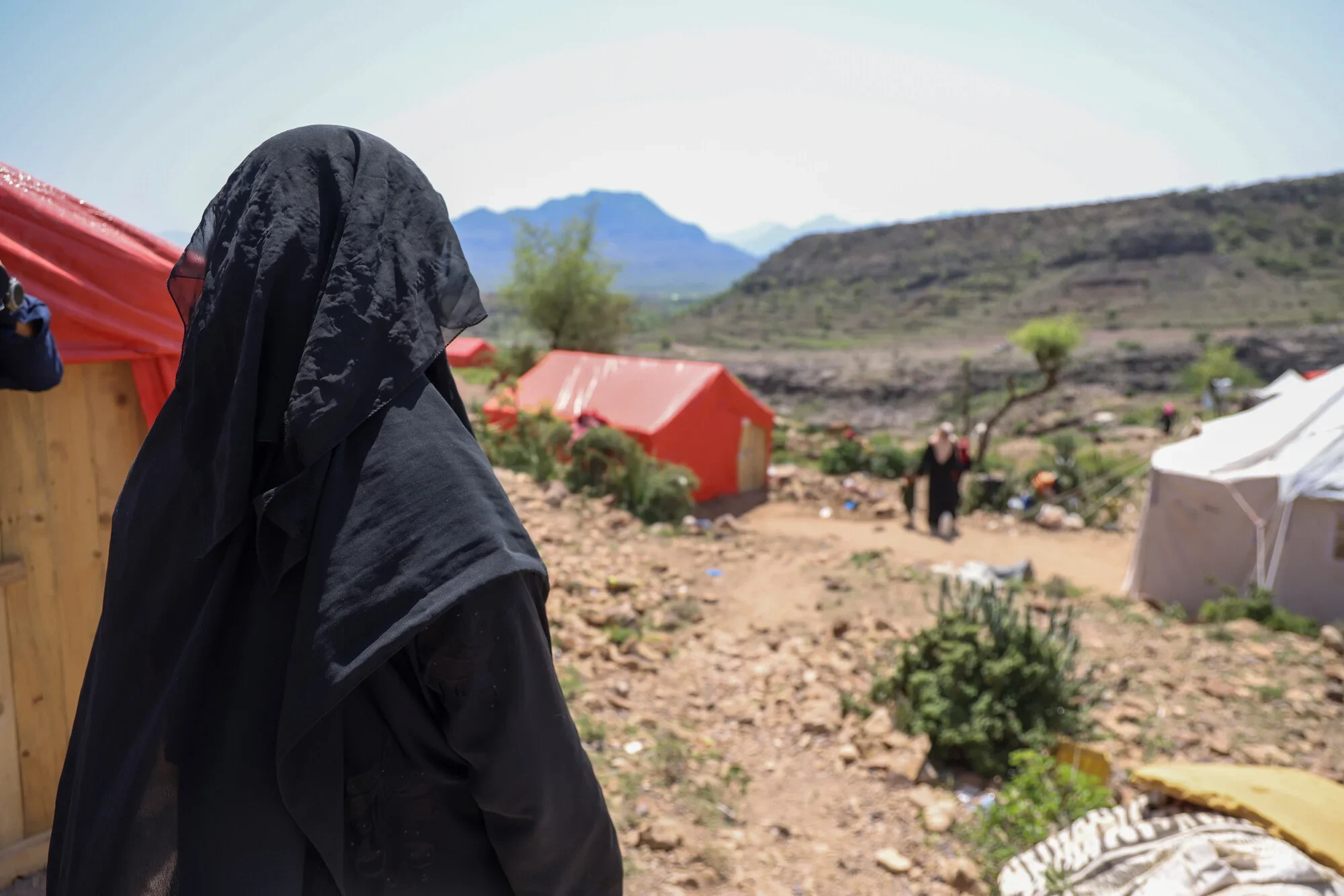
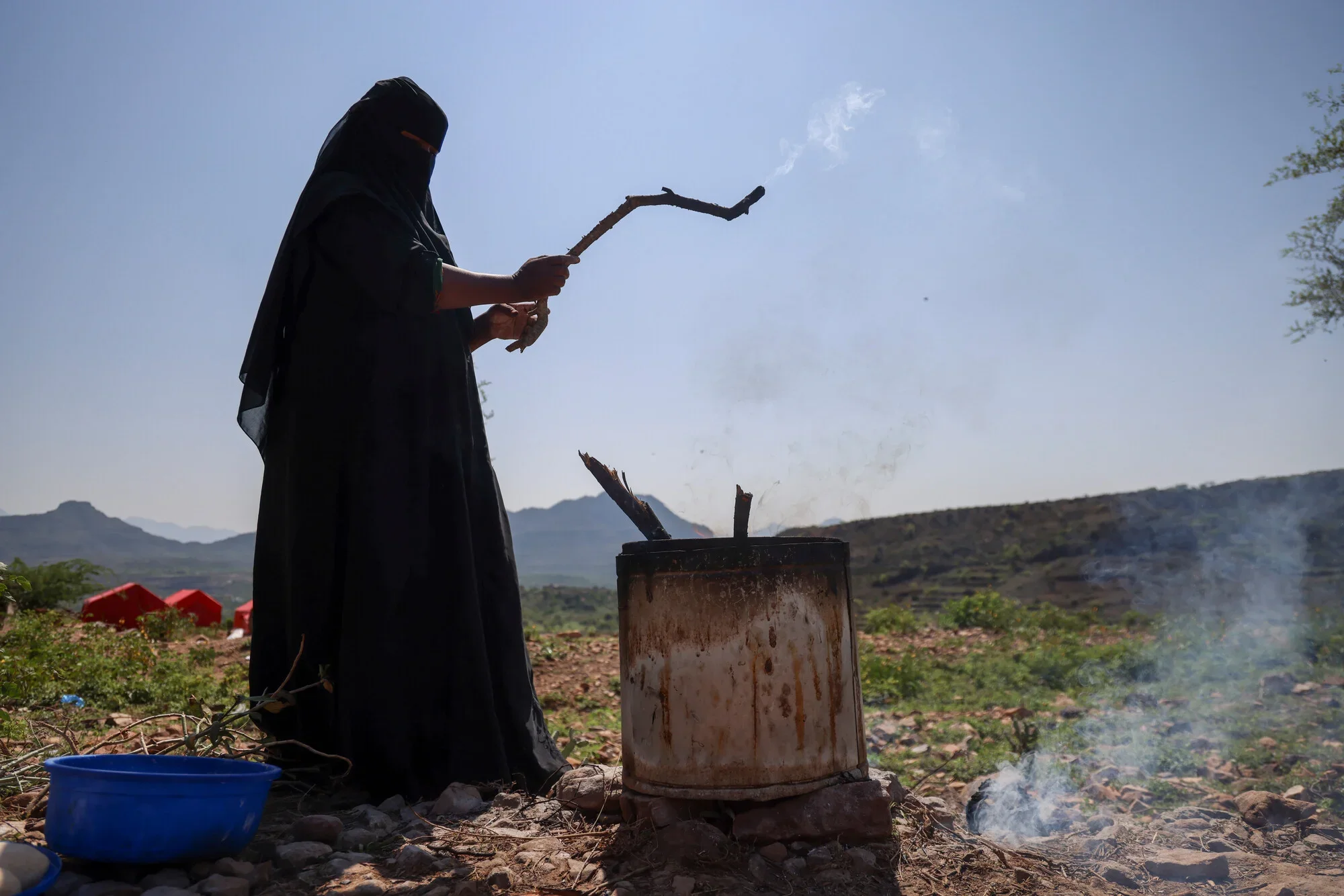
A woman in a black abaya stands outdoors stoking a fire in a makeshift metal stove using a burning stick, with smoke rising against a backdrop of mountains and red displacement tents in Taiz governorate, Yemen.

Families who fled conflict in western Yemen have arrived at displacement sites with little more than the clothes on their backs, facing urgent needs for food, shelter, and clean water. Photo: Ahmed Albasha/CARE

“When the war reached our village, we had to flee, leaving everything behind except the clothes we were wearing,” says Morada, a newly displaced mother in Taiz, southwestern Yemen.

Morada is one of more than 200,000 people who have fled their homes since the Yemen conflict 2026 escalated on Sept. 3. Houthi forces advanced down the Red Sea coast, pushing many families toward Taiz, Yemen’s third-largest city, and other parts of the country.

This is the worst outbreak of conflict since a U.N.-brokered truce in 2022.

“When we arrived here, we slept hungry on the bare ground, shivering in the cold, with no mattresses to lie on and rain falling over us. My children go to sleep crying from hunger,” Morada shares.

For many families, this is not the first displacement — or even the second. Many arrive after walking for days without food or water, according to World Food Programme (WFP) field teams working in Lahj and around Taiz.

Yemen has been at war for more than a decade. Fighting began in 2014 when Houthi forces seized Sanaa, and a Saudi-led coalition intervened the following year. The truce in 2022 reduced the violence but never brought peace. The World Health Organization (WHO) reports 959 people killed and more than 4,200 injured since the escalation began.

Years of conflict have left more than two-thirds of Yemen’s 35 million people in need of humanitarian assistance. The September escalation has pushed families into sites already strained by years of war. CARE’s assessments in Taiz governorate found that 95% of households surveyed in Al Ma’afer district were in debt and 92% had borrowed food or depended on relatives to eat. Many are staying with relatives, but those arrangements are fragile — host families are themselves struggling after years of economic decline. CARE’s own assessments also found that adults and children were already reducing meal portions and eating less frequently to preserve what little food they had.
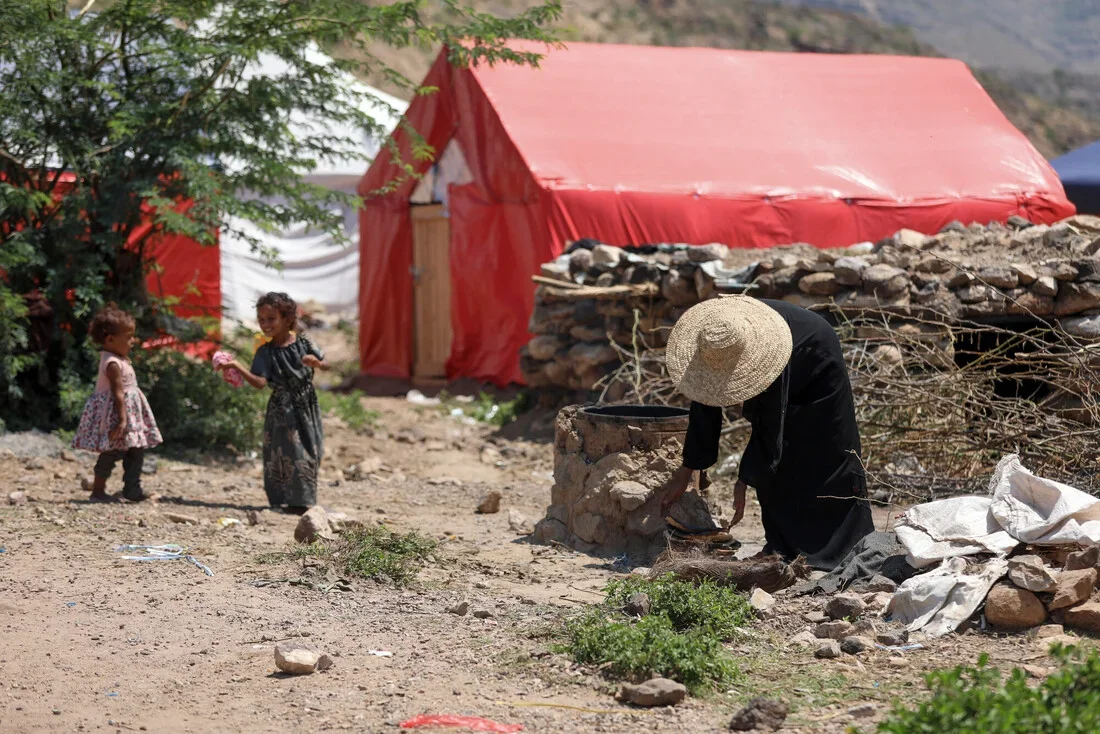
A woman in a black abaya and wide straw hat crouches over a makeshift stone stove at a displacement site, while two young girls stand nearby against a backdrop of red and white tents in Taiz governorate, Yemen.
A mother and her young children at a displacement site, where families are surviving with little food, no cooking gas, and no firewood of their own. Photo: Ahmed Albasha/CARE

“More than eight families are living in this place. Because of overcrowding, I have no choice but to sleep on the rooftop at night, exposed to the cold. All we hope for is tents that can ease the congestion and give families a little space and dignity,” says Abdo, a newly displaced person in Taiz.

“Our lives are filled with hardship. There are no toilets and no firewood to cook food. My daughter went to collect firewood and fell from a hillside. She is now in intensive care, and we do not know whether she will live or die,” Morada adds.

Women and girls face the heaviest burden

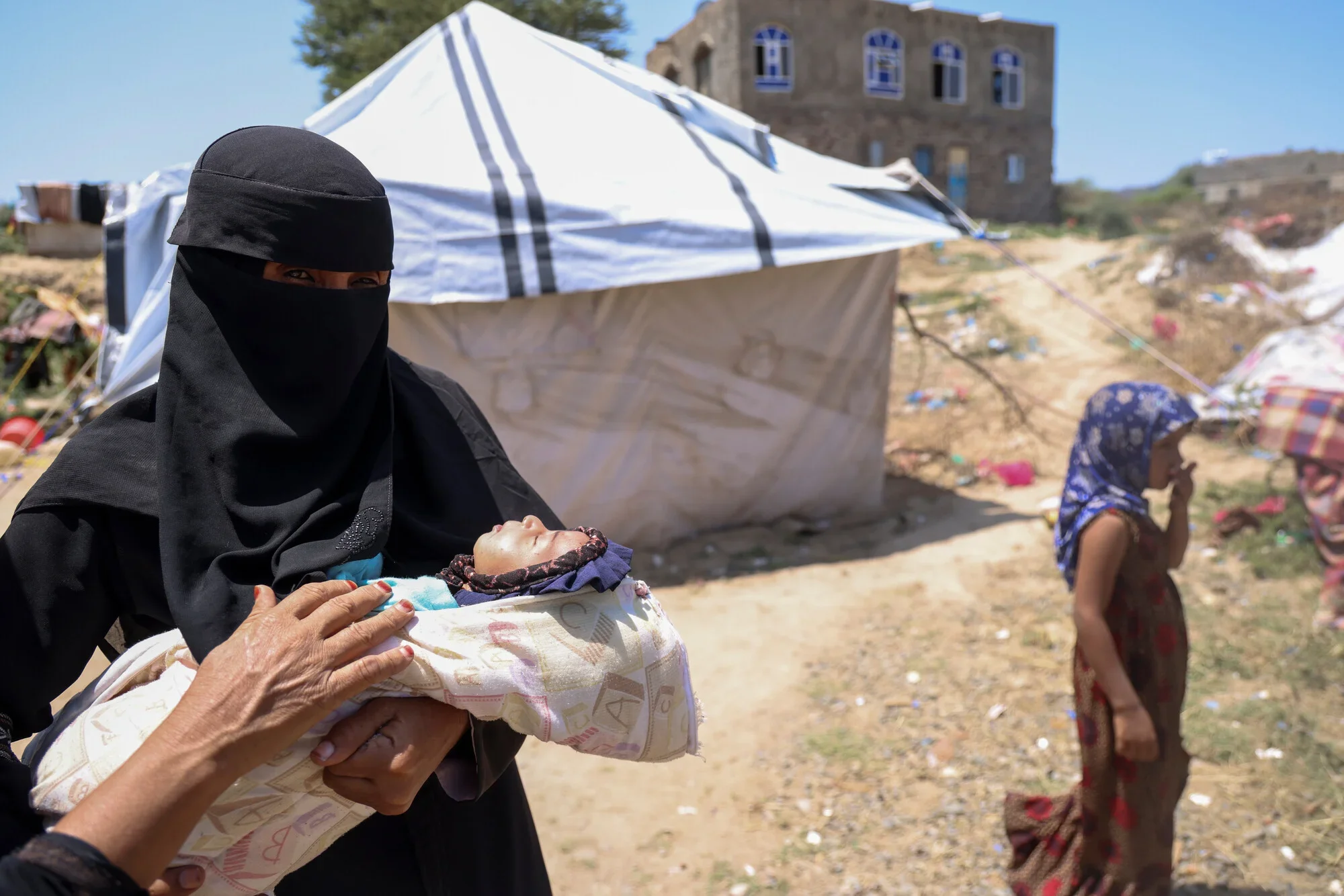
A newly displaced mother holds her newborn outside a tent. Thousands of pregnant women and new mothers have fled the conflict, many arriving after long journeys without access to health care or basic supplies. Photo: Ahmed Albasha/CARE

U.N. agencies estimate around 2,000 pregnant women are currently on the move. The escalation has displaced more than 57,000 children, and nearly 8,000 are out of school.

“Women displaced from their homes in Yemen are struggling to feed their families, find clean water, and care for their children,” says Iman Abdullahi, CARE Yemen country director. “Pregnant and breastfeeding women face difficulties getting the food and health care they need, and many have had to travel a long way to reach safety.”

“Some families are sheltering in places without toilets, private washing spaces, or lighting at night. Women need support that protects their health, safety, and dignity. This is what they are telling us they need,” Abdullahi adds.

At a displacement site in Aden, CARE colleagues met pregnant women who had arrived undernourished after long journeys, as well as mothers with newborn infants who should have been resting and recovering. One woman told CARE colleagues she had only the clothes she was wearing. Another had fled just two weeks after giving birth. She arrived after an exhausting journey, with her baby unwell.

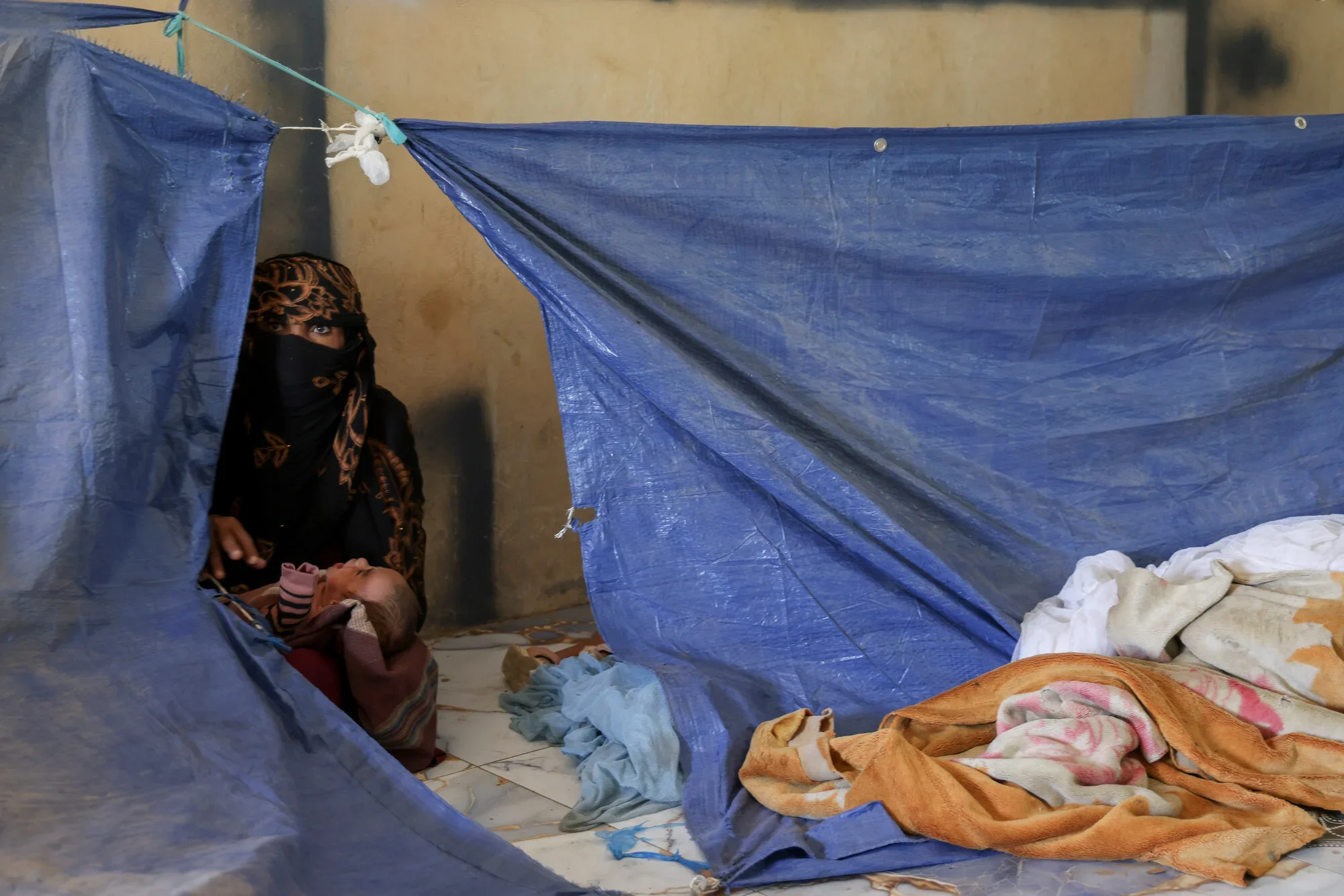
A woman in a black niqab and patterned headscarf sits inside a makeshift blue tarpaulin shelter holding a newborn infant at a displacement site in Yemen.
A mother shelters with her newborn under a makeshift tarpaulin at a displacement site in Yemen, where many families are living without proper shelter, private washing facilities, or basic hygiene supplies. Photo: Ahmed Albasha/CARE

“I visited displaced women and children living in makeshift shelters and tents in the rain. They lack shelter, clothing, and food,” says a CARE partner at a Yemeni civil society organization on Sept. 17. “The immediate priority for women and girls is dignity kits together with basic shelter.” (Dignity kits contain essential personal hygiene items — such as soap, sanitary pads, towel, and underwear — that help women and girls maintain health and privacy during crises.)

Health threats compound the risk further. WHO has confirmed more than 7,800 cholera cases across Yemen this year, with alerts already raised at displacement sites in Aden. An acute watery diarrhea outbreak has also been reported in displacement settlements in Abyan and Ad Dali’. Without hygiene supplies and safe shelter, women and children face severe health risks.

In Lahj and Aden, a growing proportion of displaced households are headed by widows or mothers who fled alone with their children — many with no income and no male family member to help navigate the displacement.

“I never thought we would make it here alive. What we lived through felt like the Day of Judgment,” Morada says. “Even now, in this displacement site, I still do not feel safe. The war continues, and any sense of security is gone.”

Why the funding gap makes everything harder

Without urgent additional funding, thousands of families who fled their homes will continue to go without food, shelter, and basic supplies. Photo: Ahmed Albasha/CARE

The 2026 response plan for Yemen calls for $2.16 billion to reach 12 million people. As of mid-year, only around 20% had been secured — the lowest funding level in a decade. The United Nations High Commissioner for Refugees’ Yemen operation received just $34 million of the $194 million required, even before the latest escalation. Women-led organizations are often among the first to reach affected women, but many are operating with severely limited and uncertain funding.

The WFP warns that nearly three in four households in accessible areas of Yemen are now unable to meet their basic food needs, the highest level recorded this year. Fighting has also cut off aid access to around 350,000 people across parts of Taiz and Hodeidah, according to WFP.

Displacement is still growing, with no sign of the fighting easing.

“As displacement continues to grow and needs emerge across the country, humanitarian organizations must have safe access and the flexibility to respond quickly and reach people wherever assistance is needed,” says Abdullahi.

How CARE is responding to the Yemen conflict displacement

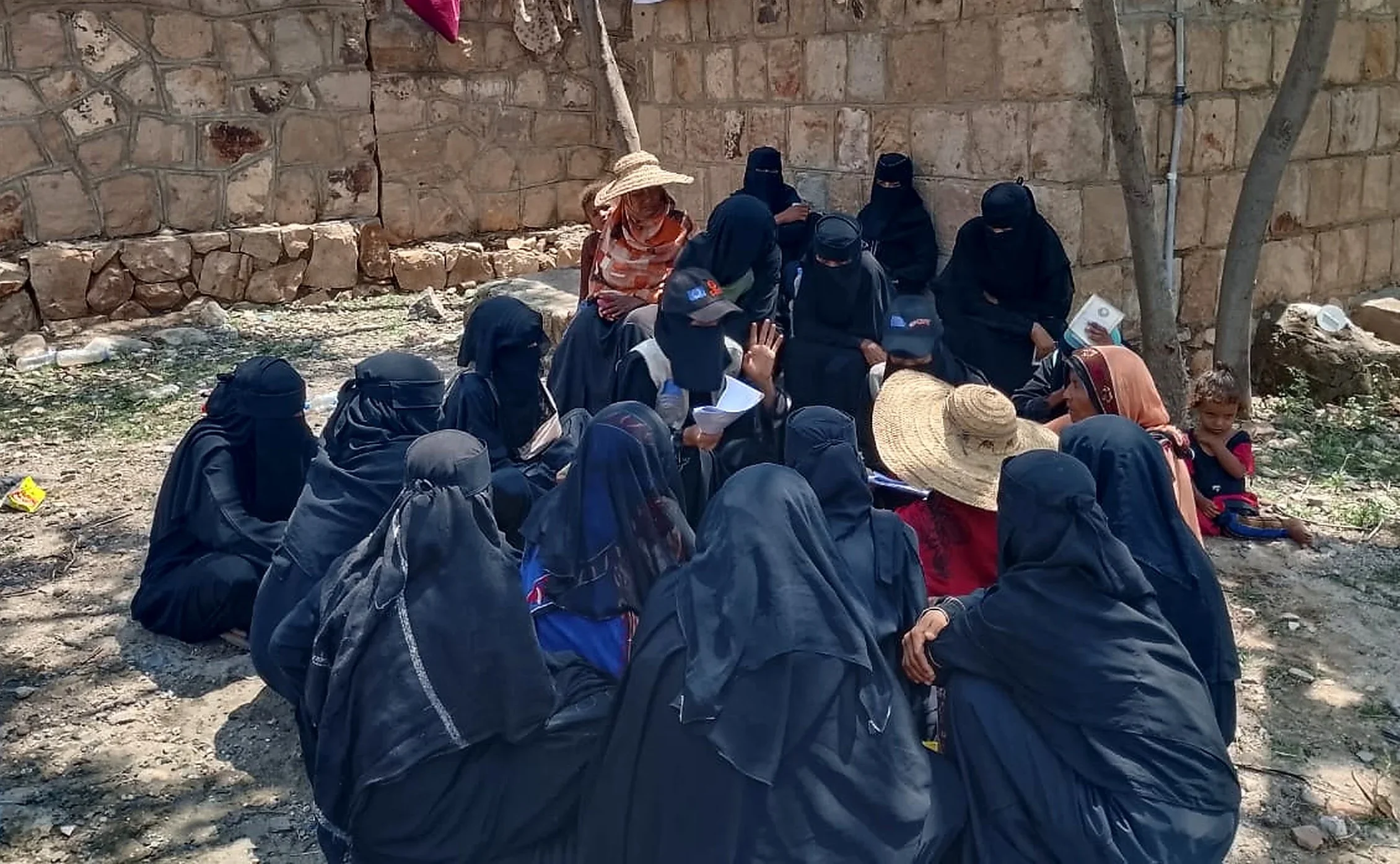
A large group of displaced women in black abayas sit in a circle outdoors at a site in Taiz governorate, Yemen, meeting with a community outreach team to discuss their needs following the September 2026 conflict escalation.
CARE teams meet with displaced women to understand their needs and priorities, ensuring the response reaches those most at risk, including pregnant women, new mothers, and female-headed households. Photo: CARE

CARE has maintained a dedicated office and a team in Taiz since 2013, operating across six of the governorate’s 23 districts. When the escalation began, programs were already running across food, health, and education — all three have had to adapt. WFP food distributions to Taiz City have stalled due to road blockades, with CARE working to shift to cash assistance so families can still be reached. All 12 schools CARE had been supporting through the Education Cannot Wait program are now being used for military purposes, with children losing access to education.

With teams already embedded across Taiz, CARE was able to act from day one. CARE has delivered multipurpose cash assistance to more than 800 newly displaced families in Taiz. Through a WFP program targeting newly displaced people, CARE has also distributed food assistance to 1,564 households across five districts. In Aden, in southern Yemen, 300 women received dignity kits. CARE is also preparing to distribute non-food item kits across Lahj, prioritizing female-headed households, pregnant women, and breastfeeding mothers.

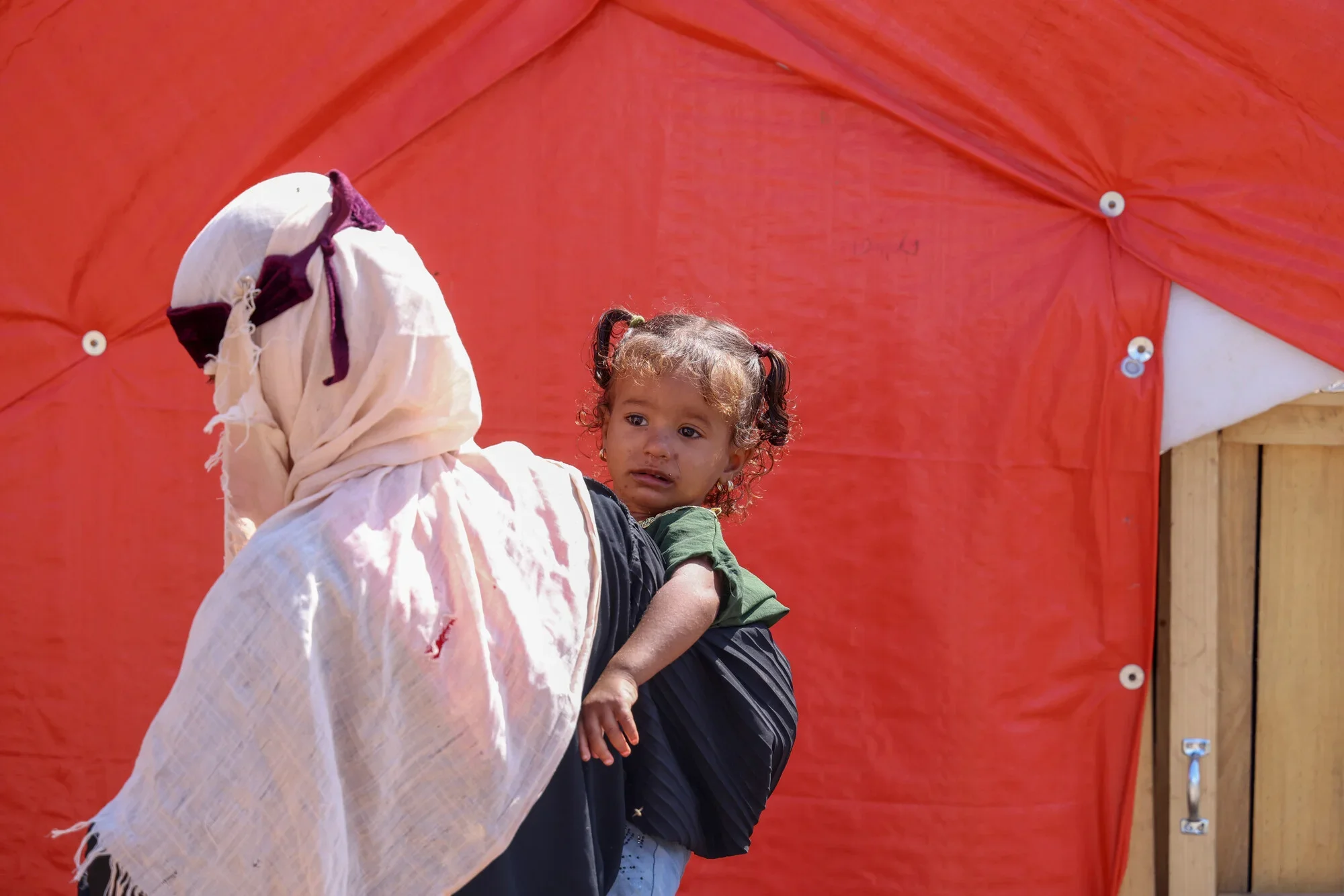
A woman in a white headscarf carries a young girl in a green top on her hip in front of a red tent at a displacement site in Taiz governorate, Yemen, as families continue to arrive following the escalation of conflict in September 2026.
A mother carries her young daughter at a displacement site where CARE is working to reach families with cash assistance, non-food items, and support for women and girls. Photo: Ahmed Albasha/CARE

Markets near the frontlines have been closing for extended periods, further cutting off access to essential supplies. WFP market monitoring found that diesel prices in Taiz have risen by 500% compared with pre-crisis levels, and the price of wheat flour has doubled. Road closures have since triggered further price increases in food and cooking gas, with all entry and exit routes to Taiz City now closed.

“In Taiz, families are rushing to buy essential food amid disruption to key roads and uncertainty about supplies. There are also concerns that fuel shortages could affect water pumping and hospital generators, making an already difficult situation harder for families,” says Abdullahi.

To understand what displaced people — especially women — need most, CARE has already conducted a rapid analysis, speaking directly with women and men across displacement sites. That work is guiding everything from where distributions happen to what supplies are included.

CARE is also working with local women’s rights organizations in Aden and Abyan to reach women and girls who may not access larger distribution points. At Batees Health Center in Abyan, CARE is providing emergency obstetric care and clean delivery kits, alongside nutrition support for women in Taiz.

“My message to decision-makers and to the world is this: women and girls displaced from Taiz do not need sympathy alone. They need real protection and tangible support that secures a safe and dignified life for them,” says a CARE partner at a Yemeni civil society organization.

CARE is appealing for additional funding to reach approximately 1,500 households across Taiz, Lahj, and Aden with cash assistance, clean water, shelter, and health care.

For mothers like Morada, that support cannot come soon enough. “Right now, all I hope for is food assistance, cooking gas, and mattresses for my family,” Morada says.


CARE in Yemen: CARE has been working in Yemen since 1992, initially supporting refugees fleeing regional conflict. Since fighting escalated in 2015, CARE has delivered humanitarian assistance to people affected by displacement, loss of livelihoods, and ongoing conflict. Over more than three decades, CARE has built deep community networks and local expertise across seven governorates — giving it the presence and relationships needed to respond rapidly when a new crisis unfolds. Between July 2025 and June 2026, CARE Yemen reached 1,459,542 people — 54% of them women — with food security and livelihoods, water, sanitation, and hygiene, protection support for women and girls, health, and education support and services.

Support humanitarian workers around the world

Around the world, CARE staff continue serving families through conflict, disasters, and crises. Your help makes that work possible.

Donate now.
Back to Top