Farmer Field and Business School (FFBS)

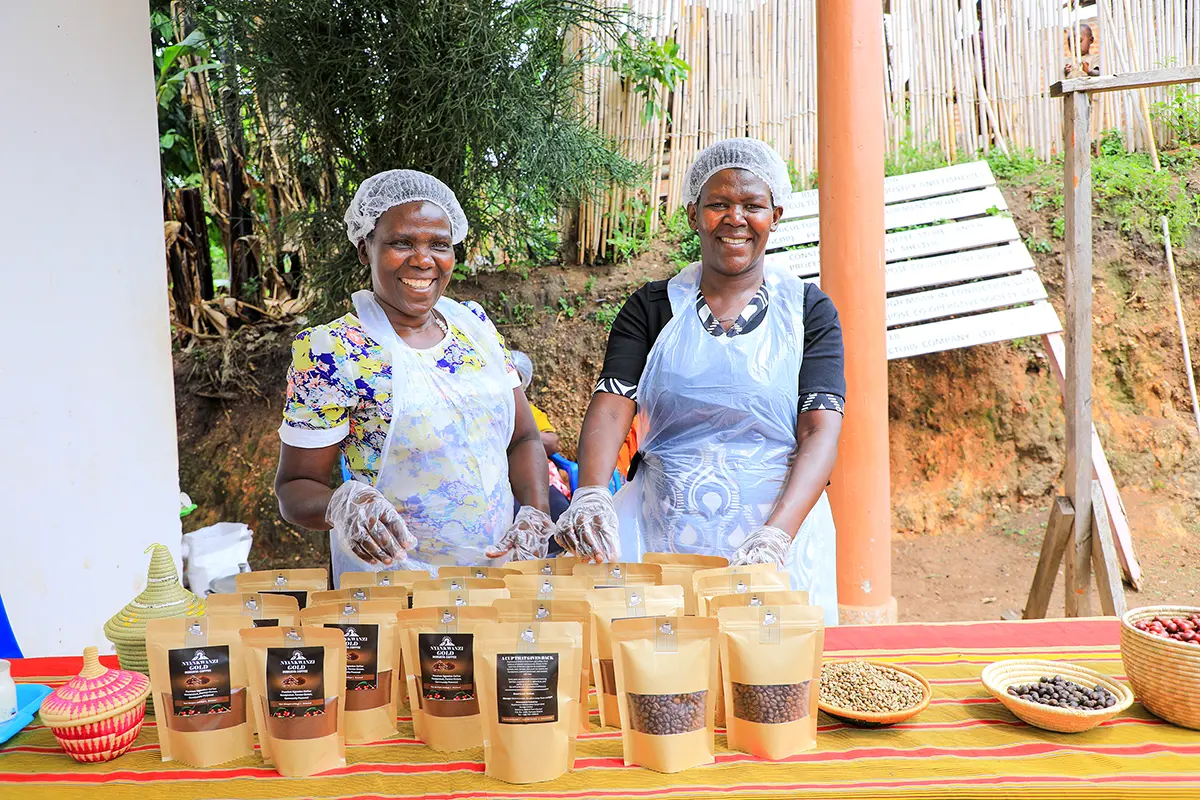
Two women wearing aprons and hair nets proudly stand behind their bagged coffee beans at a market counter.

Farmers of the Nyankwanzi Multi-Purpose Cooperative Society in Uganda proudly showcase coffee processed and packaged for market. Through the Farmer Field and Business School programs, they have improved farming techniques and strengthened skills in financial literacy, collective marketing, and record-keeping. Photo credit: © 2025 Ekinu Robert/CARE Uganda

CARE's Farmer Field and Business School (FFBS) is a proven and scalable way to help small-scale women farmers grow more food and earn more money. It supports women to take a stronger role in farming by using a market-focused, climate-smart, and nutrition-aware approach tailored to their needs. 

What is CARE’s Farmer Field and Business School (FFBS)?

CARE’s Farmer Field and Business School (FFBS) is a hands-on, practical learning approach that helps small-scale farmers, especially women crop-cultivators, livestock herders, pastoralists, and fisherfolk, improve their farms and incomes. It was first developed through the Pathways program building on FAO’s Farmer Field Schools (FFS).

As part of FFBS, women meet regularly during the farming season to learn new skills by doing real experiments on shared plots. They apply what they learn to their own farms—growing more food, earning more money, and gaining the confidence and skills to succeed in markets.

How does FFBS work?

  • FFBS teaches farming, business, and nutrition together in one program.
  • Women farmers learn climate-smart techniques, how to grow nutritious food, and how to access markets and sell their products at better prices.
  • Training is scheduled around the farming season so it fits into women’s already busy lives.
  • FFBS builds on existing groups like Village Savings and Loan Associations (VSLAs) and farmer collectives.

Promoting equality

FFBS works to break down barriers women face in agriculture by engaging men, youth, and local leaders in conversations about their roles and equality.

Through dialogue and community-led discussions, FFBS supports social change so women can have equal opportunities and decision-making power.

Adapting to different contexts

FFBS has been used in a wide range of settings: from crop farming to livestock, beekeeping, and fishing—and in refugee camps, conflict zones, and with diverse groups like youth, people with disabilities, indigenous people, and landless farmers.

The approach continues to evolve and adapt to local needs and challenges.

What does FFBS include?

  • Sustainable agriculture: Climate-smart farming for crops, livestock, and fisheries.
  • Nutrition: Encouraging families to eat healthy meals by helping families earn more and grow some of their own food.
  • Market engagement: Learning how to sell products, do market research, and build business plans.
  • Facilitation skills: Training local trainers to teach others in ways that work for adults.
  • Women and girls, men and boys: Changing harmful norms by engaging men and community leaders.
  • Monitoring and learning: Helping farmers track progress, profits, and make informed decisions.
  • Farmer groups: Working through collectives like VSLAs for stronger social and economic support.
  • Stronger services and accountability: Helping farmers speak up and shape the services and policies that affect their lives.

FFBS at scale

Over the next five years, CARE will grow FFBS to reach 25 million producers in over 60 countries through four strategies:

  1. Bring FFBS to 20 new countries.
  2. Reach more people and new sectors.
  3. Connect farmers to global markets through certification.
  4. Partner with governments and higher education institutions to embed FFBS into national programs.