Sudan, October 14, 2025 – Sudan is facing a worsening cholera outbreak as conflict, displacement, and heavy rains create conditions for the rapid spread of waterborne diseases. The situation is growing increasingly dire as the World Health Organization (WHO) has warned of a “concerning case fatality rate” of 2.8%, nearly three times the emergency threshold, signaling that the cholera outbreak is spiraling beyond control and demanding an immediate scale-up of response efforts.
Across the country, millions are struggling to access clean water, sanitation, and healthcare, leaving them increasingly vulnerable to preventable illnesses such as cholera and dengue fever. Of the over 7.4 million internally displaced people, more than 54% are women and girls. As of 13th October 2025, the Federal Ministry of Health reported 120,496 cholera cases and 3,368 deaths nationwide, including 17,246 cases and 570 deaths (CFR 3.3%) recorded across all five Darfur states since the outbreak began in Nitega, South Darfur, in May 2025. Over 1,200 cases and 81 deaths have been reported in South Darfur, 250 cases and 13 deaths in East Darfur, and 250 cases and 13 deaths in South Kordofan. The situation remains dire, with infection rates continuing to rise across all Darfur states.
“Sudan’s conflict has uprooted millions, forcing families to live in overcrowded camps where clean water is scarce and sanitation has all but collapsed,” said Abdirahman Ali, CARE Sudan Country Director. “Cholera is now spreading with terrifying speed through communities already pushed to the brink. Women, children, and the elderly are suffering the most as they are caught between war, hunger, and disease. With cholera’s fatality rate far exceeding the emergency threshold of 1% and funding rapidly drying up, the toll on human life is deepening with each passing moment.”
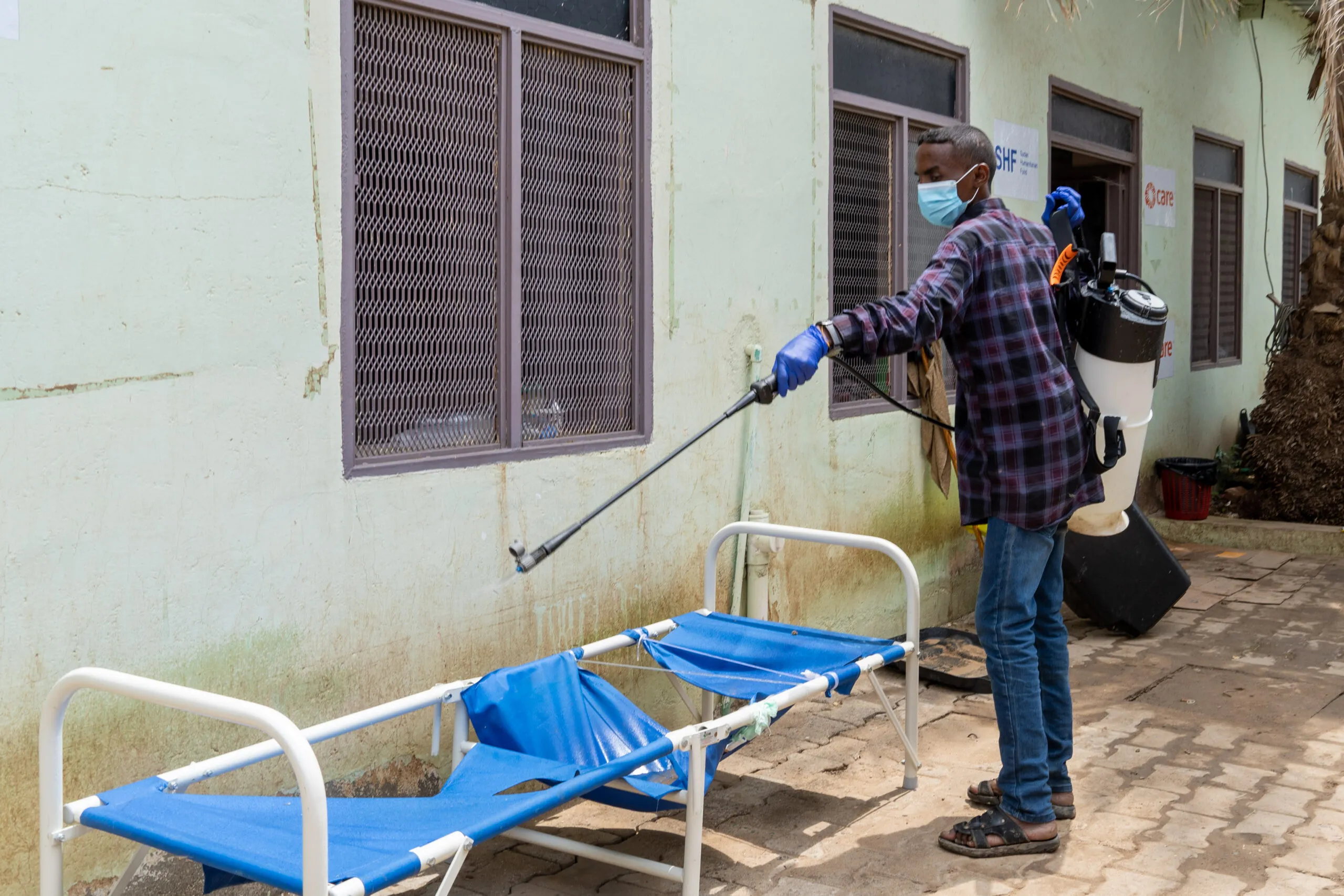
With over 75% of health facilities destroyed, healthcare for most people is a growing challenge, more so now in the middle of the cholera outbreak. At the beginning of October, CARE Sudan’s cholera emergency response reached over 58,000 people across South Darfur, East Darfur, and South Kordofan. CARE supported the operation of two Cholera Treatment Centers (CTCs) and 15 Oral Rehydration Points (ORPs), trained 106 health workers, and distributed infection prevention materials to health facilities. CARE also ensured the chlorination and testing of 24 water sources, conducted household hygiene promotion visits, distributed soap and chlorine tablets, carried out 28 cleaning and vector control campaigns, repaired 480 latrines serving nearly 9,600 people, and rolled out a mobile media campaign to raise public awareness about cholera prevention.
Ahmed, a member of CAFA—one of the local Community Hygiene Promoter groups in Omdurman—emphasized the critical role of hygiene education in preventing the spread of disease. “The heavy rains, poor sanitation, and limited access to clean water are exacerbating the outbreak of cholera and other waterborne diseases like dengue fever,” he said. “We strive to educate people about the importance of handwashing, safe water handling, food hygiene, proper waste disposal, and water chlorination to curb the cholera outbreak.”
Despite these efforts, CARE Sudan warns that the response remains underfunded and overstretched. There is a short supply of medical supplies, chlorine, and hygiene kits, as well as insufficient water trucking capacity to reach newly affected communities. The lack of sustained funding threatens to undermine ongoing response efforts and risks further escalation as the rainy season continues.
“We are doing everything possible with the resources we have, but it is not enough,” said Abdirahman Ali. “To save lives and prevent cholera from overwhelming already traumatized communities, the international community must urgently step in with funding. This is a health emergency.”
CARE Sudan is collaborating with local partners, community health volunteers, and health authorities to mitigate the outbreak, restore access to safe water, and safeguard communities affected by the intersection of conflict and disease. An urgent, concerted, and swift response is needed to halt the spread of the disease and provide treatment to those infected before more lives are lost. This hinges on two essentials: adequate funding and the protection of health workers and facilities. CARE calls on donors to immediately increase their support and mobilize the necessary resources. CARE urges duty bearers to uphold their obligations under international humanitarian law to protect humanitarian personnel, health facilities, and the civilian population.
Note to Editors
CARE has been operating in Sudan since 1979, implementing humanitarian and development programs focused on women’s and girls’ empowerment, gender justice, humanitarian action, and resiliency.
CARE’s lifesaving operations are ongoing in:
- East Darfur – water provision to refugees and the host community, and Health services
- Gedaref – WASH provision for refugees, IDPs, and the host community, and Health services
- Al Gezira – WASH provision to IDPs and the host community
- South Kordofan- Supporting Women’s Empowerment through economic and livelihood activities
- South Darfur- Provision of WASH, Livelihoods and Community empowerment
- Khartoum: Provision of MPCA to the most affected populations in Jebel Awily, Mayo, and Kalari communities and WASH activities
For media inquiries, please email usa.media@care.org or contact David Mutua, CARE East Central, & Southern Africa Regional Communication Advisor at david.mutua@care.org