December 10, 2025 – More than a week after severe storms swept across South and Southeast Asia, communities across Sri Lanka, Indonesia, and Thailand are confronting the aftermath of catastrophic rains and the long road to recovery ahead. In just a matter of days in late November and early December, torrential rains and landslides left more than 1,700 dead, cut off entire communities, and forced millions to grapple with massive losses.
These rains were brought on by coinciding intense weather systems (including tropical cyclones Ditwah and Senyar). Extreme weather events like these are increasingly fueled by warming oceans, heavier rainfall, and unpredictable monsoon patterns. Flood-related disasters have surged by 134% since 2000, placing immense strain on national systems and disproportionately affecting the most at-risk communities.
“Our thoughts are with everyone who has lost loved ones and those trying to recover with very limited resources. Women, girls, and boys remain at the sharpest edge of this crisis. They need sustained protection, access to essential services, and support to help them rebuild safely and with dignity,” said Deepmala Mahla, CARE’s Chief Humanitarian Officer.
“What we have seen across Asia is a climate crisis unfolding in real time. Countries are being hit by repeated disasters, and the impact does not end when the floodwaters recede. Families in Thailand, Sri Lanka, and Indonesia are now beginning the difficult work of rebuilding their lives. They need support that goes beyond immediate relief and helps restore homes, livelihoods, and stability,” Mahla added.
CARE’s humanitarian network and its local partners continue to reach some of the hardest-hit areas, despite damaged infrastructure, limited access, and ongoing weather risks.
Indonesia
Between November 26 and 28, extreme rainfall triggered severe flooding across Aceh, North Sumatra, and West Sumatra, followed by a strong earthquake in Aceh. More than 3 million people have been affected, with nearly 1,000 reported dead and many more injured or missing. Over 150,000 homes and public facilities have been destroyed, and more than 52 districts remain cut off by landslides and damaged roads. Families are stranded in unsafe conditions with limited access to food, clean water, and medical care. The disaster has caused impacts even greater than the 2004 Aceh tsunami.
Abdul Wahib Situmorang, CEO of Yayasan CARE Peduli, a member of the CARE confederation in Indonesia, said: “People are exhausted. They have lost homes, livelihoods, and access to clean and safe water. With no electricity, survivors are struggling with day-to-day activities, and aid distribution has become even more challenging. The severe shortage of medicines and restricted access to proper sanitation are also heightening the risk of disease outbreaks, especially for women and children. Our partner teams are supporting families who fled with nothing, have been cut off for days and urgently need clean water, hygiene and shelter kits.”
As part of their response, Yayasan CARE Peduli has been distributing pre-positioned emergency hygiene kits to help reduce health risks and support community resilience during this critical phase. They are also preparing to distribute food and family kits and deliver temporary latrines in Aceh and West Sumatra.
Thailand
In late November, Thailand’s southern region was inundated by severe monsoon rains that flooded nine provinces and affected more than 2.9 million people. So far, 185 people have lost their lives. Across the impacted regions, families continue to struggle with limited access to food, clean water, and basic supplies.
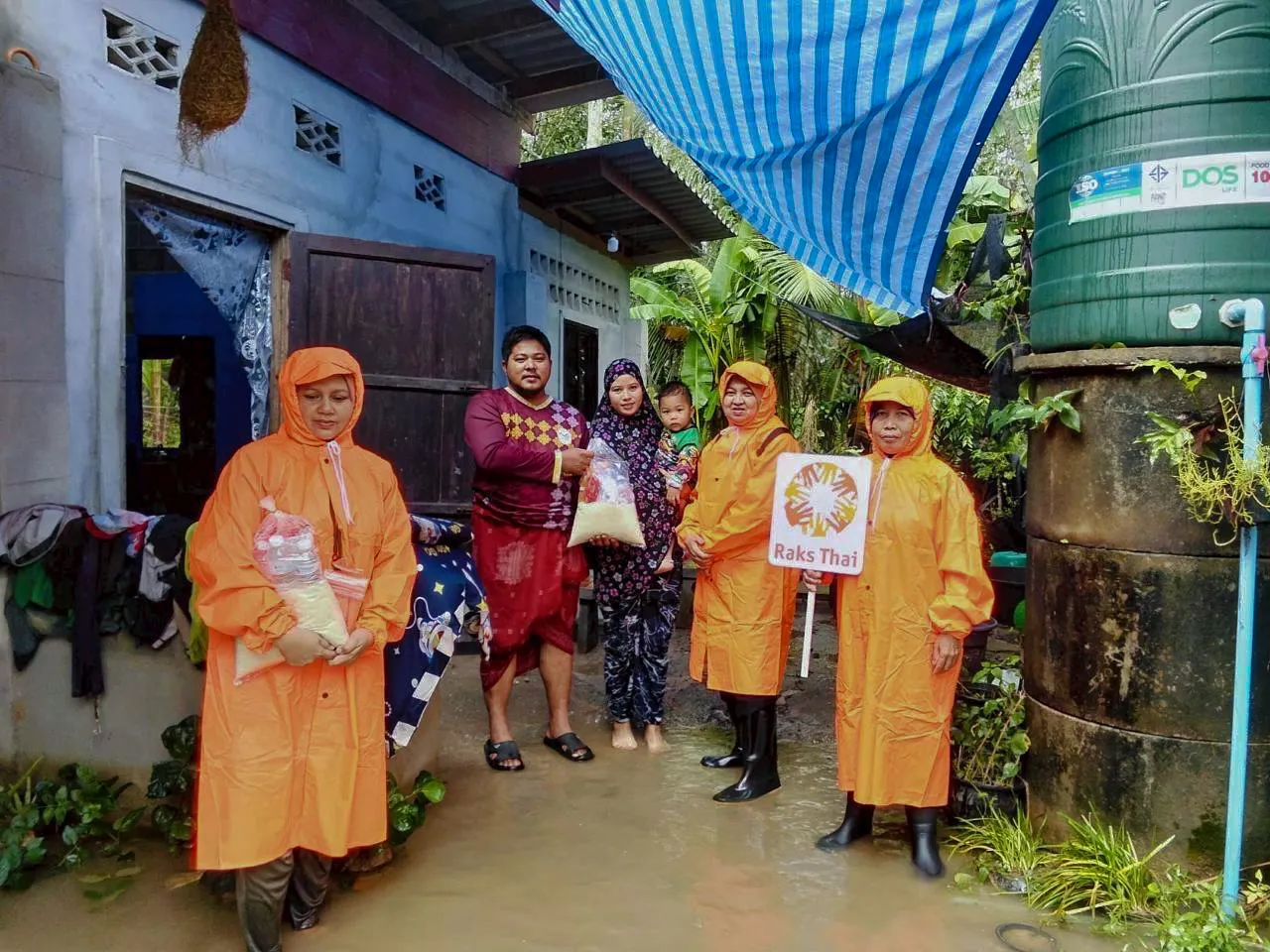
Raks Thai, a member of the CARE confederation in Thailand, is providing relief in six provinces. In the most affected southern provinces of Pattani, Yala, and Narathiwat, Raks Thai is working through local women’s groups and youth volunteers. So far, they have reached over 15,000 people with food, drinking water, and essential supplies.
Promboon Panitchpakdi, Executive Director at Raks Thai said, “While immediate relief has been critical, the real challenge is only beginning. Thousands of families in Pattani, Yala, and Narathiwat now face the enormous task of repairing damaged homes and restoring their livelihoods. Recovery requires more than emergency supplies. It demands sustained support and community leadership. This recovery is being led by multiple women’s groups across the three provinces, who are playing a central role in organizing, guiding, and driving their communities’ recovery. Raks Thai is committed to ensuring they have the resources and support they need as families rebuild their lives.”
As floodwaters recede, families will need support to clean homes, restore community spaces, and rebuild livelihoods. Households will require cleaning tools, kitchenware, bedding, warm clothing, boots, gloves, and medicines. Communities will need flat-bottom boats, water tanks, power banks, and generators. Raks Thai will also build local capacities in disaster preparedness.
Sri Lanka
Since November 17, 2025, Cyclone Ditwah has caused intense rainfall leading to flash floods and landslides across all 25 districts. More than 600 people have lost their lives, and 1.7 million people have been affected, while thousands have been displaced and urgently need support.
Chrysalis, CARE’s affiliate in Sri Lanka, is working closely with the Government of Sri Lanka and district offices. So far, they have supported 18,000 people with food, safe drinking water, hygiene kits, and other essential items. Vulnerable people are being prioritized.
“This disaster is a reminder of the climate vulnerabilities shared across South Asia,” said Ashika Gunasena, CEO of Chrysalis. “From Sri Lanka to India and Pakistan, it is always poor women and girls who are hit the hardest, which is why it is critical to uplift their voices in the response. Our priority is to deliver life-saving support now while ensuring protection, dignity, and a pathway to recovery for those who have lost everything.”
Women and girls face heightened risks. With homes destroyed and evacuation shelters overcrowded, families are sleeping outdoors or in makeshift structures without lighting, safe bathing spaces, or privacy. Protection concerns continue to rise, particularly in remote communities where access remains limited.
Reflecting CARE’s commitment to local leadership, the response to the floods is being delivered by two Global South members and one Global South affiliate of the CARE confederation. With autonomous, national organizations driving CARE’s humanitarian response in this crisis, decision-making is more informed and reflective of the communities CARE works with.
For media inquiries, please email usa.media@care.org or contact Muhammad Mudabbir Maajid, CARE Regional Communications Specialist at email: mudabbir.maajid@care.org