Executive summary
The increasing number of complex and long-lasting crises is severely affecting the lives and futures of the world’s most at-risk people. Conflicts, natural disasters, food shortages, and disease outbreaks are destroying security and causing humanitarian needs to reach unprecedented levels. According to the Global Humanitarian Overview, by the end of September 2025, almost 300 million people urgently needed help and protection, even as new crises emerged. At the same time, humanitarian support is shrinking, widening the gap between urgent needs and the resources available to meet them.
Women and girls are disproportionately affected by crisis. Compared to men, they face greater restrictions on mobility, higher risks of violence, and more limited access to food, healthcare, and livelihoods. Despite these challenges, women are at the frontline in every crisis. In every context, women use their knowledge, networks, and leadership to help communities to prepare for, respond to, and recover from disasters.
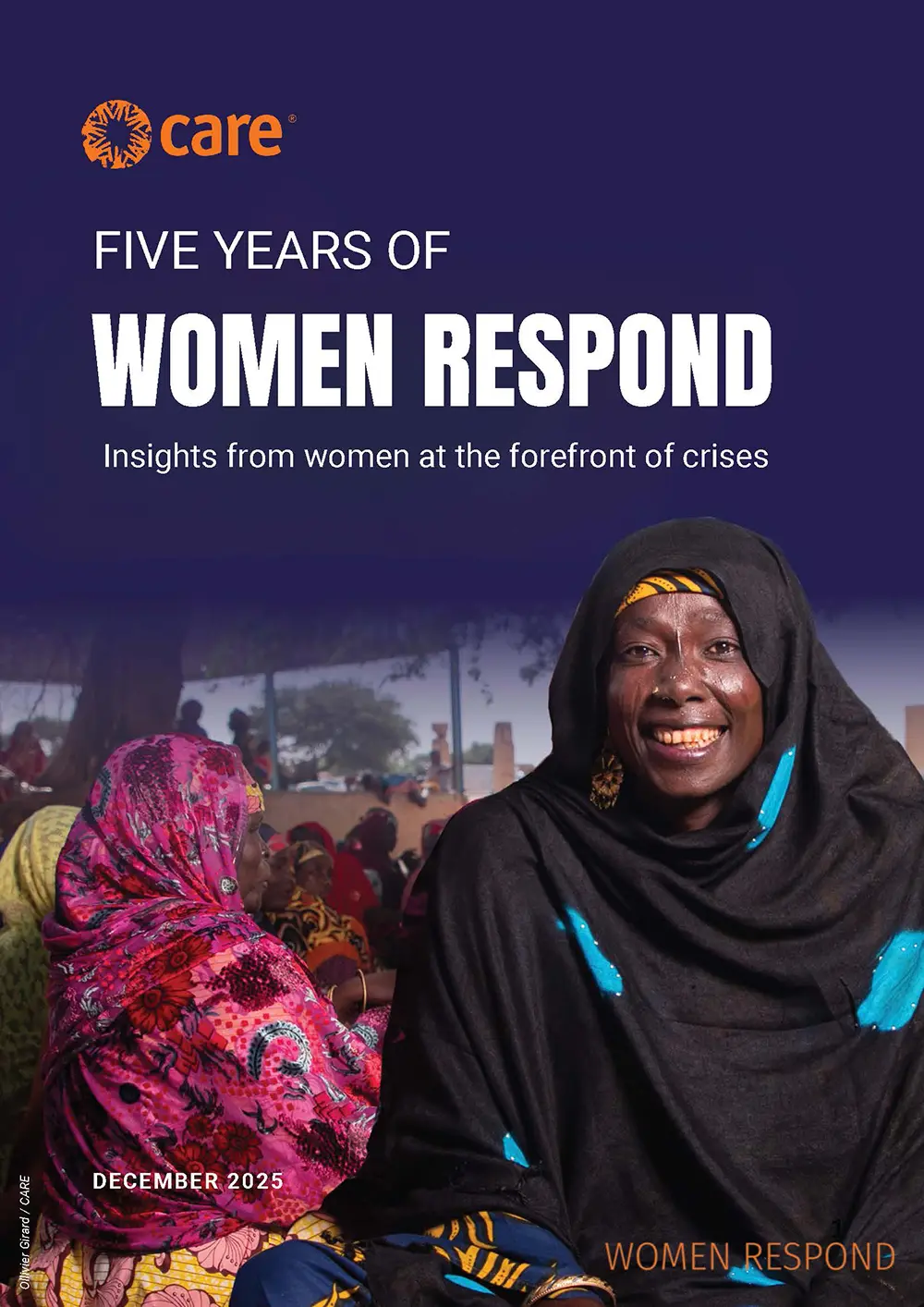
CARE’s Women Respond initiative centers this leadership by systematically listening to women in crisis settings and ensuring their voices and solutions inform and drive humanitarian action. Since 2020, the Women Respond initiative has elevated the voices of 38,000 people including 28,000 women, across 28 countries. From the early days of COVID-19 to the compounding impacts of conflict, climate change, and economic shocks, the findings have been consistent: when women speak, they not only describe the realities of crisis, they articulate practical, actionable pathways for more effective and accountable humanitarian response.
What follows reflects what women have been telling us over the past five years.