
In Tanzania's tea hills, these women are stirring up success

By Edward Charles May 20, 2026

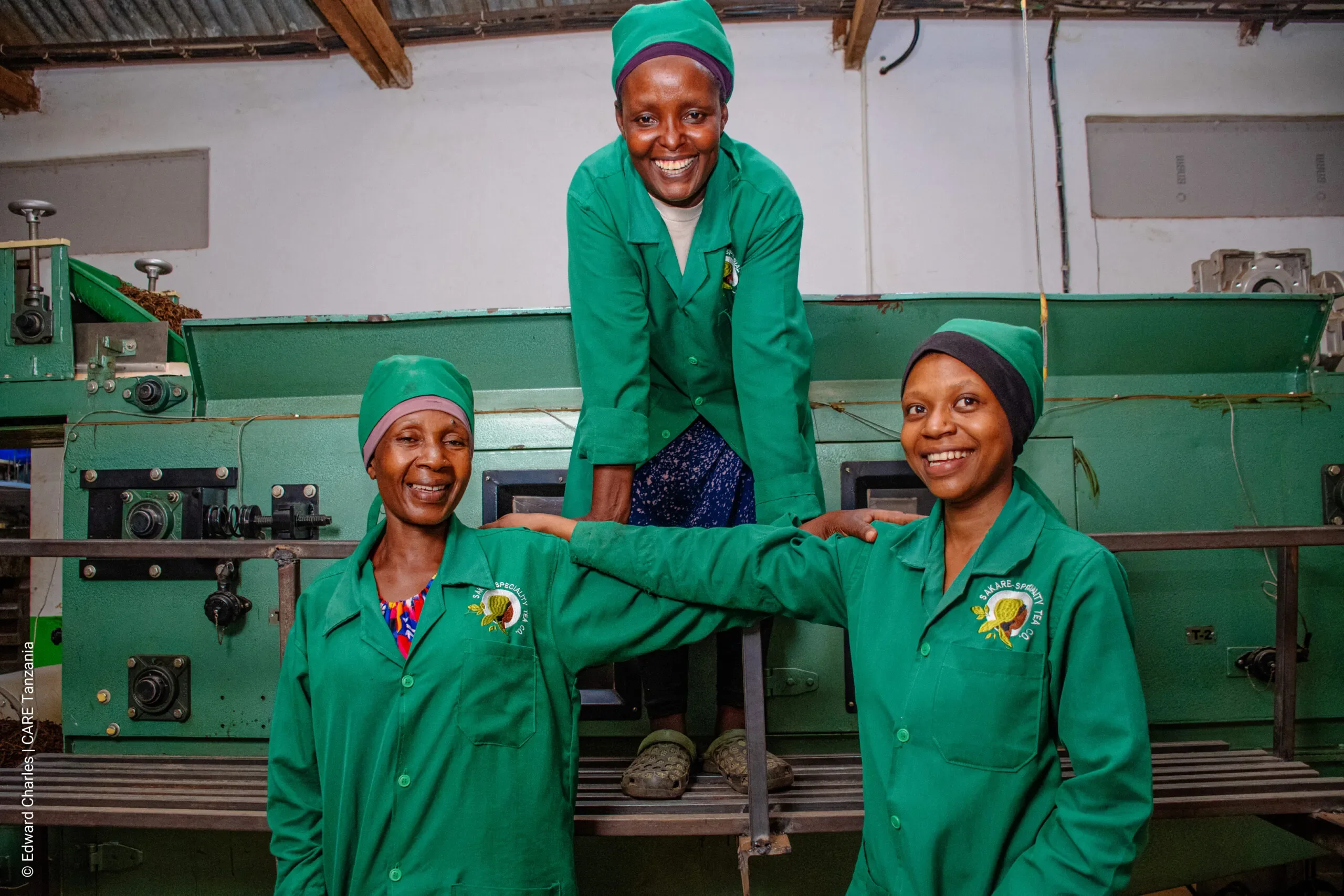
Three women smiling while taking a break at a tea factor

Tea processors at the Sakare Specialty Tea Company in Tanzania. Photo: Edward Charles / CARE

“Two years ago, I couldn’t stand on my own,” Monica Timotheo recalls from inside a tea factory. Tea is one of the most popular beverages in the world, but for Monica and others, it represents  something more. May 21 is International Tea Day, a time to recognize tea as more than a drink. It is also a source of income, independence, and new possibilities.

Want more stories like this?

Sign up for the CARE Newsletter to find out more about what’s happening around the world through vibrant, engaging stories that put humanity at the center.

Subscribe

Monica Timotheo is a mother and tea processor in the Usambara Mountainsin Bungu, Tanga, inNortheastern Tanzania. This beautiful mountain landscapehas auniquemicroclimate that is ideal for tea growth.Characterized by high altitudes (over 1,000 meters), heavy rainfall, and misty, temperate conditions,the area near the Amani Nature Reserve is knownfor its biodiversity, home tothousands of different plant speciesand varieties of wildlife.These conditions favor theyear-roundgrowth ofCamellia sinensis var assamica, a tea plant primarily used for black tea andknown for its bold and earthy flavors. 

Monica, who grew up in nearby Lutindi, has spent her life surrounded by tea. Her family grew and harvested tea leaves, but until a couple of years ago, that was the extent of her knowledge.    

“We did not know at all how those tea leaves were processed,” she said. 

While living with her family,Monica depended heavily on relatives to meet basic needs, including food and school expenses for her children. With growing family responsibilities and limited income, each day felt uncertain and difficult to navigate.  

Ididn’t have anyjob atall,” she recalls. 

But in 2023, CARE Tanzania and KAZI Yetu, with the support of Bloomberg Philanthropies, establishedtheSakareSpecialty Tea Company (SSTC),thefirst smallholder farmer-owned specialty tea factory in Tanzania to process its own orthodox (wholeleaf) black, green, and specialty teas on-site.Despitebeing unfamiliar with tea processing, Monica took a chance and appliedfor a job.Andin October 2024, she was hiredto become a processor.  

Women of SAKARE

Established in 2023 by CARE Tanzania and KAZI Yetu, SSTC is Tanzania’s first smallholder farmer-owned specialty tea factory, nestled in the Usambara Mountains in Bungu, Tanga, Tanzania. Inside the factory, tea leaves are carefully sorted, withered, rolled, dried, and packaged. Yet beyond the machinery, it is women who power this process. From production and quality control to daily operations, women are not just part of the workforce—they are leading it.

Tea time 

A year and a half later, Monica now plays a critical role in handcrafting premium green and black tea. 

SSTC workers harvest orthodox (whole leaf)teasby handin a “two leaves and a bud” style. Thismeans they only pluck the young, soft leaves on topof the tea plant, whichcontain the most flavor and aroma.Thiscareful process improves the quality of the tea, allowing farmers to earn much higher incomes. 

Preparing tea in the factory required Monica to develop several new skills and learn how to operate different machines.  

“Back when I was at home, I couldn’t even write. But now I have skills. I’ve learned so much. I can write, I can read the units and teach my colleagues who are new.” 

Monica and the other women processors start with fresh, fragrant batches of tea leaves, double-checking to ensure they meet the “two leaves and a bud” standard. They then spread the leaves evenly on withering beds, where they are left to dry for at least 14 hours.  

This withering process reduces moisture in the leaves, making them soft and easier to roll. As the leaves become softer and drier, their aroma changes, shifting from a fresh grassy smell to a scent more like warm herbs or fresh-cut hay.

The next day, the withered leaves are transferred to a loud rolling machine. 

“Rolling is my favorite part of the whole tea-making process. I love it because we shape the tea,” says Monica.  

The leaves then move to the oxidation stage, where they gradually change color from green to dark brown or black, releasing a fresh tea aroma. The leaves are then dried for about 30 minutes inside a machine running at temperatures of around 100 degrees Celsius.  

Once dried, there is one final step before packaging – the taste test. Monica pours a cup to assess the quality of the tea’s aroma and color. 

“When I drink black tea, I feel so good because it’s the tea we’re used to. It’s what most of us drink in our community.” 

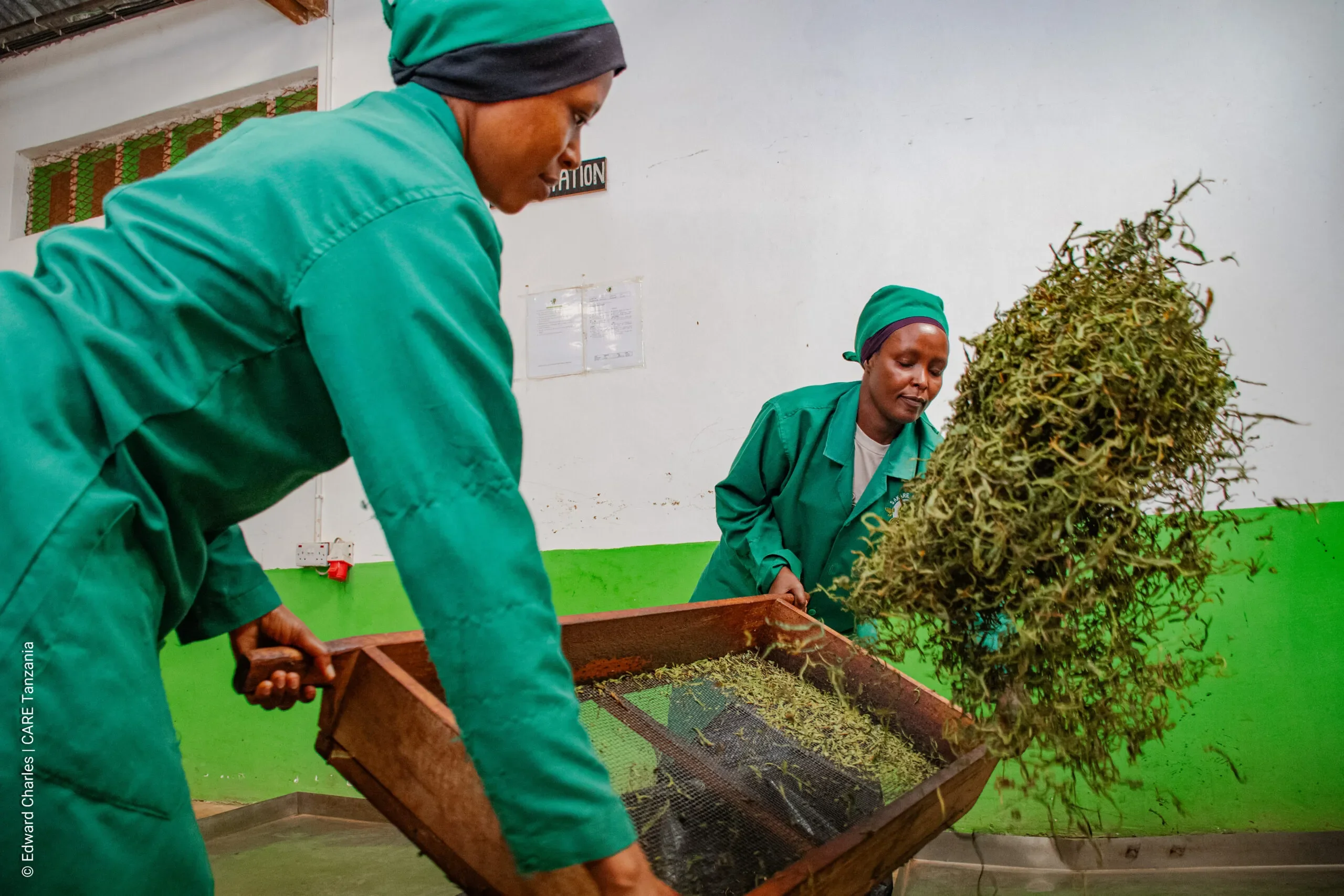
Two women processing tea leaves inside a factory
Monica (right) and a co-worker processing tea leaves. Photo Edward Charles / CARE.

Steeped for success 

Monica’s journey is not hers alone. At SSTC, she is part of a growing network of women processors. 

Through this work, she has gained not only technical skills but also financial stability and a renewed sense of self-reliance. 

I thank God, because I can manage my life. Before I depended entirely on my family, but today I can stand on my own. I can even pay for my children’s education on my own.” 

Working at the factory has given Monica confidence and skills that she can also use back at home.  

“I can pick it, roll it by hand, and even get a market for it. I can dry it and earn a little money to support myself.”  

As Monica gained experience, she also took on more responsibility. She now supports other women, guiding them through each stage of tea processing. In doing so, she is not only strengthening production—she is helping build a community of skilled,confident women able to shape their own opportunities.

“Two years ahead will be different for me,” Monica declares. “I will improve and be better than who I am today.” 

Want more stories like this?

Sign up for the CARE Newsletter to find out more about what’s happening around the world through vibrant, engaging stories that put humanity at the center.

Subscribe
Back to Top