“We kept walking”: Two mothers flee war and hunger to reach South Sudan

By Becca Mountain and Sarah Easter June 18, 2026

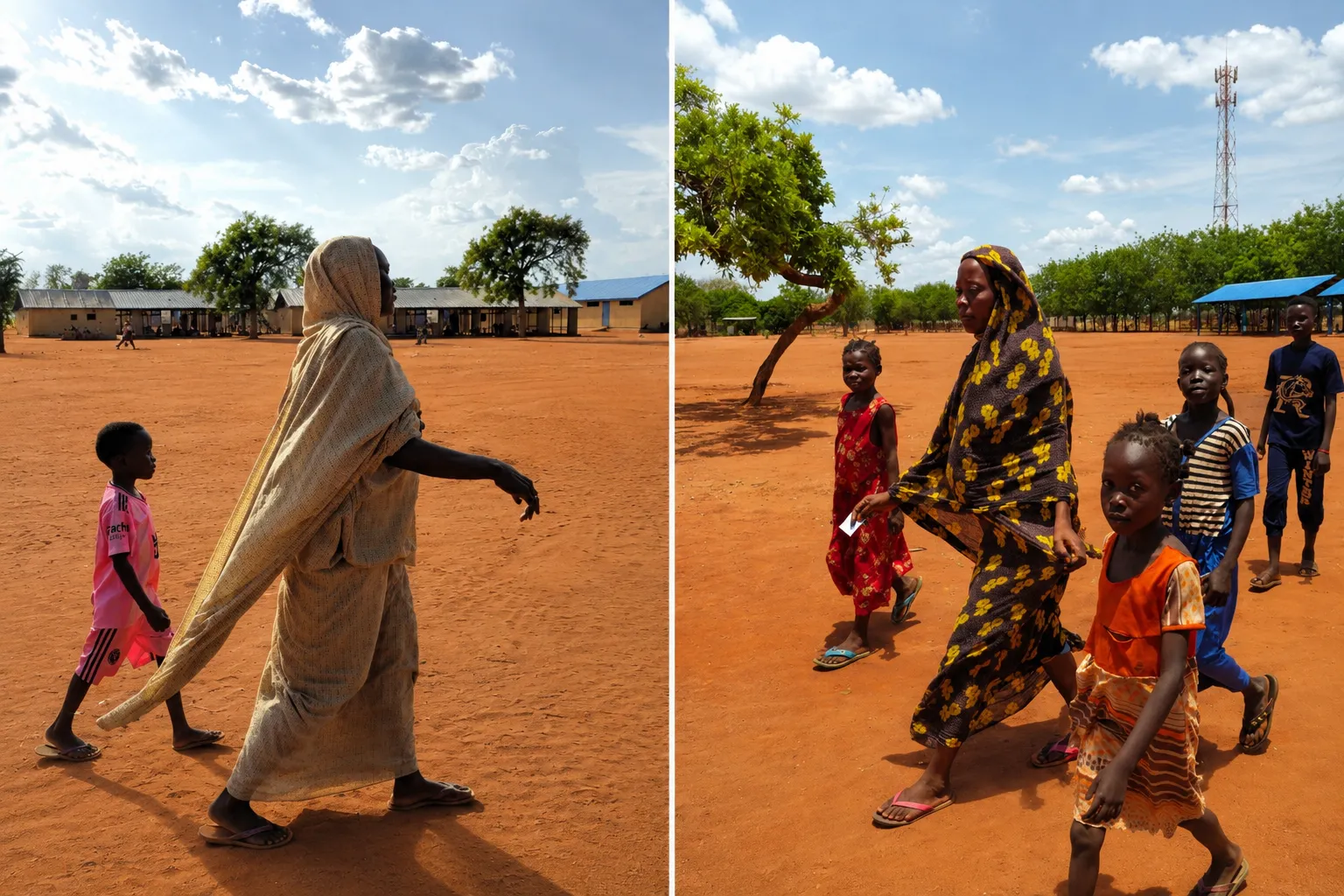
A diptych. On the left, a mother and her small son walk across a dirt field. On the right, a different mother and five children walk across a different packed dirt expanse.

Hanan (left) and Rashida (right) are just two of the countless mothers trying to find safety for their families in the midst of conflict in Sudan. All photos: Sarah Easter/CARE.

As conflict and famine conditions spread across parts of Sudan, families have been forced to flee with little more than what they can carry. For two mothers, the journey to South Sudan meant weeks and months on foot, carrying their children toward an uncertain chance at survival.

Want more stories like this?

Sign up for the CARE News & Stories email newsletter to find out more about what’s happening around the world through vibrant, engaging stories that put humanity at the center

Subscribe

At a reception center in Yida, just across the border in South Sudan, Kochoro, a CARE clinical officer, has seen the toll of these journeys again and again. As Sudan’s war has deepened, families continue to flee across the South Sudan border in search of food, shelter, and medical care. Children are not immune to the stress. They often arrive weak and silent, their bodies drained long before they reach safety.

Each day, 20 to 30 patients pass through the small health facility. Malaria cases rise with the rainfall. Many children arrive severely malnourished after fleeing areas where food has been scarce (or entirely unavailable) for months.

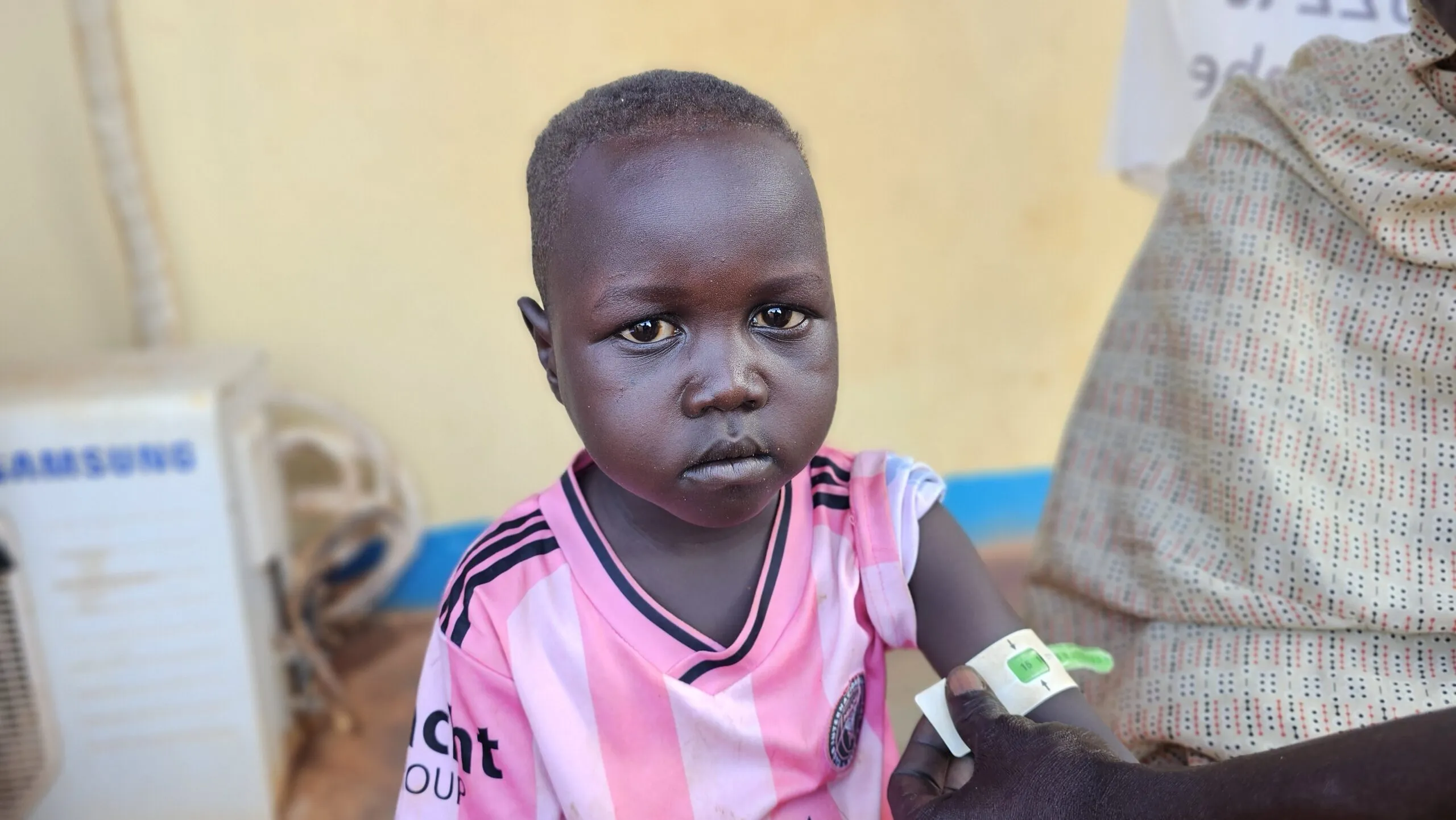
To quickly assess a child’s condition, health workers use a simple, color-coded measuring tape wrapped around the upper arm. This measurement, known as MUAC (mid-upper arm circumference), shows how urgently a child needs care: red indicates severe acute malnutrition requiring immediate treatment, yellow signals risk, and green means the child is no longer in immediate danger.

This week alone, two children’s measurements fell in the red — an indicator of acute malnutrition requiring urgent care. The health facility provided Plumpy’Nut, a high-energy therapeutic food used to treat severe malnutrition, and referred each child for further treatment.

Every week, three or four children arrive in Yida needing this level of emergency care. Recently, Sammy, a 4-year-old boy, was among them. By the time Sammy and his five siblings reached the clinic, he was too weak to answer when his mother, Hanan, called his name. His eyes did not open at the sound of her voice. All he could do was lie on the ground, exhausted by the 215-mile journey he, his siblings, and Hanan had made after fleeing their home in Sudan. 
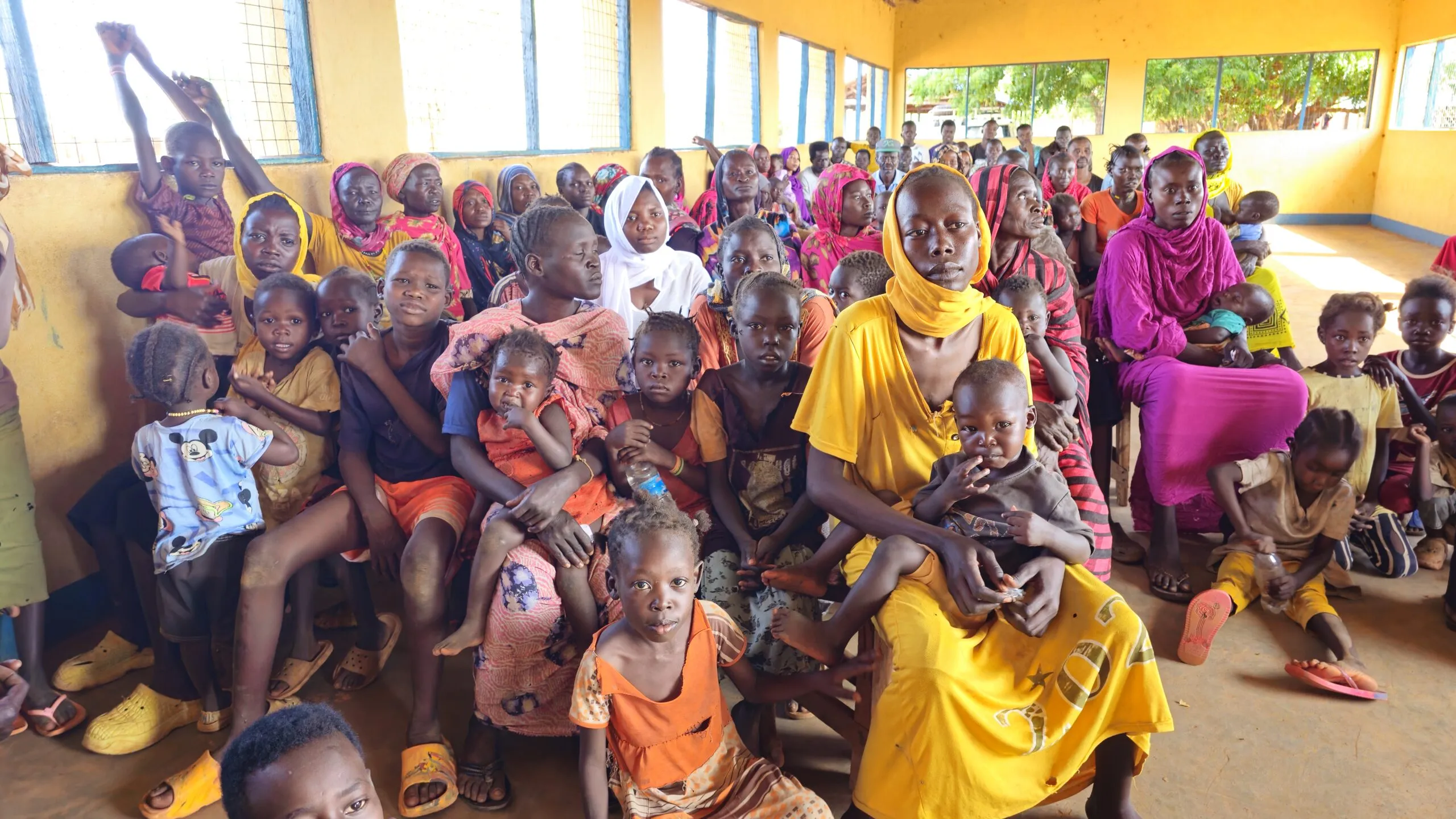
Children arrive in South Sudan weak from hunger and exhaustion

A crowded reception room full of people in colorful clothing.
The CARE-supported center in Yida receives at least 50 to 100 new refugees every day. Most are fleeing violence in Sudan.

Just outside the clinic, the reception center moves with a constant, crowded rhythm. Families gather under trees, cook over small fires, and wait—for food, for care, for transport further inland. Three buses idle nearby, engines rumbling as children press their faces to the windows while mothers call out instructions, lifting younger ones aboard. Today, 284 refugees will leave for another camp two hours away. Many others, still waiting to be registered, remain behind.

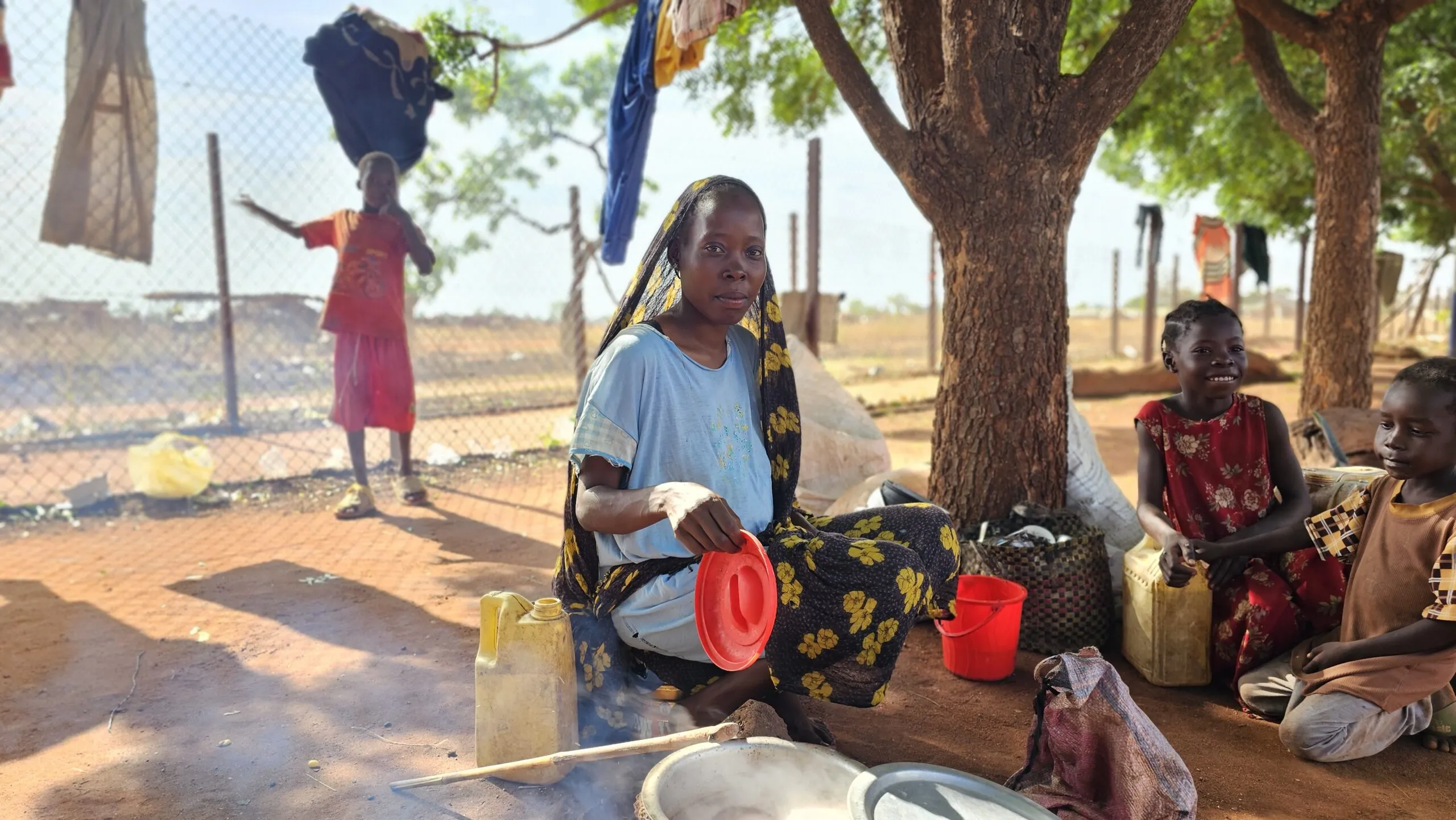
Among them is Rashida Salah, 25, sitting in the shade with her children. A pot of rice steams over a small fire nearby as her youngest son runs in circles with a toy car made from a cut-up plastic bottle, pulling it along by a string. Around them, more than 600 people are crowded into a space built for half that number. Dozens more arrive each day.

Rashida and Hanan fled the same place: Kadugli, a city in Sudan’s South Kordofan region. The conflict in Sudan between ‌the Sudanese army and the paramilitary Rapid Support Forces is now entering its third year. The years of conflict have left Kadugli cut off from food, fuel, and humanitarian assistance. In late 2025, famine conditions were confirmed in the area. As of early 2026, continued conflict, blockades, and insecurity continue to make humanitarian access extremely difficult. Across Sudan, nearly 29 million people now face acute hunger, with many families surviving on one meal a day or less as conflict continues to disrupt how food is grown, transported and sold at local markets. Too often, food is only accessible to those who risk their lives crossing active battlefields to grow, trade, or buy it. Households led by women, in particular, are being hit hard as they are reportedly more likely to experience food insecurity than male-headed households. 

“There were only bombs and hunger left in my city,” Rashida says of Kadugli. “We could not afford to stay there anymore.”

Hanan remembers the same reality. “We just stayed indoors because the bombs were coming closer. I knew it was time to leave, or we would die there. Either from hunger or from a bomb.” 

Both women fled the same city, leading their children across unknown territory, navigating fear, exhaustion, and the uncertainty of whether they would survive the journey.

Two mothers, two journeys

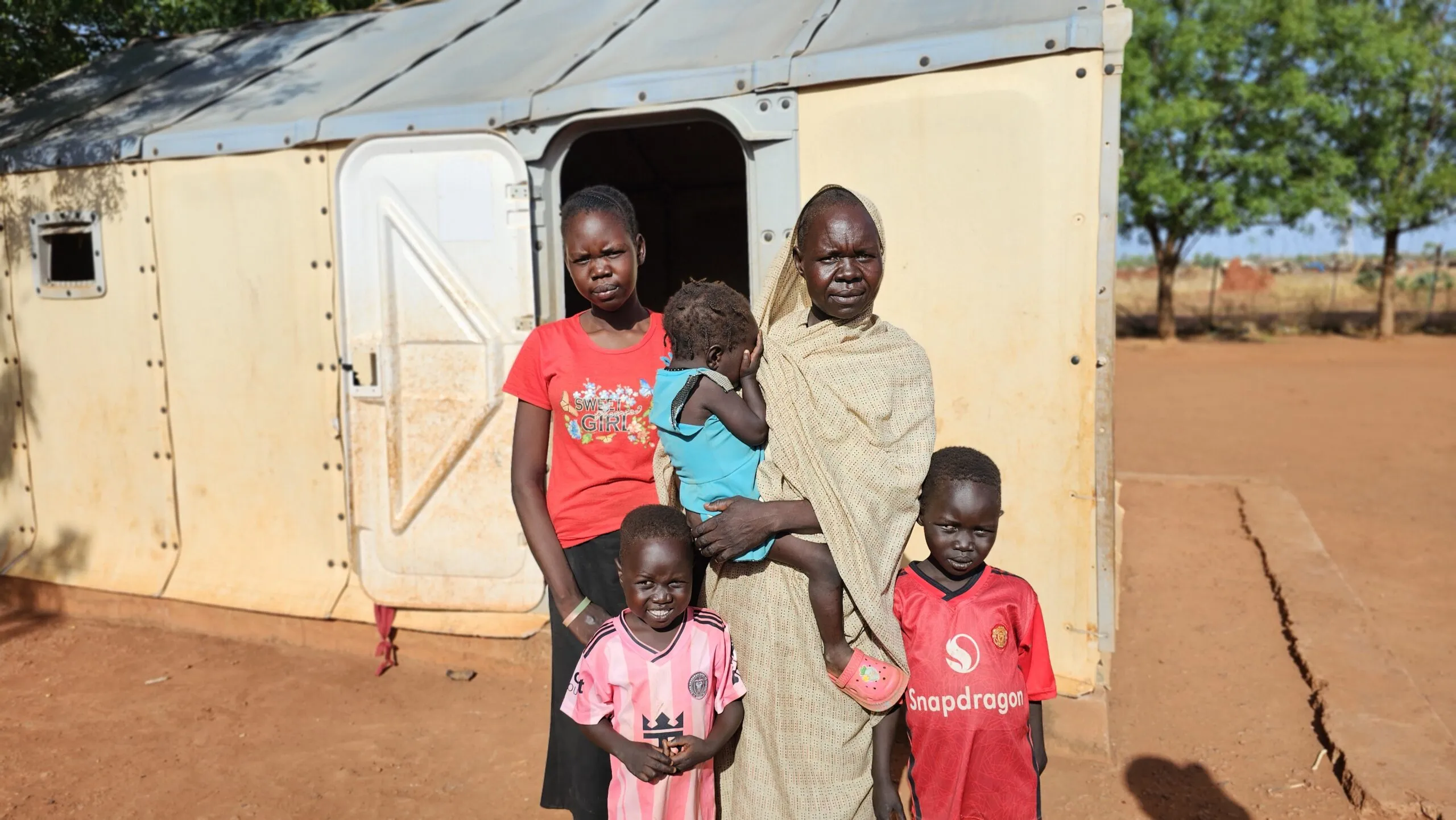
A mother and four children stand in front of a designated sleeping shelter.
Hanan Tia with four of her children — Rehab (13), Fatima (2), Sammy (4), and Juma (5) — in front of one of the shelters at the reception center in Yida.

Hanan’s journey took six months. She and her children moved in stages, stopping to rest when they could no longer go on. For a time, they stayed in a village with her grandmother — but soon, there was nothing left to eat. “Not even bread,” she says.

So, they kept moving, drawn by rumors of help somewhere across the border. “We walked from 6 a.m. to 6 p.m. until the sun went down and it was too dangerous to continue.”

Over and over, her children asked for food she did not have. “The people we met had no food left either,” she says. “They said, ‘keep walking, the border is so close.’ But it took us five days, and those five days nearly killed us.”

She carried her two-year-old daughter, Fatma, on her back and held Sammy in front of her as they walked from morning until night, drinking muddy water from rain puddles to survive.

“I thought we would die,” Hanan says. “We should have died. I don’t know how we survived.” 

A woman prepares rice over a fire while her children rest in the shade.
Rashida and her children rest beneath the trees at the reception center in Yida.

Rashida’s journey began in chaos. “A bomb dropped on my home and we ran,” she says. In the confusion, she was separated from her husband. She and her five children have not seen him since. “I was lucky my children were with me and that I did not lose them.”

For two weeks, they walked without direction. “We did not know where we were going. We just kept moving,” she says. “My kids were barefoot as everything we owned had burnt. We walked day and night; the war was following us. We could hear the bombs behind us.”

When the explosions came, her children ran into her arms. “I told them to be patient and that everything would be all right, but I was scared too. All I could think about was my kids. Everything hurt, my feet, my back, my head, until we finally crossed the border, and I thanked God that we were all still alive.”

Even after crossing into South Sudan, the war has not fully left Rashida’s family. At the reception center, when a plane flies low over the nearby airstrip, children react instantly: heads snap up, some run to their mothers; others begin to cry. Here, it is only a passenger plane. But the sound is familiar.

“The bombs always came in fours,” Rashida says. “You could hear them coming, and then you heard the impact and the loud boom.”

Around her, children imitate the sound together: “Drdrdrrrrrdrrrr.” 

Safe from bombs, but still waiting for a place to settle

A boy in a striped, pink soccer jersey looks into the camera. Around his upper arm, a MUAC tape shows that he is recovering well after treatment for severe malnutrition.
Sammy, who arrived at the reception center in Yida weak from severe hunger, is now recovering with his mother and siblings. Photo: Sarah Easter / CARE.

For many families, the reception center is a place of waiting as much as a place of relief. Some arrive injured or exhausted. Others sit through health briefings, learning how to prevent diseases like cholera in crowded conditions where outbreaks can spread quickly. Nearby, a small boy kneels beside his mother, carefully dripping water into her mouth from a plastic bag as she lies on the ground.

For 4-year-old Sammy, however, the center marked a turning point. After receiving treatment for malnutrition, he began to recover. Now he walks, talks, and plays again. At the clinic, a nutrition officer wraps the MUAC band around his arm once more. This time, the measurement reads 15.1, firmly in the green.

Hanan watches closely. She knows what that number and color mean. “Projects like this one saved my son’s life,” she says. “I am very grateful to everyone here who has come to help people like me.”

Around them, life continues in small, steady ways. Children wash clothes at shared water basins. Others carry jerrycans filled with clean water. Food is passed out: lentils and mash, three times a day. The portions are small, but it is more than what families had before.

There is still not enough space. Hanan and her children sleep in an open area with dozens of others. “The tents are full, but that is okay because we are safe here,” she says.

Safe, but not untouched. News still arrives from across the border. Recently, she learned that her nephew was killed by a bomb while walking to the market.

“I just want a safe place for my kids to survive,” she says. “A place with no bombs or fighting.”

Nearby, Rashida watches as buses pull away, carrying other families onward. She and her children are still waiting. But for now, they have reached something that once felt impossible.

“I am happy right now, because there are people here to help us,” she says. “We can survive here. Death is not waiting for us anymore.” 

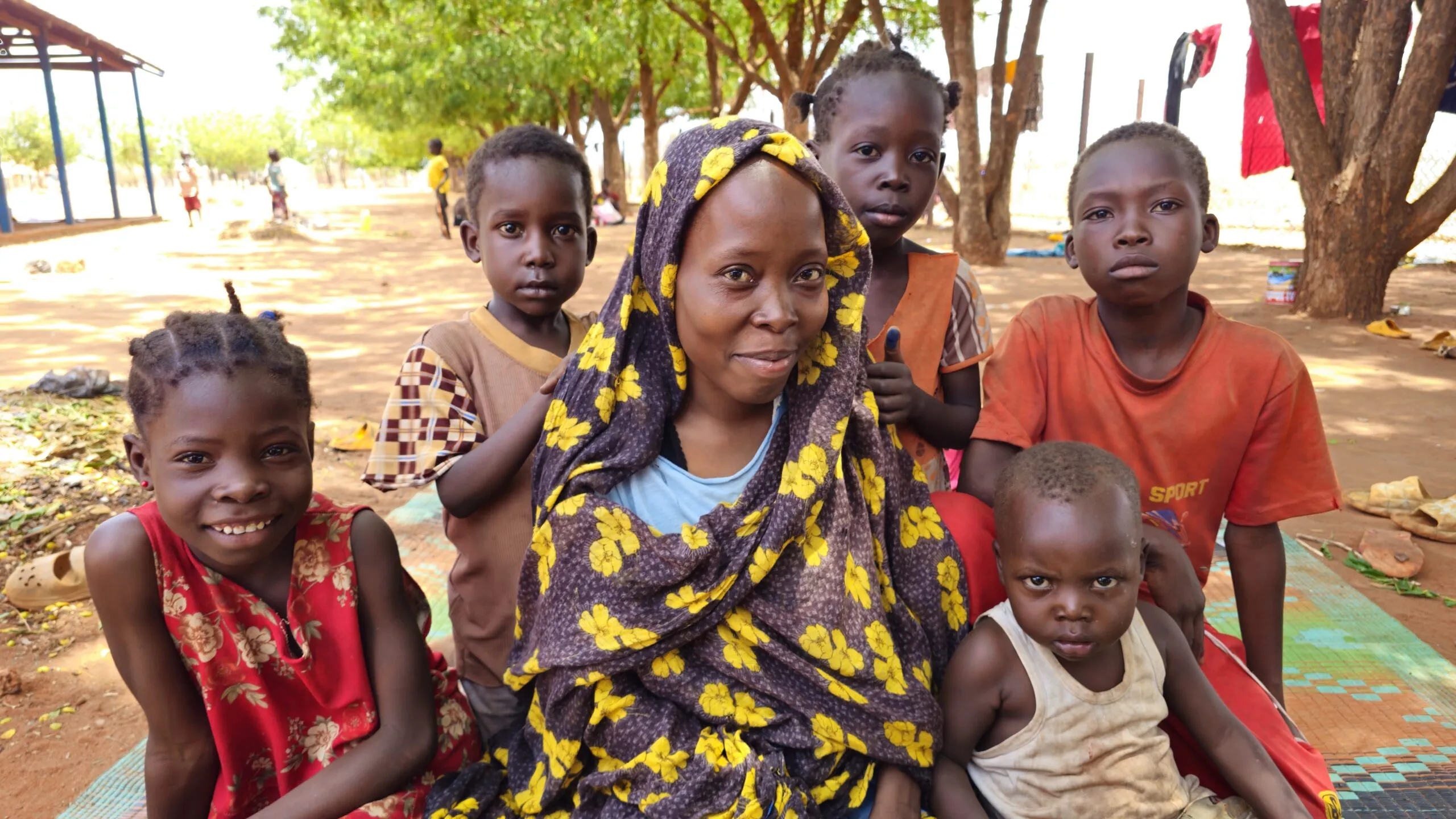
A family — a mother and five children — look at the camera as they sit on a colorful woven mat at a refugee reception center in Yida, South Sudan.
Rashida and her children (Barah, Mymin, Balasim, Adam, and Yahoub) can finally rest after their arduous journey. Photo: Sarah Easter / CARE.
Back to Top