Colombia earthquake 2026: What you need to know

By Hillol Sobhan August 13, 2026

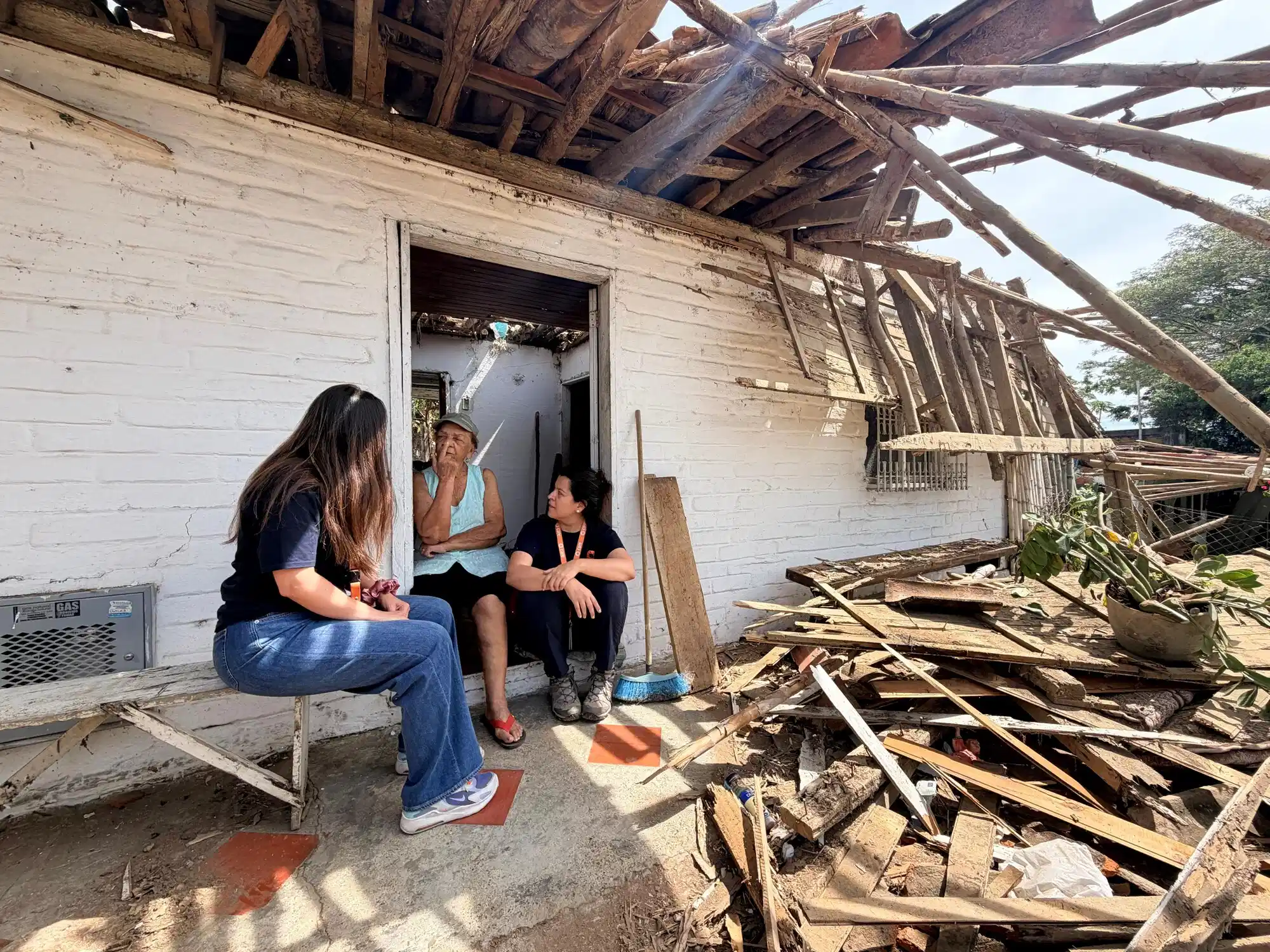
An elderly woman and two aid workers sit at the doorway of a house with a severely damaged, collapsed wooden roof and surrounding debris, illustrating the aftermath of a Colombia earthquake.

Widespread destruction across western Colombia has reduced homes and public infrastructure to rubble, leaving thousands displaced and in urgent need of basic services. Photo: Carolina Nuñez/CARE

A magnitude 7.4 earthquake struck western Colombia on Aug. 10, killing 240, injuring nearly 4,000, and causing widespread damage to homes, hospitals, schools, roads, and key public infrastructure.

“The fear of aftershocks is bringing another layer of fear and uncertainty for those coping with the earthquake’s aftermath,” says Catalina Vargas, CARE Colombia country director. Ongoing aftershocks create serious safety risks around damaged buildings, forcing families to gather in the open as they wait for news of loved ones or relief assistance.

The earthquake struck at 7:34 a.m. local time, with its epicenter near San José del Palmar in Chocó Department. It was the strongest earthquake recorded in Colombia this century. The shaking was felt in cities and towns across all 32 departments in Colombia and in neighboring Ecuador and Venezuela. Authorities continue to warn of weak structures and the threat of further landslides.

The destruction stretches well beyond individual homes. Severe damage spans 16 departments — most critically Risaralda, Caldas, Valle del Cauca, and Chocó, including the cities of Pereira, Manizales, Cali, and Quibdó.

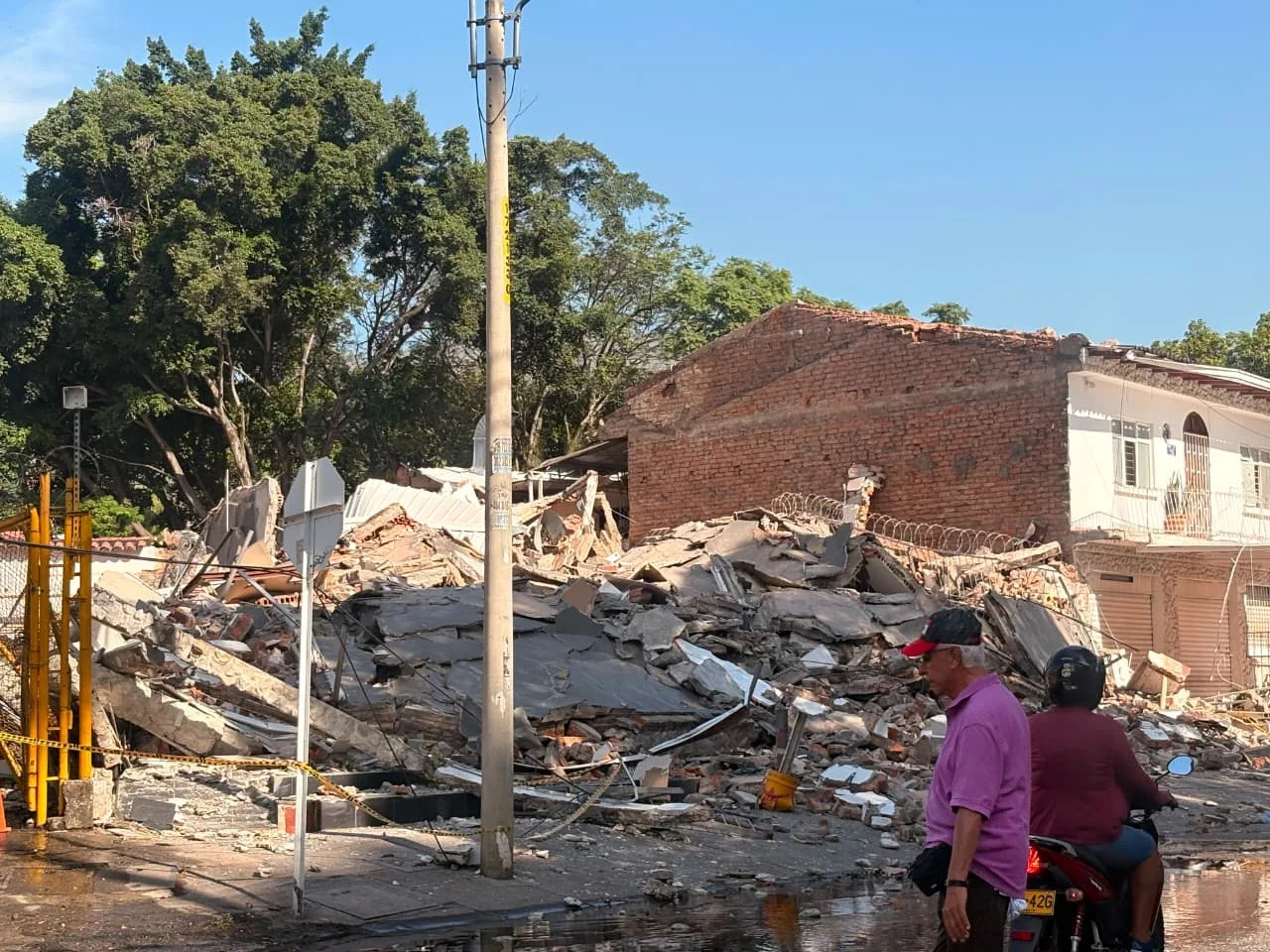
A completely collapsed brick building reduced to a pile of rubble and concrete debris along a street, with bystanders and a motorcyclist nearby showing the aftermath of a Colombia earthquake.
A street in western Colombia lies buried under concrete and brick as residents confront the sudden loss of homes and neighborhoods. Photo: Lorena Bejarano/CARE

More than 45,000 homes have been damaged, 9,215 destroyed, and 140 buildings collapsed. Health facilities, schools, community centers, roads, and bridges have also suffered heavy damage as search and rescue teams work tirelessly to locate survivors trapped under collapsed structures.

The earthquake struck a country already under severe strain. Before the disaster, an estimated 9.1 million people in Colombia needed humanitarian assistance due to ongoing conflict, displacement, poverty, and limited basic services.

Disrupted transportation has added to the challenge. Several regional airports were temporarily closed for structural inspections, while landslides, damaged roads, and widespread electricity outages continue to isolate remote communities. Although urban centers like Cali and Pereira report major damage, severe information gaps persist in rural and hard-to-reach areas, where CARE expects significant unmet needs once full assessments are complete.

“Our teams are working in the field to reach remote locations, assessing what people need and where the impact is greatest,” says Vargas. “The priority is reaching people as quickly as possible with life-saving support.”

For thousands of displaced families, the loss of homes and personal belongings is compounded by an urgent need for shelter, safe drinking water, food, hygiene supplies, healthcare, and psychosocial support. Safe shelter remains an urgent priority for families who cannot return home, yet very few shelters have been established so far relative to the widespread destruction — for instance, only two shelters have been set up in Cali.

How CARE is preparing to respond to the Colombia earthquake

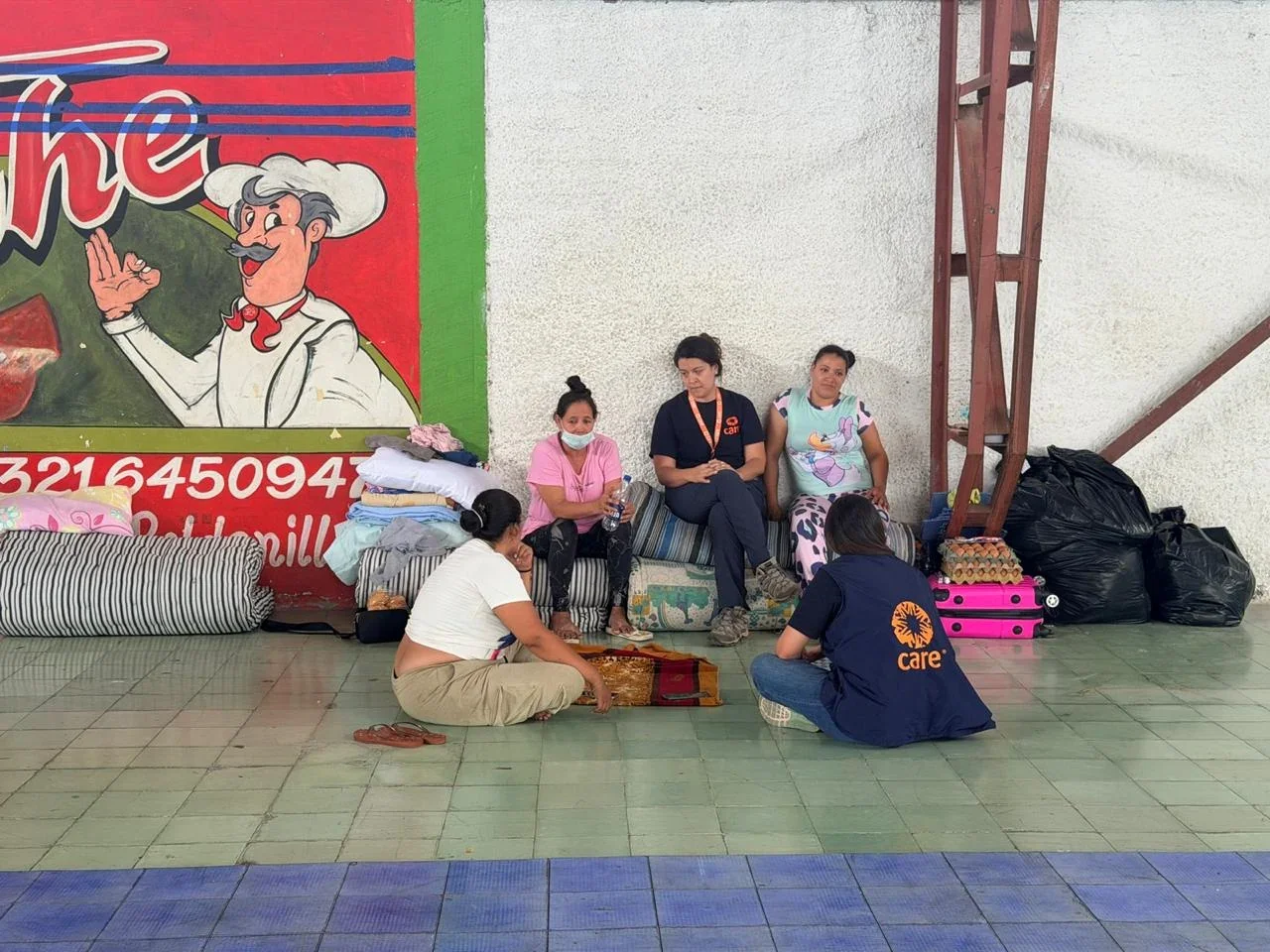
Aid workers wearing CARE vests speak with displaced people sitting on mattresses with their belongings in a temporary shelter after the Colombia earthquake.
CARE workers listen to displaced mothers in a temporary shelter, assessing immediate needs for shelter, food, and emotional support. Photo: Lorena Bejarano/CARE

CARE Colombia has mobilized its emergency teams, coordinating with national authorities, local aid groups, and community leaders to direct support where it is needed most.

CARE teams are planning visits to Valle del Cauca and Risaralda, two departments heavily impacted by the earthquake. Teams will meet with affected families, local authorities, and humanitarian workers to identify critical gaps and determine where support is needed most.

CARE is also mapping the capacity and reach of its partner network, with a particular focus on local, women-led organizations to build on existing community efforts rather than duplicate them. Immediate priorities include distributing safe drinking water, hygiene supplies, temporary shelter materials, and household essentials to displaced families.

The full scale of the operation will depend on assessment results and available funding. “While the exact nature of CARE’s response is still to be determined, our support could come in the form of food assistance, emergency supplies (via the distribution of the CARE PACKAGE® for Emergencies), protection, healthcare services, and mental health support,” says Vargas.

As assessment teams push further into isolated regions, CARE is preparing to expand its response based directly on initial findings. CARE’s response strategy will build on and scale up its established expertise in Colombia rather than introducing new models.

From the outset, CARE is prioritizing the safety and specific needs of women and girls, focusing its efforts on protection and child protection, primary healthcare, cash and voucher assistance, and delivering non-food items.

Any response will combine direct support with local partnerships, drawing on decades of humanitarian experience in Colombia as well as operational capacity built during recent earthquake responses in neighboring Venezuela.

Why some communities face greater risks after the Colombia earthquake

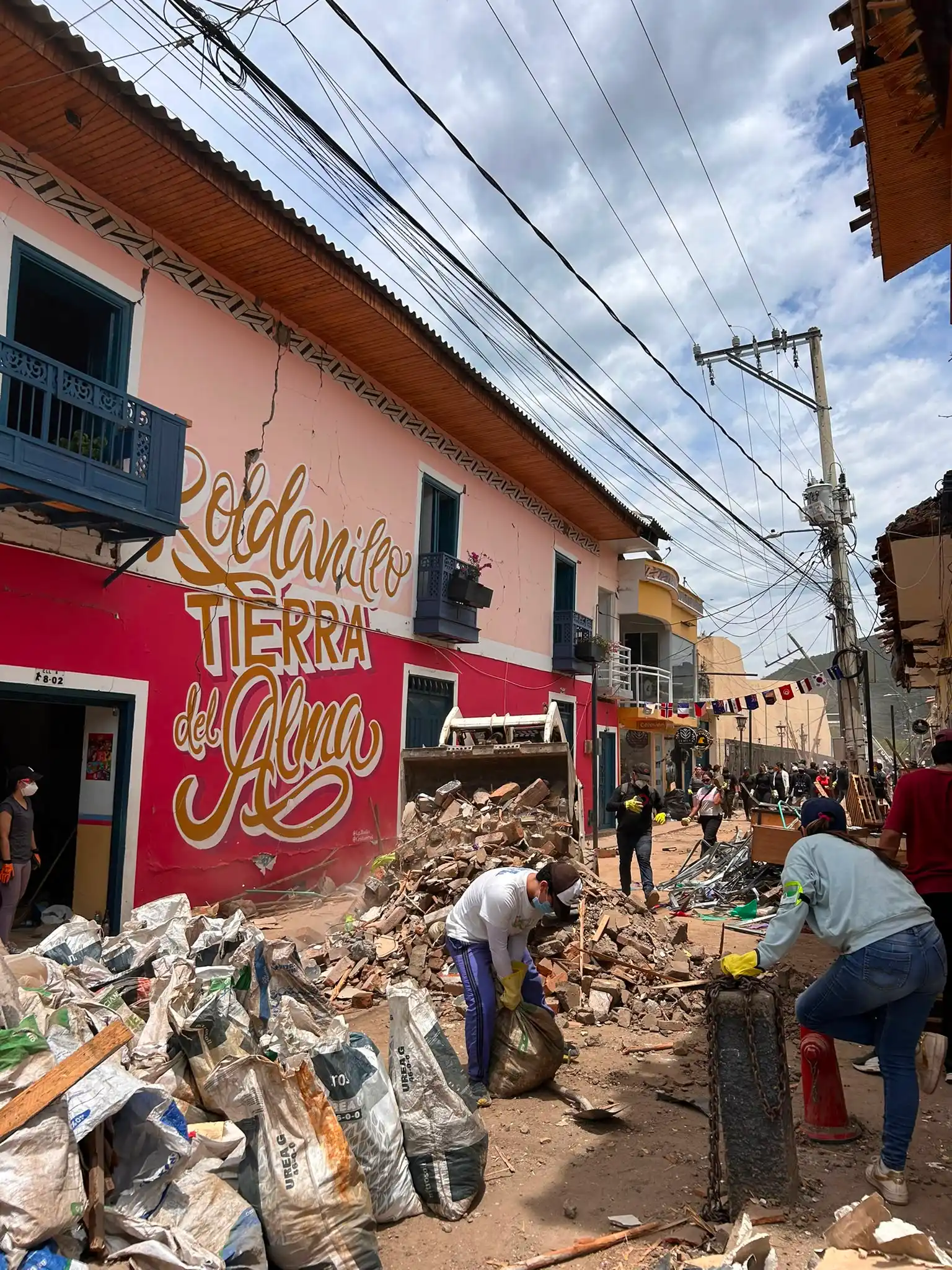
Volunteers and heavy machinery clean up rubble and fill debris bags on a street in Roldanillo following the Colombia earthquake.
Community members unite in hard-hit towns to clear fallen masonry and navigate the long road to recovery. Photo: Lorena Bejarano/CARE

Several of the hardest-hit areas, including Chocó and Valle del Cauca, were already facing serious humanitarian challenges.

Chocó, near the earthquake’s epicenter, is a priority concern for emergency responders due to its extreme vulnerability, heavy reliance on water transport for access, and severely restricted information flow following the disaster. Home to many Indigenous and Afro-Colombian communities who were already navigating chronic poverty, armed conflict, displacement, geographic isolation, and limited access to healthcare, Chocó faces immense barriers to receiving help and rebuilding lives after a disaster of this scale.

The disaster has severely strained essential health and public services right when families need them most. Structural damage to healthcare facilities across affected areas has forced local health systems onto high alert, threatening continuity of maternal and reproductive health services. At the same time, damage to dozens of schools has halted classes, robbing children of both their daily routine and a vital safe space during an already terrifying crisis.

“We are particularly concerned about women and girls, children, older people, and people with disabilities, who can face additional challenges in the aftermath of large-scale disasters like this,” says Vargas.

“When homes are destroyed and families are displaced, existing inequalities can deepen and protection risks can increase. Over the coming days, we need to make sure that assistance also reaches people living further away and in areas that are difficult to access. We stand ready to expand our response based on what our teams are seeing in the affected areas.”

The full humanitarian impact of the Colombia earthquake is still becoming clear. As assessments continue, CARE will stay close to affected communities and local partners, listen to what people say they need, and shape its response around those priorities.

CARE in Colombia: CARE has been working in Colombia since 1954, partnering with local organizations and communities across five departments, including Valle del Cauca, one of the areas most affected by the earthquake. CARE’s work focuses on protection, healthcare, and supporting communities as they recover from crises.
Back to Top