Sudan crisis: How families are restoring water and healthcare in Khartoum

By Shakir Elhassan and Hillol Sobhan June 22, 2026

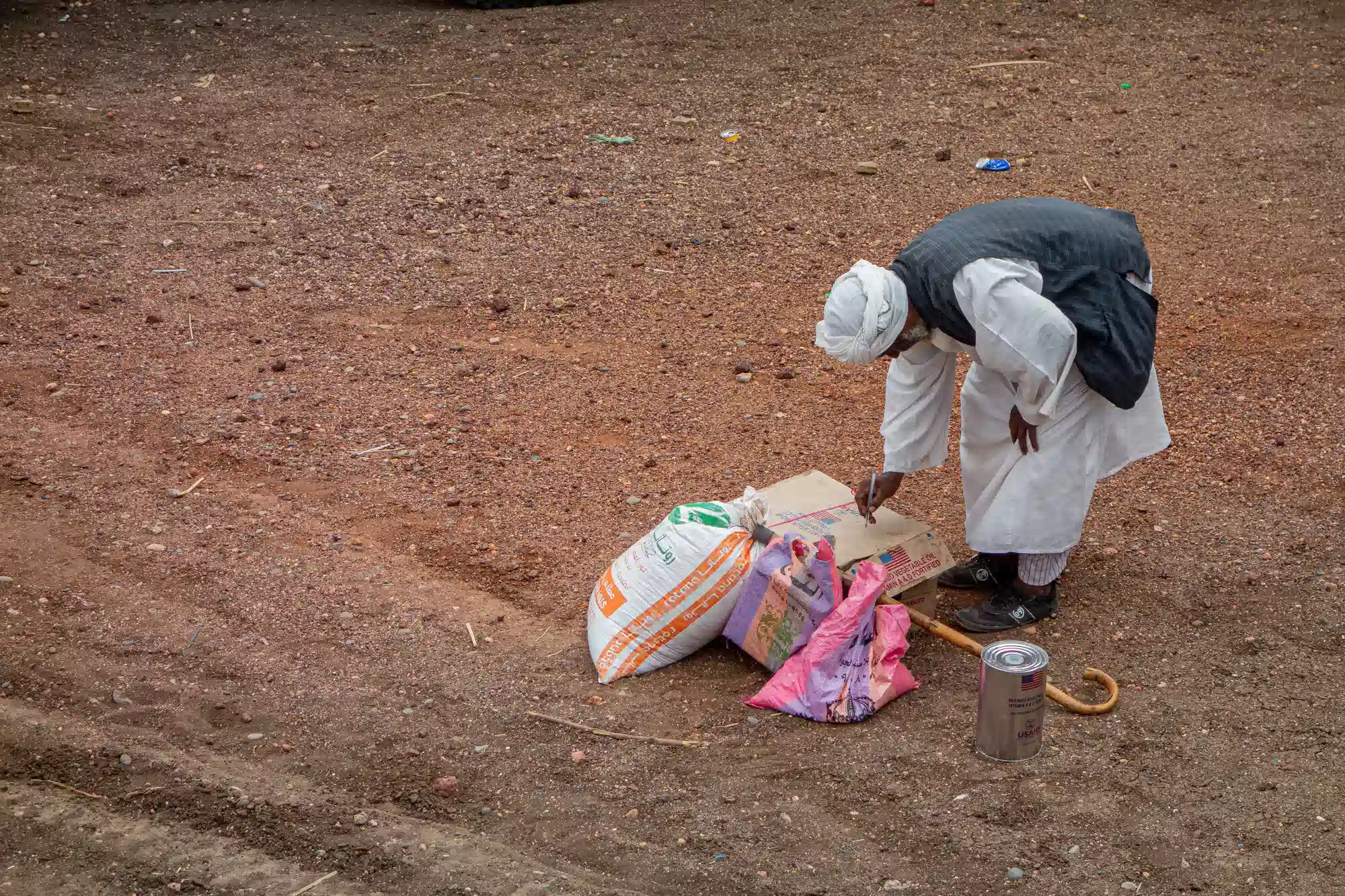
An older man wearing a white turban, white robe, and a dark vest bends down to write on a cardboard box in Sudan. Next to the box are large sacks of aid supplies, a metal tin with a USAID logo, and a wooden walking cane resting on the dirt ground.

More than 30 million people in Sudan need humanitarian assistance, including health care, food, and other support. Of these, more than 21 million people — about 45% of the population — face acute food shortages. Photo: Mohamed Abdulmajid/CARE

Three years of war have torn Khartoum apart. Water systems collapsed. Clinics shut their doors. More than 3.5 million people fled the capital alone. Now, as families return, they face a terrifying question: Can they come home — and will anything be there when they do?

Want more stories like this?

Sign up for the CARE News & Stories email newsletter to find out more about what’s happening around the world through vibrant, engaging stories that put humanity at the center

Subscribe

Amel, a mother of four, still remembers the moment she turned on the tap — and water actually came out.

It had been more than two years since she fled. Relentless shelling forced her out of her Hara 95 neighborhood in Omdurman in April 2023. She ended up in a school in Kassala — more than 300 miles away. Families slept shoulder to shoulder on thin mats. Water was rationed. Her children grew weaker from hunger and disease.

When the fighting quieted earlier this year, she came back. The city was in ruins. But the water was running.

“My main concern was getting clean water and health services,” she said. “The conflict destroyed everything: civilian infrastructure, clinics…all of it.”

This destruction has triggered mass displacement, famine, collapsed water systems, and cholera outbreaks across Sudan.

The breakdown of water, sanitation, and hygiene (WASH) systems has led to 124,418 cases of cholera and 3,573 deaths across all 18 states from August 2024 to January 2026.

“The conflict in Sudan has targeted water sources and infrastructure, and civilians are paying the heaviest price,” said Baderalzaman Issa, WASH lead for CARE Sudan in Khartoum State.
Water first: CARE fixing pipes and power

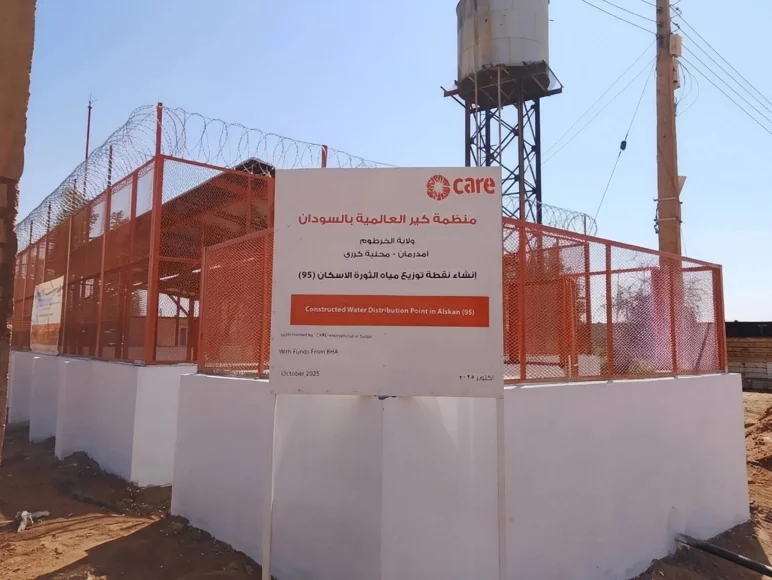
A water station in Omdurman's Hara 95 neighborhood, newly renovated by CARE to provide clean water to returning residents. Photo: CARE

For residents of Khartoum — those returning and those who never left — clean water was the first priority. CARE Sudan rehabilitated two major water treatment plants in Omdurman, Al-Manara and Bait Al Amal. It also restored more than 50 storage tanks in Al-Thawra, with a combined capacity of 10.5 million gallons (40 million liters). The repairs stopped more than 1 million gallons of water from being lost each day due to leaks. Restoring the main storage system in Karari secured long-term water availability across Omdurman.

With the power grid down, CARE installed solar panels to keep water pumps running. The team also supplied 35 chlorine gas cylinders and paid monthly stipends to 20 operators to maintain continuous water treatment.

“We renovated Al-Manara Water Station, one of the largest in Khartoum State, and ensured people had access to safe, chlorinated water even during active fighting,” said Mohamed Awad, director of the local Water Corporation.

“We have access to clean water all day now,” Amel said. “I still remember the struggle back in Kassala, how we rationed every drop.”

Amel and her family are now part of the more than 2 million people across the State reached by the repairs.

From the inside out: Communities leading their own recovery

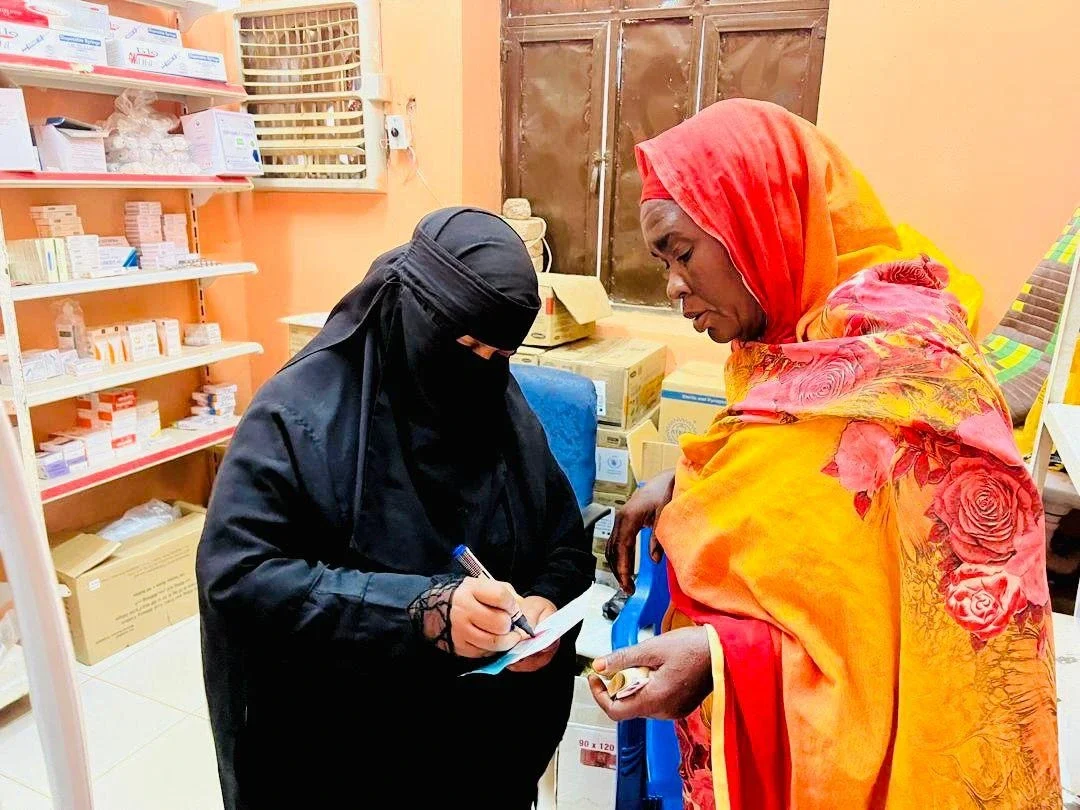
Inside a medical facility in Sudan, with shelves of medicine in the background, a healthcare worker wearing a black abaya and niqab writes on a document. A woman dressed in a vibrant orange and pink patterned headscarf and robe stands opposite her, watching attentively.
A health worker provides a consultation to a local resident inside a newly restored clinic, bringing critical medical services back to a community deeply affected by the conflict. Photo: CARE

Beyond infrastructure, CARE is putting resources directly into residents’ hands. Through cash grants, local committees decide how to invest funds for their own neighborhoods.

“The community members decided to use the cash to renovate the damaged health center in our neighborhood,” said Ahmed, head of the Al Khwoglab community committee.

Residents donated time and skills to speed up the work. With just a $5,000 grant, the community rebuilt the facility.

“The newly renovated health center provides general medical services, laboratory testing, and routine immunizations. We also offer prescriptions and safe deliveries by a qualified midwife,” said Dr. Abd Al Aal, the medical center’s manager.

“We supported communities in restoring the most urgent services,” said Admire Mandizvidza, a cash specialist for CARE Sudan. “The needs are immense. But people are showing extraordinary resilience.”

CARE supported the creation of 18 community groups across Khartoum. Women are leading these groups, working to restore clean water, functioning toilets, and basic healthcare in their neighborhoods.

A mother returns — and finds her newborn can be vaccinated

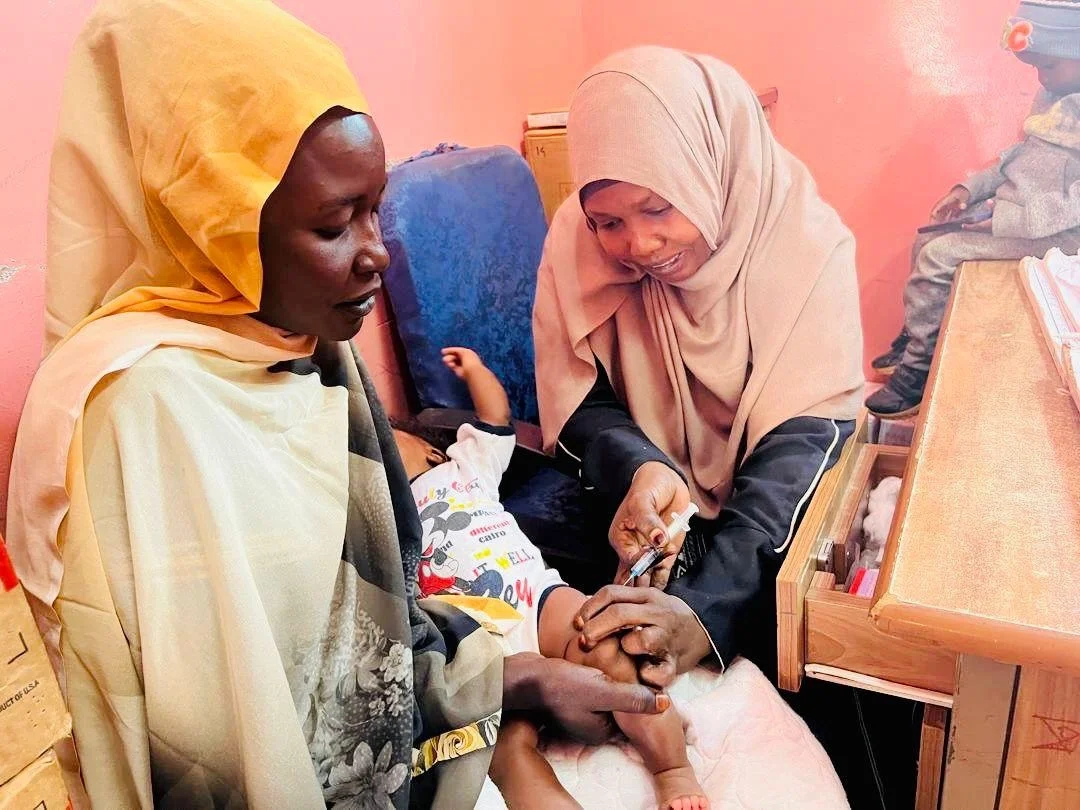
Inside a clinic in Khartoum, a healthcare worker wearing a light brown hijab carefully administers a vaccine injection into a young child's thigh.
A child receives a routine immunization at a newly restored community health center in Khartoum State. Photo: CARE

Like Amel, Huda fled Khartoum with her two children, enduring more than two years of displacement. When she returned, she carried a newborn and a fear she couldn’t shake — that she wouldn’t find immunization services near her home.

She had good reason to worry.

Since the war began, vaccination coverage across Sudan has plummeted. Immunization rates for diseases like diphtheria, tetanus, and pertussis dropped from 94% in 2022 to 48% in 2024, according to UNICEF and the World Health Organization — the lowest since 1987. The decline has fueled outbreaks of polio and measles.

Yet Huda found what she was looking for.

“I was so surprised to find that the health center in my neighborhood was operational,” said Huda, now a mother of three. “My child was vaccinated, and I even received family planning education from a midwife.”

Progress made, but needs remain vast

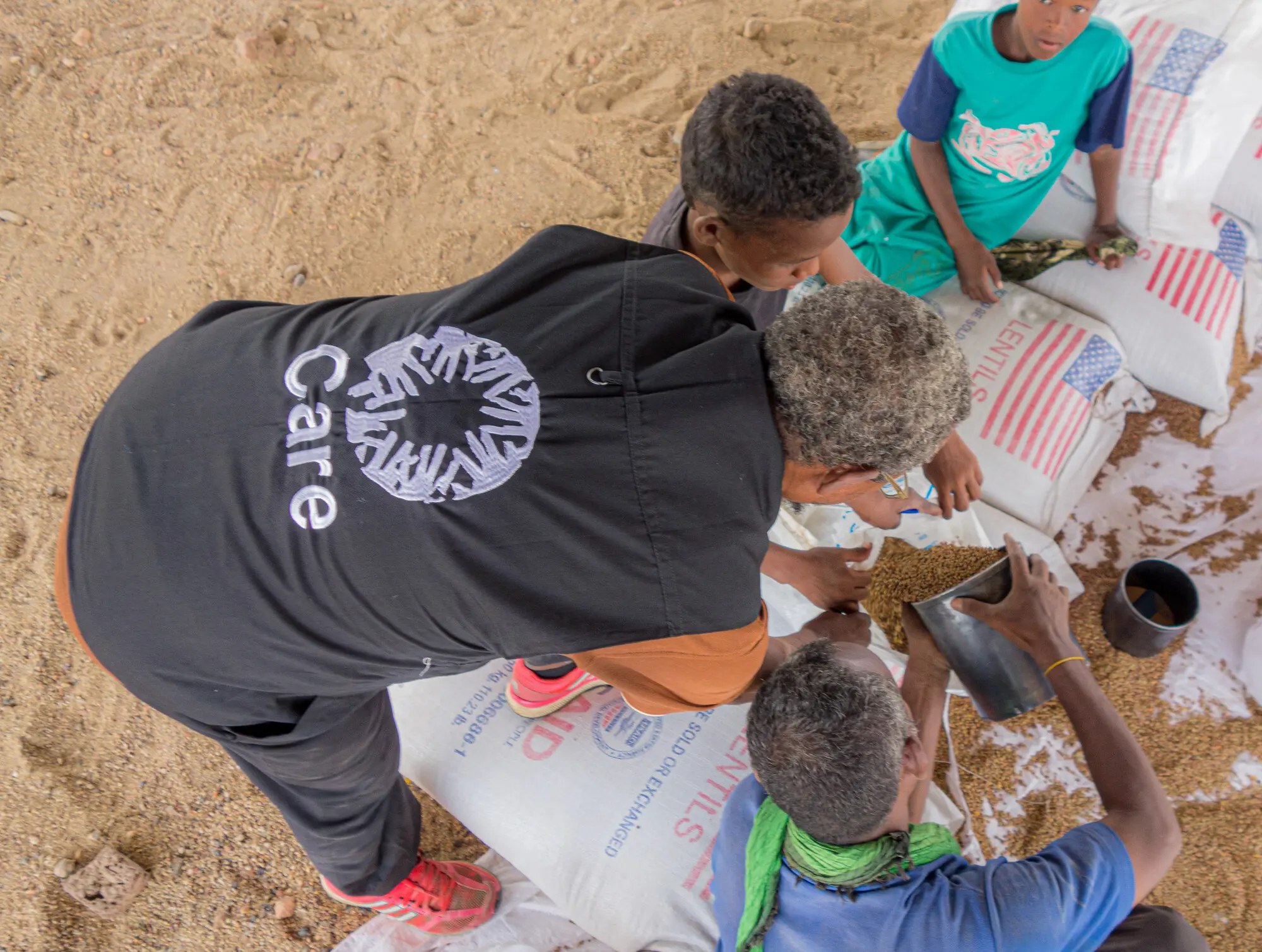
An overhead view shows a worker wearing a black CARE vest assisting people during a food distribution in Sudan. A person scoop lentils from a large white sack featuring an American flag design into a container, while children sit nearby on top of stacked supply sacks on the sandy ground.
More than 30 million people in Sudan need humanitarian assistance, including health care, food, and other support. Photo: Mohamed Abdulmajid/CARE

Working directly with local committees, CARE Sudan provided resources that helped repair a damaged clinic. The turnaround shows how quickly communities can recover when they lead decisions and receive practical support.

Today, the center provides free services: general care, laboratory testing, a stocked pharmacy, and safe delivery rooms.

“We provide free services to people even outside our immediate neighborhood,” said Fatima, a member of the community committee. To keep the center running, CARE also repaired the nearby water station and installed a solar-powered pump.

Yet these gains remain fragile. Medical supply chains are unreliable. Smaller health posts lie in ruins. Trained staff are scarce. For families like Amel’s and Huda’s, water in the tap and a clinic down the street are the first signs that rebuilding is possible. But sustaining that recovery will require predictable funding, steady supplies, and continued local leadership so early repairs may become lasting services, not temporary relief.

“These services are essential for saving lives, restoring dignity, and enabling a sustainable recovery,” said Abdirahman Ali, country director for CARE Sudan. “We’re doing our absolute best to support families returning home. But the needs are vast — and more funding is urgently required.”

Back to Top