Kabul, Afghanistan, August 13, 2026 – Five years after the Taliban returned to power, communities across Afghanistan continue to face one of the world’s largest humanitarian crises. While international attention has shifted elsewhere, 21.9 million people, nearly half of the population, still need humanitarian assistance, even as humanitarian funding continues to decline.
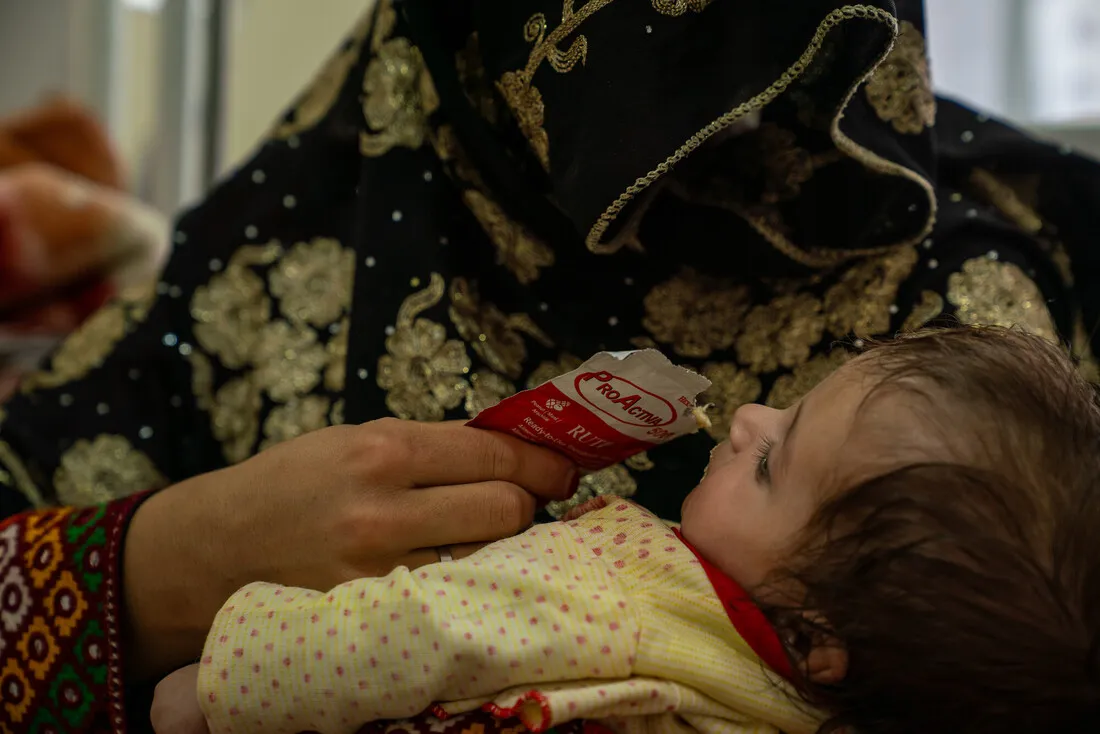
Between April and September 2026, around 13.8 million people will likely face crisis levels of acute food insecurity. Nearly 3.7 million children under five and 1.2 million pregnant or breastfeeding women are expected to experience acute malnutrition. At the same time, Afghanistan’s humanitarian response plan remains only around one-quarter funded, leaving millions of people at risk of losing access to healthcare, nutrition services, education, and protection.
Funding cuts have forced CARE to close 30 clinics this year, and the World Health Organization has reported that around 150 health facilities across Afghanistan have suspended operations or closed because of funding shortages since January. Women and girls continue to bear the brunt of these compounding crises. For pregnant women, the consequences are life-threatening. Afghanistan records 638 maternal deaths per 100,000 live births, the highest maternal mortality rate in Asia.
Amina*, a midwife working at a CARE-supported health clinic in Herat, told us, “When a mother and her baby leave the clinic safely, I know why I keep doing this work. If clinics like ours close, many women will have nowhere to turn when they need care most.”
Curtailed access to education, employment, freedom of movement, healthcare and equitable participation in public life for women and girls affects Afghan society in both the short and long term. Such conditions restrict the rights, dignity, and future opportunities of Afghan women, girls and youths. Without trained female doctors, teachers, nurses, and humanitarian workers, reaching the more than 10 million women and girls who need humanitarian assistance in 2026 will remain a significant challenge.
In addition, climate shocks, natural disasters, economic hardship, internal displacement, and large-scale returns of Afghans from other countries are increasing pressure on communities already on the brink. CARE continues to work alongside Afghan civil society organizations to reach women, girls, and their families with much-needed relief. CARE is also engaging with a wide range of stakeholders to promote full and equitable access for women and girls to education and all other essential services, as well as their safe and meaningful participation in the humanitarian response.
“Five years on, Afghans continue to show extraordinary determination to rebuild their lives, but they cannot do it alone,” said Mohammad Akmal Shareef, Country Director for CARE in Afghanistan.
“Emergency assistance remains essential, but it is not enough. Ordinary Afghans, especially women and girls and youths, are doing their best to survive, and they must not be ignored. They need sustained investment in inclusive healthcare, education, nutrition, livelihoods, and diverse national and local civil society organizations. Female staff are essential to the humanitarian response, and many are still doing crucial work, despite all the risks they face. Without them, we cannot effectively reach many of the people most in need. There must be greater recognition of the role of Afghan women working in the humanitarian response, and they must be protected so they can safely and meaningfully do their work,” added Shareef.
Continued international engagement, together with long-term investment in essential services, local civil society organizations, including networks led by and working with women is critical to helping Afghan families move from survival toward dignified lives. “People in Afghanistan should not have to choose between meeting urgent needs today and building a more stable future. A less tenuous security situation in the country presents a valuable opportunity to invest in long-term development efforts and build community resilience,” said Akmal Shareef.
CARE has worked in Afghanistan since 1961. In 2025, CARE reached approximately 1.2 million people, 67 percent of whom were women and girls. Together with local partners, CARE continues to support 32 health facilities across Balkh, Paktya, Khost, Ghazni, and Herat provinces, providing primary healthcare, maternal and newborn health, nutrition, mental health and psychosocial support, food security, livelihoods, and education assistance.
*Not real name
For media inquiries, email usa.media@care.org, or contact Nusrat Daud Pritha, CARE’s Regional Communications Advisor – Asia, nusratdaud.pritha@care.org