War on education: Students in Ukraine head back to school, but not back to normal

By Olena Lytvynenko and Ryan Bergeron September 1, 2026

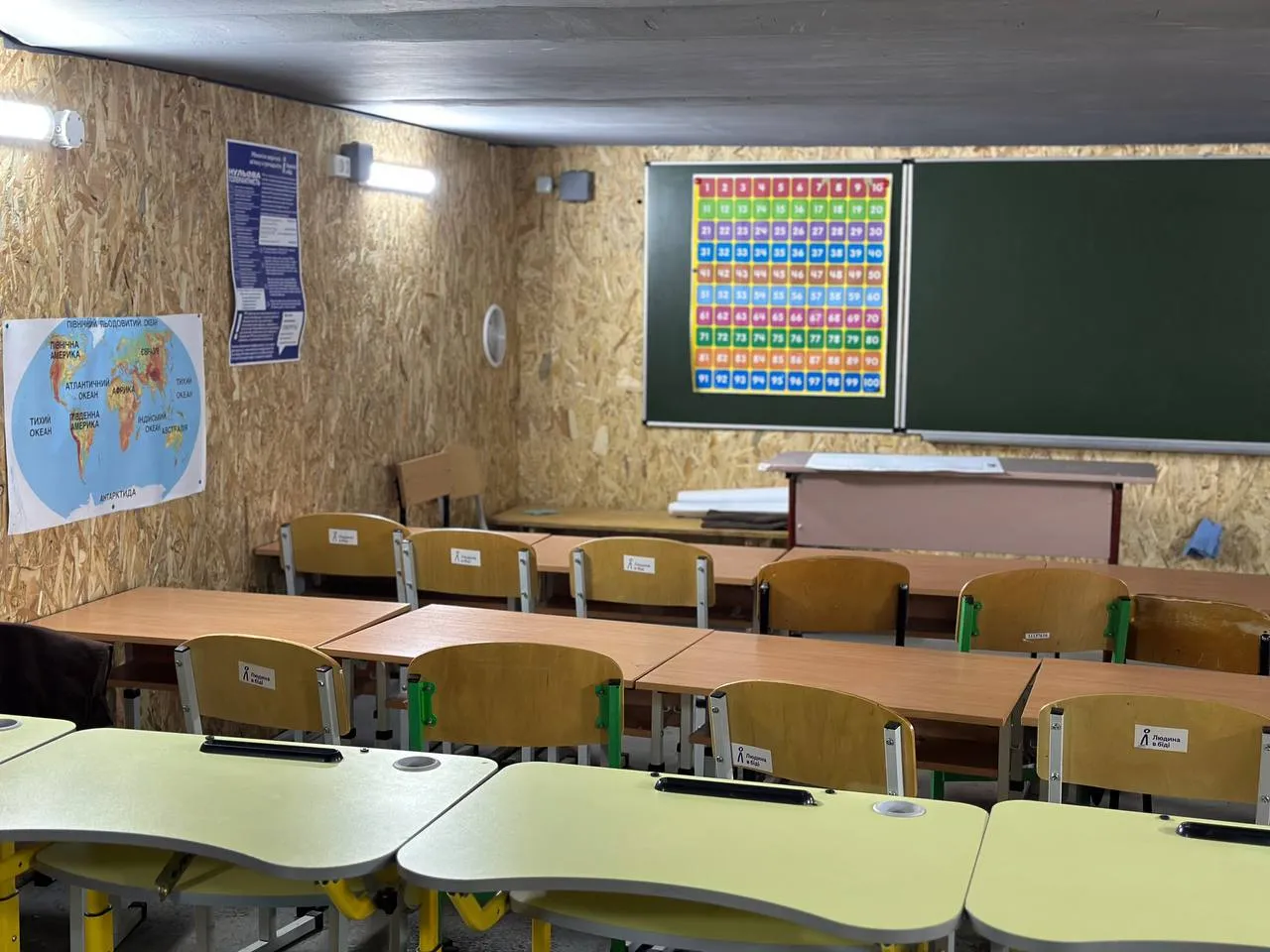
A makeshift classroom with wooden walls that was built in a shelter in Ukraine.

Makeshift classrooms in shelters, metro stations, and underground spaces have become common throughout Ukraine. Photo: CARE

As summer ends, kids around the world are getting ready to go back to school. But in Ukraine, a number of schools won't be opening their doors, and some Ukrainian students are preparing for another year of air raid alerts instead of school bells.

For kids around the world, the start of a new school year is an important moment. It’s a crisp, blank piece of paper ready for new lessons and challenges. For many, it might mean a new uniform, the smell of sharpened pencils or fresh chalk, and a chance to make new friends. The first day can be exciting and a little scary, but it’s just another normal part of growing up.

But in parts of Ukraine, the start of the school year looks different. There is no school bus picking kids up at the corner. There are no parents waving goodbye to their children as they drop them off. Instead, this is another year where too many schools will remain closed.

More than four years after fighting started, an entire class of Ukrainian children has moved through school amid air raids, attacks, displacement, and prolonged online learning. Some students have not stepped foot inside a classroom since the fighting began. The war has disrupted education for millions of children and added extra responsibilities to already stressed parents.

That is especially true for mothers.

“Women are carrying an overwhelming triple burden,” says Olga, from CARE partner organization, Culture of Change, and head of the Women Leadership in Emergency program. “They have to work, manage daily life under wartime conditions, and become ‘home teachers and caregivers’ for their children.”

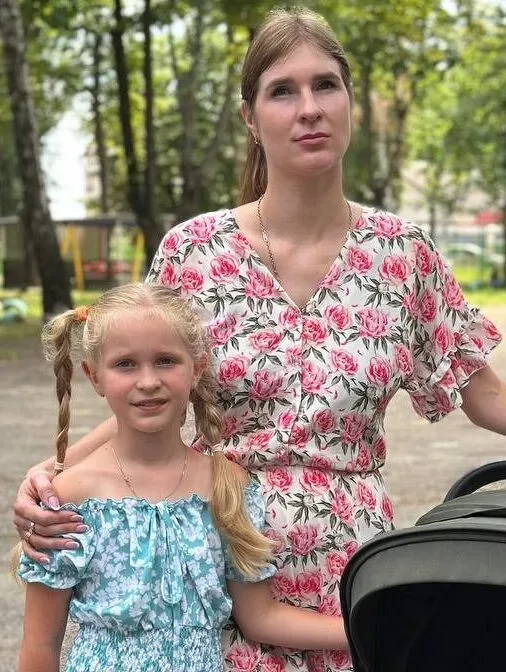
In the village of Dokuchaievske, in Ukraine’s Kharkiv region, eight-year-old Milana is about to start third grade.  Dokuchaievske is a small village with a pre-war population of about 7,000 people. Local authorities now estimate that it’s closer to 4,500. It also has a couple of schools, but Milana’s educational experience has been anything but normal. She was three when the war started, so she has never experienced a first day of school in peacetime. She has never taken a recess break with friends. She has never sat at a desk in a classroom.

Milana’s mother, Anastasia, is now a teacher as well as a caregiver in wartime. Despite the extra burdens, she’s thankful to no longer be living on the front lines of the war. Dokuchaievske is only about 20 miles from Ukraine’s border with Russia.

“When the fighting was at its worst, life was only about surviving,” she says.
Life on the front lines

A mother in Ukraine stands outside a park with her young daughter and toddler son sleeping in stroller.
Anastasia, with her daughter, Milana, who is starting third grade this fall. Photo: CARE

In early February 2022, Anastasia and her family lived a quiet life in Dokuchaievske. By the end of the month, they were sheltering in a basement just to stay alive. Being so close to the border, Dokuchaievske endured heavy missile attacks and fell to invading troops early in the war.

“When the war started, my husband woke me up and said, ‘Get up, pack your things. The war has started. We have to leave,’” Anastasia recalls. “I told him, ‘I’m not leaving my home.’”

She remembers grabbing 3-year old Milana and running through the streets to her in-laws’ house, about 500 yards away.

“We stepped outside and everything was flying around us. It was terrifying,” Anastasia says. Her in-laws “had a basement where we could hide. We lived on the ninth floor, so we had nowhere to shelter.”

For the next two months, the basement became their home. They came out only briefly to secure food as troops occupied the village and heavy fighting continued. Blast waves shattered the windows of their apartment. Homes across the community were damaged. An elderly woman they knew was killed.

For months, Anastasia thought only about keeping her family safe. Slowly, the front lines moved on. Dokuchaievske and the nearby village of Rohan were no longer occupied. Life became quieter, but it didn’t return to normal. Still, Milana was growing, and Anastasia did not want her to fall behind.

“She needed opportunities to learn and develop,” Anastasia says. “Of course, I spent time with her, but it wasn’t the same.”

But going to school in person was not an option. The village of Rohan has only two educational facilities: a kindergarten and a separate secondary school. Like thousands of other educational centers, both of these are closed because they don’t have shelters. It is one of many problems facing Ukraine’s education system after more than four years of war.

Ukraine’s education system under attack

Since the war began, the United Nations (UN) estimates that more than 1,600 schools have been damaged or destroyed. Other sources put the number of damaged educational institutions at more than 4,000.

But just because a structure has escaped damage doesn’t mean it can open for classes. Under martial law, Ukrainian schools may hold in-person classes if the building can adequately provide shelter for every student and staff member. If schools and educational institutions don’t have those sorts of facilities, they cannot host students for school. These closures have pushed millions of kids into online learning for years.’

“Right now, our community is living under a double burden — both security and social,” says Olga. “The lack of properly equipped shelters doesn’t just block a return to normal offline schooling; online learning has become a test of endurance for every family. It hits women and children the hardest.”

For students like Milana, it’s the only kind of schooling they’ve ever known. For others, it means they have spent their entire middle school or high school years online.

Olga says, “The lack of in-person learning over the past five years has significantly worsened children’s psycho-emotional and social wellbeing because of the absence of face-to-face interaction with their peers.”

Kids around Milana’s age have lived most, if not all, of their lives under this pressure. Reports show that kids who attend school virtually are more likely to have mental health issues and spend less time with friends. And conditions in Ukraine have only gotten worse as the war drags on. A UN Human Rights Monitoring Mission reports 437 civilians killed in July 2026 — the highest death count since May 2022. More than 3,200 children have been killed or injured since the invasion began in 2022.

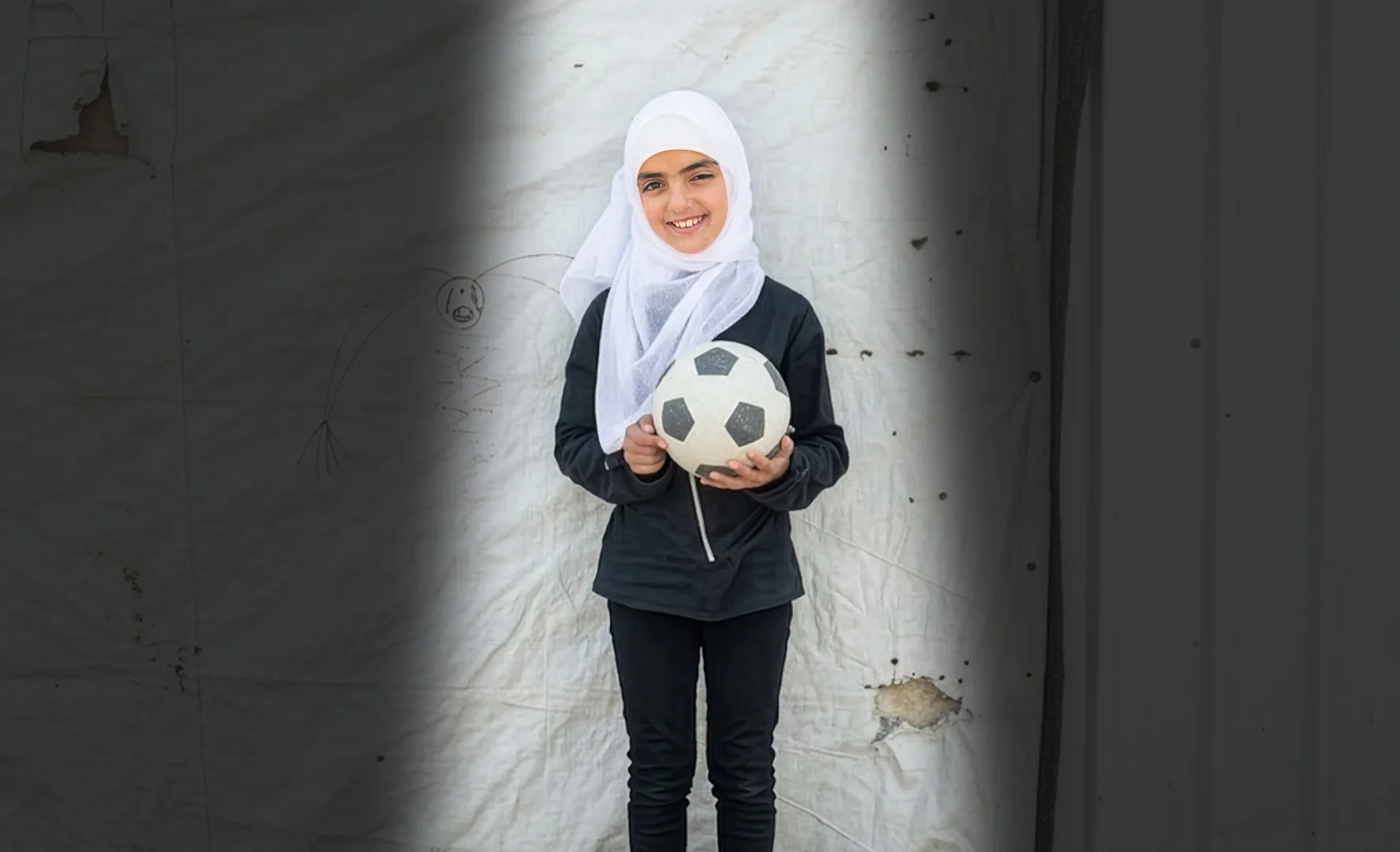
War and other crises, like natural disasters and famine, are hardest on women and girls. They face greater restrictions on movement, higher risks of violence, and less access to food, health care, and ways to earn a living. Even after an acute crisis ends, these effects on physical and mental health can persist for years.

Olga believes the long-term school closures could leave a lasting mark on this generation of kids.

“Children are deprived of a normal childhood, of ordinary live interaction with their peers, and of quality education. They are growing up in isolation during air raid alerts.”

Going back to school

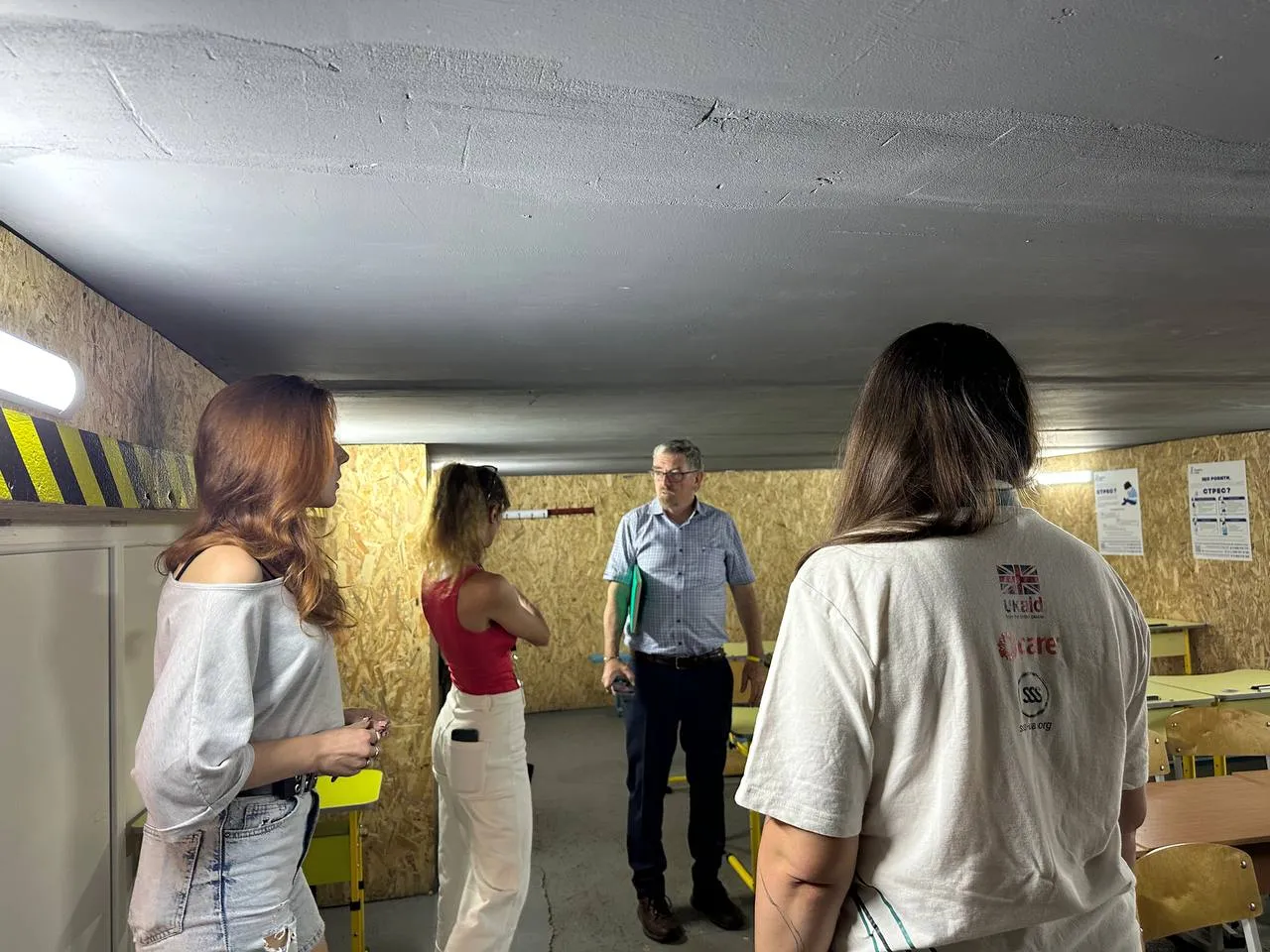
A group of people gathered in a makeshift classroom in a shelter in Ukraine.
CARE and local partners are helping renovate a school in Kryvyi Rih, Ukraine to make it more inclusive and safer for all students. Photo: CARE

Despite the ongoing crisis, Ukrainians are working to get students back in the classroom. Cities like Kharkiv, near the Russian border, have built classrooms in underground subway stations. Other schools are renovating and adding shelters to make their buildings safe.

CARE is working with local partners throughout Ukraine to help renovate and update schools to protect students and give them a chance to continue their education in the classroom.

In Kryvyi Rih, in central Ukraine, air raid alerts are now part of daily life for students, staff, and community-members. At one school, several times a day, sometimes for most of the day, every in-person student must leave their classrooms and descend underground when air raid alerts go off. There is what amounts to a second school below ground, with classrooms and shelter spaces for all the students and staff. The ceilings are low, forcing adults to stoop as they move between rooms, but the space is clean, carefully organized, and built with the same attention to detail as the classrooms above. Classes resume once everyone has settled, and students can continue their education in the relative safety of the shelter. This approach to safety and face-to-face education has led many families in the area to choose this school over others.

However, an ongoing problem remained. Students who use wheelchairs were unable to enter or exit the building easily, access the shelter, or even go to the restrooms on their own. The building simply lacked the infrastructure needed to support the needs of these students.

Maryna, vice principle for extracurricular activites at the school, says, “The situation was difficult. We were forced to carry children with disabilities, or their assistants had to carry them, accompanying them constantly.”

CARE Ukraine, with partner Stabilization Support Services, is helping renovate the school with accessibility and safety in mind, including making restrooms accessible and building an outdoor ramp so all students can enter and exit independently.

In Dokuchaievske, Anastasia, who is now mother to a younger son as well as to Milana, wants her children to have that same opportunity to learn in-person. With support from CARE Ukraine, she is working to make it happen.

Sheltering the next generation

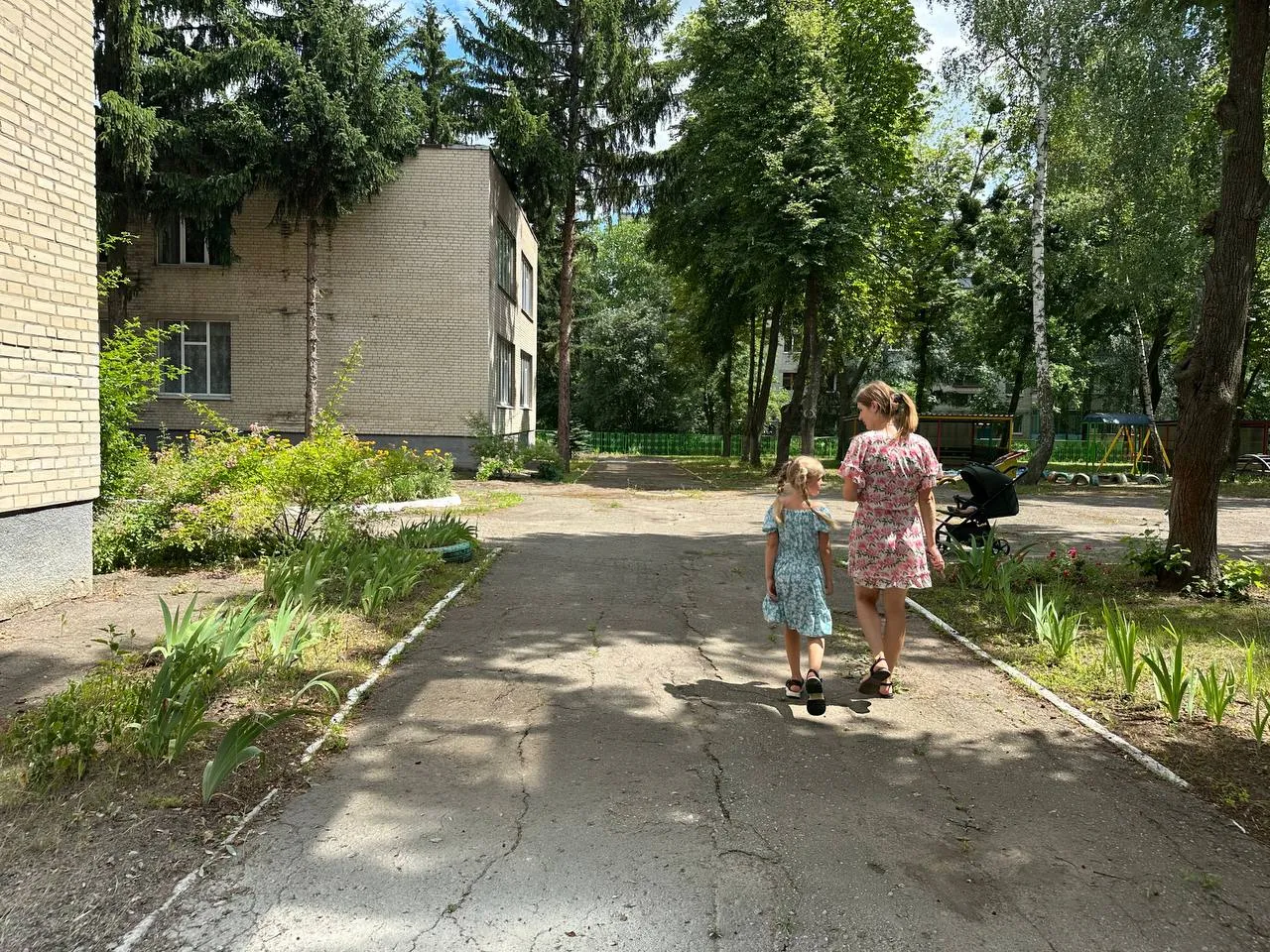
Mother and daughter walking near park on a sunny day.
Anastasia and Milana walking in their village Dokuchaievske. Anastasia is part of a CARE-supported group planning to build a shelter for the local school so that it can host students again. Photo: CARE

To that end, Anastasia is teaming up with Olga and CARE partners, Culture of Change and Women Leadership in Emergency, to provide support to women, children, and families throughout their area. Group members meet regularly to plan and work on community projects and hold activities for parents and children. For kids Milana’s age, it is the closest they have come to going to school.

Anastasia knows how important these social interactions are for the children.

“I can see how quickly my son is developing, and how much my daughter enjoys being part of all these activities,” she tells us.

Their next project will be their biggest yet: building a shelter at the local school so it can finally hold in-person classes again. The shelter is still in early planning, but without it, Olga says, the community and the country will lose far more than classroom learning.

“Without safe shelters, we’re losing not just educational space. We’re losing the social and psychological resource of our mothers, and the future of our rising generation.”

The hope is that by this time next year, Dokuchaievske’s school will have a new shelter. Then Milana can finally have something she has never experienced: a school day spent in a classroom with other children.

CARE started working in Ukraine in 2022. In the weeks after the onset of conflict in Ukraine in February 2022, the country’s humanitarian situation surpassed even the worst-case predicted scenarios. Neighboring countries have seen huge refugee influxes, largely women and children, with lines at the borders stretching for miles. To date, approximately 6 million people remain displaced outside of Ukraine in search of safety, while another 3.7 million are internally displaced within the country.

For Ukrainian refugees and internally displaced people, the most immediate needs include food, clean water, shelter and protection from violence, including violence against women and girls. In addition to the ongoing conflict, other major challenges for displaced families include freezing weather and access to healthcare, especially for women and the elderly.

CARE has worked in Europe since the aftermath of World War II, when we delivered assistance in the form of CARE PACKAGE® boxes to countries ravaged by conflict. We have active programs in multiple countries in Eastern Europe.

Back to Top