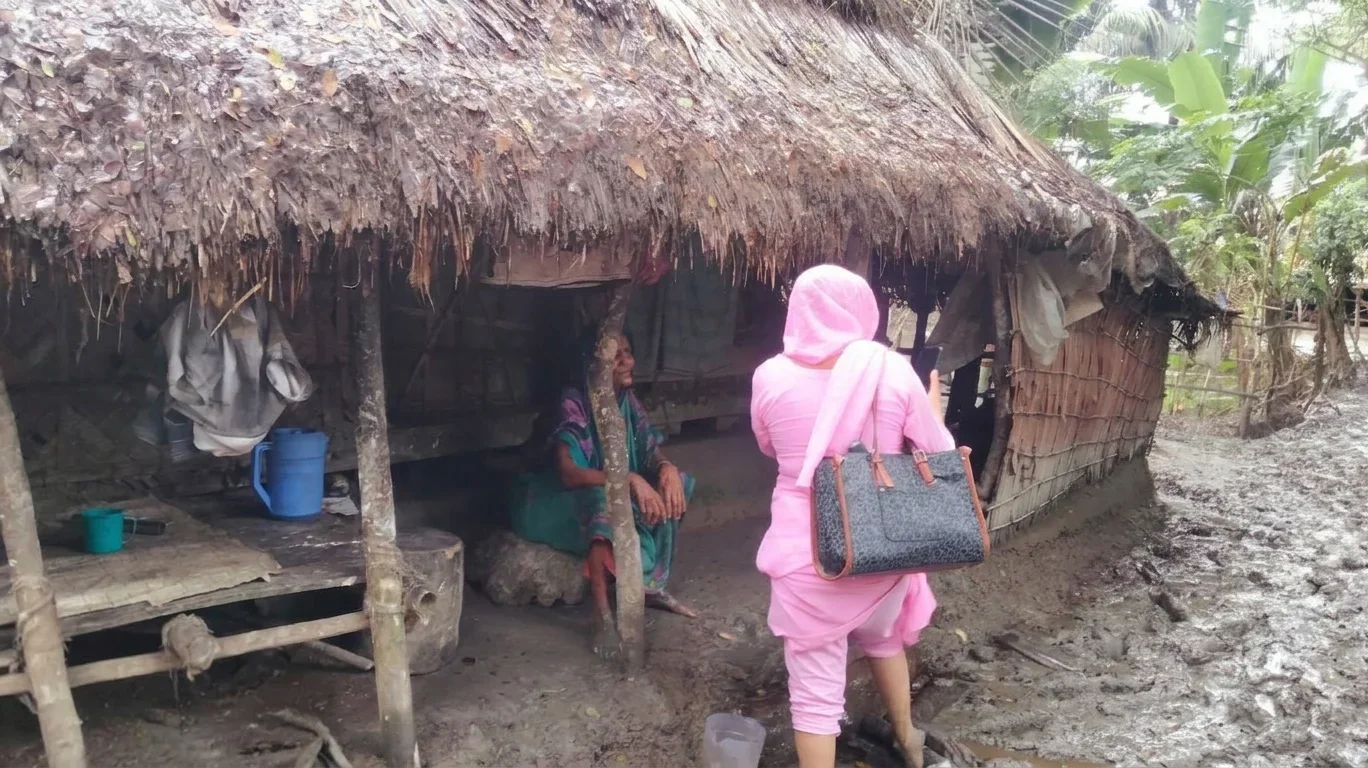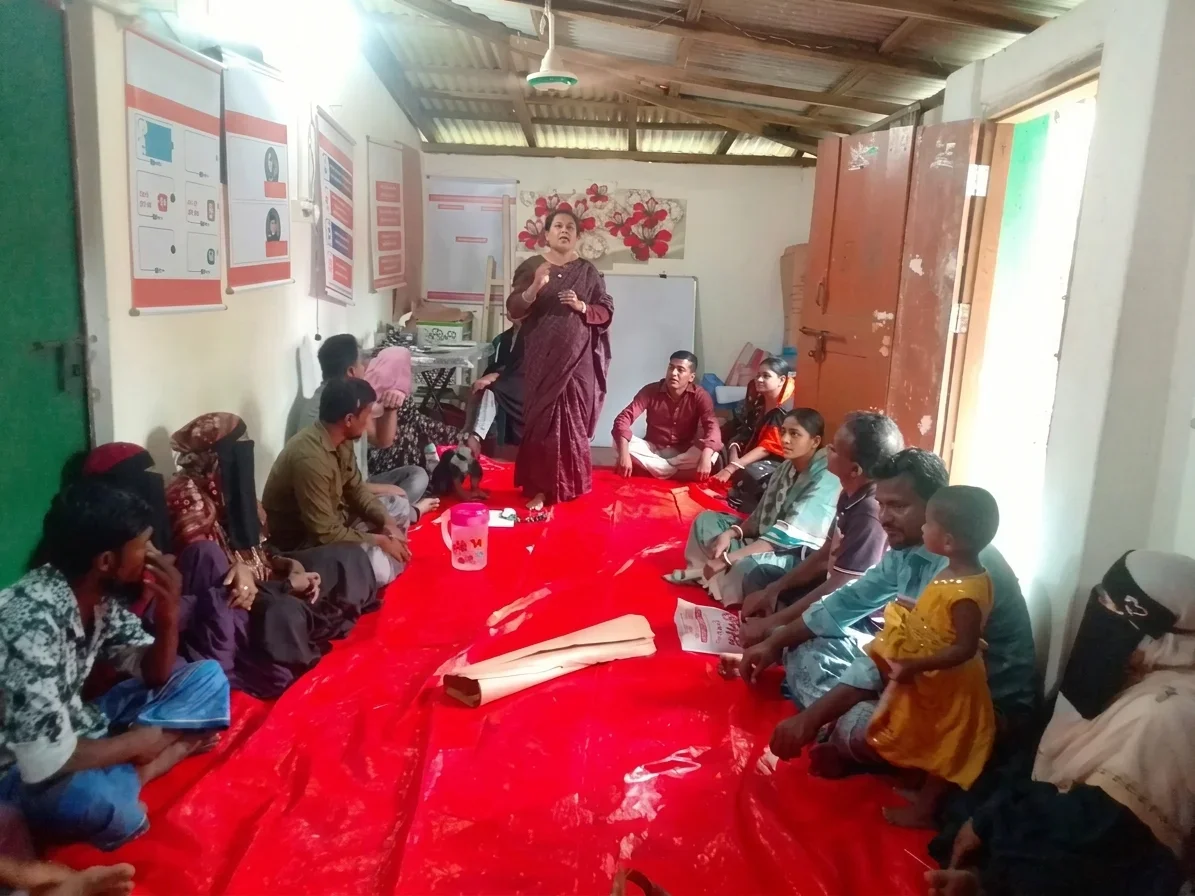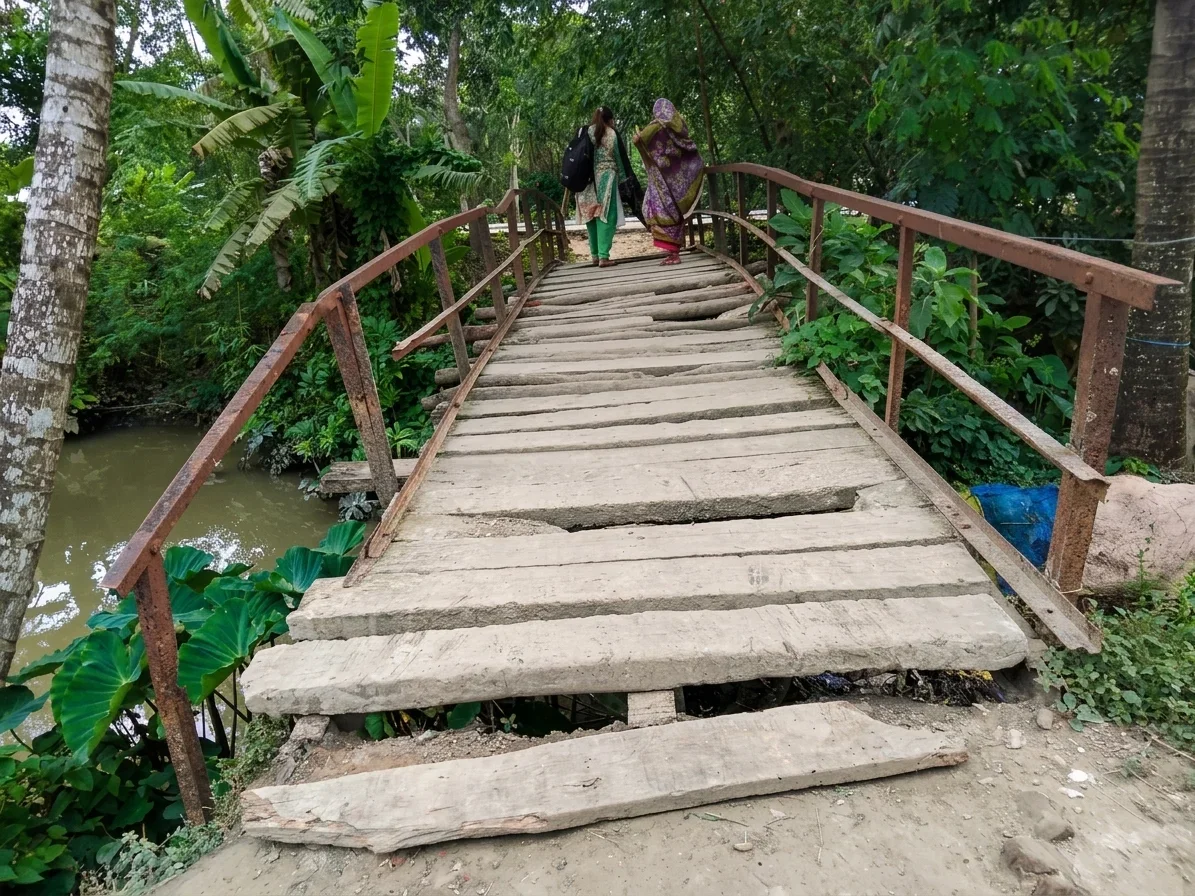
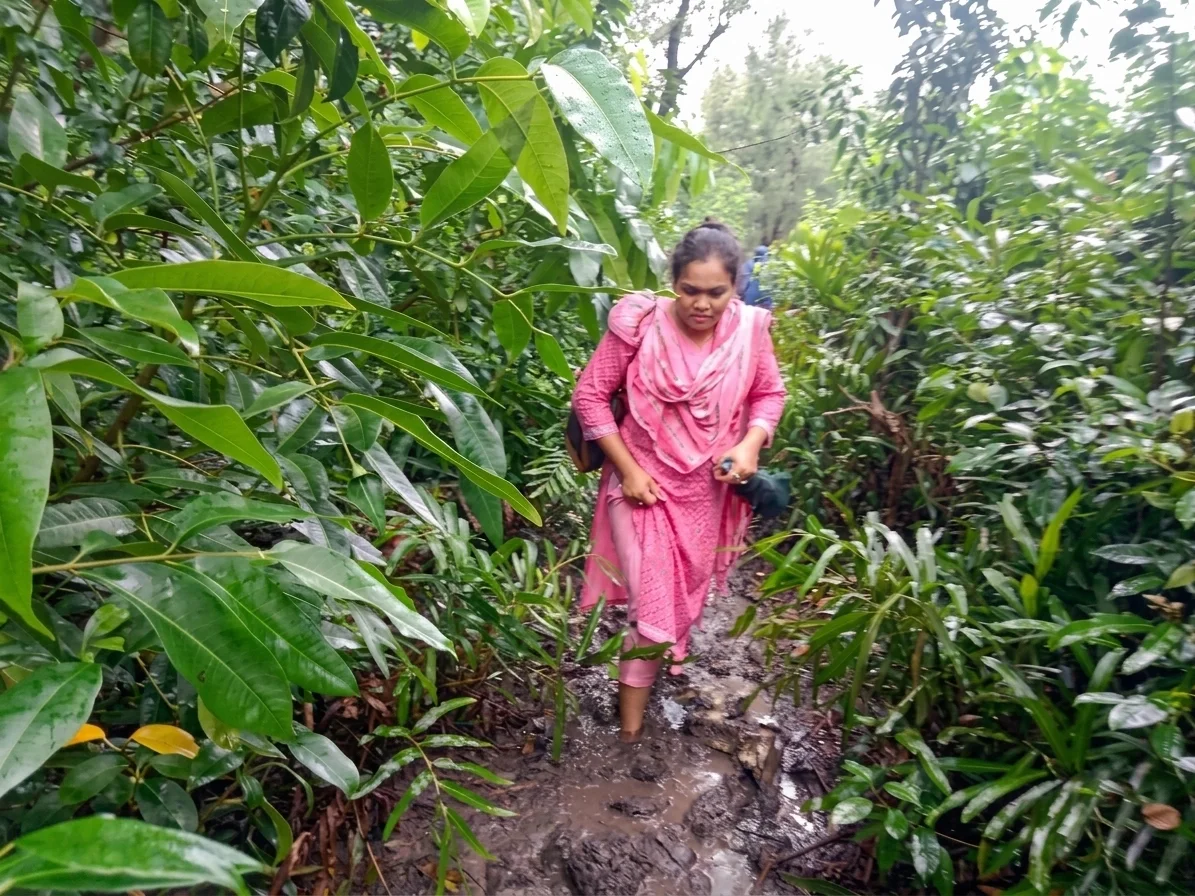
“Vehicles don’t go there,” Munni says of the final stretch to reach women’s groups in Barguna District, one of Bangladesh’s most disaster-prone coastal regions. “I must walk through mud that’s sometimes knee-deep.”
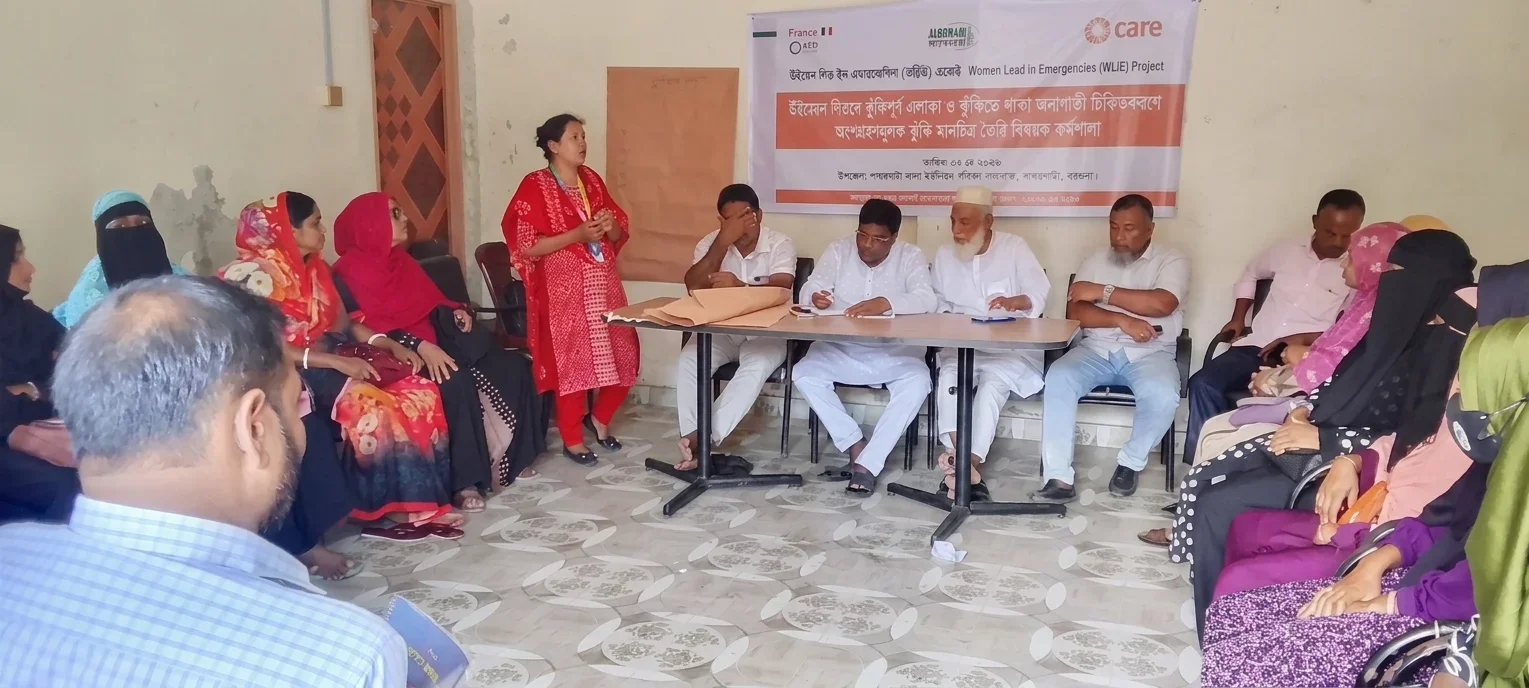
Munni has worked with JAGO NARI, a local women’s rights organization and CARE partner, for 16 years. For the past two years, she has overseen the district-level rollout of Women Lead in Emergencies (WLiE). Managed by CARE Bangladesh and CARE France, this four-year, multi-country program helps communities prepare for disasters. The initiative is funded by Agence Française de Développement. CARE International UK serves as global technical lead and the Institute of Development Studies, based in the UK, is the global research partner.
Munni has worked with JAGO NARI, a local women’s rights organization and CARE partner, for 16 years. For the past two years, she has overseen the district-level rollout of Women Lead in Emergencies (WLiE).
The WLiE project helps women and women’s organizations lead and take part in peace, security, and humanitarian action. The program operates across Bangladesh, Colombia, Ethiopia, and Ukraine. In Bangladesh, the project is building 45 community women’s groups in two cycles to help around 900 women build leadership and act together in crisis situations.
What struck Munni most was the project’s core truth: in a crisis, women are usually the last consulted and the first affected. Yet, when given support, they do not wait for outsiders to solve their problems.