International Literacy Day: The hidden ingredient in learning success is a nutritious school meal

By Iffat Khan and Lotte Renault September 8, 2026

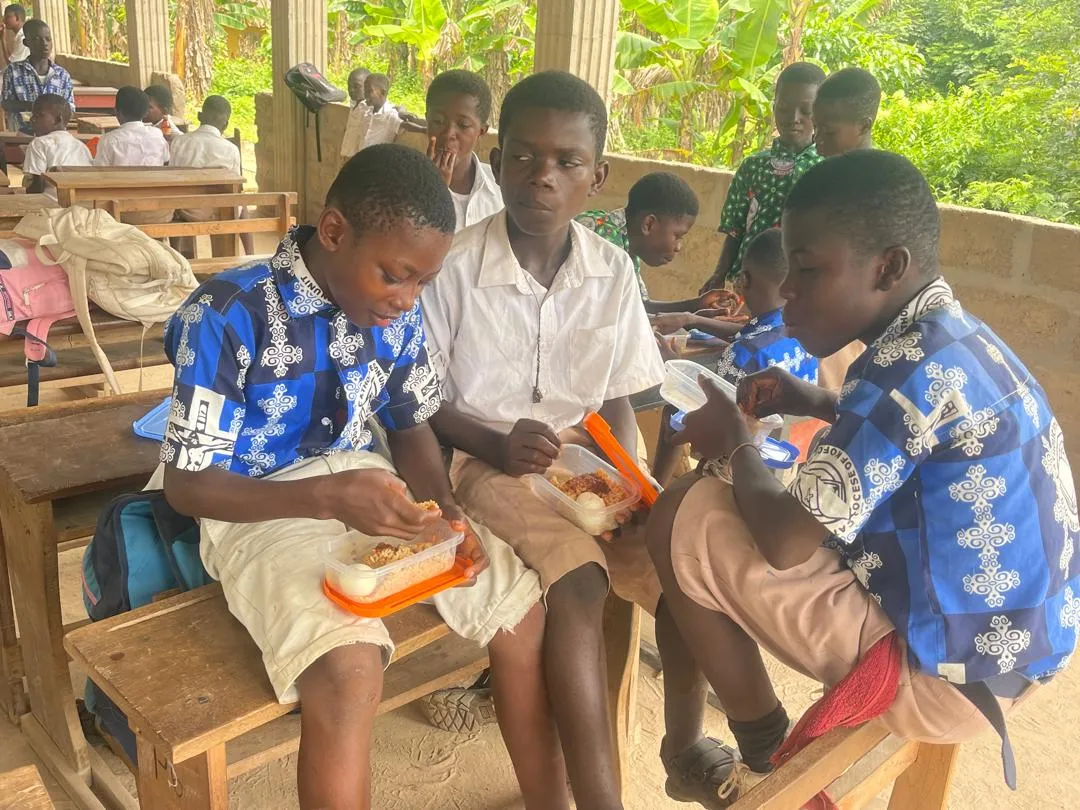
Students eating lunch at school.

Owuram RC pupils in Ghana enjoying their lunch. Photo: Lawrence Larbi Adjei / Gold Coast Nutrition Fund

September 8 is International Literacy Day, a reminder that learning starts with meeting children's basic needs. Around the world, nutritious school meals are helping children stay in school, concentrate in class, and build the literacy skills they need to succeed in life.

Imagine being unable to read. Imagine a world where you could not use your phone, read medicine labels, understand important documents, or fully participate in society.

This is what the future looks like for nearly 70% of 10-year-olds in low-and middle-income countries, who cannot read a simple text. Many will leave school before mastering basic literacy skills and may remain unable to read for the rest of their lives. The consequences extend far beyond the classroom, limiting opportunities for employment, health, civic participation, and economic independence.

At the same time, millions of children face another barrier to learning: hunger. Globally, 400 million children, or one in five, do not receive the nutrients they need to survive, grow, and learn. Hunger affects concentration, memory, attendance, and cognitive development, making it harder for children to learn to read.

School meals are one of the most effective ways to address both problems. By ensuring children receive nutritious food at school, these programs help improve attendance, keep children focused in class, and create the conditions they need to learn.

Across the countries where CARE works, the impact is clear. In Ghana, children gather each day to receive nutritious local meals rich in proteins and vitamins, encouraging regular school attendance and reducing child labor. In Somalia, where millions face severe hunger, school meals are a lifeline that keeps children in school and helps them learn.

Communities understand that school meals are an investment in children’s futures. Working alongside governments and local partners, CARE helps deliver nutritious school meals while strengthening education systems, supporting teachers, and improving learning environments. Together, these efforts are helping more children stay in school, learn to read, and build brighter futures.
Not only a meal, but a nutritious meal

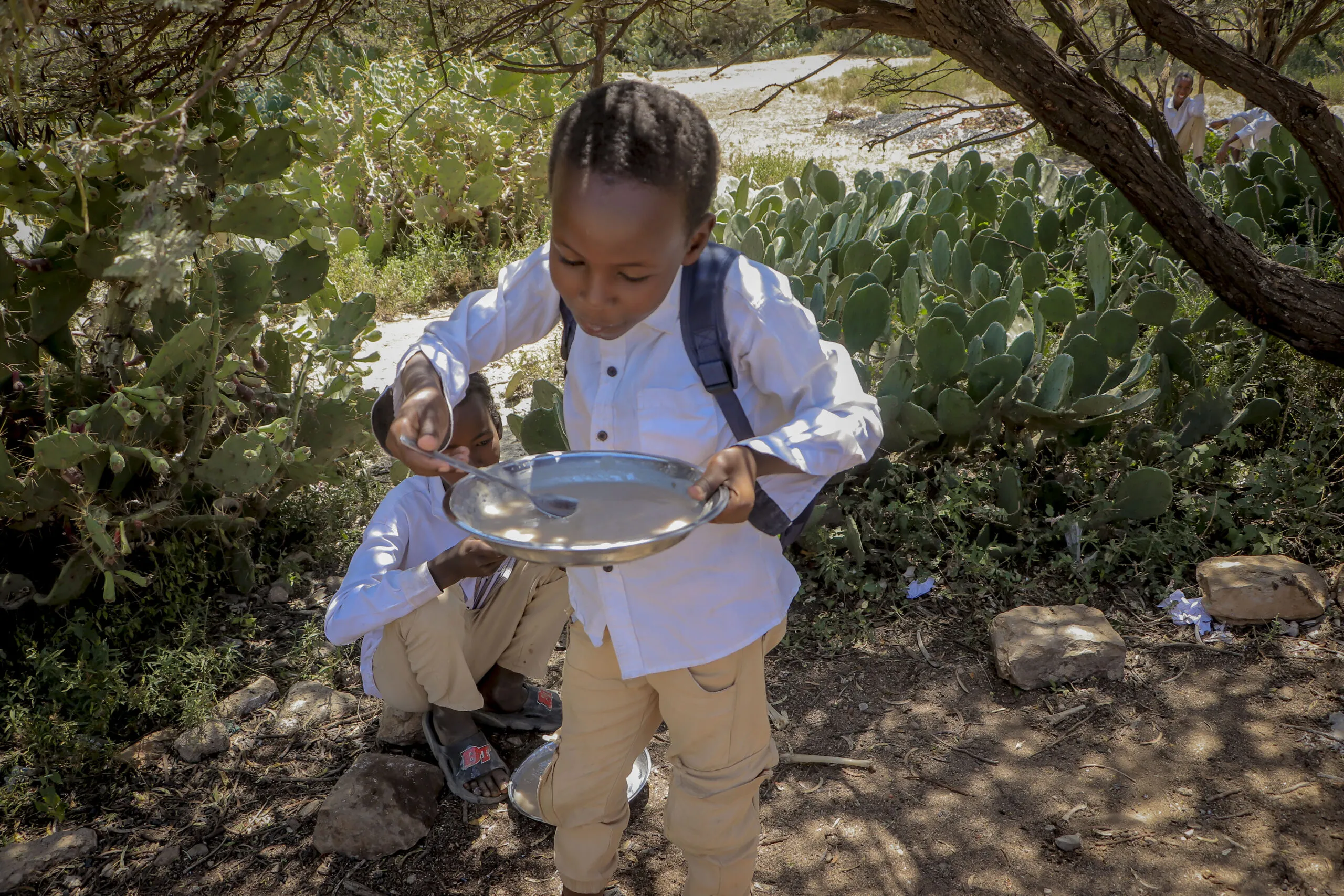
A child eating lunch from a bowl outside of school.
A student eating a school meal outside during lunch. Photo: Nimo Hajji Ali/ CARE Somalia

A full stomach matters, but a nutritious meal matters even more. Children need quality food, not just calories, to learn and grow.

School meals often rely heavily on carb-rich foods such as rice, maize, or wheat. These foods are cheap and reduce hunger, but they do not always provide the nutrition children need.

CARE makes sure meals provide the protein and vitamins children need to learn, grow, and thrive.

For 2.6 billion people, a healthy diet is still unaffordable. Animal protein, fruits, and vegetables are among the most expensive food items, and remain out of reach for households experiencing poverty. Limited access to protein-and vitamin-rich foods has a long-term impact on children’s development and learning.

In a world where healthy diets remain unaffordable for billions, school meals are one of the most effective ways to reduce this nutritional gap. A 2021 review of 57 studies across low- and middle-income countries found that school feeding programs improve both health and education. Children grew taller and healthier, while also attending school more.

Ready to read: How school meals boost literacy

In Somalia, where hunger, poverty, and conflict make it difficult for many children to stay in school, a simple meal can make a powerful difference. CARE and Somalia’s Ministry of Education found that children who received a meal at school scored six percentage points higher in reading and three percentage points higher in mathematics than children who did not.

The connection between nutrition and learning is especially clear for girls. CARE’s research in Somalia found that girls who missed out on protein-rich foods had significantly lower literacy scores.

These findings show that school meals do more than fill empty stomachs. They are helping build a generation of children who are healthier, learning faster, and better prepared for the future.

A meal that brings children back to school

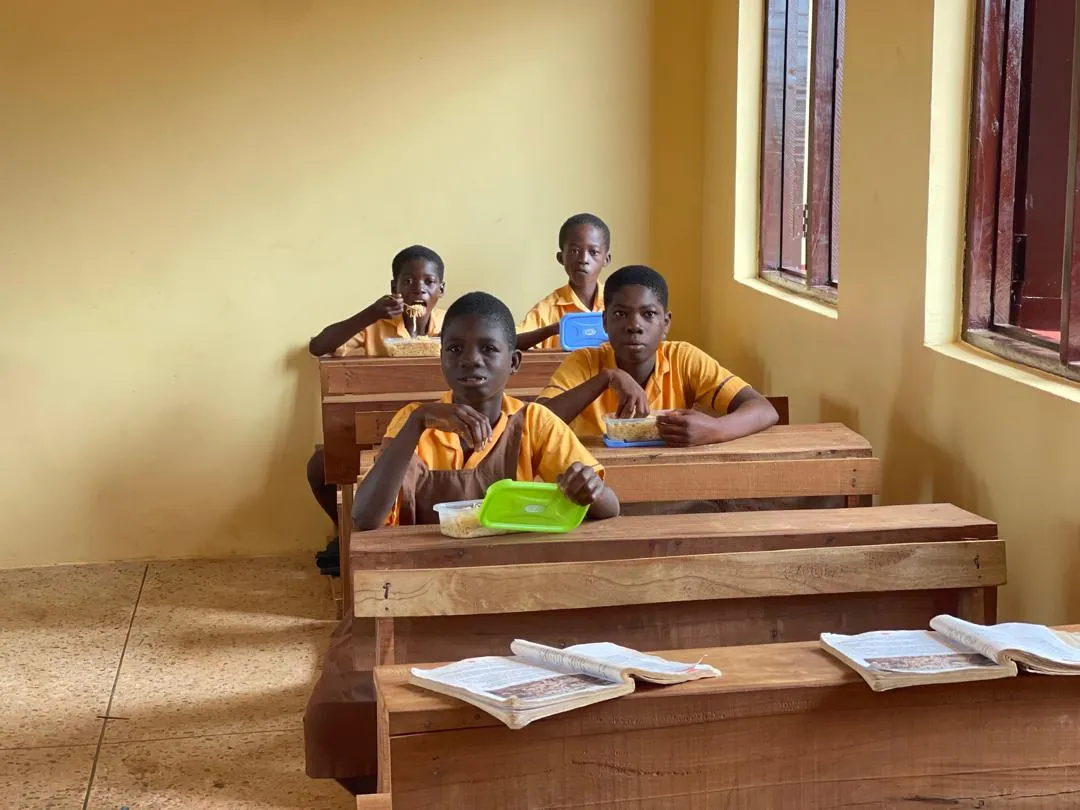
Students eating lunch in a classroom at school.
In Ghana, CARE-supported school meals helped increase attendance from 55% to 82%. Photo: ©2026 Lawrence Larbi Adjei/ Gold Coast Nutrition Fund

Every school day matters. The more time children spend in the classroom, the more they learn. Yet across many low-income countries, children are missing a critical amount of school time.

In Malawi, only 53% of students were present in class during a CARE assessment. In Ghana, attendance averaged just 60%, while in Somalia, attendance among children in grades one through four ranged between 58% and 61%. When children are not in school, they cannot build the reading skills they need to succeed.

School meals are a simple solution to getting kids back in class.

For many families, a nutritious meal is a powerful reason to send children to school and keep them there. In Ghana, CARE-supported school meals funded by the Rockefeller Foundation helped increase attendance from 55% to 82%. Today, a daily meal costing 62 cents per child is helping reduce student absences and keep more children in the classroom.

The effects go beyond food. In Malawi, CARE worked with communities to tackle child labor, one of the biggest barriers to education. This work, combined with efforts to improve children’s well-being, raised the proportion of children attending school at least 60% of the time, from 5% to 89%.

In Somalia, CARE’s homegrown school meals cost 32 cents a day for each child. After schools began serving meals, the average attendance rate increased to 90% and enrollment rose by 18%.

These results highlight a simple truth: Children learn when they are in school. By providing nutritious meals and addressing the barriers that keep children away from the classroom, communities are helping more children show up, stay in school, and gain the literacy skills they need.

Healthy meals, healthy habits

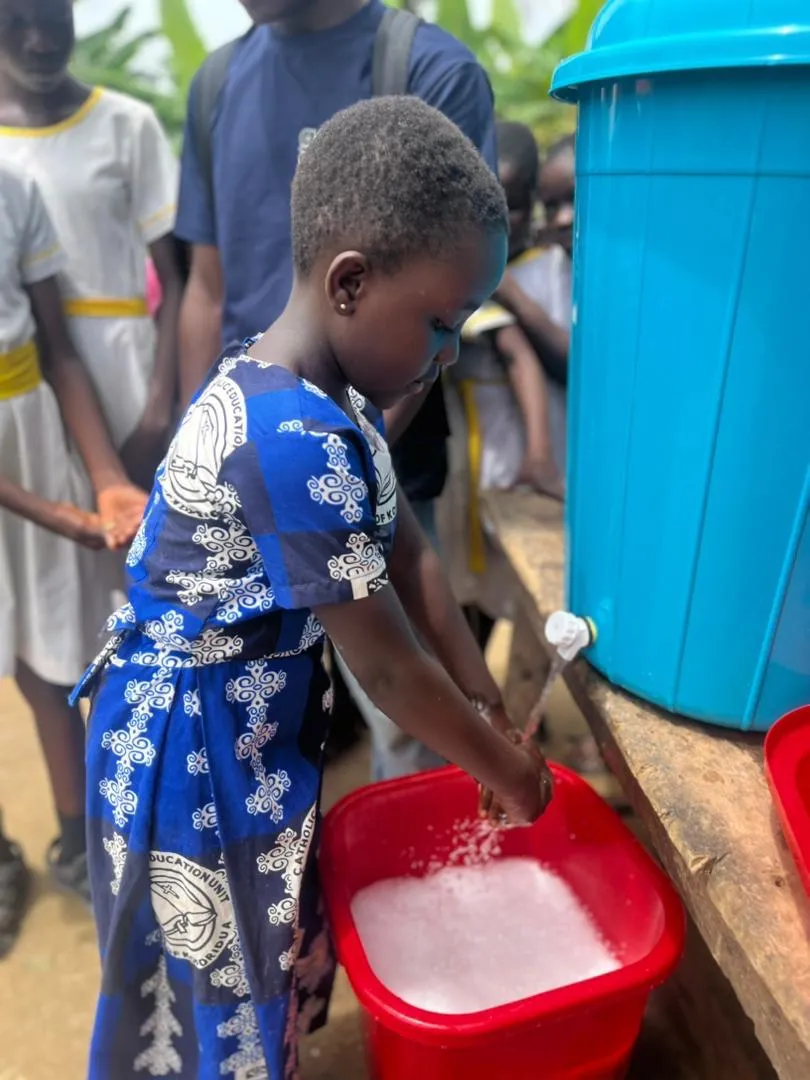
A child washing their hands with water running from barrel into soapy bucket.
Owuram RC student in Ghana practicing hand hygiene before eating. Photo: ©2026 Lawrence Larbi Adjei / Gold Coast Nutrition Fund

School meals improve more than nutrition. They are a tool to develop good hygiene habits among children and cooks.

In Ghana, the Daakye School Meals Program is helping to create healthier schools. Within three months, the share of schools where children washed their hands with soap before eating jumped from 17% to 100%. Good handwashing prevents illness and absenteeism.

Kitchens became safer, with water and dish detergent availability increasing from 67% to 100%. Access to drinking water during meals also increased from 67% to 100%.

On this International Literacy Day, the evidence is clear: Learning begins with nutrition. From Ghana to Somalia to Malawi, school meals are helping children attend school more regularly, concentrate better in class, strengthen literacy skills, and build healthier futures. More than just a meal, school feeding programs invest in children’s ability to learn, thrive, and reach their full potential. When children are well nourished, they are better prepared to read, learn, and write the next chapter of their lives.

Learning starts with nutrition.

Explore how CARE’s school feeding programs help children come to school ready to read, ready to learn, and ready to thrive.

For more information, contact education.global@care.org

Back to Top