Closer to home: Helping children recover from severe malnutrition in Ethiopia

By Massresha Tadesse and Becca Mountain October 8, 2026

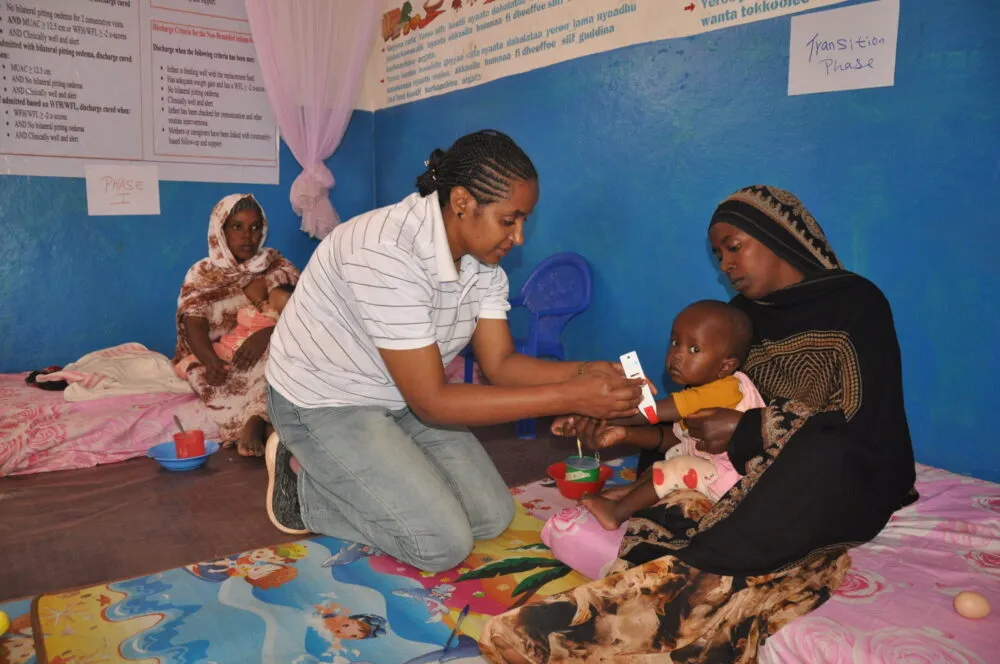
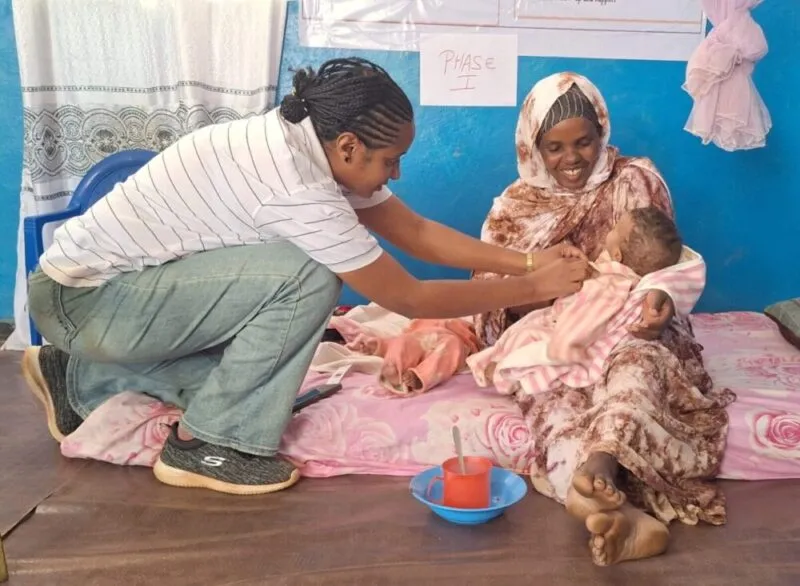
A nurse checks an infant during a growth monitoring visit in Ethiopia.

CARE nurse Meskrem Debru checks one of Sefian Hussien’s twins during a growth monitoring visit at Dehas Health Center. All photos: Massresha Tadesse/CARE

In Ethiopia’s Borena Zone, families can travel hours to reach treatment when local health centers lack the supplies and equipment they need. At Dehas Health Center, CARE-supported nutrition services help bring treatment closer to home for children experiencing severe malnutrition.

“I did not expect my babies to survive,” says 35-year-old Sefian Hussien, a mother of six from Borena Zone, in southern Ethiopia’s Oromia Region.

When Sefian gave birth to premature twins, both babies needed more specialized care than the rural Dehas Health Center could provide. They were referred to a hospital in Mega Town, nearly 75 kilometers (around 46 miles) away, where they spent six weeks receiving care in a neonatal intensive unit.

Eventually, Sefian was able to bring the newborns home.

Two months later, during a routine growth monitoring visit at the clinic, health professionals diagnosed both babies with severe acute malnutrition. The condition leaves children dangerously undernourished and at greater risk of serious illnesses and other potentially life-threatening complications. They needed immediate treatment.

But this time, thanks to CARE-supported supplies, equipment, and nutrition services at the health center, the babies were able to stay closer to home.
Bringing malnutrition treatment closer to families

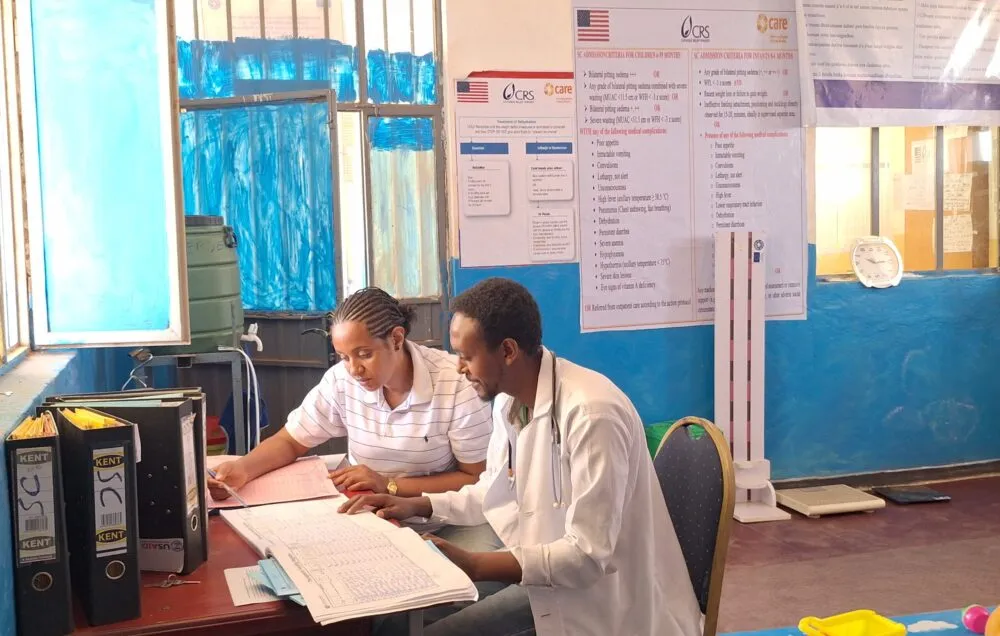
CARE nurse Meskrem Debru and health officer Zekarias Getachew monitor children receiving nutrition treatment.
CARE nurse Meskrem and health officer Zekarias Getachew monitor children’s nutrition treatment progress at Dehas.

Before Dehas Health Center was able to treat severe acute malnutrition, children being treated had to be referred to a larger facility in Mega Town. The journey could take about three hours by public transport, and ambulance coverage is limited.

That distance delays access to care. For caregivers traveling with seriously ill children, the trip means hours away from other responsibilities, including caring for family members, working, and tending livestock.

Through the Joint Emergency Operation Program (JEOP), CARE supports health facilities in the district with supplies and equipment needed to screen, monitor, treat, and follow-up with children experiencing malnutrition. All four health centers in the district receive JEOP support.

At Dehas Health Center, CARE also assigned a dedicated Community-based Management of Acute Malnutrition (CMAM) nurse named Meskrem Debru to work alongside health center staff. She provides training and mentoring to health extension workers and other community members, helping families like Sefian’s access quality care much closer to home.

During their two-week stay at the clinic, Sefian’s twins received diluted F-100, a specially formulated therapeutic milk used to help severely malnourished children regain weight and strength, along with other medical treatment.

“I could not believe how much weight they gained,” Sefian told us.

Drought increases the risk of childhood malnutrition

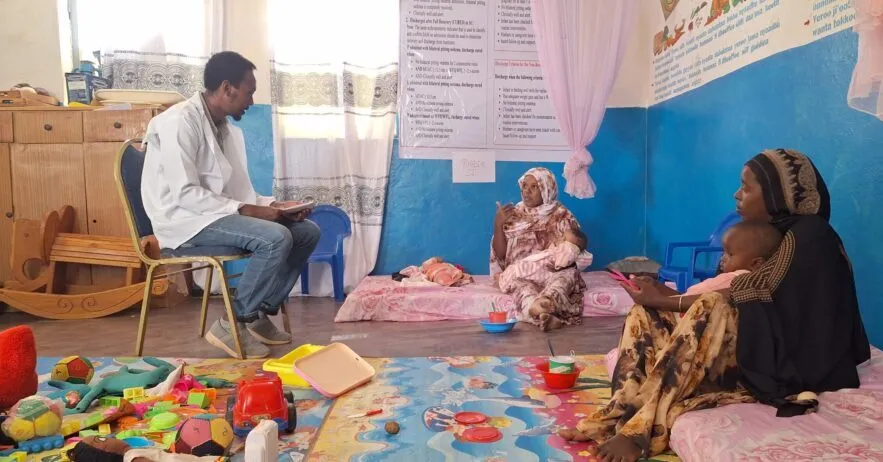
Health officer Zekarias Getachew talks with mothers about caring for children recovering from malnutrition.

Borena Zone is home to many pastoralist families who depend on cattle, goats, and other livestock for food and income. For these households, animals can provide milk and meat as well as the income needed to buy food and other necessities.

During the severe drought that affected Borena in 2022 and 2023, shortages of water and livestock feed contributed to the deaths of more than 3.3 million animals in the zone, according to a multi-agency assessment cited by UNICEF.

The loss devastated livelihoods across a region where many families depend heavily on livestock. As animals died and household resources declined, getting enough nutritious food became increasingly difficult.

Borena remains drought-prone, but the area is not currently experiencing the severe conditions of recent years. The effects of those losses, however, can continue to shape families’ access to food and nutrition.

Health workers have seen the difference timely treatment can make.

“As health professionals, nothing is more rewarding than seeing children recover and return home healthy,” says Zekarias Getachew, a health officer at the center. “Thanks to critical nutrition supplies, we can now treat severe malnutrition cases both as inpatients and outpatients.”

Identifying malnutrition earlier

A nurse examines a young child during malnutrition treatment.
Meskrem checks the progress of a child’s recovery during treatment for malnutrition.

Treating severe malnutrition is only part of the work.

CMAM nurse Meskrem works with health center staff and community members to identify children who are malnourished and connect them to appropriate, timely care.

“In addition to supporting treatment at the health center, we provide practical training to health extension workers on identifying severe malnutrition and referring affected children to the health center,” she says.

Health extension workers also help families in the community monitor their children’s growth and recognize signs that they may need additional care. Their goal is to identify children’s needs before conditions become severe.

CARE also finances meals for caregivers whose children are receiving treatment at the health center, helping parents remain close to their children during their stay and relieving some of the burden they already face.

More than 1,400 children supported

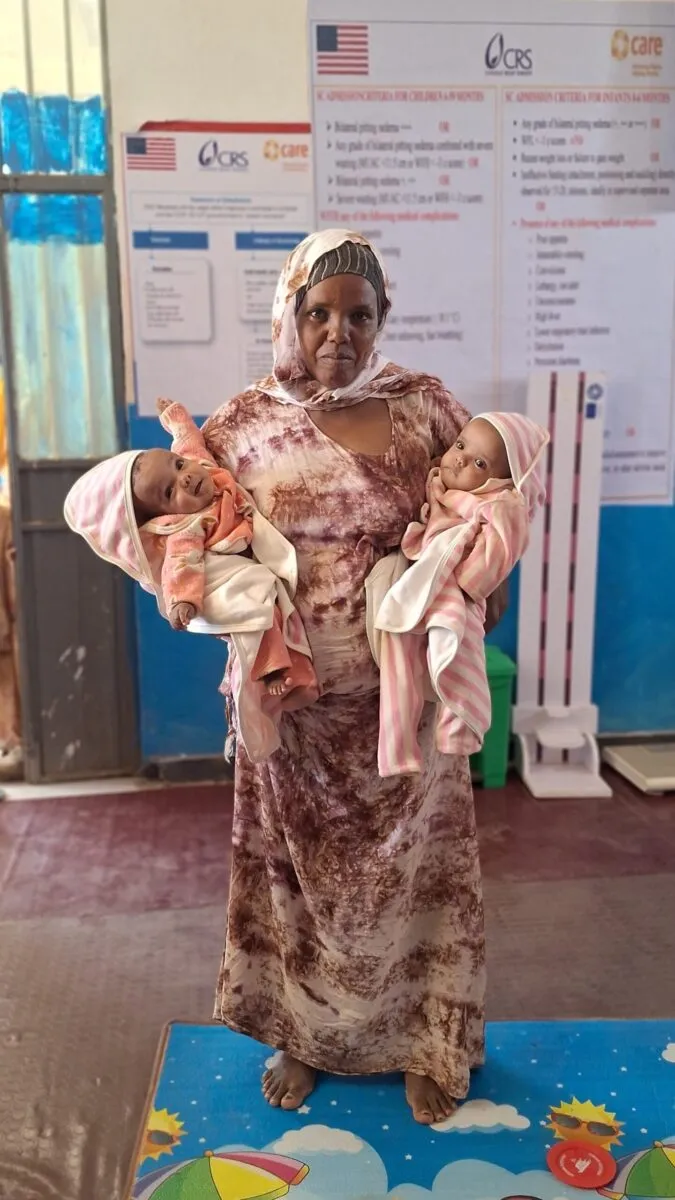
Sefian Hussien holds her infant twins in Ethiopia’s Borena Zone.
Sefian returned to Dehas Health Center with her twins for a routine checkup after their treatment for severe acute malnutrition.

CARE implements JEOP emergency assistance across all 13 woredas, or districts, of Borena Zone, with nutritional components currently active in three districts.

Across those districts, more than 1,400 children with malnutrition have been identified and treated through CARE-supported nutrition work.

The program also trains and mentors frontline healthcare workers and works with local health services and communities to improve screening, referral, treatment, and follow-up.

“The progress we have seen in Borena shows what is possible when health facilities have the resources they need to treat malnourished children,” says Did Boru, CARE Borena Field Office Coordinator.

“But these gains remain fragile. Sustained investment is critical to ensure health centers like Dehas continue to have access to lifesaving therapeutic nutrition supplies.”

A few months after their treatment, Sefian returned to the health center with the twins for a routine checkup. Her older son came with her, carrying one of the babies. The twins are now around six months old and are in good health.

Sefian, who once feared these two would not survive, appreciates their progress every day.

“When I look at my children now,” she says, “I feel hope.”


CARE has worked in Ethiopia since 1984, partnering with communities to respond to humanitarian emergencies and address the underlying causes of poverty.

Today, CARE Ethiopia works with communities, local partners, and government institutions on food and nutrition security, health, water, livelihoods, and other programs designed to help people withstand crises and build greater economic security. Women and girls are at the center of CARE’s work.

Help children facing hunger and malnutrition.

For children facing severe malnutrition, timely care can be lifesaving. Your gift helps CARE provide food, nutrition support, and other essential assistance to families facing hunger and crisis.

Donate now.
Back to Top