October 29, 2026, Maputo, Mozambique – With forecasts pointing to an El Niño-driven drought, the coming harvest is at risk in southern and central Mozambique, where communities still recovering from flooding and displacement are running out of food, water and seeds. After years of repeated climate shocks, they have few resources left, and another failed harvest could push them deeper into hunger. Women and girls are expected to bear the greatest burden, facing increasing pressure to secure food, find water, care for children and protect livelihoods as conditions worsen.
As water sources dry up, woman and girls often travel longer distances to collect water while continuing to manage farming activities, household responsibilities, and caregiving duties. CARE’s recent Rapid Needs Assessment across 14 communities in Gaza, Inhambane and Nampula Provinces, also points to heightened risks of child marriage, school dropout and worsening health and dignity outcomes for women and girls who lack access to adequate water and hygiene supplies.
The situation is already severe in some communities. One resident in Chokwe told CARE, “If we showed you the water we drink, you would be frightened.” Communities are also reporting growing health concerns linked to drought and unsafe water, including diarrhoeal disease and signs of worsening child malnutrition.
The urgency is underscored by the latest Integrated Food Security Phase Classification (IPC) analysis, which projects that 1.84 million will face Crisis or worse level of acute insecurity (IPC Phase 3+) between October 2026 and March 2027. The crisis is taking a devastating toll on women and children. 254,000 people are projected to face Emergency levels of acute food insecurity (IPC Phase 4). More than 103,600 children under five are expected to suffer from acute malnutrition, while over 11,100 pregnant and breastfeeding women are likely to face acute malnutrition, putting their health and wellbeing at serious risk.
Yet available support remains dangerously limited. CARE’s Needs Assessment also found that 93 per cent of communities reported receiving no assistance related to the looming drought threat, despite growing concerns over food insecurity, water shortages and the potential loss of future harvests.
“One of our main concerns is the shortage of seeds and food reserves, especially because the last farming season was poor,” said Pedro Egas Moniz Mauaie, Coordinator of the CBA SCALE+ Project, implemented by national organization MAHLAHLE, which CARE partners with. “We are sharing information and promoting preparedness, and we are planning to support communities with drought-tolerant seeds and better access to water. Early action is essential to reduce the impact of drought, but awareness-raising must be matched by practical support.”
In the southern provinces of Maputo, Gaza and Inhambane, consecutive droughts and floods have destroyed crops and depleted seed stocks. In Cabo Delgado and parts of Nampula Province, conflict and displacement continue to disrupt farming and access to agricultural inputs such as seeds, leaving many households increasingly reliant on external support.
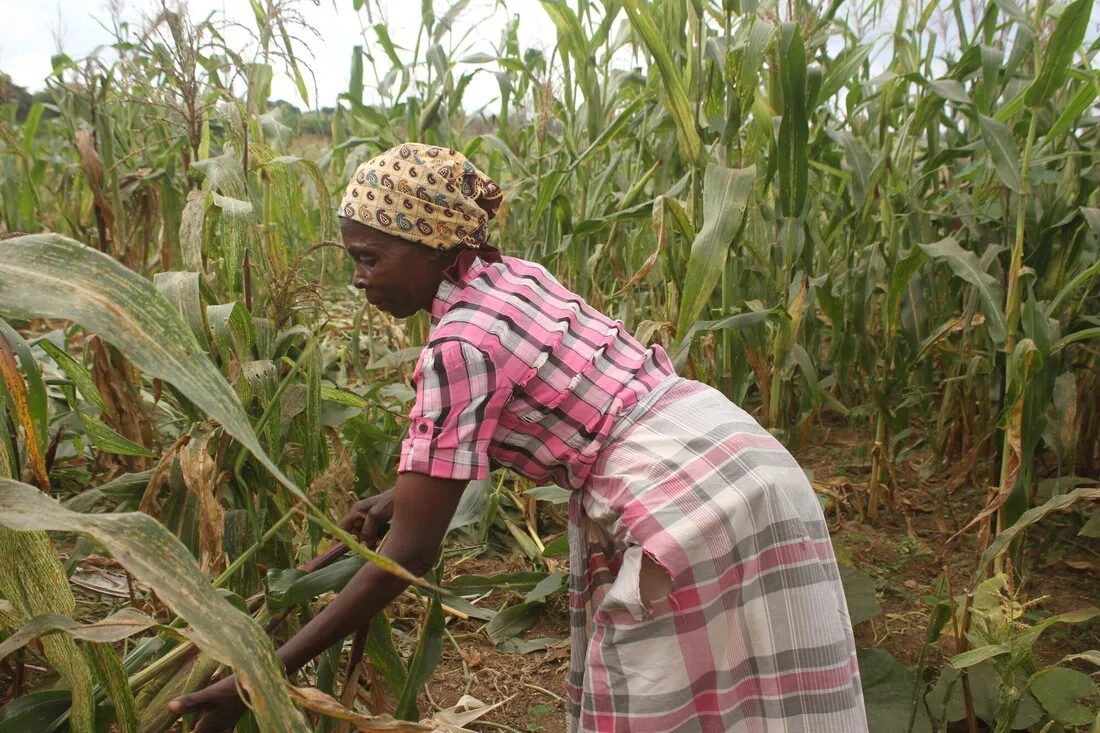
Across affected areas, women are already adapting farming practices and working to protect food production, but many lack the resources needed to prepare for another difficult season. In Chinguengue Community, Mabote District, Inhambane Province, women farmers are preparing for the rainy season with growing anxiety, knowing that another failed harvest could have devastating consequences.
“We were told there may be a drought this rainy season, with long periods without rain. This worries me a lot because we depend on farming to feed our families,” says Laurentina Lapião Nharre. “We are growing crops that resist drought, like cassava, cowpeas and pearl millet. The information helps us plan, but we also need suitable seeds and more water sources to protect our families and livestock.”
“Early warnings are important, but warnings alone cannot put seeds in the ground or food on the table,” said Kátia dos Santos Dias, CARE Mozambique Country Director. “Farmers need the right seeds, access to water and practical support now, while there is still time to protect the next harvest. At the same time, families already facing hunger need immediate assistance. We cannot continue responding only after a crisis has deepened. Investing in women farmers, local organisations and anticipatory action is essential to preventing further losses.”
CARE is calling on governments, donors and partners to urgently scale up support to communities before the next harvest is jeopardised. Investing in women farmers, women-led and local organisations that are best placed to reach vulnerable communities, support community preparedness and drive locally led solutions, alongside drought-resilient agriculture, reliable water access and anticipatory action, can help communities safeguard livelihoods, protect future harvests and prevent hunger from deepening across drought-affected regions of Mozambique.
About CARE Mozambique
CARE has worked in Mozambique since 1984, partnering with local communities, civil society organizations and government institutions to address humanitarian needs and long-term development challenges. CARE supports communities affected by conflict, displacement, droughts, floods and cyclones through emergency response, climate adaptation, food and nutrition security, water and sanitation, women’s economic empowerment and disaster risk reduction programmes. In northern Mozambique, CARE works with conflict-affected and displaced populations to provide emergency assistance, protection, shelter, water and sanitation services, cash support and livelihood recovery opportunities. Across the country, CARE strengthens community resilience to climate shocks by supporting climate-smart agriculture, anticipatory action, disaster preparedness and locally led solutions, with a particular focus on the leadership and contributions of women and girls. CARE’s work aims to save lives, protect livelihoods and support communities to recover from crises while building a more resilient future.
Notes to the Editors
- CARE’s September 2026 Rapid Needs Assessment, conducted across 14 communities in seven districts in Gaza, Inhambane and Nampula provinces identified food, safe water and seeds as the top priorities across affected communities. Findings also pointed to heightened risks of child marriage, school dropout, and worsening health and dignity outcomes for women and girls as water shortages intensify.
- National projections indicate that up to 5.3 million people could see their access to water compromised as the El Niño event develops.
- Since April 2026, CARE Mozambique has supported more than 200,000 people affected by conflict and flooding across Cabo Delgado, Nampula and Gaza provinces through the Restore project.
- CARE’s response has included emergency food assistance, healthcare, water and sanitation services, shelter support, cash assistance and livelihood recovery activities. CARE rehabilitated more than 30 water sources, supported over 6,000 people through mobile health teams, distributed hygiene kits and facilitated the construction of approximately 1,500 shelters for displaced and vulnerable households.
- In Gaza Province, CARE provided seeds, agricultural inputs and farming tools to more than 18,000 flood-affected people to help restart food production and strengthen recovery following severe flooding.
- In response to the anticipated El Niño drought, CARE has activated a Crisis Modifier for Mozambique’s Northern Provinces and will provide multipurpose cash assistance to vulnerable households in the drought-affected districts of Panda, Chókwè and Chiúre.
For media inquiries, please email usa.media@care.org or contact Pauline Hurungudo, CARE East and Southern Africa, Regional Communications Advisor, Pauline.Hurungudo@care.org