Systems Orchestration Playbook: Locally Led Scale

November 16, 2026
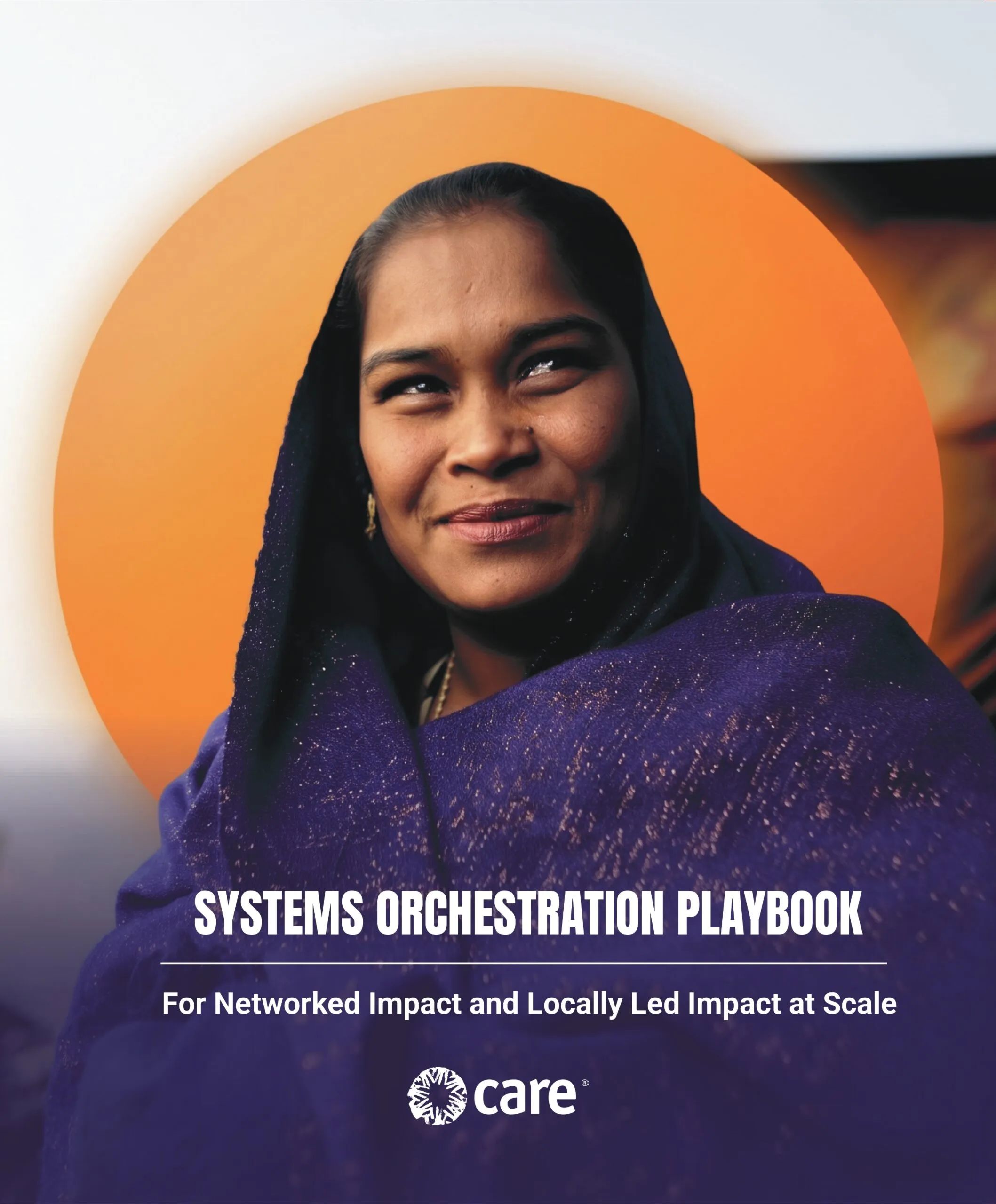
The CARE systems Orchestration Playbook cover features an image of a woman smiling at the camera.

Scaling ends with a handoff. CARE’s Systems Orchestration Playbook guides teams through three stages — Preparation, Design, and Implementation — as governments, civil society, and the private sector take ownership of proven programs. Case studies from Rwanda and Nepal show the process in practice, with worksheets for every step.

Download the full report (English)
The CARE systems Orchestration Playbook cover features an image of a woman smiling at the camera.

About the Systems Orchestration Playbook

The Systems Orchestration Playbook is a facilitation guide for building local ownership of a proven solution with the ecosystem of stakeholders who will lead and fund it when external support ends. It walks country teams from understanding what Systems Orchestration asks of an INGO, to co-creating a shared purpose and plan with local systems actors, to supporting them as they carry the work forward. Each part of the process comes with plain-language guidance, activities, worksheets, and reflection questions, drawing on the experience of CARE Nepal and CARE Rwanda.

To learn more about how CARE is making a difference, visit our Evidence and Impact page.

Related Reports

Impact Measurement

Scaling Playbook: A Guide to Durable Impact at Scale

Proven programs reach more people when local institutions run and pay for them. Through worksheets, workshop activities, and examples from our programs, CARE’s Scaling Playbook helps teams make solutions simple, affordable, and ready for others to adopt.

Climate

You Can’t Blame the Weather: Preventing Hunger in the 2026–27 El Niño

"You Can't Blame the Weather" is the first in a series on the impact of El Niño. It highlights that donor choices have the power to decide the outcomes for millions vulnerable to the climate shocks posed by El Niño. These shocks are arriving at a moment of deep precarity for communities dealing with conflict, market disruption, and the compounding forces of price hikes in the wake of escalating conflict in the Middle East. The humanitarian community has deployed rapid, large-scale crises before, such as in the aftermath of Russia's invasion of Ukraine, and while these responses weren't perfect, they did measurably mitigate the worst potential impacts of the crisis. We can learn and improve from this recent history to prevent, respond, and recover from El Niño shocks in 2026-2027.

Education & Work

Women (in VSLAs) Respond Report: What women told us in 2025

This report shares the voices of VSLA members in seven countries, who told us compounding crises are leaving them hungrier, poorer, and less resilient than before. Despite this, once again, women tell us they are stepping up, supporting each other, and leading the response in their families and communities.